
Property managers in Edmonton face a constant challenge maintaining safe, accessible sidewalks that meet city standards while managing costs effectively. Cracked concrete, uneven surfaces, and trip hazards create liability risks and accessibility concerns that demand immediate attention. Understanding the complete sidewalk restoration process, from initial assessment through final inspection, helps you navigate Edmonton’s regulations, leverage cost-sharing programs, and maintain compliant infrastructure. This guide walks you through every stage of sidewalk restoration, equipping you with the knowledge to make informed decisions about repairs, budgets, and maintenance strategies that protect both pedestrians and your property investment.
Table of Contents
- Key takeaways
- Understanding sidewalk restoration regulations and cost responsibilities
- Preparation: assessing sidewalk condition and reporting hazards
- Executing the sidewalk restoration process step-by-step
- Post-restoration inspection, maintenance, and compliance for facility managers
- Professional sidewalk restoration and maintenance solutions in Edmonton
- FAQ
Key Takeaways
| Point | Details |
|---|---|
| Fifty fifty cost share | Reconstruction expenses are split evenly between the City of Edmonton and adjacent property owners under the Local Improvement Bylaw. |
| Two payment options | Property owners may pay in full at project completion or via twenty year amortized installments through property tax bills. |
| Proactive maintenance matters | Early, targeted repairs extend sidewalk life and delay costly reconstruction. |
| Report hazards to 311 | Edmonton’s 311 service records hazards by location and severity to prioritize repairs. |
Understanding sidewalk restoration regulations and cost responsibilities
Edmonton’s sidewalk infrastructure operates under a clear regulatory framework that defines when reconstruction occurs and who pays. Sidewalk reconstruction follows the Local Improvement Bylaw as part of the Neighbourhood Renewal program, creating a structured approach to infrastructure upgrades across the city. This system ensures systematic neighborhood improvements while distributing costs fairly between public and private stakeholders.
The financial structure splits reconstruction expenses equally between the City of Edmonton and adjacent property owners. This 50-50 cost share applies to most residential and commercial properties, though corner lots may face different calculations based on frontage measurements. Property owners receive two payment options: a lump sum payment at project completion or amortized payments spread over 20 years through property tax bills. The amortization option provides budget flexibility for property managers overseeing multiple locations or working with limited capital reserves.
Understanding the local improvement process helps you anticipate timelines and prepare stakeholders. The city initiates projects through neighborhood assessments, then notifies affected property owners about proposed work. A petition process allows property owners to voice concerns or request modifications before city council approval. Once approved, the city manages contractor selection and construction oversight, though property managers remain responsible for coordinating access and addressing property-specific connection points.
Key regulatory responsibilities for property managers include:
- Maintaining clear pedestrian access during construction phases
- Ensuring property sidewalk connections meet city standards
- Coordinating landscaping restoration on private property boundaries
- Documenting all maintenance activities for compliance records
Proactive engagement with concrete sidewalk repair & curb installation professionals before major reconstruction projects can identify cost-effective maintenance alternatives. Strategic repairs extend sidewalk life and delay expensive reconstruction, giving you greater control over capital expenditure timing.
Preparation: assessing sidewalk condition and reporting hazards
Effective sidewalk management starts with systematic condition assessment. Walk your properties regularly, looking for specific deterioration patterns that signal repair needs. Cracks wider than one-quarter inch indicate structural movement requiring attention. Trip hazards, defined as vertical displacement exceeding one-half inch between adjacent slabs, create immediate liability concerns. Mud pumping, where water and soil eject through joints during traffic, reveals base failure that worsens rapidly without intervention.
Edmonton’s 311 service provides the primary reporting mechanism for sidewalk hazards. Call 311 or use the online portal to document specific locations, hazard types, and severity levels. Include photos when possible to expedite assessment. The city prioritizes reported hazards based on pedestrian traffic volume and injury risk, though response times vary seasonally. Your reports trigger annual inspections that determine repair types and urgency levels.
Maintenance repairs offer cost-effective alternatives to full reconstruction for properties with localized damage. Asphalt patching works year-round and receives priority during winter months when concrete work becomes impractical. Mud pumping and concrete raising techniques lift settled slabs without replacement, preserving existing infrastructure. Slab replacement addresses isolated failures without disturbing adjacent sections. Grinding removes trip hazards by beveling edges, creating smooth transitions that extend sidewalk service life by years.
Winter limitations significantly impact repair scheduling. Cold temperatures restrict concrete work to brief windows, making asphalt patching the primary winter solution. Plan major repairs during spring through fall when contractors can complete work efficiently and materials cure properly. This seasonal constraint makes proactive fall inspections critical for identifying issues before winter freeze-thaw cycles accelerate deterioration.
Common assessment indicators include:
- Surface scaling or spalling exposing aggregate
- Standing water indicating drainage failures
- Vegetation growth through joints signaling movement
- Edge deterioration along curb interfaces
Pro Tip: Schedule quarterly sidewalk inspections in March, June, September, and November to catch seasonal damage patterns. Spring inspections reveal winter freeze-thaw damage, while fall assessments identify issues before snow cover conceals problems for months.
Document every inspection with dated photos and written notes describing locations and conditions. This documentation demonstrates due diligence if liability claims arise and provides historical data showing deterioration rates. Regular monitoring through sidewalk maintenance techniques prevents small issues from becoming expensive emergencies.
Executing the sidewalk restoration process step-by-step
The physical restoration process follows a systematic sequence that transforms damaged sidewalks into safe, compliant infrastructure. Understanding each stage helps you coordinate with contractors, manage timelines, and communicate effectively with building occupants about access restrictions.
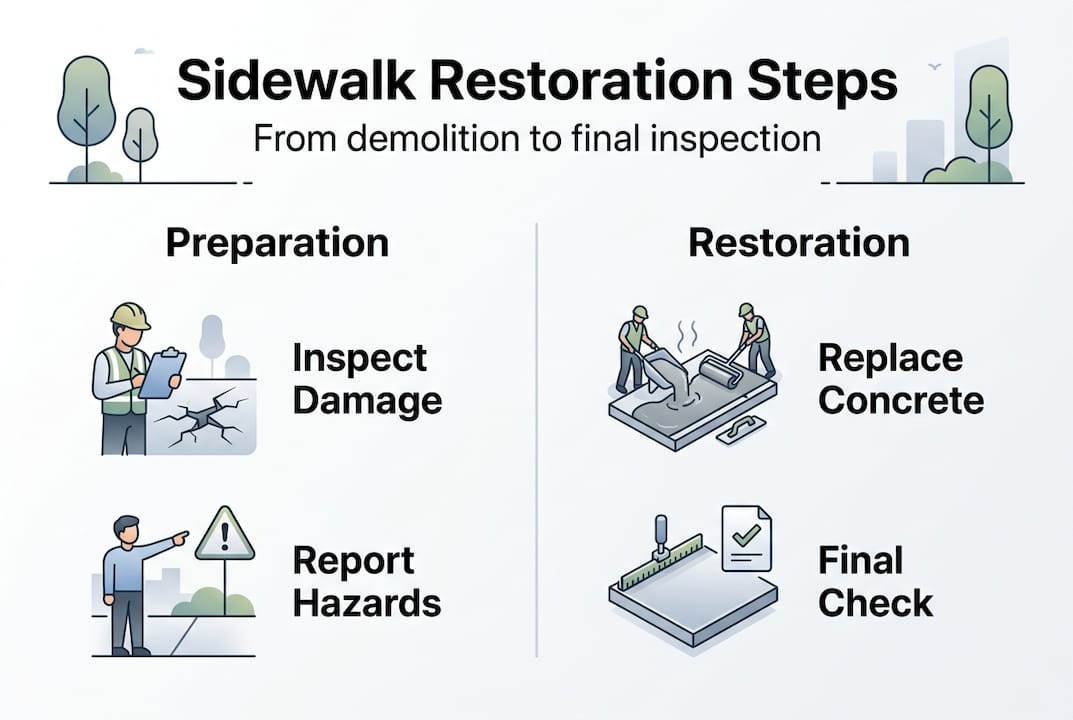
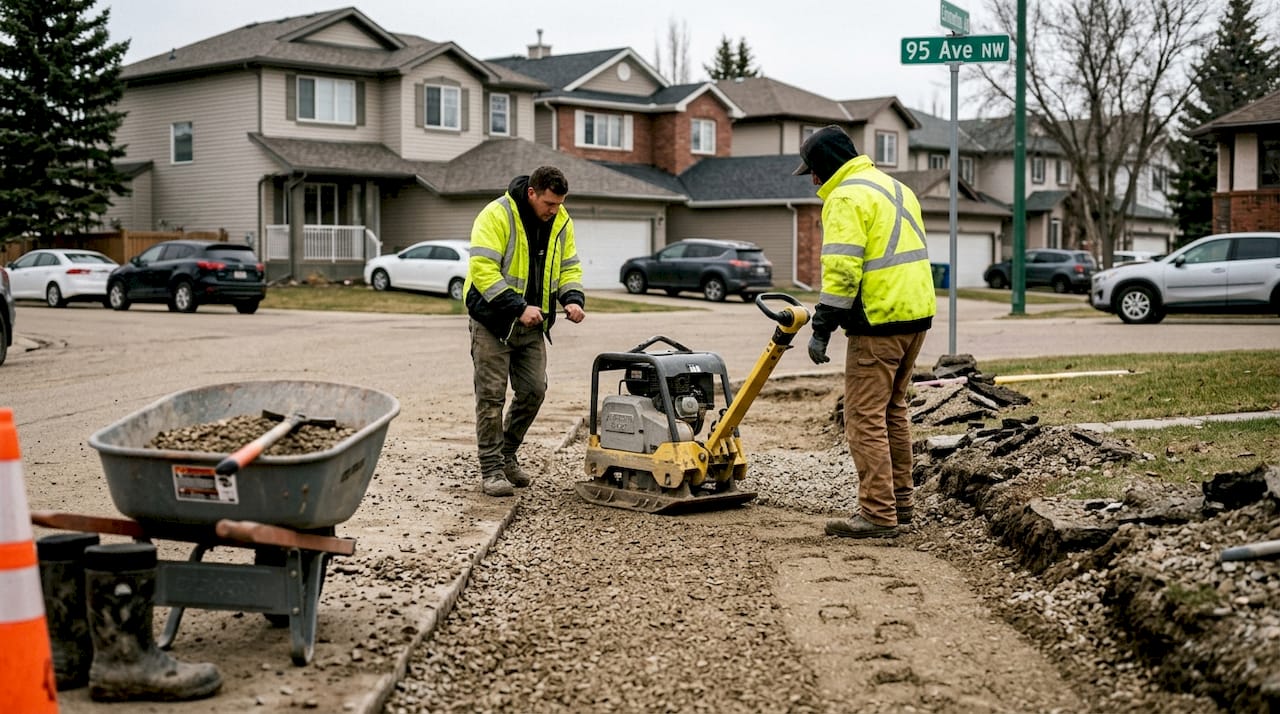
Reconstruction begins with removal of existing damaged concrete. Contractors saw-cut precise boundaries to minimize disturbance to adjacent sections, then break and remove deteriorated material. Excavation extends below the old sidewalk, removing compromised base material that contributed to failure. Proper excavation depth, typically 8-12 inches, ensures adequate support for new construction.
Base preparation determines long-term performance. Contractors place and compact granular material in lifts, creating a stable foundation that resists settlement and frost heaving. Proper compaction requires multiple passes with vibratory equipment, testing density at intervals to verify specifications. Drainage considerations during this phase prevent water accumulation that causes premature failure. Slopes direct water away from building foundations while maintaining accessibility standards.
Concrete placement follows city design standards specifying mix proportions, reinforcement requirements, and finishing techniques. Edmonton’s freeze-thaw climate demands air-entrained concrete with appropriate strength ratings. Steel reinforcement, typically welded wire mesh or rebar, controls cracking and distributes loads. Contractors pour concrete in sections with control joints at prescribed intervals, creating planned crack locations that maintain structural integrity.
Connection to existing property sidewalks requires careful coordination. New public sidewalk elevation must match property walks to eliminate trip hazards at boundaries. Contractors may need to adjust property walk sections to achieve smooth transitions, work that falls outside the city contract scope. Proactive communication with contractors about these connection points prevents last-minute surprises and additional costs.
Landscaping restoration completes the project. Contractors replace sod, topsoil, and plantings disturbed during construction, returning boulevard areas to pre-construction condition. This work occurs after concrete curing, often weeks after main construction. Property managers should verify landscaping completion and quality before signing final acceptance documents.
Restoration timeline breakdown:
- Removal and excavation: 1-2 days per property
- Base preparation and compaction: 1 day
- Concrete placement and finishing: 1 day
- Curing period with barricades: 7-14 days
- Landscaping restoration: 1-2 days
- Final inspection and acceptance: 1 day
| Phase | Duration | Access Impact |
|---|---|---|
| Demolition | 1-2 days | Complete closure |
| Base work | 1 day | Complete closure |
| Concrete pour | 1 day | Complete closure |
| Curing | 7-14 days | Barricaded, no pedestrian access |
| Landscaping | 1-2 days | Minimal impact |
Material selection accounts for Edmonton’s harsh climate. High-quality concrete mixes with proper air entrainment resist freeze-thaw damage that destroys inferior materials within years. Contractors should provide mix design specifications showing compliance with city standards. Question any cost-saving material substitutions that compromise longevity.
Pro Tip: Schedule restoration work during low-traffic periods when possible. Summer months offer optimal curing conditions, but spring and fall work minimizes disruption to retail or office properties with peak summer activity.
Monitor curing conditions closely. Concrete gains strength gradually over weeks, requiring protection from traffic, extreme temperatures, and rapid moisture loss. Contractors should maintain barricades until concrete reaches specified strength, typically 7-10 days minimum. Premature traffic causes surface damage and structural weakening that shortens sidewalk life.
Coordinate pedestrian access throughout construction. Provide clearly marked alternate routes with appropriate signage. Ensure accessibility compliance for alternate paths, maintaining adequate width and slope for wheelchair users. Communicate timeline updates to building occupants, adjusting as weather or unforeseen conditions impact schedules. Professional management of these details through sidewalk upkeep services maintains positive relationships with tenants and visitors during disruptive construction periods.
Post-restoration inspection, maintenance, and compliance for facility managers
Restoration completion marks the beginning of long-term maintenance responsibility. Schedule a detailed post-construction inspection within 30 days of project completion, documenting workmanship quality and identifying any deficiencies requiring contractor correction. Check elevation transitions, surface finish quality, joint placement, and landscaping restoration. Verify that new sidewalk slopes properly for drainage without creating accessibility barriers. Document everything with photos and written notes, creating a baseline record for future reference.
Implement a proactive maintenance program that extends sidewalk life and prevents costly emergency repairs. Regular grinding addresses minor surface irregularities before they become trip hazards. Strategic patching fills cracks promptly, preventing water infiltration that accelerates deterioration. Monitor joints and edges where damage typically initiates, scheduling preventive repairs during optimal weather windows. This proactive approach costs significantly less than reactive emergency repairs or premature reconstruction.
Edmonton’s winter compliance requirements demand year-round attention. Property owners must remove snow and ice from adjacent sidewalks per Community Standards Bylaw 14600. Failure triggers $100 fines plus city removal costs, expenses that accumulate quickly across multiple properties. Establish snow removal contracts before winter, specifying response times and service standards that ensure compliance during storms. Document all removal activities, creating records that demonstrate due diligence if disputes arise.
Ongoing maintenance best practices include:
- Quarterly visual inspections documenting conditions
- Prompt 311 reporting of new hazards or deterioration
- Annual professional assessments identifying repair priorities
- Immediate temporary repairs for sudden trip hazards
- Coordination with city inspection schedules
Maintenance documentation serves multiple purposes beyond regulatory compliance. Detailed records demonstrate property management diligence, supporting liability defense if injury claims occur. Historical data reveals deterioration patterns, informing capital planning and budget forecasting. Systematic documentation also streamlines communication with ownership groups, city inspectors, and insurance carriers.
Grinding offers exceptional value for aging sidewalks approaching reconstruction thresholds. This technique removes trip hazards and extends service life by 5-10 years, delaying major capital expenditures. Target grinding for sidewalks with isolated vertical displacement but otherwise sound concrete. The cost per linear foot runs significantly below replacement, making it an attractive option for properties with constrained capital budgets.
Establish relationships with qualified contractors before emergencies arise. Vet providers based on city certification, insurance coverage, and references from similar properties. Negotiate preferred pricing for routine maintenance, securing predictable costs and priority scheduling. These relationships prove invaluable when urgent repairs demand immediate response or when coordinating complex multi-property projects.
Winter preparation extends beyond snow removal. Apply de-icing products judiciously, selecting formulations that minimize concrete damage while maintaining safety. Avoid excessive salt application that accelerates surface scaling. Consider sand or alternative traction materials in extremely cold conditions when chemical de-icers lose effectiveness. Proper winter care through winter property preparation strategies protects your restoration investment and maintains compliance throughout harsh Edmonton winters.
Professional sidewalk restoration and maintenance solutions in Edmonton
Navigating Edmonton’s sidewalk restoration requirements demands expertise in local regulations, climate-appropriate construction methods, and proactive maintenance strategies. ProZone Ltd. brings specialized knowledge of Edmonton’s infrastructure standards and proven experience managing complex sidewalk projects for property and facility managers across the region. Our team understands the unique challenges of maintaining safe, compliant sidewalks through Alberta’s extreme seasonal conditions.
Our concrete sidewalk repair & curb installation services address everything from minor maintenance to complete reconstruction projects. We coordinate seamlessly with city processes, handle regulatory compliance, and deliver quality workmanship that extends infrastructure life. Whether you need emergency trip hazard repairs, systematic maintenance programs, or full-scale reconstruction coordination, our team provides the expertise and reliability property managers depend on. We also offer comprehensive road construction for municipalities and commercial properties, making us your single-source solution for all exterior infrastructure needs. Contact ProZone Ltd. today to discuss how we can simplify your sidewalk management and protect your property investment.
FAQ
What triggers the sidewalk restoration process in Edmonton?
The city conducts annual inspections that identify deterioration requiring repair or reconstruction. Property owners, tenants, or pedestrians can also report hazards through the 311 service, triggering assessment and potential restoration. Neighborhood renewal programs initiate systematic reconstruction in targeted areas regardless of individual sidewalk condition. Local improvement projects may begin through property owner petitions requesting upgrades.
How are sidewalk restoration costs shared between the city and property owners?
Reconstruction costs split equally between the City of Edmonton and adjacent property owners under the Local Improvement Bylaw framework. Property owners choose between lump sum payment at project completion or amortized payments over 20 years added to property tax bills. Corner lots may have different cost calculations based on total frontage measurements. Payment terms provide flexibility for property managers balancing multiple capital priorities.
What are property owners’ responsibilities for sidewalk snow and ice removal?
Community Standards Bylaw 14600 requires property owners to remove snow and ice from adjacent sidewalks within specified timeframes after snowfall. Non-compliance results in $100 fines plus costs if the city performs removal on the owner’s behalf. These charges accumulate for each violation, creating significant expenses across winter months. Property managers must establish reliable snow removal systems ensuring consistent compliance.
Can sidewalk maintenance be done year-round in Edmonton?
Asphalt patching works throughout winter and receives priority for emergency repairs during cold months. However, concrete work including slab replacement and grinding requires warmer temperatures for proper material curing and typically occurs between late spring and early fall. Winter temperature limitations make proactive fall repairs critical for addressing issues before conditions prevent concrete work. Plan major maintenance during optimal weather windows to ensure quality results and avoid seasonal delays.