
TL;DR:
- Catch basin installation involves integrating stormwater inlets with underground piping to prevent surface flooding. Proper materials, certified components, and adherence to regulations are essential for system durability, especially in Alberta’s freeze-thaw climate. Regular inspections and maintenance ensure long-term performance and compliance with environmental standards.
Catch basin installation is the engineered process of placing stormwater collection points into a property’s drainage system to channel surface runoff into underground piping, preventing flooding and surface damage. Property owners and facility managers across Alberta rely on this infrastructure to protect parking lots, roadways, and building foundations from water accumulation. Calgary alone manages approximately 60,000 storm drains across its municipal network. That scale reflects how seriously Alberta communities treat stormwater control. Understanding what catch basin installation involves, from materials to regulatory approvals, helps you make informed decisions before a single shovel breaks ground.
What is catch basin installation and how does it work?
Catch basin installation is the structured process of integrating a stormwater inlet, underground piping, and a grated surface opening into a site’s drainage system. The basin collects runoff from paved surfaces such as parking lots, driveways, and roadways, then directs that water into the municipal storm sewer network. Without properly installed catch basins, surface water pools, accelerates pavement deterioration, and creates liability risks for property managers.
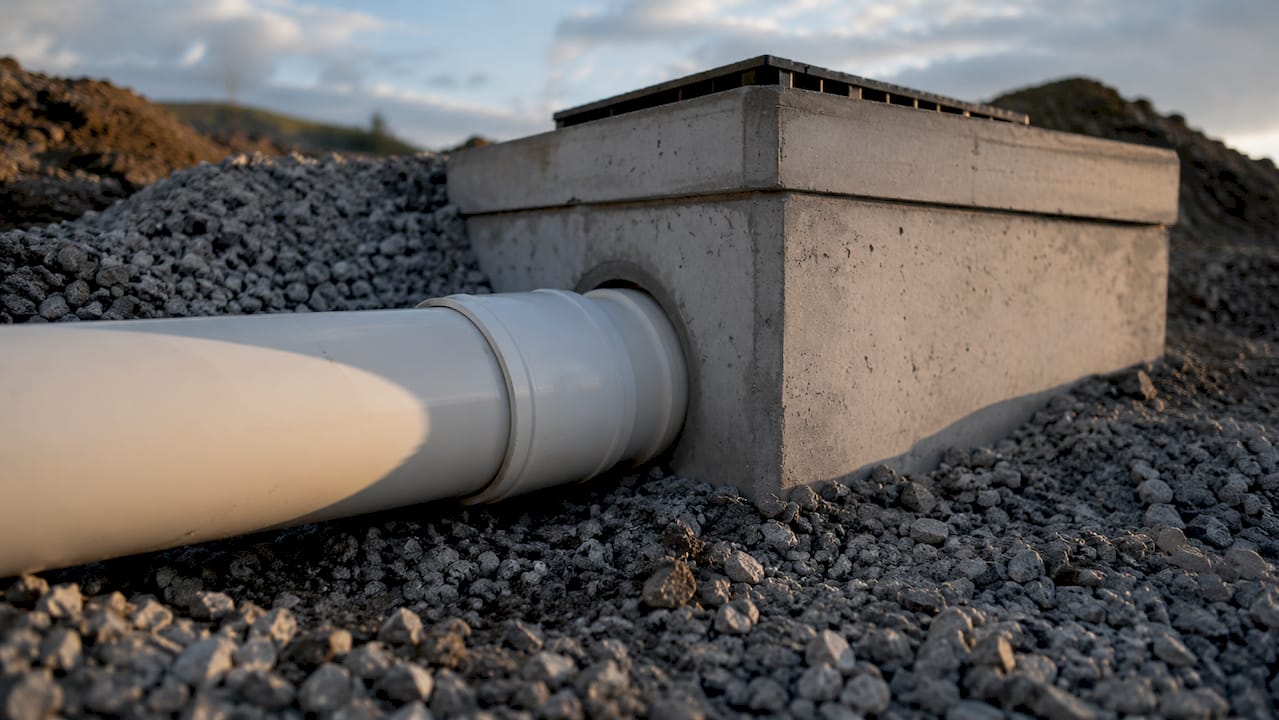
The system works through gravity. Runoff flows across a graded surface toward the basin’s grated opening, drops into the basin chamber, and exits through a lead pipe connected to the storm sewer. The grate filters out large debris before it enters the underground system. Correct grading of the surrounding surface is as critical as the basin itself. A poorly graded site will redirect water away from the inlet, defeating the entire installation.
Alberta’s freeze-thaw climate adds complexity. Water that pools near a basin opening and refreezes can heave surrounding pavement, crack the basin frame, and block the grate. A properly designed catch basin setup accounts for these thermal stresses from the start, using materials and installation methods that tolerate repeated freeze-thaw cycles without premature failure.
What components and materials does a catch basin require?
A catch basin system consists of several distinct components, each with specific material and certification requirements. Understanding these parts helps property managers evaluate contractor proposals and verify that quoted materials meet municipal standards.
The core components include:
- Grated top and frame: The surface opening that accepts runoff. Frames and grates must be CSA or CPCQA certified to meet EPCOR and municipal utility requirements. Uncertified grates are a common shortcut used by lower-tier contractors.
- Barrel or chamber: The precast concrete structure below the grate that holds collected water temporarily before it drains. Precast units must carry Canadian Precast Concrete Quality Assurance (CPCQA) certification.
- Catch basin lead: The pipe connecting the basin to the storm sewer main. EPCOR design guidelines set a minimum 250mm diameter for these leads, with a maximum run of 30m before a maintenance hole is required and a minimum grade of 1.0% to maintain flow velocity.
- Bedding and backfill material: Granular material placed around the barrel and pipe to support the structure and allow drainage. Frozen or organic material used as backfill causes settlement and premature failure.
Material quality directly affects system lifespan. Municipal utility providers like EPCOR require certified components to ensure that installations perform consistently and remain maintainable over decades. Specifying non-certified materials to reduce upfront cost typically results in rejection during inspection or costly replacement within a few years.
Pro Tip: Request the CSA or CPCQA certification documentation for every component before your contractor begins installation. Legitimate suppliers provide these certificates as standard practice.
How is catch basin drainage installation carried out step by step?
A compliant catch basin drainage installation follows a defined sequence. Skipping or shortcutting any step creates structural, hydraulic, or regulatory problems that are expensive to correct after the fact.
-
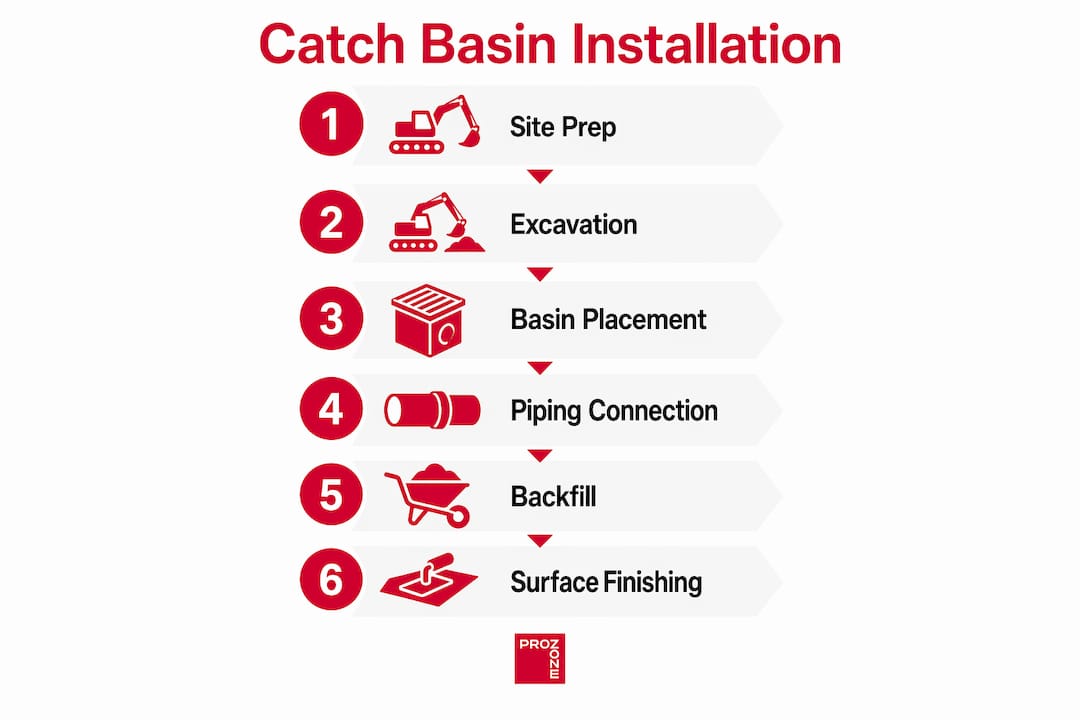
Site assessment and design submission. A licensed engineering practitioner (LEP) assesses the site, calculates runoff volumes, and establishes rim elevations for each basin. Formal engineering designs with flow calculations and site plans must be submitted for municipal approval under Alberta’s Environmental Protection and Enhancement Act (EPEA) before any excavation begins.
-
Marking and excavation. The basin location is marked according to the approved design. Excavation depth accounts for the barrel height, bedding layer, and pipe invert elevation. Underground utility locates must be completed before any digging begins.
-
Bedding preparation. A compacted granular bedding layer is placed at the base of the excavation. This layer supports the precast barrel and prevents differential settlement. The bedding must be free of frozen material, organic matter, and large stones.
-
Basin and pipe installation. The precast barrel is set on the bedding, and the lead pipe is attached at the correct invert elevation to achieve the minimum 1.0% grade toward the storm sewer main. The connection to the main requires approval and must not be made without authorisation from the utility provider.
-
Backfilling and compaction. Granular material is placed and compacted in lifts around the barrel and pipe. Frozen backfill materials are strictly prohibited. In Edmonton’s climate, winter installations require heated enclosures or scheduling to avoid placing frozen material that will settle and shift when it thaws.
-
Frame and grate setting. The frame is set to the approved rim elevation and grouted into place. The grate is installed and checked for secure seating. Rim elevation must match the surrounding surface grade to direct flow into the basin rather than around it.
-
Surface reinstatement. Asphalt or concrete is restored around the basin to match the existing surface grade. Poor reinstatement creates low spots that pond water adjacent to the grate rather than directing it into the opening.
-
As-built documentation. The LEP prepares as-built drawings confirming that the installation matches the approved design. These drawings must be submitted within six months of construction completion and retained for the life of the drainage system.
Pro Tip: Schedule catch basin installation to coincide with parking lot resurfacing or road rehabilitation work. Coordinating these projects reduces mobilisation costs and avoids cutting freshly laid pavement.
What regulations govern catch basin installation in Alberta?
Catch basin installation in Alberta is not a permit-free activity. The Environmental Protection and Enhancement Act (EPEA) and municipal engineering standards set binding requirements for design, approval, and documentation. Non-compliance carries regulatory penalties and can require full removal and reinstallation at the property owner’s expense.
Key regulatory obligations include:
- EPEA compliance: Any stormwater management works that discharge to a water body or municipal system require approval under the EPEA. Engineering standards mandate detailed site plans, rim elevations, and flow calculations before approval is granted.
- Licensed engineering practitioner involvement: An LEP must design the system, oversee installation, and certify the as-built drawings. The LEP’s stamp confirms that the installation meets Alberta Safety Codes and municipal standards.
- Stormwater Management (SWM) report: This document serves two purposes. It satisfies the regulatory approval requirement and functions as the operations and maintenance guide for the system’s entire service life. Ignoring the SWM report’s inspection schedules causes system failure and creates environmental liability.
- As-built submission timeline: As-built drawings must be delivered within six months of construction completion. Late or missing as-builts can trigger compliance orders and complicate future property transactions.
Improper installation, particularly unauthorised connections to storm mains or the use of non-certified materials, leads to premature system failures and costly repairs. Beyond the financial impact, environmental harm from uncontrolled discharge can result in regulatory enforcement action. Engaging a contractor who understands Alberta Safety Codes and EPCOR’s design guidelines is not optional. It is the baseline requirement for a compliant installation. For context on how stormwater control regulations apply to adjacent infrastructure like curb and gutter, the requirements follow the same EPEA framework.
How should you maintain catch basins after installation?
Post-installation maintenance determines whether a catch basin system performs for decades or fails within a few years. The Stormwater Management report prepared during the approval process defines the specific inspection and cleaning schedule for each installation. Following that schedule is both a regulatory obligation and a practical necessity.
Standard maintenance practices include:
- Annual inspections: Inspect each basin at least once per year, checking for debris accumulation, sediment build-up, cracked barrels, damaged frames, and displaced grates. Annual inspections catch minor issues before they become structural failures.
- Post-storm inspections: After any rainfall event exceeding 25mm in 24 hours, inspect basins for blockages and overflow evidence. Heavy events stress the system and can dislodge debris that was previously stable.
- Grate and sediment cleaning: Clear grate surfaces of leaves, gravel, and debris regularly, particularly in autumn when leaf fall is heaviest. Remove sediment from the basin chamber before it accumulates to a depth that restricts flow into the lead pipe.
- As-built drawing retention: Keep as-built drawings on file throughout the system’s service life. These drawings are required for any future modification, repair, or property sale involving the drainage infrastructure.
Coordinating catch basin maintenance with broader commercial drain maintenance schedules reduces the cost per inspection and keeps the full drainage system in consistent condition. Property managers who treat catch basin maintenance as a standalone task often miss the connection between basin performance and the condition of the downstream piping.
Pro Tip: Schedule your annual catch basin inspection in early spring, after the ground thaws. Winter freeze-thaw cycles cause the most structural movement, and spring inspection catches any frost-related damage before the heavy rain season begins.
For a detailed breakdown of common failure modes and repair options, the Prozoneltd resource on catch basin repair and maintenance covers the full range of post-installation problems and their solutions.
What Alberta’s climate teaches you about catch basin installation
Working on drainage infrastructure in Edmonton and the surrounding region makes one thing clear: the freeze-thaw cycle is the single greatest threat to any catch basin installation. Contractors who treat Alberta like a temperate climate produce installations that fail within two to three winters. The ground moves. Backfill that was placed without proper compaction settles. Frames that were set at the correct rim elevation end up sitting 50mm high or low after one frost season.
The most durable installations I have seen share two characteristics. First, they were designed by a licensed engineering practitioner who understood the site’s specific soil conditions, not just the standard specifications. Second, they were coordinated with other infrastructure work on the same site. Coordinating installation with road maintenance reduces mobilisation costs and extends pavement service life by preventing the ponding that accelerates asphalt deterioration.
The other consistent mistake is treating the Stormwater Management report as a document to file and forget. The SWM report is the operational manual for the system. Property managers who read it, follow its inspection schedule, and act on its maintenance requirements avoid the expensive remediation that comes from ignoring early warning signs. A blocked basin that goes uninspected for two years does not just fail. It causes surface flooding, pavement damage, and potential environmental liability that costs far more to address than a routine cleaning would have.
Certified materials and professional engineering are not premium add-ons. They are the minimum standard for a system that will perform reliably in Alberta’s climate. Cutting corners on either produces a system that looks correct on installation day and fails quietly over the following winters.
— ProZone
Prozoneltd’s approach to catch basin installation in Alberta
Prozoneltd delivers catch basin installation and drainage infrastructure services for commercial, municipal, and private clients across Edmonton and the surrounding region. Every installation uses CSA and CPCQA certified components, and all design work is completed by licensed engineering practitioners who understand Alberta Safety Codes and EPCOR’s design guidelines. Prozoneltd coordinates drainage work with broader site projects to reduce costs and protect pavement longevity. For property managers and facility owners who need compliant, durable stormwater infrastructure, Prozoneltd’s Edmonton infrastructure solutions cover the full scope of drainage and construction services. Contact Prozoneltd directly through the online form for a free estimate and professional consultation tailored to your site’s drainage requirements.
FAQ
What is a catch basin and what does it do?
A catch basin is a stormwater inlet structure that collects surface runoff through a grated opening and directs it into an underground drainage system. It prevents flooding by removing water from paved surfaces before it can pool or cause damage.
How long does catch basin installation take?
Installation time varies by site conditions and system complexity, but a single basin installation typically takes one to two days once excavation, pipe connections, and surface reinstatement are complete. Permit approval and engineering design add time before physical work begins.
What pipe diameter is required for a catch basin lead in Alberta?
EPCOR design guidelines require a minimum pipe diameter of 250mm for catch basin leads, with a maximum run of 30m before a maintenance hole is required and a minimum grade of 1.0% to maintain flow.
Do I need an engineer for catch basin installation?
A licensed engineering practitioner must design the system, oversee installation, and certify as-built drawings within six months of construction completion. This requirement applies under Alberta’s Environmental Protection and Enhancement Act and cannot be waived.
How often should catch basins be inspected after installation?
Catch basins require at least one annual inspection and an additional inspection after any rainfall event exceeding 25mm in 24 hours. The Stormwater Management report prepared during the approval process specifies the exact schedule for each installation.