
TL;DR:
- Winter site maintenance involves planned actions to manage snow, ice, and cold hazards at properties during winter. It is a legal obligation in Alberta to ensure hazard control and document safety measures for visitors and workers. Proper planning, inspections, and documentation reduce liability, improve safety, and help property managers meet legal requirements across Edmonton’s challenging climate.
Winter site maintenance is defined as the full set of planned actions taken to manage snow, ice, and cold-weather hazards at a property or facility during the winter season. For Edmonton property managers and facility managers, this is not optional upkeep. It is a legal and operational obligation governed by the Alberta Occupiers’ Liability Act and the Alberta OHS Act, both of which require documented hazard control and reasonable care for all site visitors and workers. Prozoneltd delivers certified winter maintenance programmes across Edmonton and the surrounding region, applying Alberta Safety Code standards to every project.
What is winter site maintenance and what does it cover?
Winter site maintenance is the industry term for seasonal facility management practices that address snow accumulation, ice formation, freeze-thaw damage, and cold-weather equipment reliability. Property managers in Edmonton deal with one of Canada’s most demanding winter climates, where temperatures can swing dramatically within a single week, creating repeated freeze-thaw cycles that stress pavement, drainage systems, and building infrastructure.
The scope of cold weather site care extends well beyond snow ploughing. It includes ice control on walkways and parking areas, inspection of drainage to prevent ice damming, maintenance of mechanical and electrical systems exposed to freezing temperatures, and the documentation of all hazard assessments and corrective actions. Each of these elements connects directly to the duty of care that Alberta law places on site owners and employers.
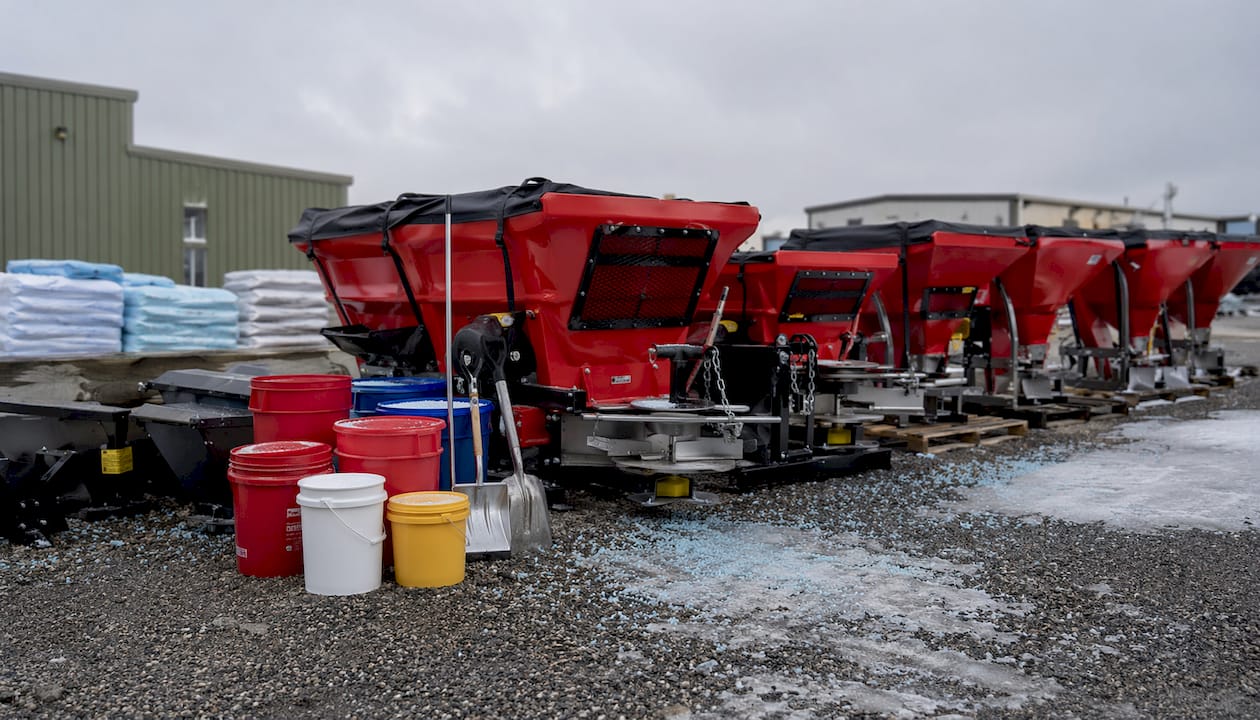
Prozoneltd approaches winter property upkeep as a structured programme rather than a reactive service. Reactive maintenance, responding only after a hazard appears, consistently costs more and creates greater liability exposure than a planned, pre-season approach.
What are the essential components of winter site maintenance?
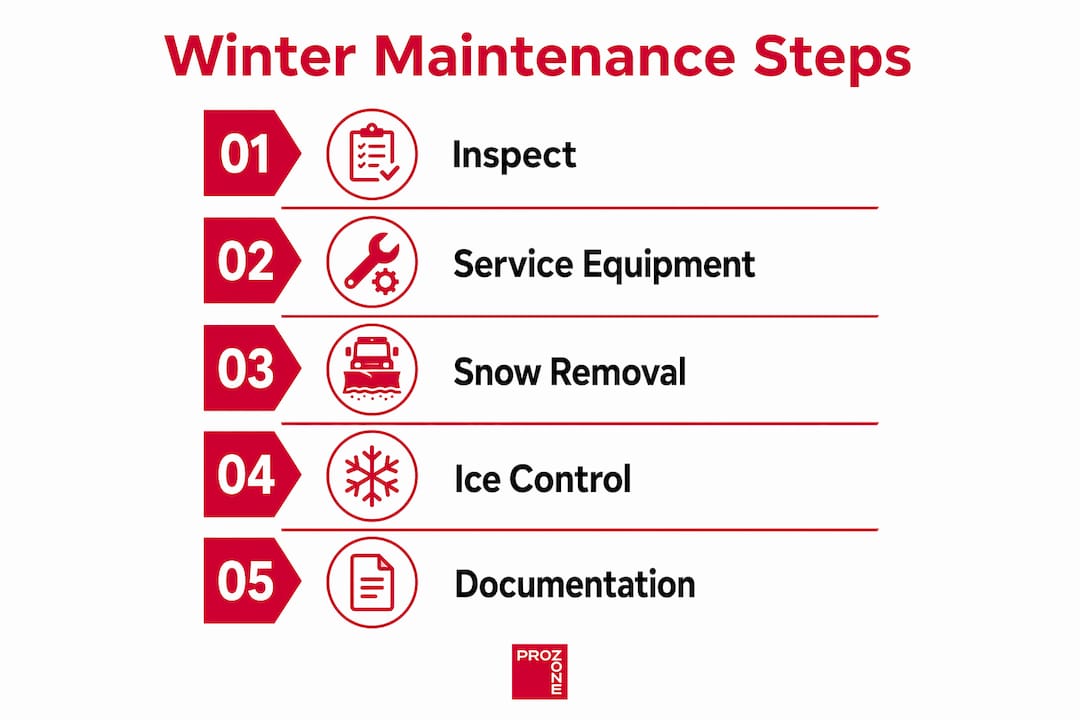
Effective site maintenance in winter rests on five core components. Each one addresses a distinct risk category, and skipping any one of them creates gaps that can lead to injury, equipment failure, or regulatory non-compliance.
- Snow and ice removal. Methods vary by site type. Commercial parking lots require heavy ploughing equipment and bulk de-icing materials. Residential driveways and walkways need hand equipment and targeted traction products such as rock chips for winter sanding. Public spaces demand the fastest response times due to high foot traffic volumes.
- Equipment maintenance. Delaying preventive maintenance on fleet equipment results in an estimated 22% loss of winter operational uptime. That figure represents ploughs, loaders, and spreaders sitting idle during the exact events when they are needed most.
- Routine site inspections. Inspections must occur before, during, and after significant weather events. Each inspection should produce a written record noting conditions observed, actions taken, and the name of the person responsible.
- Hazard assessments. Under the Alberta OHS Act, employers must conduct ongoing hazard identification and risk assessment as site conditions change. A hazard assessment completed in october does not satisfy the requirement if conditions change in january.
- Documentation and inspection logs. Written records are the primary defence against slip-and-fall claims. Without them, demonstrating that reasonable care was taken becomes extremely difficult in court.
Pro Tip: Schedule equipment servicing and site inspections together on the same visit. Combining both tasks reduces technician travel time and produces a single, unified record that satisfies both operational and legal documentation requirements.
How do legal requirements shape winter site maintenance in Alberta?
Alberta law places a clear duty of reasonable care on property owners and employers. The Alberta Occupiers’ Liability Act requires site owners to keep premises reasonably safe for all visitors. The Alberta OHS Act adds a parallel obligation for employers to protect workers from foreseeable hazards, including those created by winter weather.
Legal safety compliance in Alberta requires documented hazard assessments and active risk mitigation. Employers must prove they have taken reasonable care to manage winter hazards. Enduring bad weather without documented action does not satisfy the legal standard.
Slip-and-fall claims must be commenced within 2 years under Alberta law, and there is no preliminary written notice deadline for snow and ice claims. That extended window means a claim can arrive long after the incident, making contemporaneous inspection records the most reliable form of defence.
The table below summarises the key legal obligations for Edmonton site owners and employers.
| Obligation | Governing Legislation | Applies To |
|---|---|---|
| Duty of reasonable care to visitors | Alberta Occupiers’ Liability Act | All property owners |
| Hazard identification and control | Alberta OHS Act | All employers |
| Formal health and safety programme | Alberta OHS Act | Sites with 20+ workers |
| Joint Health and Safety Committee | Alberta OHS Act | Sites with 20+ workers |
| Documented inspection records | Both Acts | All sites |
| 2-year limitation period for claims | Alberta Limitations Act | All property owners |
Employers with 20 or more workers must maintain a formal health and safety programme, which includes written procedures for winter hazard control. Smaller sites are not exempt from the duty of care. They simply have fewer prescribed programme requirements, but the obligation to document and act remains.
Prozoneltd maintains inspection records and hazard assessment logs as a standard part of every winter maintenance contract. This practice directly supports clients’ ability to demonstrate compliance if a claim is ever filed.
What practical strategies ensure effective winter site maintenance?
Effective seasonal site maintenance follows a three-phase framework: autumn preparation, winter execution, and post-winter review. Each phase has distinct tasks and deadlines.
-
Conduct a formal pre-season site inspection by mid-october. Structured pre-season inspections done by mid-october enable optimal equipment reliability and cost-effective winter readiness. Inspect pavement for cracks that will worsen under freeze-thaw stress, check drainage outlets for blockages, and confirm that all lighting is functional for shorter daylight hours.
-
Service all equipment 6–8 weeks before the first expected snowfall. Canadian public works teams that start winter readiness programmes 6–8 weeks before the first-call date avoid significant downtime from equipment failure. For Edmonton, this means equipment servicing should be complete by early october at the latest.
-
Establish contractor agreements before the season begins. Waiting until snow arrives risks premium emergency pricing. Locking in a contract with a certified provider like Prozoneltd before the season starts secures priority response times and agreed service levels.
-
Execute timely snow clearing and ice management during winter events. Response time is the single most important variable during active weather. Ice forms within minutes of temperature drops on wet pavement, so clearing must begin before accumulation reaches hazardous levels.
-
Conduct a post-winter review in march or april. Assess pavement damage, drainage performance, and any near-miss incidents from the season. Use findings to update the hazard assessment and adjust the following year’s programme. Preventive maintenance helps extend the life of building systems and maintain safe environments year over year.
Pro Tip: Use a digital maintenance tracking platform to log inspection dates, weather conditions, actions taken, and staff names in real time. Digital records are timestamped automatically, which makes them far more defensible than handwritten logs if a claim is ever disputed.
What challenges do Edmonton property managers face in winter site maintenance?
Edmonton’s climate creates specific challenges that generic winter maintenance programmes do not address. The city experiences frequent freeze-thaw cycles, where temperatures rise above zero during the day and drop well below freezing at night. This pattern is more damaging to asphalt and concrete than sustained cold, because water enters surface cracks, freezes, expands, and widens the crack with each cycle.
- Freeze-thaw pavement damage. Cracks that appear minor in october can become significant trip hazards by february. Early crack sealing before the first freeze prevents the most costly damage.
- Variable weather responsiveness. Edmonton can receive a major snowfall followed by a warm spell within 48 hours. Maintenance programmes must account for rapid condition changes, not just steady winter conditions.
- Salt and de-icer environmental impact. Salt usage must be balanced to reduce environmental impact while managing ice control effectively. Salt runoff affects soil and vegetation near treated areas. Prozoneltd uses calibrated application rates and recommends alternative traction materials, such as rock chips, where salt reduction is a priority.
- Resource constraints during peak events. Major snowfall events strain contractor capacity across the city simultaneously. Property managers without pre-season contracts face delays and higher costs during exactly the periods when fast response matters most.
- Contractor coordination and communication. Clear service level agreements, defined response times, and regular communication between property managers and maintenance contractors prevent the gaps that lead to unaddressed hazards. Reviewing site hazard identification practices before the season helps both parties align on what constitutes a reportable condition.
What Prozoneltd has learned from Edmonton winters
The most common mistake property managers make is treating winter maintenance as a single service rather than a programme. A one-time ploughing contract does not produce inspection records, does not address equipment readiness, and does not satisfy the documentation requirements of the Alberta OHS Act. The difference between a certified maintenance programme and a generic ploughing service becomes clear the first time a slip-and-fall claim arrives.
Early preparation consistently outperforms reactive response on every measurable outcome: cost, liability exposure, and equipment reliability. Property managers who complete pre-season inspections and lock in certified contractor agreements before october 15 face fewer emergency call-outs, lower per-event costs, and stronger legal documentation throughout the season.
Certified contractors bring more than equipment. They bring documented procedures, trained staff, and accountability structures that generic providers cannot match. Prozoneltd’s commitment to Alberta Safety Codes means every winter maintenance engagement produces the records and evidence that protect clients when it matters most. Integrating digital tracking for inspections and service logs is no longer optional for sites with significant foot traffic or liability exposure. It is the baseline standard for competent winter facility management in 2026.
Prozoneltd’s winter maintenance services for Edmonton properties
Edmonton property managers who need a certified, documentation-driven winter maintenance programme can rely on Prozoneltd for the full scope of cold weather site care. Prozoneltd delivers professional snow removal across commercial, municipal, and residential sites, with response times and service levels defined before the season begins. Every engagement includes hazard assessment records, inspection logs, and equipment readiness checks aligned with Alberta Safety Code requirements. For managers who want to understand the full range of winter site maintenance services available, Prozoneltd’s team provides free estimates through the online contact form or by phone. Contact Prozoneltd before the season begins to secure priority scheduling and a programme built for Edmonton’s specific freeze-thaw conditions.
FAQ
What is winter site maintenance?
Winter site maintenance is the planned management of snow, ice, and cold-weather hazards at a property or facility during the winter season. It includes snow removal, ice control, equipment servicing, site inspections, and hazard documentation.
What does Alberta law require for winter site maintenance?
The Alberta Occupiers’ Liability Act requires property owners to maintain reasonable safety for all visitors. The Alberta OHS Act requires employers to conduct documented hazard assessments and maintain formal safety programmes for sites with 20 or more workers.
How early should Edmonton property managers prepare for winter?
Pre-season inspections and equipment servicing should be complete by mid-october. Starting winter readiness programmes 6–8 weeks before the first expected snowfall avoids the equipment failures and emergency pricing that come with late preparation.
Why is documentation so important in winter site maintenance?
Documented evidence of hazard identification and control is the primary defence against slip-and-fall claims in Alberta. Without written inspection records, demonstrating that reasonable care was taken becomes very difficult if a claim is filed within the 2-year limitation period.
How does Edmonton’s freeze-thaw climate affect winter maintenance planning?
Edmonton’s repeated freeze-thaw cycles cause pavement cracking and drainage problems that worsen throughout the season. Maintenance programmes must include early crack sealing, drainage inspections, and flexible response schedules to address rapid condition changes rather than steady cold alone.