
Top road repair methods for Edmonton property managers 2026
Choosing the right road repair method determines whether your Edmonton facility’s infrastructure lasts years or demands costly intervention within months. Property managers face freeze-thaw cycles, heavy vehicle loads, and strict municipal standards that make selection challenging. This guide evaluates proven repair methods through criteria like durability, sustainability, and regulatory compliance, equipping you to make informed decisions that extend pavement life and optimize maintenance budgets.
Table of Contents
- How To Choose Effective Road Repair Methods: Key Criteria
- Micro-Surfacing: A Sustainable Solution For Asphalt Preservation
- Aramid-Reinforced Asphalt Interlayers: Innovative Cracking Control
- Concrete Pavement Rehabilitation: Guidelines And Best Practices
- Comparing Road Repair Methods: Costs, Benefits, And Ideal Uses
- Partner With ProZone For Expert Road Repair Solutions In Edmonton
- Frequently Asked Questions
Key takeaways
| Point | Details |
|---|---|
| Micro-surfacing extends asphalt life sustainably | Adds a protective layer using significantly less energy than traditional overlay methods |
| Aramid-reinforced interlayers reduce cracking dramatically | Fiber technology absorbs approximately 80% of crack movement, offering 5 to 10 times greater crack resistance |
| Concrete rehab follows systematic treatment prioritization | Guidelines ensure cost-efficient repairs that maintain longevity beyond warranty periods |
| Compliance with Edmonton design standards is mandatory | Designers must reference all applicable standards for private development and city-contracted projects |
| OSCAM permit processing averages 6 business days | Early application prevents delays, especially during peak construction months |
How to choose effective road repair methods: key criteria
Selecting optimal road repair methods requires evaluating multiple factors specific to Edmonton’s demanding environment and regulatory framework. Effective decision-making balances technical performance, long-term value, and compliance requirements.
Compliance with municipal standards forms the foundation of any successful repair project. City of Edmonton design and construction standards mandate that designers ensure all relevant standards apply to their projects, whether private development or city-contracted work. This responsibility cannot be delegated or overlooked.
Durability against Edmonton’s unique climate stressors separates temporary fixes from lasting solutions. Freeze-thaw cycles crack inferior materials within seasons, while heavy vehicle loads accelerate deterioration on commercial properties. Methods that seal surfaces against moisture intrusion prevent the expansion damage that plagues Edmonton pavements every winter.
Energy efficiency and sustainability directly impact operating costs and environmental compliance. Technologies requiring less energy for installation reduce carbon footprints while lowering project expenses. Property managers increasingly face pressure to demonstrate environmental stewardship, making sustainable repair methods strategic assets.
Permit requirements influence project timelines significantly. Processing times vary by season and application complexity, so early submission prevents costly delays. Understanding permit workflows helps coordinate repairs with minimal facility disruption.
Pro Tip: Start budgeting for concrete repairs by evaluating current pavement condition against these criteria to identify which repair method delivers maximum ROI for your specific situation.
Critical selection criteria include:
- Regulatory compliance with all applicable Edmonton design standards
- Resistance to freeze-thaw damage and heavy load stress
- Energy consumption and environmental impact metrics
- Moisture sealing capability to prevent subsurface deterioration
- Installation timeline and facility downtime requirements
- Long-term maintenance demands and lifecycle costs
Micro-surfacing: a sustainable solution for asphalt preservation
Micro-surfacing represents a preventive maintenance breakthrough that addresses minor surface defects before they escalate into structural failures. This technology delivers substantial cost savings by extending existing pavement life rather than replacing it.
The method applies a thin polymer-modified asphalt emulsion layer that fills small cracks, seals the surface, and corrects raveling. City of Edmonton micro-surfacing guide explains that micro-surfacing extends asphalt life by providing a fresh, sacrificial layer designed to wear and oxidize, protecting the structural pavement beneath.
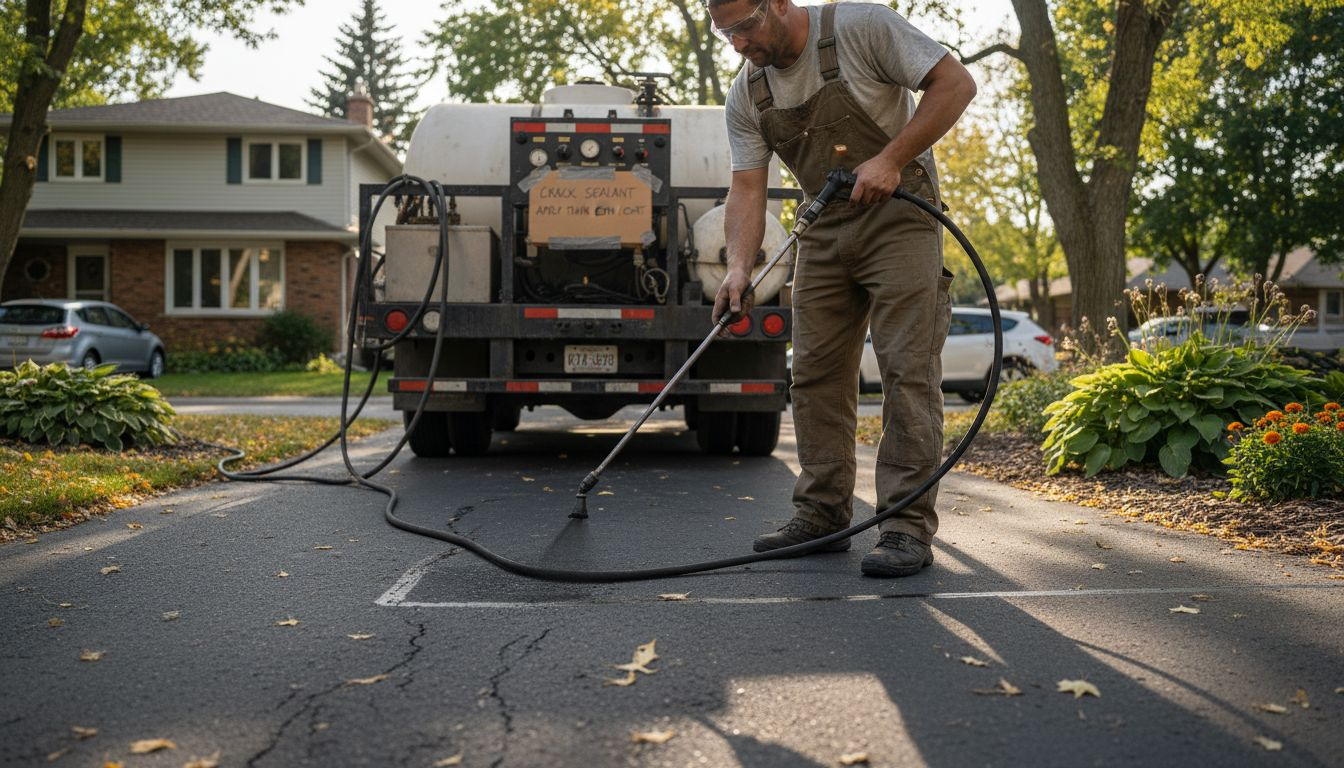
Sustainability advantages distinguish micro-surfacing from traditional repair approaches. The same Edmonton guide notes that micro-surfacing consumes significantly less energy compared to alternative road treatments like grinding and overlay. This energy efficiency translates to lower carbon emissions and reduced project costs.
Application speed minimizes operational disruptions, a critical factor for busy commercial facilities. Crews complete most projects within hours, allowing normal traffic flow to resume quickly. This rapid turnaround reduces lost productivity and maintains facility access.
Preventive timing maximizes return on investment. Applying micro-surfacing before large structural cracks develop captures pavement in optimal condition, when treatment delivers maximum life extension. Waiting until major deterioration occurs forces more expensive interventions.
Pro Tip: Schedule micro-surfacing every 7 to 10 years on moderate-traffic surfaces to prevent minor surface wear from becoming deep structural damage, similar to strategies outlined in asphalt pulverization benefits for comprehensive pavement management.
Key micro-surfacing benefits:
- Seals surface against moisture penetration and oxidation
- Corrects surface irregularities and restores friction
- Requires minimal facility downtime during application
- Costs substantially less than full overlay or replacement
- Supports sustainability goals through reduced energy use
- Extends pavement service life by 5 to 8 years when properly timed
Aramid-reinforced asphalt interlayers: innovative cracking control
Advanced fiber reinforcement technology offers Edmonton property managers a powerful tool to combat reflective cracking, the persistent problem that shortens overlay lifespan and drives maintenance costs upward. Aramid-reinforced interlayers represent cutting-edge engineering proven in Alberta conditions.
Aramid-reinforced asphalt interlayers significantly reduce reflective cracking in asphalt pavements, extending pavement life substantially. This technology delivers 5 to 10 times greater crack resistance than conventional asphalt mixes, transforming pavement performance.
The mechanism relies on stress absorption rather than rigid strength. Thick fiber-reinforced asphalt interlayers, typically 25mm, absorb approximately 80% of crack movement from underlying pavement, preventing cracks from propagating through new overlay layers. This absorption dramatically reduces reflective cracking that otherwise appears within months.
“The aramid fiber technology acts like reinforcement bars in concrete, distributing stress across the pavement structure rather than concentrating it at weak points. This fundamentally changes how overlays perform over time.”
Long-term cost savings justify the premium investment. While initial material costs exceed standard overlays, extended service life and reduced maintenance frequency deliver superior lifecycle value. Properties avoiding multiple overlay replacements save substantially over 20-year planning horizons.
Installation expertise determines performance outcomes. Proper aramid fiber dosing and application technique require specialized knowledge. When evaluating contractors, verify experience with fiber-reinforced systems to ensure proper installation, similar to considerations in choosing paving contractors.
Pro Tip: Request case study documentation from contractors showing aramid interlayer performance on Edmonton-area projects with similar traffic loads and climate exposure to verify real-world effectiveness.
| Performance Metric | Standard Overlay | Aramid-Reinforced Interlayer |
|---|---|---|
| Crack resistance multiplier | 1x (baseline) | 5-10x |
| Crack movement absorption | 20-30% | ~80% |
| Expected service life extension | 0-2 years | 5-8 years |
| Reflective cracking timeline | 1-3 years | 7-12 years |
Aramid interlayer advantages:
- Prevents reflective cracking through stress absorption
- Extends overlay service life by years, not months
- Reduces long-term maintenance frequency and costs
- Performs reliably in freeze-thaw cycling conditions
- Proven technology with Alberta project validation
Concrete pavement rehabilitation: guidelines and best practices
Concrete pavement demands different repair approaches than asphalt, with systematic treatment strategies ensuring cost-efficient longevity. Property managers overseeing concrete surfaces benefit from evidence-based rehabilitation frameworks.
Concrete pavement rehabilitation guidelines provide guidance on rehabilitation techniques and treatment prioritization methods for existing plain concrete pavements. These systematic approaches ensure repairs address root causes rather than superficial symptoms.
Common rehabilitation methods include full-depth slab replacement for severely damaged sections, localized repairs using lean mix concrete sub-base for stability, and surface treatments like diamond grinding to restore smoothness. Each method suits specific deterioration patterns and traffic demands.
Following specifications from multiple authorities ensures consistency. Projects incorporating standards from transportation agencies, engineering societies, and municipal codes achieve superior longevity by meeting diverse performance requirements simultaneously.
Pro Tip: Conduct annual concrete inspections to identify minor spalling and joint deterioration early, when repairs cost hundreds rather than thousands, following the diagnostic approach in concrete parking lot repair guide.
Step-by-step concrete rehabilitation approach:
- Assess pavement condition using visual surveys and non-destructive testing to identify distress types and severity
- Prioritize treatments based on structural importance, safety impact, and cost-effectiveness using systematic ranking
- Select appropriate repair method matching deterioration pattern, whether full replacement, partial depth repair, or surface treatment
- Execute repairs following specifications that address drainage, sub-base stability, and joint sealing
- Implement post-repair monitoring to validate performance and adjust future maintenance strategies
| Concrete Repair Method | Cost Range | Expected Longevity | Best Application |
|---|---|---|---|
| Full-depth replacement | High | 25-30 years | Severely cracked or settled slabs |
| Partial depth repair | Medium | 10-15 years | Surface spalling and scaling |
| Diamond grinding | Low-Medium | 5-10 years | Surface irregularities, minor faulting |
| Joint resealing | Low | 3-7 years | Preventive maintenance, joint deterioration |
Concrete rehab considerations:
- Treatment prioritization maximizes budget effectiveness
- Sub-base stability must be addressed before surface repairs
- Joint sealing prevents moisture intrusion and freeze damage
- Specifications from multiple standards ensure comprehensive quality
- Regular inspection enables timely intervention before major failures
Comparing road repair methods: costs, benefits, and ideal uses
Comprehensive comparison across repair methods clarifies trade-offs and helps match solutions to facility-specific requirements. Understanding relative strengths guides strategic maintenance planning.
Cost analysis must extend beyond initial investment to lifecycle value. Methods with higher upfront costs often deliver superior total ownership economics through extended service life and reduced maintenance frequency. Property managers balancing immediate budgets against long-term obligations need clear cost-benefit frameworks.
Environmental impact increasingly influences method selection. Sustainability-focused organizations prioritize low-energy techniques that reduce carbon footprints while meeting performance standards. Energy consumption data helps quantify environmental advantages.
Disruption level affects operational continuity. Facilities requiring 24/7 access favor quick-application methods that minimize downtime, even at premium costs. Others with flexible scheduling can accept longer installation periods for cost savings.
| Repair Method | Initial Cost | Lifespan Extension | Environmental Impact | Disruption Level | Ideal Use Case |
|---|---|---|---|---|---|
| Micro-surfacing | Low | 5-8 years | Very low energy use | Minimal (hours) | Preventive maintenance on sound asphalt |
| Aramid-reinforced interlayer | High | 5-8 years (overlay life) | Moderate | Moderate (1-2 days) | High-traffic areas prone to cracking |
| Concrete full replacement | Very high | 25-30 years | High energy/materials | High (3-5 days) | Structurally failed concrete sections |
| Concrete partial repair | Medium | 10-15 years | Moderate | Low-Moderate (1 day) | Localized concrete deterioration |
Scenarios best suited for each method:
- Micro-surfacing: Parking lots and access roads with minor surface wear but sound structural integrity
- Aramid interlayers: Main thoroughfares and loading zones where cracking historically recurs within 3 years
- Concrete replacement: Entrance drives and heavy equipment areas with severe slab cracking or settlement
- Concrete partial repair: Loading docks and aprons with surface spalling but intact structural slabs
Strategic selection based on this comparison optimizes maintenance budgets while extending infrastructure service life. Property managers can match methods to specific pavement sections, applying premium technologies where performance demands justify costs while using cost-efficient solutions for lower-stress areas. Refer to repair or replace guide for additional decision frameworks.
Partner with ProZone for expert road repair solutions in Edmonton
Translating repair method knowledge into successful projects requires local expertise and proven execution capabilities. ProZone delivers specialized road repair solutions tailored to Edmonton property managers’ infrastructure challenges.
Our team brings deep experience across asphalt preservation technologies, innovative crack control systems, and concrete rehabilitation techniques. We help clients navigate method selection, ensuring compliance with Edmonton design standards while optimizing performance and budget alignment. From initial assessment through project completion, ProZone provides the technical expertise and quality execution that extends infrastructure service life.
Comprehensive resources support informed decision-making. Our concrete repair budgeting guide helps property managers plan financially, while detailed technical documentation on asphalt road benefits and facts builds understanding of pavement performance.
Partner with ProZone for road repair to access Edmonton’s leading infrastructure maintenance expertise, ensuring your facilities benefit from proven repair methods that deliver measurable results and long-term value.
Frequently asked questions
What is the typical lifespan extension provided by micro-surfacing?
Micro-surfacing extends pavement life by providing a fresh, sacrificial layer that wears and oxidizes, typically adding 5 to 8 years of service. Actual extension depends on existing pavement condition, traffic loads, and application timing.
How long does the OSCAM permit approval process take in Edmonton?
OSCAM permit applications average 6 business days for processing, though timelines vary with application complexity and seasonal volume. Submit applications early during peak construction months to avoid delays that could impact project schedules.
What are the key benefits of aramid-reinforced asphalt interlayers?
Aramid-reinforced interlayers significantly reduce reflective cracking, providing 5 to 10 times greater crack resistance than standard mixes. They absorb approximately 80% of crack movement, dramatically extending pavement lifespan and reducing maintenance frequency over 20-year horizons.
When should property managers choose concrete replacement over repair?
Full-depth concrete replacement becomes necessary when slabs exhibit severe cracking, significant settlement, or structural failure that compromises load-bearing capacity. Localized repairs suffice for surface deterioration like spalling or scaling where underlying structure remains sound.
How does freeze-thaw cycling affect road repair method selection in Edmonton?
Edmonton’s intense freeze-thaw cycles demand repair methods with superior moisture sealing and flexible stress absorption. Technologies that prevent water infiltration and accommodate thermal movement, like aramid-reinforced interlayers and properly sealed concrete joints, perform best in this climate.
Recommended
- Saving Money and Preventing Accidents: The Benefits of Proactive Asphalt Repair in Edmonton – ProZone Ltd.
- Budgeting for Concrete Repairs: Understanding the Costs for Edmonton Businesses – ProZone Ltd. – Home, Main office, asphalt, concrete, snow removal, Alberta, Edmonton, SherwoodPark, rubber paving, streetbond, thermoplastic, landscaping supplies