
Many property managers mistakenly view concrete repair as a cosmetic fix, overlooking its crucial role in structural integrity and financial health. In Edmonton’s harsh climate, where freeze-thaw cycles and heavy traffic accelerate deterioration, timely concrete repair becomes a strategic investment rather than a maintenance expense. Proper repairs can extend structure lifespan by 10-20 years, preventing catastrophic failures and protecting your bottom line. This guide reveals how concrete repair transforms commercial properties through enhanced safety, reduced costs, and prolonged service life, offering property managers actionable insights to make informed maintenance decisions.
Table of Contents
- Common Causes Of Concrete Damage And Why Early Repair Matters
- How Concrete Repair Extends Property Lifespan
- Safety And Cost Benefits Of Concrete Repair For Commercial Property Managers
- Techniques And Materials Used In Effective Concrete Repair
- Why Choose Prozone For Your Concrete Repair Needs In Edmonton
Key takeaways
| Point | Details |
|---|---|
| Lifespan extension | Concrete repair adds 10-20 years to structure life, delaying expensive replacements. |
| Cost prevention | Early crack repairs stop minor issues from escalating into structural failures requiring complete rebuilds. |
| Safety improvement | Properly maintained concrete reduces accident risk by up to 30%, protecting tenants and reducing liability. |
| Maintenance efficiency | Addressing root causes through targeted repairs minimizes recurring damage and lowers long-term costs. |
How concrete repair extends property lifespan
Concrete deterioration follows a predictable pattern: small cracks expand, water infiltrates, internal corrosion accelerates, and structural integrity fails. Without intervention, this cascade leads to complete replacement, costing property managers tens of thousands in capital expenditures and operational downtime. Studies show that implementing timely concrete repair can extend service life by 15-20 years, transforming a depreciating asset into a stable, long-term investment.
The mathematics of repair versus replacement favor proactive maintenance dramatically. Consider a commercial parking structure: full replacement costs $150-$200 per square foot, while targeted repairs average $10-$25 per square foot. By addressing cracks and spalling early, property managers preserve the underlying structure’s integrity, avoiding the exponential cost growth that accompanies deferred maintenance. This approach aligns perfectly with strategies for extending the life of your parking lot through systematic intervention.
Different repair techniques restore concrete integrity at various damage stages:
- Epoxy injection fills hairline cracks, preventing water infiltration and further splitting
- Patching compounds rebuild spalled surfaces, restoring load-bearing capacity
- Overlay systems add protective layers that resist chemical damage and abrasion
- Structural reinforcement addresses deeper issues affecting foundation stability
Each method targets specific deterioration types, allowing customized solutions that match damage severity and budget constraints. The key lies in matching repair technique to damage stage, ensuring resources deliver maximum lifespan extension without over-engineering solutions.
“Concrete repair is not about fixing what’s broken, it’s about preserving what remains functional and preventing future failures through strategic intervention.”
Property managers who embrace this philosophy shift from reactive crisis management to proactive asset preservation. Understanding budgeting for concrete repairs becomes essential, as planned maintenance costs less than emergency interventions. The financial logic is compelling: invest modestly now to avoid catastrophic expenses later, while maintaining property value and tenant satisfaction throughout the structure’s extended service life.
Common causes of concrete damage and why early repair matters
Edmonton’s commercial properties face unique environmental stressors that accelerate concrete deterioration. Traffic, aggressive cleaning, and temperature swings create a perfect storm of damage factors. Freeze-thaw cycles expand water trapped in concrete pores, creating internal pressure that cracks surfaces from within. Heavy vehicular loads generate stress concentrations at weak points, while de-icing salts penetrate surfaces and corrode reinforcing steel.
The progression of concrete damage follows a predictable timeline that makes early intervention critical:
- Hairline cracks appear from thermal stress or minor settling
- Water infiltrates through surface cracks during precipitation or snowmelt
- Freeze-thaw cycles expand trapped moisture, widening existing cracks
- Spalling develops as surface layers separate from underlying concrete
- Structural compromise occurs when reinforcement corrodes and loses strength
- Complete failure requires full section replacement and extended downtime
This cascade demonstrates why timing matters enormously in concrete maintenance. Research confirms that all concrete cracks should be repaired regardless of size to prevent damage escalation. A $500 crack repair today prevents a $15,000 structural replacement tomorrow, making early intervention the most cost-effective strategy available to property managers.
Water infiltration deserves special attention as the primary accelerant of concrete damage. Once moisture penetrates the surface, it attacks from multiple angles: dissolving calcium compounds that bind concrete together, corroding steel reinforcement through oxidation, and creating hydraulic pressure during freeze-thaw cycles. Understanding concrete crack causes helps property managers identify vulnerable areas before minor issues become major problems.
Pro Tip: Schedule concrete inspections immediately after winter, when freeze-thaw damage becomes visible but hasn’t yet progressed to structural compromise. This timing window allows cost-effective repairs before spring rains accelerate deterioration.
Safety considerations compound the urgency of early repair. Cracked concrete creates trip hazards that expose property managers to liability claims and workers’ compensation costs. Spalled surfaces generate loose debris that damages vehicles and creates projectile risks. Proper concrete sidewalk maintenance addresses these hazards proactively, protecting both people and budgets through systematic intervention before accidents occur.
Techniques and materials used in effective concrete repair
Modern concrete repair relies on advanced materials and precise application techniques that restore structural integrity while preventing future damage. High-performance concrete repair systems seal, protect, and restore surfaces, extending service life and reducing maintenance requirements. The key lies in matching repair method to damage type, ensuring materials bond properly and perform under Edmonton’s demanding climate conditions.
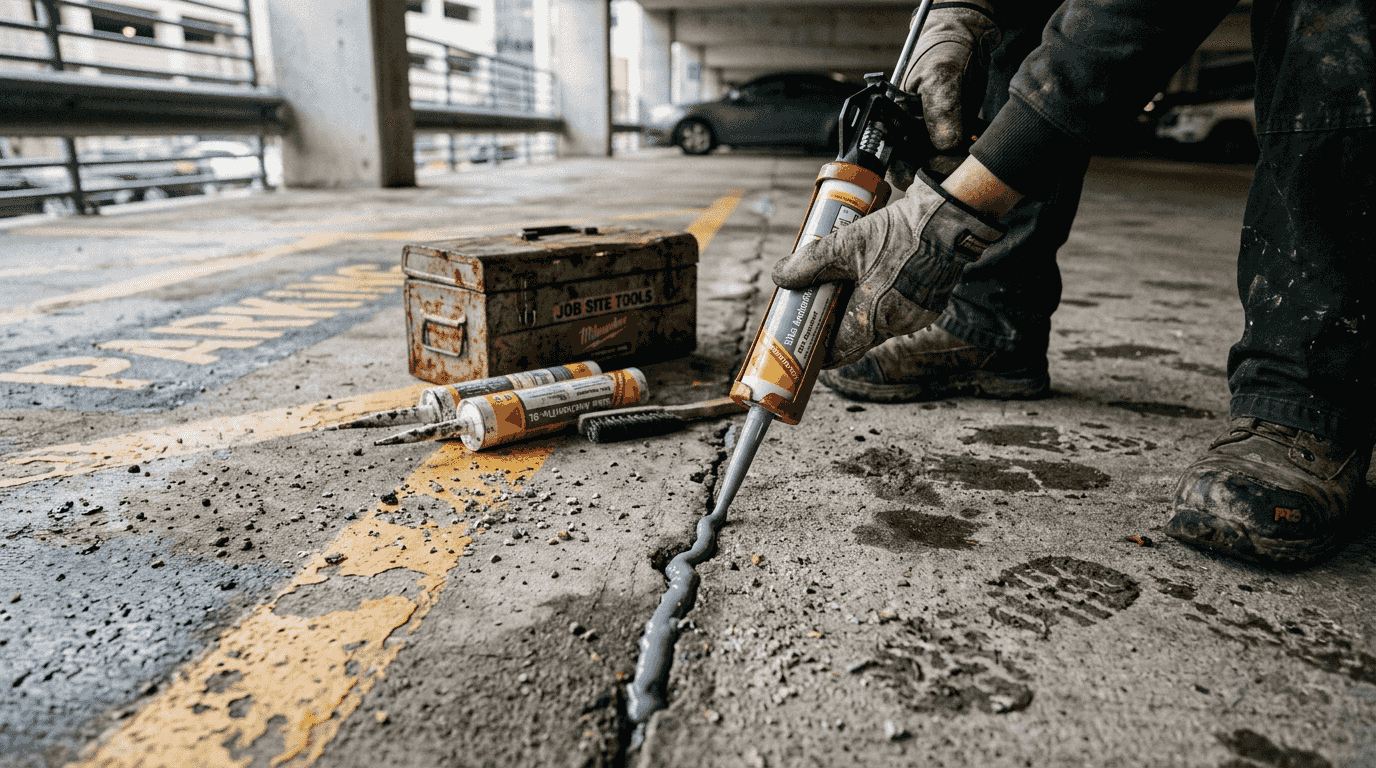
Epoxy injection stands as the gold standard for hairline crack repair. This technique forces low-viscosity epoxy resin deep into cracks under pressure, filling voids completely and bonding crack faces together. The result exceeds original concrete strength at the repair location, preventing crack reopening and water infiltration. Epoxy injection works best on cracks smaller than 0.125 inches, making it ideal for early-stage damage intervention before structural compromise occurs.
Patching compounds address larger damage areas where concrete has spalled or delaminated. These polymer-modified materials bond mechanically and chemically to prepared surfaces, rebuilding lost sections with materials that match or exceed original concrete properties. Success depends entirely on surface preparation: removing loose material, cleaning thoroughly, and creating proper bonding profiles ensure patches remain intact under traffic loads and thermal stress.
| Repair Method | Best For | Typical Cost | Lifespan |
|---|---|---|---|
| Epoxy Injection | Hairline cracks under 0.125 inches | $8-$15/linear foot | 15-20 years |
| Patching | Spalling and surface damage | $12-$25/sq ft | 10-15 years |
| Overlay Systems | Widespread surface deterioration | $15-$30/sq ft | 15-25 years |
| Structural Repair | Deep cracks affecting reinforcement | $50-$150/sq ft | 20-30 years |
Resinous flooring repair offers specialized solutions for industrial and commercial spaces. Repair success depends on understanding crack type and choosing appropriate materials that accommodate movement or provide rigid bonding as conditions demand. Dynamic cracks require flexible sealants that move with seasonal expansion, while static cracks need rigid epoxies that restore monolithic integrity.
Surface preparation determines repair longevity more than any other factor. Proper preparation includes:
- Mechanical cleaning to remove contaminants and create bonding profiles
- Crack routing to create uniform channels for filler materials
- Moisture testing to ensure surfaces meet bonding requirements
- Priming to enhance adhesion between old concrete and new repair materials
Pro Tip: Test repair materials on small sections before full application. Edmonton’s temperature extremes affect curing times and final properties, so field testing ensures materials perform as expected under actual site conditions.
Property managers seeking practical guidance can explore parking lot repair approaches that demonstrate these techniques in action. Winter protection strategies also matter, as repairs must withstand seasonal stress. Learning best practices to protect concrete in winter ensures repairs deliver expected lifespan extensions rather than failing prematurely under freeze-thaw cycling.
Safety and cost benefits of concrete repair for commercial property managers
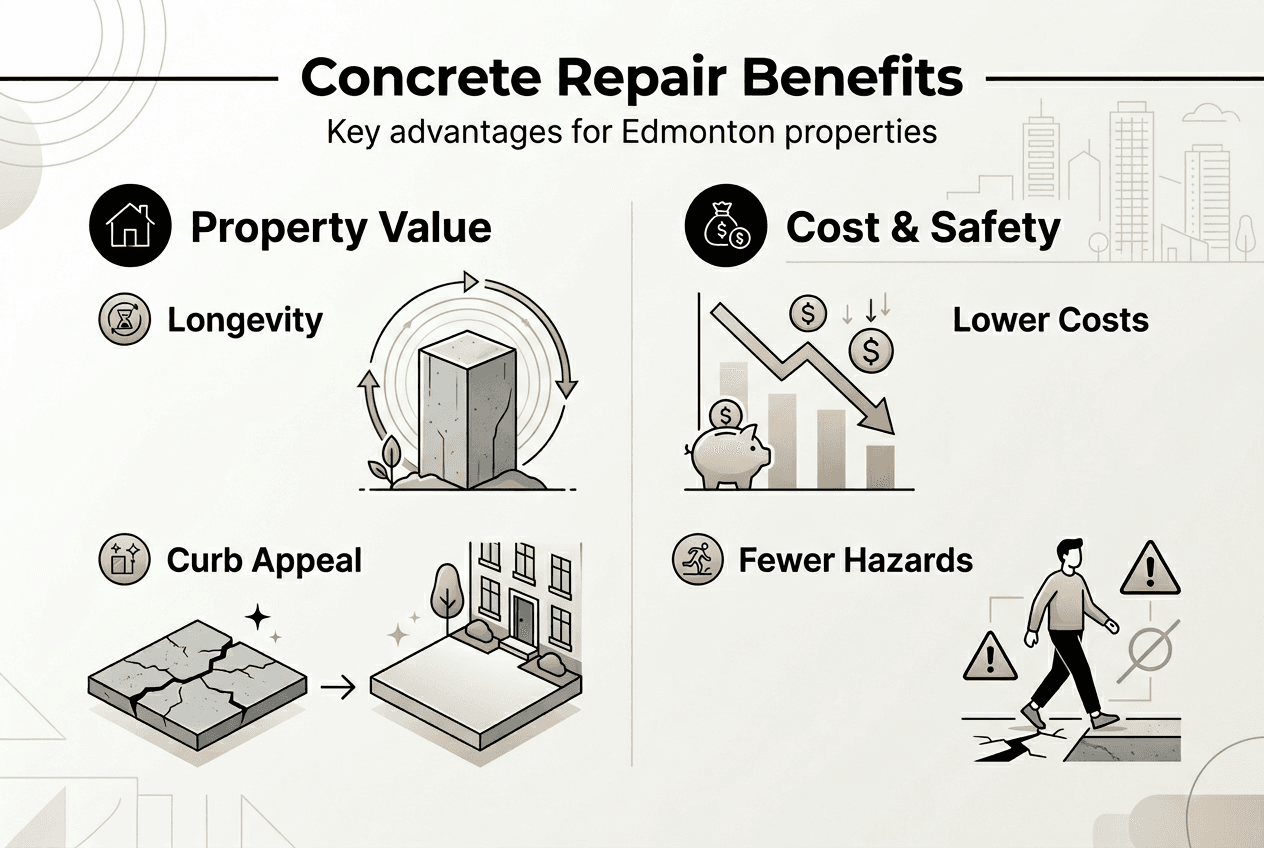
Concrete repair delivers measurable safety improvements that protect both people and financial assets. Research demonstrates that properly repaired concrete reduces accident risk by up to 30%, translating directly into lower insurance premiums, reduced liability exposure, and improved tenant satisfaction. Trip and fall incidents cost commercial property owners an average of $50,000 per claim when legal fees and settlements combine, making proactive repair a clear financial winner compared to reactive crisis management.
The cost dynamics of repair versus replacement reveal dramatic savings potential. Consider these comparative scenarios:
- Minor crack repair: $500-$2,000, prevents $15,000-$50,000 in structural replacement
- Spalling patch: $2,000-$8,000, avoids $30,000-$100,000 in section reconstruction
- Preventive overlay: $10,000-$40,000, eliminates $150,000-$300,000 in full replacement
Each intervention point offers exponential return on investment, with earlier action generating greater savings. Property managers who implement systematic inspection and repair programs report 60-70% lower lifetime concrete maintenance costs compared to those who defer action until failures force emergency intervention.
Service life extension provides the most compelling financial benefit. Well-maintained parking structures last 40-50 years versus 10-15 years with deferred maintenance, quadrupling asset value and eliminating multiple replacement cycles. This longevity advantage compounds when considering financing costs, construction inflation, and operational disruption expenses that accompany major reconstruction projects.
Downtime costs often exceed direct repair expenses in commercial settings. A failed parking structure forces tenant relocations, disrupts business operations, and creates revenue losses that dwarf repair investments. Proactive maintenance schedules repairs during low-use periods, minimizing operational impact while preventing catastrophic failures that shut down facilities for months during emergency reconstruction.
Tenant and customer perception matters significantly in competitive commercial markets. Properties with well-maintained concrete surfaces signal professional management and attention to detail, supporting premium rental rates and tenant retention. Conversely, cracked and spalling concrete suggests neglect, driving tenants toward better-maintained competing properties and eroding property values over time.
“Every dollar invested in proactive concrete repair returns five to ten dollars in avoided replacement costs, making maintenance the highest-return investment available to property managers.”
Property managers tracking commercial parking lot repairs gain visibility into damage patterns and intervention timing. This data-driven approach optimizes maintenance spending, directing resources toward high-impact repairs while deferring lower-priority items strategically. Understanding budgeting for concrete repairs enables accurate forecasting and prevents budget surprises that disrupt financial planning.
| Benefit Category | Measurable Impact | Timeline |
|---|---|---|
| Safety Improvement | 30% reduction in accident risk | Immediate |
| Cost Avoidance | 5-10x ROI on repair investment | 3-5 years |
| Lifespan Extension | 15-20 additional service years | Long-term |
| Property Value | 8-12% higher resale values | Ongoing |
Why choose ProZone for your concrete repair needs in Edmonton
ProZone Ltd brings specialized expertise in Edmonton’s unique climate challenges, combining technical knowledge with practical experience across hundreds of commercial properties. Our assessment process identifies not just visible damage but underlying causes, ensuring repairs address root problems rather than symptoms. This diagnostic approach prevents recurring failures and maximizes your maintenance investment.
Our proven track record spans parking structures, loading docks, sidewalks, and industrial floors throughout the Edmonton region. We understand how freeze-thaw cycles, de-icing chemicals, and heavy traffic interact to damage concrete, allowing us to recommend solutions that perform reliably under local conditions. When you partner with ProZone for long-lasting concrete repair, you gain access to materials and techniques specifically selected for Alberta’s demanding environment.
Cost-effective repair strategies balance immediate needs with long-term value. We help property managers prioritize interventions based on safety risk, damage progression rates, and budget constraints. This consultative approach ensures resources deliver maximum impact, extending parking lot life while maintaining financial flexibility for other property needs. Our transparent pricing and detailed project planning eliminate surprises, supporting accurate budgeting for concrete repair costs throughout the fiscal year.
Frequently asked questions
What are the most common causes of concrete cracks in commercial properties?
Vehicular traffic generates repeated stress that creates fatigue cracks, while harsh cleaning chemicals dissolve concrete binders and weaken surfaces. Temperature swings cause expansion and contraction that opens joints and creates thermal stress cracks. Structural overload from heavy equipment or improper load distribution also contributes significantly to crack formation. Understanding these common causes of concrete cracks helps property managers implement preventive measures and schedule timely inspections.
How can early concrete repair save money for property managers?
Early intervention stops minor damage from escalating into structural failures requiring complete replacement. A $2,000 crack repair today prevents a $50,000 section replacement next year, delivering 25x return on investment. Extended service life reduces capital expenditure frequency, while planned maintenance costs less than emergency repairs requiring premium labor rates and expedited material delivery. Property managers who embrace proactive strategies realize significant savings from early concrete repair across their entire portfolio.
What types of repair methods are best for different concrete issues?
Epoxy injections work ideally for hairline cracks under 0.125 inches, providing structural bonding that exceeds original concrete strength. Patching compounds address spalling and surface delamination, rebuilding lost sections with polymer-modified materials. Overlay systems protect widespread surface deterioration, while structural repairs handle deep cracks affecting reinforcement. Proper damage diagnosis ensures repair method selection delivers expected performance and longevity. Exploring repair methods for concrete problems helps property managers understand which approach suits their specific damage patterns.
How often should commercial properties in Edmonton inspect their concrete for repairs?
Annual inspections provide optimal damage detection timing, catching issues early before they escalate into structural problems. Spring inspections immediately after freeze-thaw season reveal winter damage while repairs remain cost-effective. High-traffic areas benefit from semi-annual surveys to monitor accelerated wear patterns. Regular inspection programs prevent costly emergency repairs by identifying problems during the narrow window between initial damage and structural compromise. Following inspection frequency recommendations ensures systematic monitoring that protects both safety and budgets.
Recommended
- Budgeting for Concrete Repairs: Understanding the Costs for Edmonton Businesses – ProZone Ltd. – Home, Main office, asphalt, concrete, snow removal, Alberta, Edmonton, SherwoodPark, rubber paving, streetbond, thermoplastic, landscaping supplies
- Best Practices to Protect Your Concrete this Winter – ProZone Ltd.
- Saving Money and Preventing Accidents: The Benefits of Proactive Asphalt Repair in Edmonton – ProZone Ltd.