
Concrete cracks in commercial properties are more than cosmetic issues. They signal underlying stress, weather damage, or material degradation that can escalate quickly without intervention. For property managers and facility managers in Edmonton, choosing the right repair strategy means balancing cost, durability, and minimal disruption. This guide walks you through identifying crack types, preparing surfaces, selecting materials, and verifying repairs to extend your concrete infrastructure’s lifespan and reduce long-term maintenance expenses.
Table of Contents
- Understanding The Problem: Types And Causes Of Concrete Cracks
- Preparing The Concrete Surface For Effective Crack Repair
- Choosing And Applying The Right Repair Materials And Methods
- Inspecting And Verifying Repaired Cracks For Durability
- Discover ProZone’s Proven Concrete Repair Solutions
Key takeaways
| Point | Details |
|---|---|
| Cost-effective repairs extend concrete lifespan | Timely crack treatment prevents expensive full replacements and minimizes operational disruptions. |
| Surface preparation ensures lasting adhesion | Cleaning, widening, and drying cracks before repair application is critical for durable results. |
| Repair methods vary by crack size and load | Hairline cracks need flexible sealants; structural cracks over 1/8 inch require epoxy injection. |
| Early repair prevents escalating damage | Small cracks left unaddressed evolve into structural problems that compromise safety and increase costs. |
Understanding the problem: types and causes of concrete cracks
Concrete fails when tensile stress exceeds its capacity. While concrete handles compression well, its tensile strength is only 10-15% of its compressive strength. This vulnerability makes cracking inevitable under certain conditions. Recognizing why cracks form helps you choose targeted repairs and avoid recurring failures.
Several mechanisms drive crack formation in commercial concrete. Plastic settlement occurs when fresh concrete loses moisture too quickly during curing, creating surface shrinkage. Alkali-Silica Reaction (ASR) develops when silicon dioxide in aggregate reacts with alkali hydroxides, forming expansive gel that cracks concrete over 5 to 20 years. Rebar corrosion causes expansion up to four times the original diameter, generating internal pressure that fractures surrounding concrete.
Common crack types include:
- Hairline cracks: less than 1/16 inch wide, often cosmetic but can admit moisture
- Settlement cracks: form when ground shifts beneath slabs, creating uneven stress distribution
- Structural cracks: exceed 1/8 inch, compromise load-bearing capacity and require immediate attention
- Pattern cracking: resembles spider webs, indicates widespread material or design issues
Even small, non-structural cracks pose risks. Moisture infiltration accelerates freeze-thaw cycles in Edmonton’s climate, widening cracks and damaging reinforcement. Understanding causes of concrete cracking helps you prioritize repairs based on severity and root cause. Identifying crack type and origin informs material selection and application method, ensuring repairs address the underlying problem rather than masking symptoms.
Preparing the concrete surface for effective crack repair
Proper surface preparation ensures adhesion between repair material and existing concrete. Skipping this step leads to premature failure, wasted materials, and repeated repairs. Thorough preparation takes time but dramatically extends repair longevity and reduces maintenance cycles.
Follow these preparation steps:
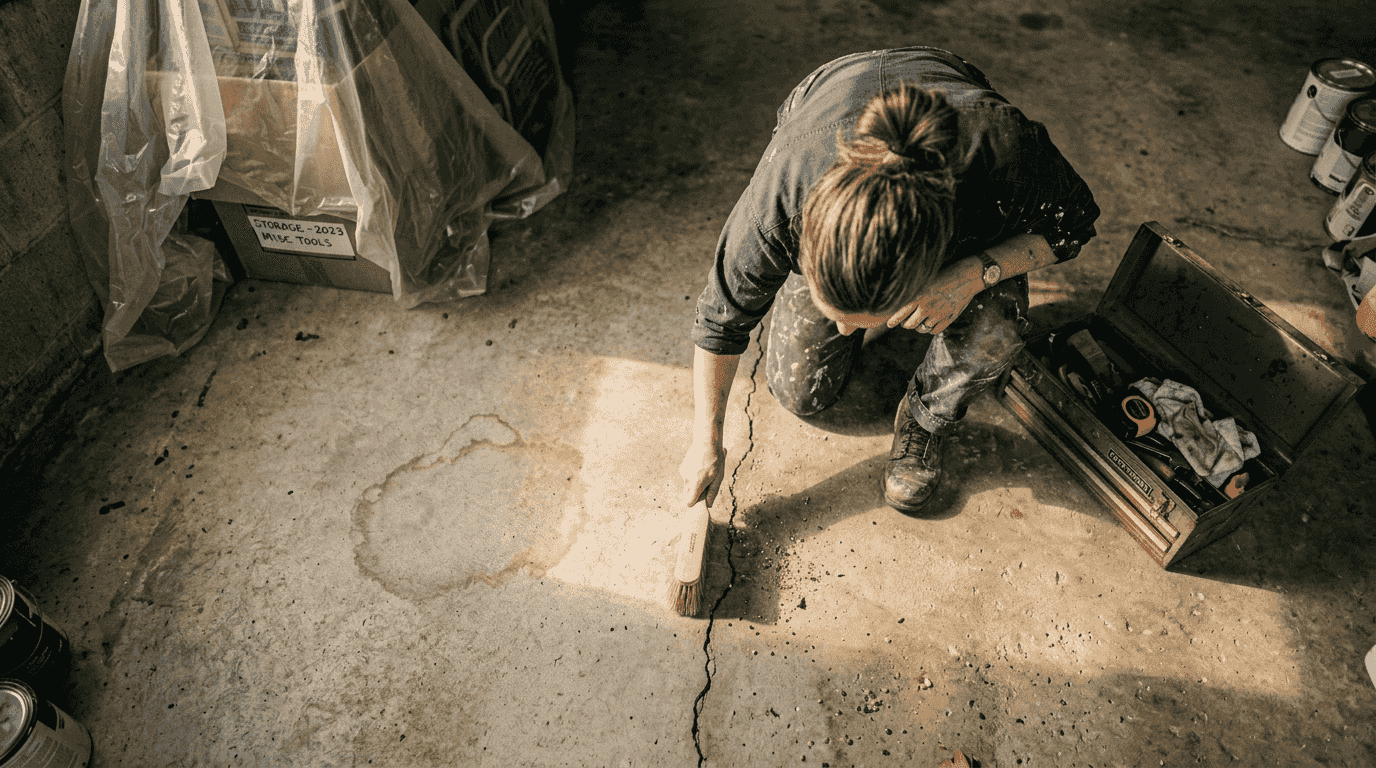
- Remove loose debris, dust, laitance, and contaminants from the crack using wire brushes or compressed air.
- Widen hairline cracks slightly with a grinder to create a V-shaped groove that allows repair material to penetrate and bond effectively.
- Inspect for hidden damage, moisture intrusion, or secondary cracks that may not be visible on the surface.
- Ensure the crack is completely dry before applying repair products, as moisture prevents proper adhesion.
- Clean surrounding concrete to remove oil, grease, or coatings that interfere with bonding.
Drying time varies with crack depth and ambient humidity. In Edmonton’s variable climate, allow extra drying time during humid periods or after recent precipitation. Use fans or heaters to accelerate drying if repairs are time-sensitive, but avoid introducing heat that could cause thermal stress.
Pro Tip: Document crack locations, widths, and preparation steps with photos and notes. This record helps you track recurring issues, plan preventive maintenance, and demonstrate due diligence for insurance or regulatory purposes.
Proper preparation also means protecting adjacent surfaces. Mask areas you don’t want to treat and cover drains to prevent repair material from entering drainage systems. Review concrete surface preparation techniques and concrete protection best practices to ensure you’re following current standards and avoiding common mistakes that compromise repair quality.
Choosing and applying the right repair materials and methods
Selecting appropriate repair materials depends on crack width, structural load, exposure conditions, and expected service life. Different products serve distinct purposes, and matching material to application prevents costly rework.
Research shows crack sealing is more cost-effective than crack filling over time because it prevents moisture infiltration and extends pavement life. For cracks narrower than 1/8 inch in non-structural applications, flexible sealants accommodate minor movement without failing. For cracks wider than 1/8 inch, epoxy injection or ASTM C881 polyurethane systems restore structural integrity by bonding crack faces and transferring loads.
Megapoxy’s crack repair solutions offer versatile, high-performance options for commercial properties. These products seal, protect, and restore concrete with durable formulations designed for easy application and long-term performance. Epoxy systems provide superior strength for load-bearing repairs, while polyurethane products offer flexibility for areas subject to movement or thermal expansion.
Repair method comparison:
| Crack Size | Method | Cost | Durability | Typical Application |
|---|---|---|---|---|
| Under 1/16 inch | Flexible sealant | Low | Moderate | Non-structural, cosmetic repairs |
| 1/16 to 1/8 inch | Polyurethane injection | Moderate | High | Parking lots, walkways with moderate traffic |
| Over 1/8 inch | Epoxy injection | High | Very High | Structural repairs, load-bearing slabs |
| Pattern cracking | Overlay or resurfacing | Very High | Very High | Widespread damage requiring full restoration |
Application steps:
- Select repair material based on crack characteristics and load requirements.
- Mix material according to manufacturer specifications, ensuring correct ratios for optimal performance.
- Inject or apply material into prepared crack, filling from bottom to top to eliminate air pockets.
- Smooth surface flush with surrounding concrete, feathering edges for seamless appearance.
- Allow material to cure per manufacturer guidelines before exposing to traffic or loads.
Pro Tip: Consider commercial property traffic patterns and exposure when selecting repair methods. High-traffic areas need faster curing times and higher abrasion resistance. Outdoor applications in Edmonton require freeze-thaw resistance and UV stability.
For detailed cost comparisons and project planning, review crack sealing vs filling cost analysis and explore ProZone concrete repair solutions tailored for Edmonton’s commercial properties. Access Megapoxy repair solutions for technical specifications and application guides that help you execute repairs with confidence.
Inspecting and verifying repaired cracks for durability
Post-repair inspection confirms that repairs meet quality standards and will perform as expected. Immediate verification catches application errors before they become failures, while ongoing monitoring identifies new issues early.
Verify repair quality through visual and tactile inspection. Check that repair material is flush with surrounding concrete without voids or gaps. Run your hand over the repair to detect surface irregularities that could trap moisture or create trip hazards. Tap the repair gently with a hammer; solid, bonded material sounds uniform, while delaminated repairs produce hollow sounds.
All concrete cracks should be repaired regardless of size to prevent spreading damage. Small cracks admit moisture that accelerates deterioration through freeze-thaw cycles and rebar corrosion. Targeted in-place slab repairs prevent costly full replacements and minimize disruption in commercial settings where downtime directly impacts operations.
Ongoing maintenance extends repair service life:
- Inspect repaired cracks quarterly for signs of movement, new cracking, or material degradation
- Clean repaired areas regularly to prevent dirt buildup that hides developing problems
- Reapply sealants every 3 to 5 years in high-traffic or exposed areas
- Document inspection findings to track performance and plan future maintenance budgets
Pro Tip: Create a digital maintenance log with photos, repair dates, materials used, and inspection notes. This documentation helps you identify patterns, demonstrate proactive management to stakeholders, and plan replacement cycles based on actual performance data rather than estimates.
Regular monitoring combined with prompt repairs creates a sustainable maintenance program. Review concrete repair and maintenance strategies to develop a comprehensive approach that maximizes infrastructure lifespan while controlling costs.
Discover ProZone’s proven concrete repair solutions
Effective concrete crack repair requires the right products, expertise, and local knowledge. ProZone Ltd delivers durable, cost-effective concrete repair solutions designed for Edmonton’s challenging climate and commercial property demands.

Whether you’re managing parking lots, loading docks, or building foundations, ProZone’s comprehensive services help you maintain safe, functional concrete infrastructure. Explore road and concrete durability solutions that extend service life and reduce lifecycle costs. Access concrete repairs budgeting guidance tailored for Edmonton businesses to plan repairs effectively. Discover best practices to protect concrete this winter and prevent seasonal damage that compounds existing cracks. Partner with ProZone to implement professional repairs that protect your investment and minimize future maintenance.
How to repair concrete cracks: FAQ
What is the best repair method for small hairline cracks?
Flexible sealants work best for hairline cracks under 1/16 inch in non-structural applications. These products accommodate minor movement without cracking and prevent moisture infiltration that worsens damage over time.
How often should repaired cracks be inspected?
Inspect repaired cracks quarterly in the first year, then twice annually if performance is stable. High-traffic or exposed areas may need more frequent monitoring to catch developing issues early.
Can untreated cracks cause safety hazards?
Yes, untreated cracks create trip hazards, admit moisture that causes freeze-thaw damage, and can compromise structural integrity in load-bearing slabs. Small cracks evolve into serious safety and liability issues when neglected.
Is epoxy injection suitable for all crack types?
Epoxy injection works best for structural cracks over 1/8 inch that require load transfer and high strength. It’s not ideal for actively moving joints or hairline cracks that need flexibility.
What maintenance helps prolong concrete slab life?
Regular cleaning, prompt crack repair, periodic sealing, and proper drainage prevent premature deterioration. Review concrete crack causes to understand factors that impact longevity and adjust maintenance accordingly.