
TL;DR:
- The 2026 outdoor landscaping trends focus on ecological sustainability, experiential design, and climate-adapted solutions suitable for Alberta’s conditions. Native plants have become predominant, replacing traditional lawns with water-smart, biodiverse alternatives, while layered privacy and microclimate features enhance outdoor comfort and value. These trends emphasize thoughtful, site-specific design that integrates native species, phased transitions, and sensory experiences for year-round use.
The defining 2026 trends in outdoor landscaping centre on ecological sustainability, experiential design, and climate-adapted solutions built for Alberta’s demanding conditions. Requests for native planting and pollinator gardens increased 23% year over year, while traditional lawn areas declined 25% as homeowners and designers shift toward low-maintenance, water-smart alternatives. Sources including Yardzen, Elle Decor, and the Calgary Herald confirm that the latest landscaping designs are no longer about adding features. They are about creating immersive, purposeful outdoor spaces that perform across every Alberta season.
What are the 2026 trends in outdoor landscaping for alberta?
The core design principle driving 2026 garden design concepts is the shift from feature-driven yards to spaces that reflect local climate, support biodiversity, and serve daily routines. Yardzen formally named 2026 “The Year of the Experiential Yard,” identifying four defining movements: native and climate-adapted planting, shrinking traditional lawns, privacy and microclimate design, and experiential outdoor living. Each of these trends carries specific implications for Alberta’s Zone 3-4a growing conditions, freeze-thaw cycles, and periodic drought. Understanding how they apply locally is what separates a well-executed project from a generic one.
How do native plants dominate 2026 landscaping designs in alberta?
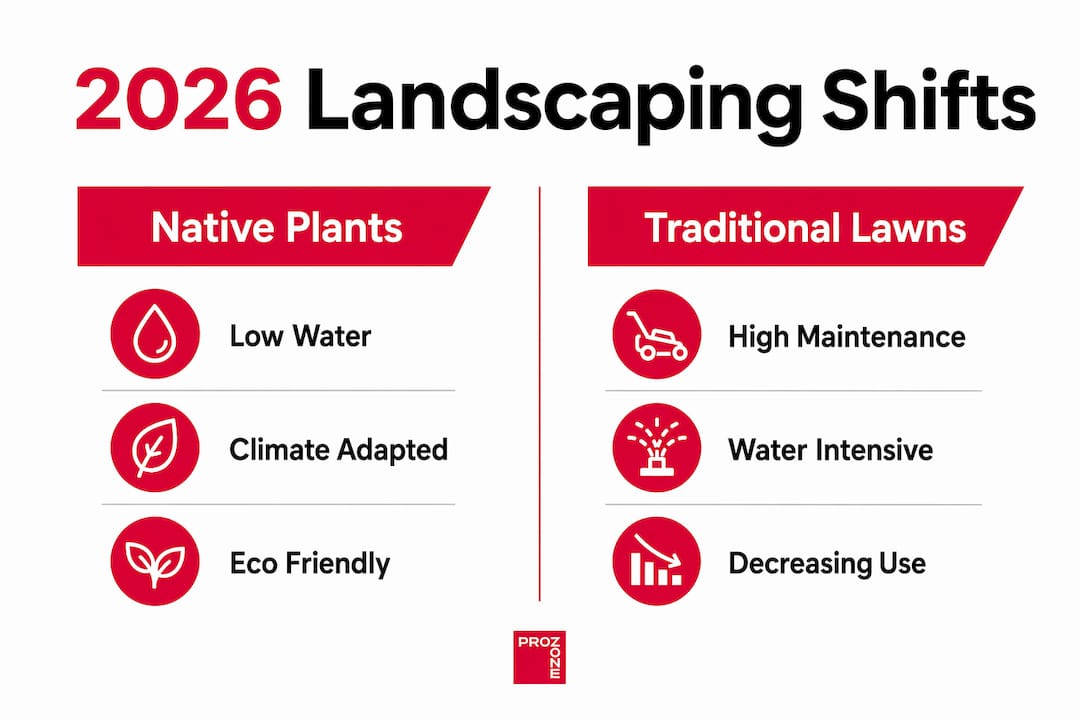
Native and climate-adapted planting is the single most significant shift in outdoor landscaping ideas for 2026. Native planting requests rose 23% year over year, driven by a clear preference for ecological performance over ornamental appearance. This is not a passing aesthetic preference. It reflects a practical response to Alberta’s increasing drought variability and the real cost of maintaining water-intensive traditional gardens.
Calgary’s YardSmart programme offers a concrete regional model. It promotes drought and heat-resilient planting by encouraging native species selection and on-site stormwater retention. The programme reduces outdoor water demand, improves stormwater quality, and supports pollinator biodiversity across urban properties. Edmonton-area designers and property developers are applying the same principles, pairing native-first plant palettes with detailed stormwater management to reduce irrigation and flooding risks.
The ecological benefits of native species over traditional ornamentals are measurable:
- Water use: Native species like Western Canada violet (Viola canadensis), Prairie crocus (Pulsatilla patens), and Blue grama grass (Bouteloua gracilis) require significantly less irrigation once established compared to Kentucky bluegrass or hybrid ornamental shrubs.
- Biodiversity: Native plantings support local pollinator populations, including native bee species critical to Alberta’s agricultural ecosystem.
- Resilience: Species adapted to chinook temperature swings and late spring frosts require less intervention and replacement after harsh winters.
- Maintenance cost: Reduced fertiliser, pesticide, and irrigation inputs lower long-term maintenance costs for both residential and commercial properties.
- Soil health: Deep-rooted native grasses improve soil structure and organic matter over time, benefiting adjacent plantings.
Pro Tip: Introduce native species in phases rather than replacing an entire planting scheme at once. Removing all existing vegetation simultaneously can destabilise soil moisture and disrupt the microclimate, making establishment harder for new plants in Alberta’s variable spring conditions.
Why are traditional lawns shrinking and what replaces them?
Traditional lawn square footage declined 25% year over year in 2026, making this one of the most measurable shifts in sustainable outdoor trends. That reduction reflects a genuine change in how homeowners and property managers calculate value. Turf grass demands consistent irrigation, regular mowing, fertilisation, and overseeding after Alberta’s hard winters. The alternatives deliver comparable or superior visual results at a fraction of the ongoing cost.
The most practical substitutes for traditional turf in Alberta’s climate include:
- Clover blends: White clover (Trifolium repens) mixed with fine fescues tolerates drought, fixes atmospheric nitrogen, and stays green through dry summers without supplemental irrigation.
- Native grasses: Buffalo grass (Bouteloua dactyloides) and Blue grama grass form dense, low-growing mats that handle freeze-thaw cycles without heaving or bare patches.
- Gravel and crushed stone: Pea gravel and fractured washed rock provide permeable, low-maintenance ground cover that drains effectively and resists frost heave when installed over a properly prepared base.
- Layered groundcovers: Creeping thyme (Thymus serpyllum), kinnikinnick (Arctostaphylos uva-ursi), and low-growing sedums form dense mats that suppress weeds and tolerate foot traffic.
- Mulched planting beds: Organic mulch over native perennial beds reduces soil moisture loss, moderates soil temperature through freeze-thaw cycles, and decomposes to improve soil structure.
Phased lawn replacement is the recommended approach for maintaining soil and microclimate stability during transition. Removing all turf at once exposes bare soil to Alberta’s drying winds and temperature extremes, which can delay establishment of replacement species by a full growing season. A phased approach also allows designers to test which alternatives perform best in specific microclimates on a given property before committing to full-scale installation.
Pro Tip: Before installing gravel or stone groundcovers, invest in proper geotextile fabric and a compacted granular base. In Edmonton’s freeze-thaw conditions, stone laid directly over unprepared subgrade will migrate and create uneven surfaces within two to three winters.
How does privacy and microclimate design shape trendy outdoor spaces in 2026?
Privacy-focused design elements increased another 10% year over year in 2026, building on a prior 22% jump. Shade and cooling features rose by 13% over the same period. These numbers reflect a clear shift in how Alberta homeowners and property developers define outdoor comfort. The goal is no longer simply to screen a yard from neighbours. It is to create a thermally comfortable, visually private refuge that functions across Alberta’s wide seasonal range.
Hard fencing vs. organic privacy methods
| Feature | Hard Fencing | Layered Organic Screening |
|---|---|---|
| Visual privacy | Immediate | Develops over 1-3 seasons |
| Thermal comfort | Minimal wind buffering | Significant microclimate moderation |
| Maintenance | Periodic staining or replacement | Seasonal pruning and mulching |
| Ecological value | None | High: habitat, pollination, soil health |
| Aesthetic flexibility | Fixed | Evolves with seasonal colour and texture |
| Cost over 10 years | Moderate to high (replacement) | Lower with native species |
Effective privacy solutions in 2026 combine vegetation, hardscape geometry, and shade to address both visual screening and thermal comfort. A layered approach typically includes a structural element such as a pergola or low masonry wall, a mid-layer of dense shrubs like Saskatoon serviceberry (Amelanchier alnifolia) or Nanking cherry (Prunus tomentosa), and a canopy layer of deciduous trees that provide summer shade while allowing winter sun penetration.
Key design considerations for Alberta microclimate management include:
- Positioning deciduous trees on the south and west exposures to block afternoon summer heat while allowing low winter sun to warm paved surfaces.
- Using coniferous windbreaks on the north and northwest sides to reduce wind chill exposure during Alberta’s cold season.
- Incorporating decorative stone and hardscape elements that absorb daytime heat and release it gradually in the evening, extending the usable outdoor season.
What is the experiential yard concept in 2026 garden design?
The experiential yard is defined as an outdoor space designed around daily routines and sensory experience rather than a list of installed features. Yardzen’s 2026 trend report identifies this as the central organising principle of modern outdoor design. The shift means designers are asking “How will this space be used at 7 a.m. on a Tuesday?” before selecting any materials or plants. That question produces fundamentally different outcomes than a feature-first approach.
Exterior spaces are increasingly designed as immersive, private resort-style garden rooms with native planting and clean-lined hardscapes that function across seasons. Wellness programming such as heated walkways and fire features supports year-round use in Alberta’s climate, where the outdoor season would otherwise compress to five or six months.
Practical experiential yard elements gaining traction in Alberta include:
- Dedicated morning zones: A sheltered east-facing patio with a small fire feature and wind screening creates a usable outdoor space from early spring through late autumn.
- Garden rooms: Defined outdoor areas separated by planting or low walls, each serving a distinct purpose such as dining, reading, or children’s play.
- Wellness features: Outdoor showers, cold plunge areas, and fire pits are appearing in residential designs as extensions of indoor wellness routines.
- Heated walkways: Hydronic or electric in-slab heating under concrete pathways eliminates ice hazards and extends comfortable outdoor access through Edmonton winters.
- Materials palette: Natural stone, weathered steel edging, and native-inspired earth tones in concrete finishes create visual coherence between built and planted elements.
The experiential yard concept shifts focus from what a yard contains to how it supports everyday life. For Alberta property developers, this translates directly into measurable added value. Properties with well-designed outdoor living zones consistently attract stronger buyer interest and higher valuations than those with generic turf and standard fencing.
Prozoneltd’s view on applying these trends in alberta’s climate
Working with Alberta properties over many years, the clearest lesson is that trend adoption fails when it ignores local climate realities. The freeze-thaw cycle in Edmonton is not a minor variable. It is the primary design constraint. A gravel garden installed without a proper compacted base will heave within two winters. A privacy planting installed without accounting for prevailing northwest winds will struggle to establish and provide the screening it was intended to deliver.
The phased approach to lawn reduction is not just a design preference. It is a technical necessity in Northern climates. Removing large turf areas at once exposes subgrade to Alberta’s drying conditions and creates establishment challenges that set projects back by a full season. Gradual transition, combined with proper soil amendment and moisture management, produces far better long-term results.
What stands out about the 2026 direction is that it aligns well with what quality construction practice has always demanded: respect for site conditions, appropriate material selection, and workmanship that holds up over time. Native planting, permeable groundcovers, and layered microclimate design are not just aesthetically appealing. They are structurally sound responses to Alberta’s environment. Prozoneltd’s commitment to Alberta Safety Codes, certified workmanship, and quality-graded materials means these trends can be executed to a standard that lasts, rather than requiring costly remediation after the first hard winter.
— Prozoneltd
Bring 2026 landscaping trends to your alberta property with Prozoneltd
Prozoneltd delivers the construction and materials expertise needed to implement 2026’s most significant outdoor landscaping trends across Edmonton and the surrounding region. From commercial-grade landscaping materials suited to Alberta’s climate to phased lawn removal, permeable groundcover installation, and privacy and microclimate design, Prozoneltd’s certified crews work to Alberta Safety Codes on every project. Whether you are a landscape designer specifying materials, a property developer planning a multi-unit outdoor space, or a homeowner ready to reduce turf and add genuine outdoor living value, Prozoneltd offers a free estimate and expert consultation. Review 2026 outdoor construction examples or contact Prozoneltd directly through the online form to discuss your project requirements.
FAQ
What native plants work best for outdoor decor in alberta in 2026?
Prairie crocus, Saskatoon serviceberry, Blue grama grass, and creeping kinnikinnick are among the most reliable native species for Alberta Zone 3-4a conditions. Calgary’s YardSmart programme recommends these species for their drought tolerance, pollinator value, and resilience to chinook temperature swings.
How much has traditional lawn area declined in 2026 landscaping trends?
Traditional lawn square footage declined 25% year over year in 2026, replaced by native grasses, clover blends, gravel gardens, and layered groundcovers that require less water and maintenance.
What is the experiential yard concept in 2026 garden design?
The experiential yard is an outdoor space designed around daily routines and sensory experience rather than installed features. Yardzen identified it as the defining 2026 outdoor design principle, with examples including garden rooms, wellness features, and dedicated seasonal use zones.
Why is phased lawn replacement recommended for alberta properties?
Phased replacement maintains soil moisture, microclimate stability, and plant establishment conditions during transition. Removing all turf at once in Alberta’s climate exposes bare subgrade to drying winds and freeze-thaw stress, which delays new planting establishment by a full growing season.
How do privacy and microclimate features add value to outdoor spaces in 2026?
Privacy design elements increased 10% year over year and shade features rose 13%, reflecting demand for thermally comfortable, visually screened outdoor refuges. Layered organic screening combining vegetation, hardscape, and shade structures outperforms single-type fencing in both thermal comfort and long-term ecological value.