
TL;DR:
- Materials supply in construction involves sourcing and delivering quality materials on time without exceeding budget, directly impacting project schedules. Systemic risks like concentrated sources, trade restrictions, and climate disruptions have intensified in 2026, making resilient procurement strategies essential. Early planning, supplier diversification, and integrated supply chain management are crucial to mitigate delays and control costs effectively.
The role of materials supply in construction is the coordinated process of sourcing, procuring, and delivering quality materials to site on time and within budget, directly determining whether a project finishes on schedule or runs over cost. When supply chains perform well, project managers control their critical path. When they fail, delays compound and margins erode fast. In 2026, systemic supply chain vulnerabilities have intensified across concentrated supply sources, trade restrictions, and climate-related disruptions, making materials supply management one of the highest-priority disciplines in commercial construction. This article covers the risks, the data, and the strategies you need to stay ahead.
What is the role of materials supply in construction projects?
The role of materials supply is to guarantee that the right materials arrive at the right place, in the right quantity and quality, at the right time. This definition sounds straightforward, but the execution involves coordinating extraction, processing, manufacturing, transportation, and on-site delivery across multiple suppliers and jurisdictions.
Supply chain management encompasses all sourcing-to-delivery activities that directly affect a project’s cost, quality, productivity, and client satisfaction outcomes. That end-to-end scope means a failure at any single link, whether a port delay, a fabrication backlog, or a specification mismatch, can cascade into schedule slippage and cost overruns.
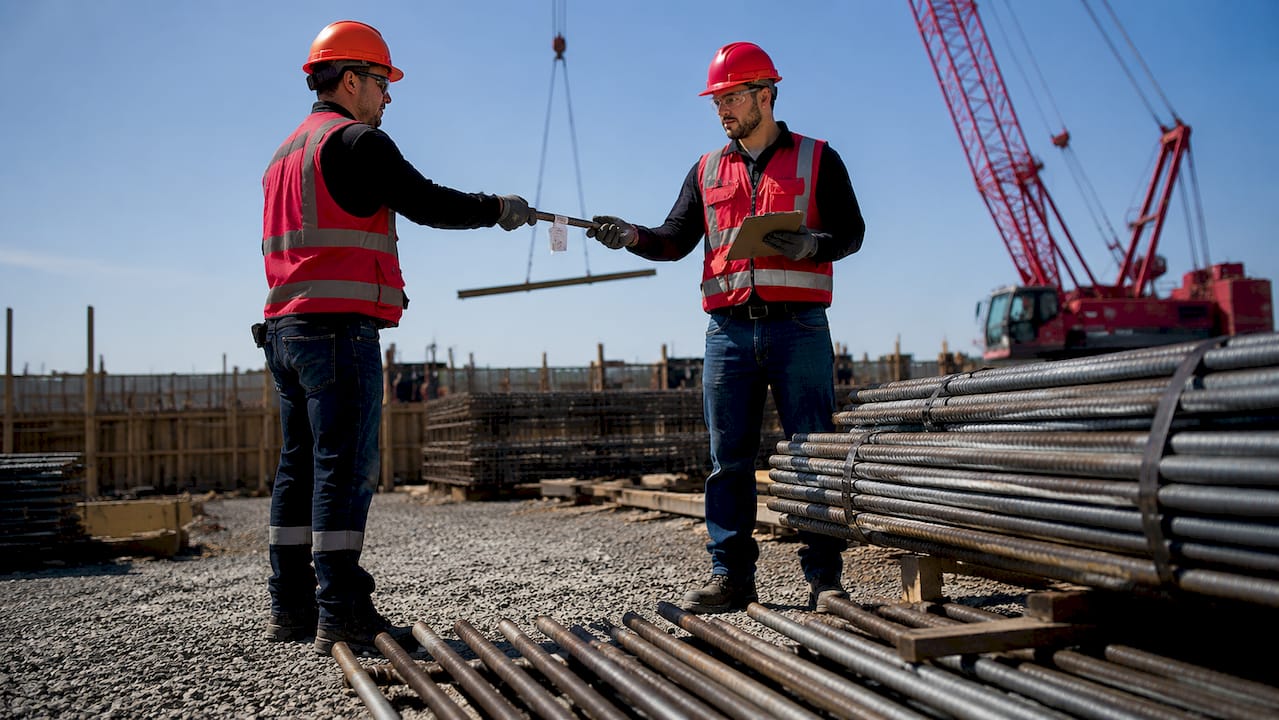
For Edmonton-area project managers, the importance of material supply is amplified by Alberta’s freeze-thaw cycle. Materials specified for southern climates often underperform in sub-zero conditions. Getting the specification right at procurement stage is as critical as getting the delivery date right.
How do supply chain vulnerabilities affect construction projects?
Materials supply chains face systemic risks including concentrated supply sources, trade restrictions, and climate-related disruptions that no single firm can fully mitigate on its own. The World Economic Forum reports that these vulnerabilities have intensified over the past three years. That means firm-level procurement fixes are no longer sufficient on their own.
The key risk categories project managers must account for include:
- Concentrated supply sources: Many critical construction materials, including specialty steel grades and aggregates, come from a small number of producers or regions. A single geopolitical disruption can remove a major supply source from the market.
- Trade restrictions and tariffs: Tariffs on imported steel and aluminium have directly extended lead times in 2026 by reducing import competition and pushing demand onto domestic fabricators already operating near capacity.
- Energy and fuel cost volatility: Container rerouting and rising fuel prices can drive construction material price increases of 20% to 100%, according to the UK Construction Leadership Council. That range reflects how quickly oil-based raw material costs and freight surcharges can compound.
- Climate risks: Extreme weather events disrupt extraction, transport routes, and storage conditions. In Alberta, spring flooding and early freeze events have delayed aggregate deliveries on multiple Edmonton-area projects in recent years.
- Sustainability and circular economy pressures: Regulatory requirements for lower-carbon materials and recycled content are changing what suppliers can offer and at what price point.
“Materials supply risk is systemic and should be managed through end-to-end resilience strategies rather than treating it as isolated procurement issues.” — World Economic Forum, 2026
The interdependence of multi-material projects adds another layer of complexity. The impact of supply on production is not only felt through delivery timing. Quality, specification compatibility, and substitution risks all require coordinated procurement strategies across every material category on a project.
What are the lead time and pricing challenges in 2026?
Lead time data is the clearest early warning signal available to project managers. Steel sheet and plate lead times have reached multi-year highs of 7.5 to 9 weeks in 2026, running 2–3 weeks longer than the same period last year, with price increases of 20–25%. Those numbers represent a direct threat to any project schedule built on last year’s assumptions.
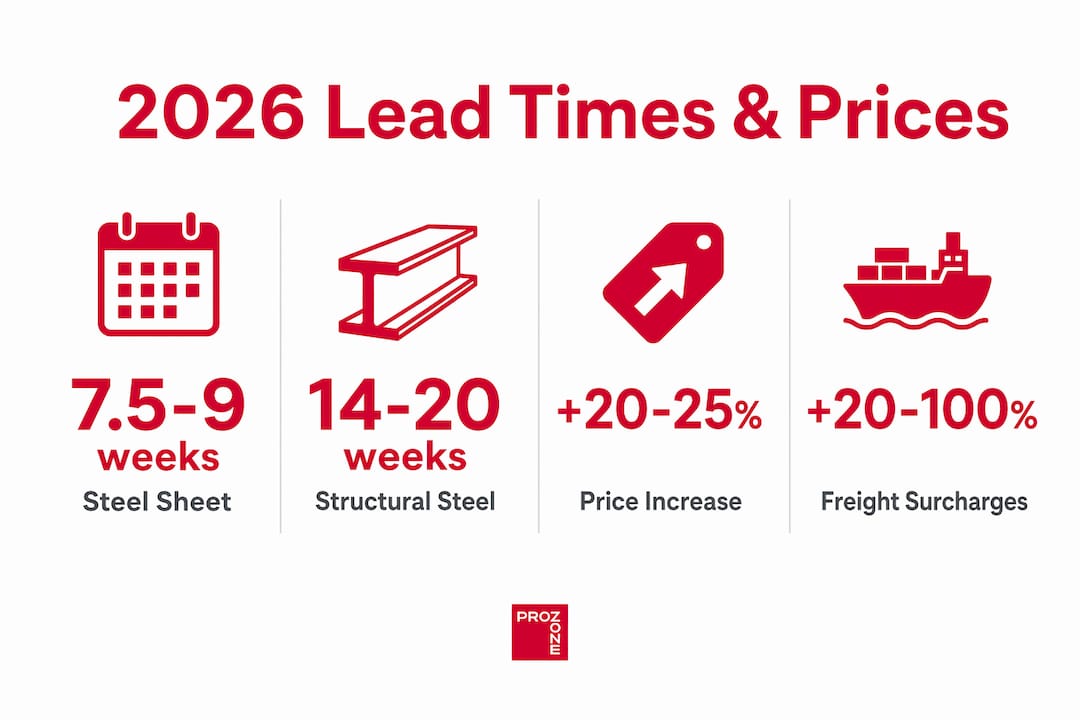
Structural steel fabrication and delivery timelines are even more demanding. Order-to-site lead times for structural steel commonly run 14–20 weeks in 2026, driven by tariffs and reduced import competition that have concentrated demand on domestic fabricators. A project manager who orders structural steel eight weeks before it is needed on the critical path will miss the window.
| Material Category | Typical Lead Time (2026) | Price Change vs. 2025 |
|---|---|---|
| Steel sheet and plate | 7.5–9 weeks | +20% to +25% |
| Structural steel (order-to-site) | 14–20 weeks | +20% to +25% |
| Specialty fabricated components | 16–24 weeks | Variable |
| Aggregates (local Alberta supply) | 1–3 weeks | Moderate increase |
| Concrete materials | 2–4 weeks | Moderate increase |
The pricing risk does not stop at the purchase order. Rapid surcharges for energy, freight, and raw materials undermine bid certainty and require contract mechanisms such as escalation caps and notice periods to manage cost risks effectively. Without those mechanisms in place, a contractor absorbs surcharges that were not priced into the original bid.
Pro Tip: Build your project schedule around worst-case lead times, not average lead times. For structural steel in 2026, that means planning for 20 weeks from order to site, not 14. The difference between those two numbers is the difference between a project that delivers on time and one that does not.
How can project managers strategically manage materials sourcing?
Strategic materials sourcing strategies start with one principle: procurement decisions made early protect schedules and budgets. Decisions made late create emergencies. The following approach reflects what experienced project managers are applying on commercial projects in 2026.
- Order structural materials at design completion, not at permit issuance. For steel-intensive projects, waiting for permits before ordering structural steel adds 6–8 weeks to an already extended lead time window. Place conditional orders with cancellation provisions where possible.
- Plan for worst-case lead times across all critical path materials. Schedule protection depends on worst-case order-to-site windows, particularly for structural steel, because fabrication capacity constraints can extend beyond raw material lead time stabilisations.
- Identify approved substitutes before you need them. Secondary raw materials and circular economy approaches reduce import dependence and improve supply resilience. Fraunhofer ISI confirms that standardised quality and transparent digital material data are required to make substitution decisions confidently.
- Negotiate contract protections against surcharges. Escalation caps, energy surcharge notice periods, and supplier governance clauses are not optional extras in 2026. They are standard risk management tools for any project with a timeline longer than three months.
- Diversify your supplier base for critical materials. Relying on a single supplier for any critical input creates a single point of failure. Qualifying two or three suppliers for key materials adds procurement flexibility without significant administrative overhead.
- Monitor lead time trends as a forward indicator. Lead times correlate directly with price increases and serve as an early warning for schedule and cost risks. Reviewing Steel Market Update data monthly gives project managers a four-to-six week head start on emerging supply problems.
Pro Tip: For Alberta projects, always specify materials to CSA standards and confirm that substitutes meet the same freeze-thaw performance requirements. A cheaper aggregate that fails after two winters costs far more in remediation than the original price difference.
You can also review sand and gravel supply considerations specific to Alberta to understand how local sourcing affects both cost and schedule on regional projects.
What role does integrated supply chain management play?
Integrated supply chain management is the coordination of all activities from raw material extraction through to final delivery on site, with visibility and control at every stage. This is the standard that separates reliable project delivery from reactive crisis management.
The core components of an effective construction supply chain include:
- Supplier qualification and pre-approval: Vetting suppliers for financial stability, production capacity, quality certifications, and safety compliance before they are needed on a project.
- Procurement scheduling aligned to the project critical path: Matching order dates to lead times so that materials arrive when they are needed, not weeks early (creating storage problems) or weeks late (creating delays).
- Quality assurance at source: Inspecting materials at the point of manufacture or processing, not only on arrival at site. This is particularly relevant for types of construction materials that must meet Alberta Safety Codes performance requirements.
- Transportation and logistics coordination: Managing freight routes, container availability, and customs clearance for imported materials, with contingency plans for disruption.
- Digital transparency and traceability: Using digital product information systems to track material specifications, certifications, and chain of custody from source to site.
The impact of supply on production quality is direct. Materials that arrive without proper documentation, or that have been substituted without approval, create specification compliance risks that can trigger hold points, rework, or regulatory non-compliance. For Edmonton projects subject to Alberta Safety Codes, that risk has real financial and legal consequences.
Prozoneltd applies this integrated approach on every project, sourcing materials that meet Alberta Safety Codes requirements and maintaining full traceability from supplier to site. That discipline is what allows consistent delivery on commercial, municipal, and infrastructure projects across the Edmonton region.
What i have learned about materials supply after years on edmonton projects
The most common mistake I see on commercial projects is treating materials procurement as a back-office function rather than a schedule-critical discipline. Project managers who engage with their supply chain early, who know their lead times before they finalise their programme, and who build contingency into their procurement schedule consistently outperform those who do not.
Edmonton’s freeze-thaw cycle adds a layer of specification risk that does not exist in milder climates. Materials that perform adequately in Vancouver or Toronto can fail within two seasons in Alberta. Specifying to CSA standards and confirming freeze-thaw performance at procurement stage is not conservative practice. It is the minimum standard for responsible project management in this region.
The pressure to reduce costs by sourcing cheaper materials is real, but the cost of rework, warranty claims, and schedule recovery almost always exceeds the initial saving. Quality materials from qualified suppliers, procured on a realistic timeline, are the most cost-effective choice over the life of a project. That is not a theoretical position. It is what the numbers show on completed projects.
— Prozoneltd
How Prozoneltd supports your materials supply and project delivery
Prozoneltd provides construction professionals and project managers across Edmonton with reliable materials supply, expert procurement guidance, and full-service construction delivery that meets Alberta Safety Codes. Whether you are managing a commercial paving project, an earthworks contract, or an outdoor infrastructure programme, Prozoneltd’s team brings the supply chain discipline and local knowledge to protect your schedule and your budget.
From construction services for Edmonton managers through to direct materials supply for landscaping and infrastructure, Prozoneltd operates as a single accountable partner. You get qualified suppliers, certified materials, and a team that understands what Alberta’s climate demands from every specification. Contact Prozoneltd today through the online form or call directly for a free project estimate.
FAQ
What is the role of materials supply in construction?
The role of materials supply is to ensure that quality materials are available at the right time, quantity, and specification to keep a construction project on schedule and within budget. Failures in supply directly cause schedule delays, cost overruns, and quality deficiencies.
How long are structural steel lead times in 2026?
Structural steel fabrication and delivery lead times commonly run 14–20 weeks order-to-site in 2026, according to Terrapin Construction Group. Project managers must place orders at design completion, not at permit issuance, to protect the critical path.
How do rising material prices affect project budgets?
Steel sheet and plate prices have risen 20–25% in 2026, and energy-driven freight surcharges can add a further 20–100% to import costs. Contracts without escalation caps or surcharge notice periods expose project budgets to uncontrolled cost increases.
What are the best materials sourcing strategies for 2026?
The most effective strategies are early procurement based on worst-case lead times, pre-qualification of multiple suppliers for critical materials, and contract mechanisms that cap energy and freight surcharges. Integrating approved substitutes and secondary raw materials also improves supply resilience.
Why does materials supply matter more in alberta than other provinces?
Alberta’s freeze-thaw cycle requires materials specified to CSA freeze-thaw performance standards. Materials that meet general Canadian standards but not Alberta-specific performance requirements can fail within two seasons, creating rework costs that far exceed any initial procurement savings.