
TL;DR:
- Compliance in Alberta construction involves ongoing adherence to safety, legal, and quality standards enforced by regulatory bodies and certifications. Effective management includes maintaining current documentation, ensuring correct certifications, and fulfilling prime contractor duties on multi-employer sites to prevent costly penalties and project delays. Continuous proactive compliance practices build business resilience, foster safety, and improve bid eligibility.
Compliance in construction is defined as the ongoing obligation to meet all legal, safety, and quality standards required for a project to proceed lawfully and safely. In Alberta, the role of compliance in construction extends well beyond paperwork. It determines which contractors can bid on public work, how sites are managed when multiple employers are present, and whether a project survives an unannounced OHS inspection. Regulatory bodies including the Alberta Safety Codes Council and the Partnership in Injury Reduction (PIR) programme set the framework. Certifications like COR and SECOR are the commercial gatekeepers that enforce it.
What construction regulations and compliance requirements are essential in Alberta?
Alberta’s construction regulatory framework rests on two pillars: the National Building Code (2023 Alberta Edition) and the Occupational Health and Safety Act. Both carry real financial consequences for non-compliance. The Safety Codes Council treats permitting as a vital safeguard, not a procedural formality, and enforcement reflects that position.
OHS inspectors hold authority to enter any regulated work site without prior notice. Compliance orders must be obeyed immediately, with appeals handled after the fact. The principle regulators apply is clear: comply first, appeal second.
Administrative penalties for OHS contraventions are capped at $10,000 per day per violation. That cap compounds fast. Five active violations running over five days can produce $250,000 in penalties before any prosecution begins. That figure alone reframes compliance as a financial priority, not just a safety one.
Key documentation requirements for Alberta construction sites
Every site must maintain current records across several categories:
- Safety policies and procedures: Written, site-specific, and signed off by management
- Training records: Dated certificates for WHMIS, fall protection, and equipment operation
- Hazard assessments: Completed before work begins and updated when conditions change
- Joint Health and Safety Committee (JHSC) minutes: Signed and filed at regular intervals
- Inspection logs: Records of physical site checks, deficiencies noted, and corrective actions closed out
Common OHS inspection violations include missing policies, incomplete training records, unguarded openings, and improper PPE usage. These are preventable. A documentation gap that takes one hour to fix can trigger a compliance order that halts work for days.
Pro Tip: Treat your documentation system as a live file, not an archive. Update training records the day training occurs, not at audit time.
How do COR and SECOR certifications affect project eligibility in Alberta?
COR (Certificate of Recognition) and SECOR (Small Employer COR) are the two safety management certifications administered through PIR in Alberta. They are not optional for contractors pursuing public or institutional work. COR and SECOR certifications are mandatory eligibility gates for public and institutional construction bidding. A bid without the correct certification is disqualified regardless of price.
The employee threshold separates the two designations. SECOR applies to employers with 1–10 employees. COR applies to employers with 11 or more. Both require a third-party audit against a standardised safety management system. Both must be maintained annually through internal audits and periodic external re-audits.
What prequalification documents do Alberta public tenders require?
Prequalification requirements for Alberta public tenders typically include:
- COR or SECOR certification from a PIR-approved certifying partner
- WCB-Alberta clearance letter (current, not expired)
- Commercial general liability insurance at specified limits
- Performance and labour and material payment bonds
- Valid business registration and applicable trade licences
Missing any single item results in automatic disqualification. WCB clearance is particularly time-sensitive. Failing to keep WCB clearance current mid-project risks delayed payments or contract termination, not just bid rejection.
Common audit failure points
Audit failures most often stem from weak evidence architecture and incomplete corrective action closures. Documented procedures without observable field execution fail audits. Auditors look for proof that the system runs in the field, not just on paper.
Treating COR as a one-time event is a strategic error that increases audit costs and operational disruption. Continuous maintenance improves safety outcomes, reduces audit surprises, and strengthens buyer confidence.
Pro Tip: Run a mock internal audit six weeks before your scheduled external audit. Use the same scoring criteria your certifying partner applies. Gaps found internally cost far less to fix than gaps found by an auditor.
What are prime contractor responsibilities on multi-employer Alberta sites?
Section 10 of Alberta’s OHS Act requires a prime contractor designation on any construction site where two or more employers are present. The prime contractor holds legal responsibility for overall safety coordination. That duty does not transfer to subcontractors, even when subcontractors carry their own safety programmes.
The prime contractor’s coordination duties include joint hazard assessments, toolbox talks, and documented hazard communication across all employers on site. These must be recorded to provide protection during enforcement actions. Verbal coordination is not sufficient.
Core coordination obligations for prime contractors
- Designate the prime contractor in writing before mobilisation, naming the responsible party clearly in the contract.
- Conduct and document joint hazard assessments with all employers present before each new phase of work begins.
- Hold and record toolbox talks that address site-specific hazards, attended by workers from all employers.
- Establish a hazard communication system so that new hazards identified by any employer are shared across the site immediately.
- Grant intervention authority in subcontractor contracts, giving the prime contractor the right to stop unsafe work regardless of which employer’s crew is involved.
Coordination failures on multi-employer sites are treated as independent violations. They are separate from whatever incident triggered the inspection. That means a general contractor can face distinct fines and orders even when a subcontractor’s crew caused the underlying hazard.
The legal duties of prime contractors on Alberta sites have grown more complex as enforcement trends shift toward holding site managers accountable for coordination gaps, not just physical hazards.
Pro Tip: Include a specific safety coordination clause in every subcontract. Define the prime contractor’s right to stop work, remove personnel, and direct corrective action. Verbal agreements do not hold up under OHS enforcement.
How can construction businesses maintain effective compliance practices?
Effective compliance is an ongoing commercial obligation, not a project milestone. The construction businesses that manage it well treat documentation, field execution, and audit readiness as parallel workstreams rather than sequential tasks.
Documentation and field execution
Maintaining current safety documentation covers training records, hazard assessments, JHSC minutes, and corrective action logs. Each document must reflect what is actually happening on site. Continuous evidence of compliance requires updated training, documented hazard assessments, and corrective action closeouts. Auditors and inspectors look for the connection between the written record and observable field behaviour.
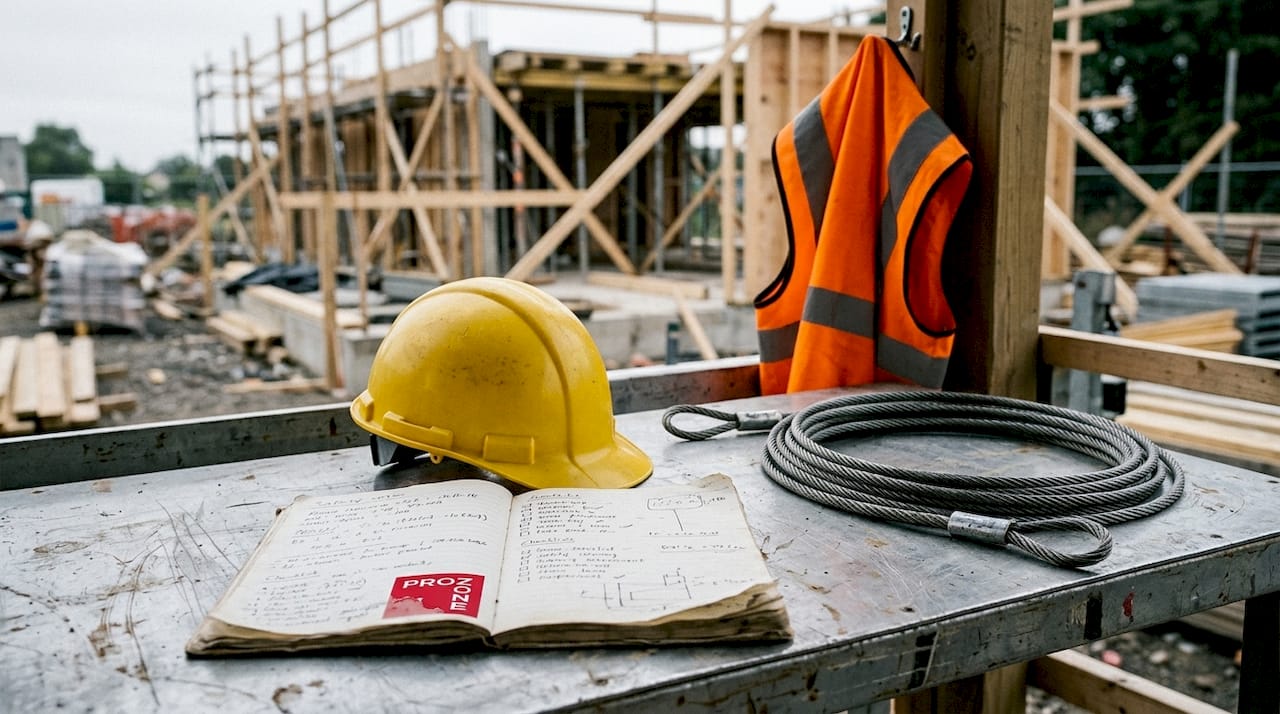
Field-based controls must match documented procedures. If your fall protection procedure requires a specific anchor point inspection before each shift, the inspection log must show it happened. A gap between the written system and site reality is the most common reason audits fail.
Proactive compliance vs. reactive compliance
| Approach | Trigger | Cost profile | Outcome |
|---|---|---|---|
| Proactive | Internal schedule | Predictable, lower | Audit readiness, bid eligibility maintained |
| Reactive | Inspection or incident | Variable, often high | Penalties, orders, potential bid disqualification |
Proactive compliance includes running internal mock audits, closing corrective actions before they age, and reviewing documentation monthly rather than quarterly. Reactive compliance means scrambling after an OHS order or a failed external audit. The permitting process in Alberta follows the same logic: errors in drawings or incomplete documentation cause costly delays that a pre-submission review would have prevented.
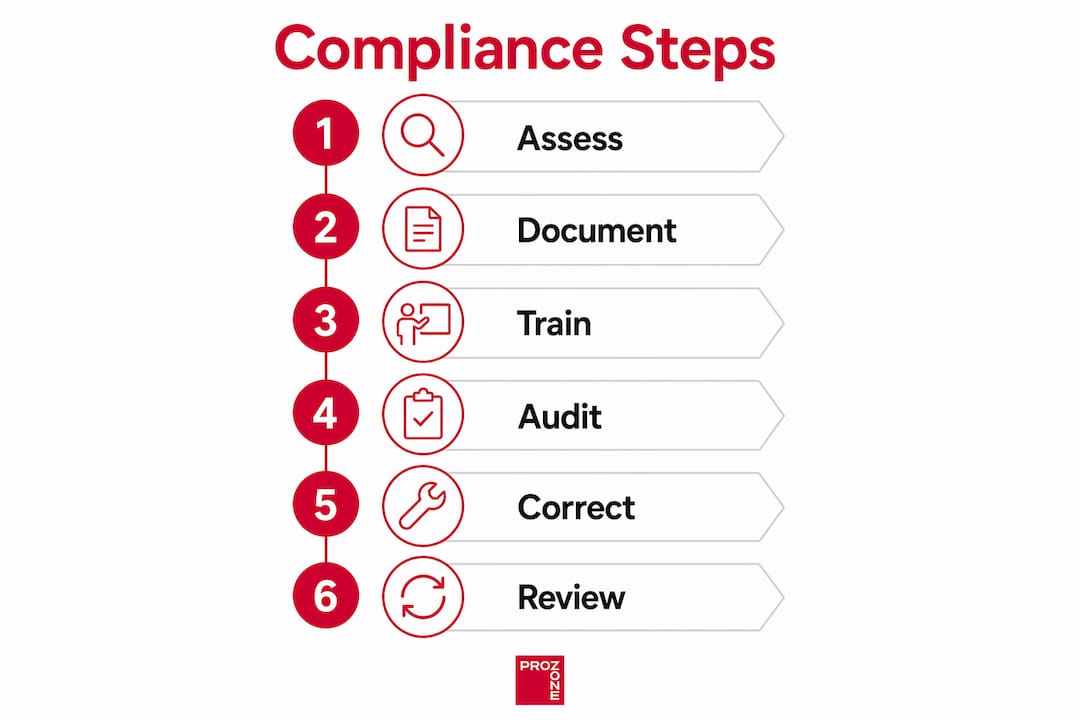
Reviewing ADA compliance paving standards for Alberta properties is one concrete example of where proactive review prevents costly rework on civil and municipal projects.
Common site preparation mistakes that lead to permit delays and compliance failures include incomplete drawings, missing soil reports, and incorrect setback documentation. These errors are avoidable with a structured pre-submission checklist.
Compliance is a business strategy, not a burden
Working across Alberta construction sites, the pattern is consistent. Contractors who treat compliance as a cost centre struggle at bid time and scramble during inspections. Contractors who treat it as a business system win more work, manage fewer surprises, and build stronger subcontractor relationships.
The most common misunderstanding is that COR certification is the finish line. It is the starting point. Maintaining audit readiness year-round requires the same discipline as managing a project schedule. The documentation system, the field execution, and the corrective action process all need active management between audits.
Prime contractors often underestimate the coordination obligation on multi-employer sites. The OHS Act does not care whether a subcontractor had their own safety programme. If the prime contractor did not document joint hazard assessments and toolbox talks, the prime contractor is exposed. Clear contracts with explicit intervention authority are not optional. They are the legal foundation of site coordination.
The regulatory environment in Alberta is tightening. Enforcement trends show that coordination failures are increasingly treated as distinct violations. Staying ahead of that trend means building compliance into project planning from day one, not retrofitting it after mobilisation.
— ProZone
How Prozoneltd supports Alberta contractors with certified construction services
Prozoneltd operates across Edmonton and the surrounding region with a direct commitment to Alberta Safety Codes compliance and quality materials on every project. From concrete screeds and asphalt laying to earthworks and site preparation, every service Prozoneltd delivers is executed within the regulatory framework Alberta requires. Contractors and property managers who need a partner that understands COR obligations, OHS documentation, and site coordination can review Prozoneltd’s construction services for Edmonton managers or contact the team directly for a free estimate. Prozoneltd’s experience with municipal and commercial clients means your project starts compliant and stays that way.
FAQ
What is the role of compliance in construction projects?
Compliance in construction is the obligation to meet all legal, safety, and quality standards required by Alberta’s OHS Act, building codes, and certification programmes. It protects workers, protects the business from penalties, and determines eligibility for public project bidding.
What are the penalties for OHS violations in Alberta?
Administrative penalties are capped at $10,000 per day per violation. Five concurrent violations over five days can produce $250,000 in penalties before prosecution begins.
Is COR certification required to bid on Alberta public projects?
COR or SECOR certification is a mandatory prequalification requirement for public and institutional construction bids in Alberta. A bid submitted without valid certification is disqualified regardless of price.
What does a prime contractor have to do on a multi-employer site?
Under Section 10 of Alberta’s OHS Act, the prime contractor must coordinate safety across all employers, document joint hazard assessments and toolbox talks, and establish a hazard communication system. Coordination failures are treated as independent violations separate from any incident that triggered an inspection.
How often should construction businesses review their compliance documentation?
Monthly reviews of training records, hazard assessments, and corrective action logs maintain audit readiness. Treating documentation as a live system rather than a periodic task reduces audit costs and prevents compliance orders.