
TL;DR:
- Snow hauling involves the removal of accumulated snow from a property by transporting it to an approved off-site location. It is necessary when on-site snow storage becomes unsafe, obstructs emergency access, or violates environmental regulations. Proper planning, equipment, and clear triggers ensure effective and compliant snow removal.
Snow hauling is defined as the physical removal of accumulated snow from a property by loading it into trucks and transporting it to an approved off-site disposal location. This process is distinct from snow plowing, which only relocates snow within the same property boundary. For commercial properties, municipal sites, and residential complexes in Edmonton, snow hauling is a critical component of winter maintenance planning. Alberta’s freeze-thaw climate creates conditions where on-site snow storage quickly becomes a safety and compliance liability, making hauling not an optional upgrade but a necessary part of responsible site management.
What is snow hauling and when does it differ from plowing?
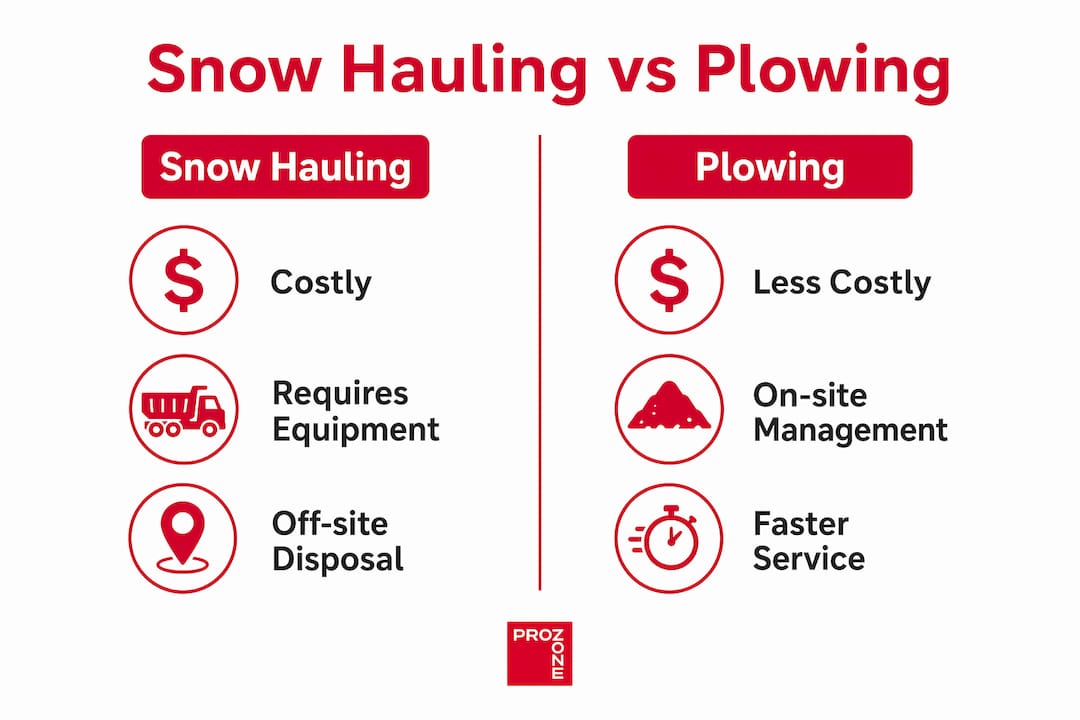
Snow hauling is the downstream step in a two-stage winter maintenance process. Plowing consolidates snow into piles on-site. Hauling then removes those piles entirely by loading them into dump trucks and transporting them to a designated disposal site. The two services are not interchangeable, and treating them as the same service is one of the most common sources of contractual disputes between property managers and contractors.
Snow plowing is faster and less costly per event. It works well when a property has adequate snow storage capacity, clear sightlines, and no access restrictions. Snow hauling becomes necessary when those conditions no longer hold. Hauling requires loaders and trucks after plowing consolidates snow on-site, which means it cannot be performed as a standalone operation without prior consolidation.
Understanding this distinction protects both property owners and contractors. A service agreement that does not separate plowing and hauling charges will almost always produce budget surprises by mid-winter.
When is snow hauling necessary for your property?
Snow hauling becomes necessary when on-site snow storage reaches a point where it creates safety, operational, or compliance problems. Three categories of triggers drive this decision.
Capacity and access triggers
- Pile height exceeds safe limits. Piles taller than roughly 5 feet obstruct sightlines for drivers and pedestrians at intersections and lot exits.
- Parking stalls drop below usable thresholds. Blocked parking stalls and reduced lane width signal that on-site storage has reached its limit.
- Driving lanes narrow below design width. When lanes compress to the point where emergency vehicles cannot pass, hauling is no longer optional.
- Emergency access is compromised. Fire connections, hydrants, and ambulance routes must remain clear at all times under Alberta fire codes.
Safety and liability triggers
Blocked sightlines at lot exits create direct liability for property owners. Pedestrian pathways that are narrowed by snow piles force foot traffic into vehicle lanes. In Edmonton’s climate, piles that are not removed refreeze overnight and create ice hazards that persist for days after a snowfall event.
Compliance and environmental triggers
Municipal bylaws in Edmonton and surrounding Alberta municipalities set specific requirements for snow storage proximity to storm drains, water bodies, and flood zones. When on-site piles threaten runoff into these areas, hauling is the legally required response.
Pro Tip: Set numeric hauling triggers in your service agreement before the season starts. Thresholds like “haul when piles reach 5 feet” or “haul when available parking drops below 75%” remove subjectivity and prevent disputes mid-season.
What equipment and techniques do professionals use for snow hauling?
Professional snow hauling operations rely on a coordinated sequence of machinery and logistics. The process is more resource-intensive than plowing and requires careful scheduling to minimise disruption to site operations.
Core equipment
- Front-end loaders (wheel loaders): The primary loading machine. Operators use the bucket to scoop consolidated snow piles and load them into waiting dump trucks. Loader size is matched to pile volume and site access constraints.
- Articulated dump trucks or standard tandem dump trucks: These carry the snow from the loading zone to the approved disposal site. Truck capacity determines how many loads are required per job.
- Snow pushers and blades: Used in the consolidation phase before loading begins. Pushers gather loose snow into dense, compact piles that loaders can handle efficiently.
- Spotters and traffic control personnel: Required on active commercial sites to manage vehicle and pedestrian safety during loading operations.
The hauling sequence
Hauling loose snow without prior consolidation is inefficient and expensive. The correct sequence is: plow and consolidate first, then load, then transport. Skipping consolidation forces loaders to work across a wide area, increasing machine hours and fuel costs significantly.
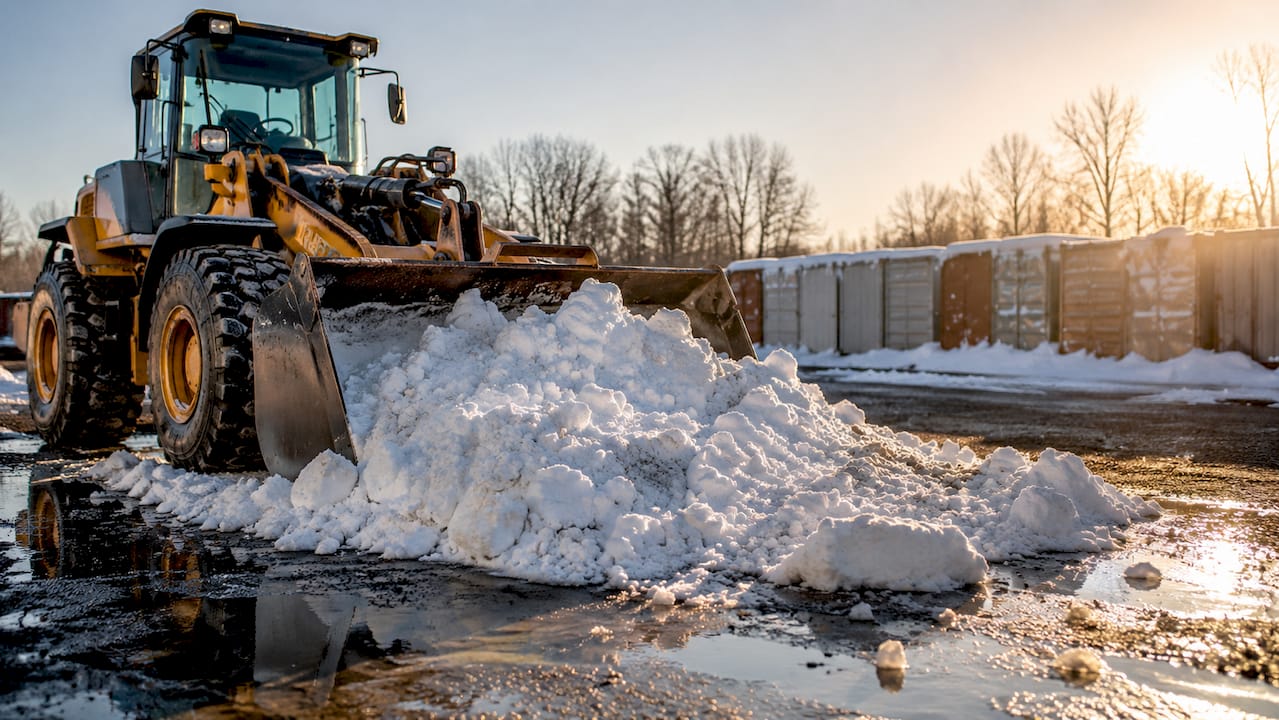
Scheduling matters as much as equipment selection. Most commercial hauling operations run during low-traffic windows, typically overnight or early morning, to avoid conflicts with deliveries, customers, and staff. Prozoneltd coordinates hauling schedules with site operators to minimise downtime.
Pro Tip: Always confirm that your contractor’s dump trucks are rated for the load weight of compacted snow. Wet, compacted snow is significantly heavier than fresh powder, and overloaded trucks create road safety and equipment liability issues.
What are the environmental and legal rules for snow disposal in Canada?
Snow disposal is a regulated activity in Canadian municipalities. Property managers who treat it as an informal process face fines, environmental liability, and potential civil claims.
Key regulatory requirements
Municipal snow disposal ordinances generally require the following:
| Requirement | Details |
|---|---|
| Designated disposal sites | Sites must be zoned industrial or specifically approved for snow dumping |
| Permits and documented agreements | Verbal permissions for off-site dumping carry high legal and financial risk |
| Runoff management | Disposal sites must prevent meltwater from reaching storm drains or water bodies |
| No-pile zones on property | Hydrants, drains, and accessible routes must be mapped and kept clear |
| Prohibited locations | Snow cannot be dumped near wetlands, flood zones, or unzoned land |
Why illegal dumping carries serious consequences
Disposal sites must be zoned industrial, away from flood zones, and managed for runoff. Dumping snow in an unapproved location, even on private property, can result in municipal fines and orders to remediate contaminated meltwater. In Alberta, runoff from road snow carries road salt, sand, petroleum residue, and heavy metals. These contaminants reaching a storm drain or water body trigger environmental protection violations under provincial legislation.
Pre-season site mapping
A pre-season site map marking no-pile zones near hydrants, drains, and accessible routes is the single most effective tool for avoiding compliance failures. Prozoneltd prepares site-specific maps for commercial clients before each winter season, identifying approved pile zones and no-pile zones in writing.
Documented dump site agreements are mandatory. Handshakes or verbal permissions for off-site snow dumping pose high legal and financial risks. Every off-site disposal arrangement requires a written permit or contract with the receiving site.
How much does snow hauling cost compared to plowing?
Snow hauling costs significantly more than plowing per event. The price difference reflects the additional equipment, labour, fuel, and dump site fees involved.
Typical price ranges
| Service type | Typical cost range |
|---|---|
| Residential snow hauling | $300–$800+ per load |
| Commercial snow hauling | $1,000–$5,000+ per job |
| Standard snow plowing (commercial) | Significantly lower per event |
Commercial hauling costs $1,000–$5,000+ per job, while residential loads run $300–$800+. These figures reflect the full resource demand of the operation, not just truck time.
What drives hauling costs higher
Hauling requires more equipment hours and transportation expense than plowing. The cost components include loader machine time, truck fuel and driver hours, dump site access fees (where applicable), and traffic control personnel on active sites. Wet, heavy snow late in the season increases all of these costs because it takes longer to load and weighs more per truck.
Controlling hauling costs through planning
Clear separation of plowing and hauling charges in service agreements avoids budget surprises and contractual conflicts. Property managers who bundle hauling into a flat-rate plowing contract often discover mid-season that hauling was never included. The most cost-effective approach is a hybrid model: use on-site storage for the first accumulations of the season, then schedule hauling when storage limits are reached. This reduces the total number of haul events per season without compromising safety.
For commercial snow management in Edmonton, regional bundling of hauling with plowing contracts often produces better pricing than booking hauling as a separate emergency service after the fact.
Best practices for integrating snow hauling into your winter plan
Effective winter programmes use a hybrid approach of on-site snow storage for initial accumulations and scheduled hauling when storage or safety limits are reached. The following practices define a well-managed winter site plan.
- Map pile and no-pile zones before the first snowfall. Identify approved storage areas away from hydrants, drains, accessible routes, and sightline-critical intersections. Document these zones in writing and share them with your contractor.
- Set numeric hauling triggers in your service agreement. Specific measurable thresholds like pile height limits and parking stall availability percentages remove ambiguity and prevent disputes.
- Schedule hauling during low-traffic windows. Overnight or early-morning operations minimise disruption to tenants, customers, and deliveries.
- Monitor for refreeze risk after hauling. Meltwater from residual snow at the base of former pile locations refreezes overnight in Edmonton’s climate. Apply sand or rock chips to these areas immediately after hauling.
- Review pile placement after every major storm. Conditions change as the season progresses. A pile location that was safe in november may block a sightline by february when surrounding piles have grown.
Pro Tip: Treat your first hauling event of the season as a dry run. Confirm that your contractor’s trucks can access all loading zones without damaging curbs or underground infrastructure, and adjust the site map if needed.
For municipal-scale operations, scheduling and logistics coordination become even more critical, as multiple sites must be serviced within tight overnight windows.
Why snow hauling deserves more strategic attention than it gets
Property managers consistently underestimate snow hauling until a liability event forces the issue. A slip-and-fall near a poorly placed pile, a fire truck blocked by a snow berm, or a municipal fine for runoff contamination all trace back to the same root cause: hauling was treated as a reactive emergency rather than a planned service.
The distinction between plowing and hauling is not just operational. It is contractual and financial. Liability from poor snow management, including pile placement and refreeze hazards, is a hidden cost that property managers rarely budget for until it appears as a legal claim. The cost of one slip-and-fall incident exceeds the cost of a full season of scheduled hauling on most commercial properties.
The most effective reframe is to treat hauling as a strategic reset. When piles are removed entirely, the site returns to its baseline condition. Sightlines clear. Parking restores. Emergency access reopens. That reset has measurable value for tenant satisfaction, insurance risk profiles, and regulatory compliance. Prozoneltd’s approach to winter site management builds hauling triggers into every service agreement from the start, so clients are never caught making reactive decisions during a storm.
— ProZone
Prozoneltd’s snow hauling and winter site management services
Prozoneltd provides professional winter maintenance services for commercial, municipal, and residential properties across Edmonton and the surrounding Alberta region. Every snow management programme includes pre-season site mapping, documented hauling triggers, and coordination with Alberta Safety Codes requirements. Prozoneltd’s equipment fleet covers front-end loaders, dump trucks, and traffic control resources for active commercial sites. Whether you need a full-season contract or a single haul event, Prozoneltd builds a plan specific to your site’s layout, traffic patterns, and compliance obligations. Contact Prozoneltd directly through the online inquiry form or call for a free estimate before the season begins.
FAQ
What is snow hauling in simple terms?
Snow hauling is the process of loading accumulated snow into trucks and transporting it off-site to an approved disposal location. It differs from plowing, which only moves snow within the same property.
When should a property manager schedule snow hauling?
Schedule hauling when on-site piles block sightlines, reduce available parking below safe thresholds, or compromise emergency vehicle access. Numeric triggers like pile height limits set in advance make this decision objective and dispute-free.
How much does commercial snow hauling cost in Edmonton?
Commercial snow hauling costs typically range from $1,000 to $5,000+ per job, depending on pile volume, truck loads required, and dump site fees. Residential loads generally run $300–$800+ per load.
Is snow dumping regulated in Alberta?
Snow disposal is regulated at the municipal level across Alberta. Approved sites must be zoned for the purpose, and documented permits or agreements are required for any off-site dumping. Illegal dumping near wetlands or storm drains carries environmental fines under provincial legislation.
What equipment is used for snow hauling?
Professional snow hauling uses front-end loaders to consolidate and load snow, combined with tandem or articulated dump trucks for transport. Traffic control personnel are required on active commercial sites during loading operations.