
Preformed thermoplastic symbols are factory-made pavement graphics, engineered to a fixed thickness and bead content, then heat-fused directly onto asphalt or concrete on site. They deliver sharper edges, built-in retroreflectivity, and a lower lifecycle cost than paint at any location that takes heavy wheel and foot traffic.
The bottom-line recommendation for contractors and spec writers: specify preformed thermoplastic for crosswalks, arrows, and legends where nighttime visibility and edge definition matter most. Under OPSS.MUNI 710 and OPSS 1713 guidance, correctly installed material carries a service life of roughly 6 to 8 years. ProZone Ltd installs to these standards across the Edmonton region.
- Typical thickness: 90 to 125 mils depending on symbol type
- Glass bead content: minimum 30 percent intermixed for retroreflective performance
- Common uses: crosswalks, arrows, STOP legends, bike lane markers, accessible parking symbols
Pro Tip: Ask any supplier for a technical data sheet before quoting a project. If they can’t produce one with bead content and thickness listed by symbol type, that’s a red flag on quality control.
Table of Contents
- What are preformed thermoplastic symbols and when should you use them?
- How durable are preformed thermoplastic symbols compared to paint?
- What thickness and bead content should a spec require?
- Which symbols and applications suit preformed thermoplastic best?
- How do crews install preformed thermoplastic symbols on site?
- What standards should tenders reference for thermoplastic markings?
- How often should crews inspect and repair thermoplastic symbols?
- What belongs in a thermoplastic symbol procurement checklist?
- Why ProZone specifies higher bead content for Edmonton projects
- Get a specification-grade thermoplastic install with ProZone
- Sources
- FAQ
What are preformed thermoplastic symbols and when should you use them?
Preformed thermoplastic symbols arrive at the job site as pre-cut sheets with thickness, bead distribution, and shape already set at the factory. That production control cuts variability between crews and improves acceptance rates on tendered municipal work, since inspectors are checking against a known product rather than a field-mixed batch.
Choosing the right marking material comes down to shape and traffic pattern. Symbols, legends, crosswalks, and arrows are discrete graphics best served by preformed material. Long, continuous lane lines are usually more efficient with hot-applied thermoplastic, since it can be extruded continuously rather than cut to a template. Paint remains a fair choice only where budget is tight and a short service life is acceptable.
Certain triggers should push a spec toward preformed every time:
- High annual average daily traffic (AADT) intersections
- School zones and hospital entrances, where visibility failures carry real liability
- Commercial loading zones with constant heavy-vehicle turning
- Projects with architectural or branding requirements, like custom logos
Pro Tip: If a site sees more than one snowplough pass per storm through winter, preformed material’s higher wear resistance pays for itself within two seasons.
How durable are preformed thermoplastic symbols compared to paint?
Preformed thermoplastic outperforms paint on every durability metric that matters to a facility manager: edge retention, colour stability, and resistance to abrasion from snowploughs and studded tires. Comparisons between preformed and hot-applied thermoplastic consistently show preformed material holding a sharper edge line over its service life, largely because the factory-cut profile doesn’t rely on a field crew freehanding the shape.
Cities that switch from waterborne paint to durable thermoplastic markings report 20 to 30 percent lower maintenance costs over a five-year window on comparable sites.
Retroreflectivity depends on the glass beads embedded through the material, not just dusted on the surface. That intermixed bead structure keeps night-time visibility intact as the top layer wears down, which is the entire point of specifying preformed over paint in the first place.
- Crosswalk installs typically take 60 to 120 minutes per continental layout, including prep and template placement
- Traffic can generally return within 20 to 30 minutes of cooling
- Skid resistance meets or exceeds paint markings, an important factor for pedestrian crossings in winter conditions
What thickness and bead content should a spec require?
A tender document that skips thickness and bead content by symbol type is asking for a race to the bottom on price. Thicker material inlays better under snowplough blades and resists edge lift; thinner profiles are acceptable for low-traffic legends but shouldn’t be substituted on arrows or crosswalk bars carrying constant wheel loads.
Bead content is non-negotiable for night visibility. Specifications should require a minimum of 30 percent intermixed glass beads, not surface-broadcast beads alone, since surface beads shed faster under traffic.
| Spec item | What to require |
|---|---|
| Thickness | 90 to 125 mils, matched to symbol type and traffic load |
| Bead content | Minimum 30% intermixed, documented on technical data sheet |
| Colour and pigment | UV-stable pigment with skid-resistant aggregate option |
| Supplier documentation | Data sheet, bead content percentage, warranty terms |
| Traceability | Batch numbers for QA and warranty claims |
- Require a signed warranty statement tied to a specific expected service life
- Ask for factory QA records, not just a sales brochure
- Compare skid resistance test references between products before awarding
For a broader look at where thermoplastic fits against other surfacing materials, see our primer on thermoplastic and StreetBond products.
Which symbols and applications suit preformed thermoplastic best?
Contractors reach for preformed thermoplastic on a predictable list of graphics: directional arrows, crosswalk bars, continental crosswalk patterns, STOP legends, bike lane symbols, accessible parking markers, roundabout guide markings, and custom branded logos for private lots.
Preformed material earns its premium at locations where a marking failure has real consequences. Intersections, school zones, hospital driveways, and retail entrances all fall into that category, along with any high-visibility pedestrian crossing where a faded edge line means a driver misjudges the stop point at dusk.
- Modular panel kits speed layout on smaller commercial jobs by cutting field measurement time
- Custom-cut legends reduce the labour needed for branded parking areas
- Standard symbol sizing aligns with municipal and provincial dimension tables, avoiding rework
How do crews install preformed thermoplastic symbols on site?
Surface preparation determines whether a symbol lasts six years or peels within one Edmonton winter. Crews need to clean the substrate, grind or shot-blast away oil contamination and laitance, and confirm pavement temperature meets minimums before laying material. Manufacturer guidance specifies these steps precisely because skipped prep is the most common cause of early bead loss and delamination.
Equipment on a proper crew includes high-velocity air blowers, grinders or shot blasters, a propane torch or infrared heater, tamping rollers, and primer or adhesive where the substrate calls for it.
- Confirm layout with chalk lines and place tack samples for approval
- Clean and grind the substrate, removing all contaminants and laitance
- Position the preformed symbol and secure it against wind shift
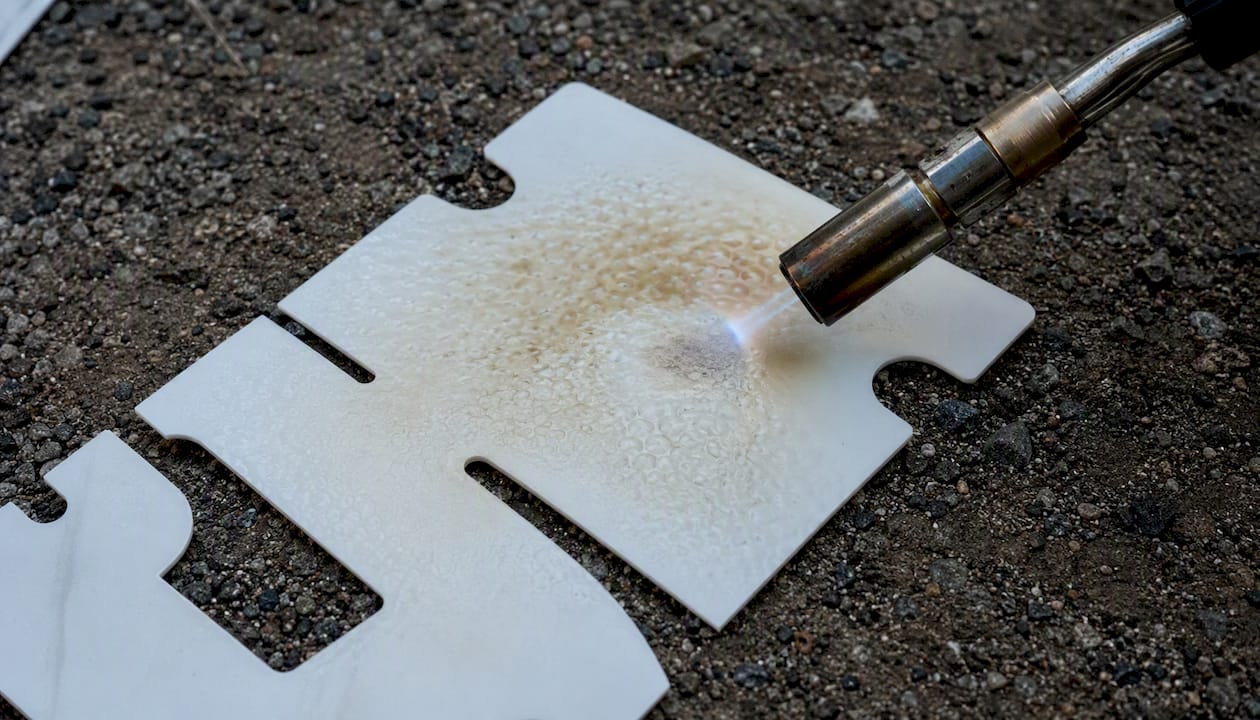
- Apply heat evenly with torch or infrared equipment until the material flows into the surface texture
- Roll or tamp the symbol to activate embedded beads and force out trapped air
- Allow cooling per manufacturer time before reopening to traffic
Field QA should never be skipped. Use heat indicator crayons or strips to confirm activation temperature, check edge adhesion by hand at the perimeter, and butt joints tightly without overlap since material laid over an existing joint fails prematurely. Retain a sample panel for the owner’s records on every job.
Pro Tip: Overheating is the number one cause of premature bead loss. If the material starts to bubble or discolour, the torch is too close or the crew is moving too slowly across the panel.
Read more on surface prep in our guide to advantages of thermoplastic on asphalt.
What standards should tenders reference for thermoplastic markings?
Every Canadian tender involving preformed thermoplastic should cite OPSS.MUNI 710 alongside the linked OPSS 1713, 1714, and 1715 specifications, which define marking classifications, sample submission sizes, and acceptance testing. Symbol dimensions should track MUTCD-equivalent standards so layouts match what drivers expect across jurisdictions.
Vendors should be required to submit representative samples and pass acceptance testing before a batch ships to site. Installation constraints matter just as much as material specs.
- Minimum pavement temperature commonly set at 21 degrees Celsius for preformed tape
- Maximum relative humidity typically capped near 70 percent during application
- No application directly over unaddressed pavement joints
How often should crews inspect and repair thermoplastic symbols?
Inspect high-traffic symbols at least twice a year, once after winter thaw and once mid-season, watching for bead loss, edge fraying, delamination at corners, and any drop in skid resistance underfoot.
Repair options scale with the damage found. A spot inlay handles localized bead loss or minor edge lift. A full grind-and-reapply is warranted once delamination spreads past a symbol’s edges. Full replacement becomes the right call once the base layer itself shows cracking beneath the marking.
- Bead loss visible to the eye means retroreflectivity has already dropped below spec
- Edge fraying signals the substrate bond is failing, not just surface wear
- Freeze-thaw cycling through an Edmonton winter accelerates delamination faster than in milder climates, since repeated moisture expansion under the marking works joints loose
Pro Tip: Schedule inspections right after spring thaw, before the freeze-thaw cycle has a chance to compound minor damage into a full replacement job.
See our related guidance on repair or replace decisions for parking lot assets generally.
What belongs in a thermoplastic symbol procurement checklist?
A tender document missing any of these items invites disputes at project closeout. Build the checklist directly into contract language rather than leaving it to verbal agreement.
- Reference material standards by name (OPSS.MUNI 710, OPSS 1713/1714/1715) and require compliance documentation
- Specify bead content percentage and thickness by symbol type, not as a single blanket number
- Set sample submission timelines before production begins
- Define warranty terms tied to a specific expected service life, not a vague “durable” claim
- Require proof of certified installer qualifications and equipment lists before award
- Confirm storage requirements protect material from moisture and temperature extremes before installation
- Retain installed samples for owner records and future warranty claims
- Verify installer carries Alberta Safety Code compliance documentation
Why ProZone specifies higher bead content for Edmonton projects
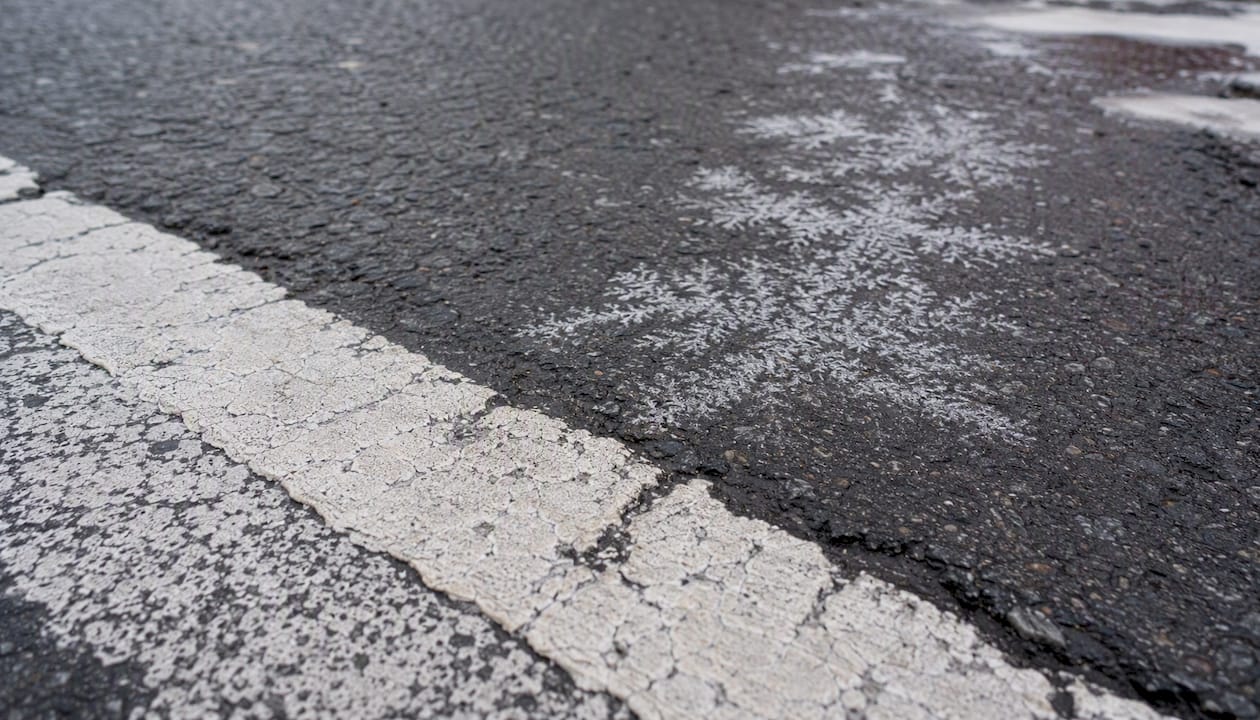
Edmonton’s freeze-thaw cycle punishes marginal material choices faster than almost any other Canadian climate. ProZone specifies bead content and thickness at the higher end of accepted ranges precisely because repeated freeze-thaw movement works joints and edges loose over a single season if the base spec is thin.
Sequencing matters as much as material selection. Coordinating layout timing with municipal inspectors and pouring around forecast freeze windows keeps a project from failing acceptance testing on temperature grounds alone. Contact ProZone for a specification review before your next tender goes out.
Get a specification-grade thermoplastic install with ProZone
ProZone is the installer that treats symbol specs the way a municipal inspector does, not the way a discount subcontractor does. Every crew works to Alberta Safety Code requirements, with certified installers, factory-sourced material meeting bead content minimums, and on-site QA checks documented for your project file. That means fewer callbacks and a marking that still reads sharp after two Edmonton winters, not one.
Getting a free estimate takes minutes. Use the online contact form or call directly, and have your site plan, symbol list, and expected traffic volume ready so the quote reflects the actual job. Explore our thermoplastic pavement marking services or request pricing through our construction services page to start your specification review today.
Sources
Keep these on hand when drafting a tender or checking a supplier’s data sheet.
Standards: OPSS.MUNI 710 and OPSS 1713/1714/1715. Installation guides: manufacturer torch and infrared application bulletins. Buyer reference: Canadian preformed thermoplastic procurement guidance.
- TS 710 Pavement Markings (Toronto specification update)
- 3M information folder for preformed thermoplastic pavement markings
- Use of preformed thermoplastics and comparisons with hot-applied thermoplastic
- Painted vs thermoplastic vs preformed crosswalk material comparison
- Preformed thermoplastic markings specification and bead content guidance
FAQ
What is the typical service life of preformed thermoplastic symbols?
Correctly installed preformed thermoplastic typically lasts 6 to 8 years, depending on traffic volume, climate, and bead content meeting the 30 percent intermixed minimum.
How long does a preformed thermoplastic crosswalk take to install?
A continental crosswalk layout typically takes 60 to 120 minutes including substrate prep and template placement, with traffic able to return shortly after cooling.
Should I choose preformed thermoplastic or hot-applied for parking lot symbols?
Preformed thermoplastic suits discrete symbols and legends where edge sharpness matters, while hot-applied thermoplastic is more efficient for long, continuous lane lines.
What standard should I reference in a Canadian tender for thermoplastic markings?
Reference OPSS.MUNI 710 alongside the linked OPSS 1713, 1714, and 1715 specifications, which set marking classifications, sample requirements, and installation temperature limits.
Does ProZone install preformed thermoplastic symbols in the Edmonton region?
Yes, ProZone Ltd supplies and installs preformed thermoplastic symbols to municipal and commercial specifications, with certified installers meeting Alberta Safety Code requirements.