
Commercial snow removal cost in Canada typically runs $150 to $1,000 per visit or $600 to $8,000 or more per month, depending on lot size, snowfall frequency, and service level. Seasonal flat-rate contracts for larger sites commonly land between $5,000 and $50,000 for the winter, according to a Calgary pricing guide. For property managers building next winter’s budget, the range depends far more on trigger depth and response guarantees than on the plow truck itself.
Quick planning rules:
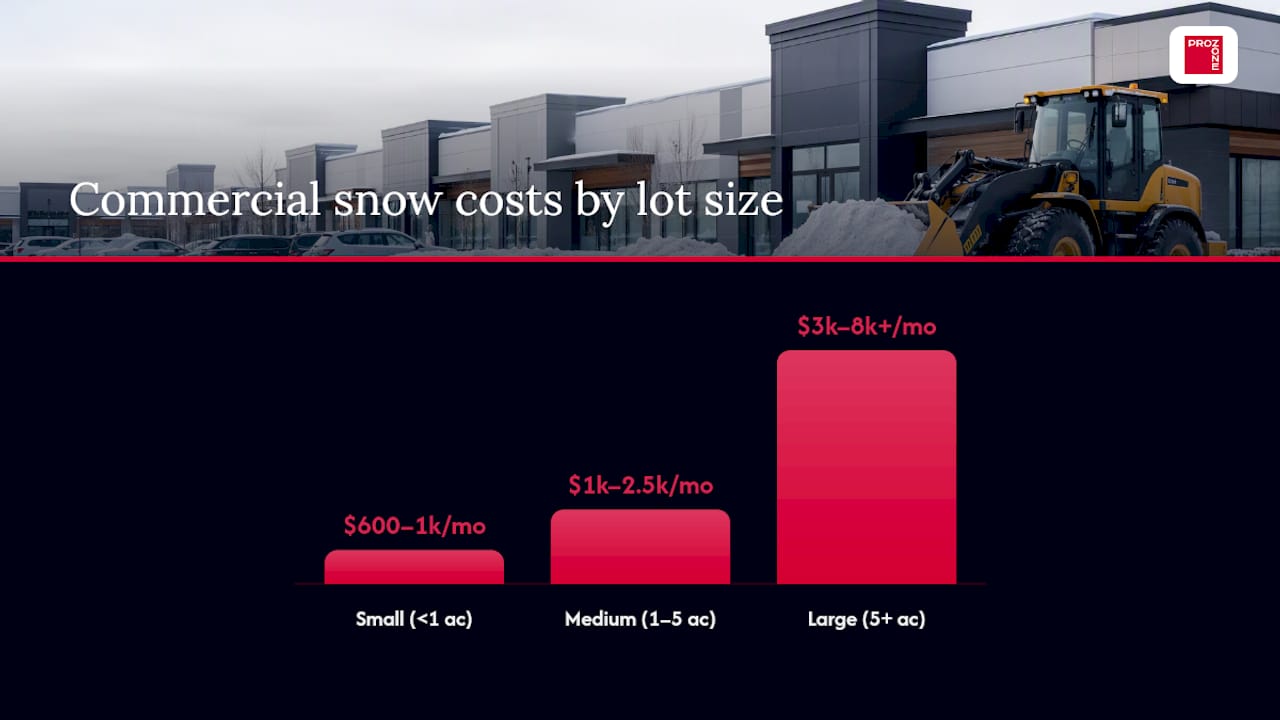
- Small commercial lots (retail storefronts, small offices): $600 to $1,000 per month, or $150 to $400 per visit.
- Medium lots (office parks, strip malls): $1,000 to $2,500 per month.
- Large sites (industrial yards, multi-building complexes): $3,000 to $8,000 plus per month, or $1,500 to $7,500 per visit.
Statistic Callout: IBISWorld puts the 2026 benchmark market price for snow removal services in Canada at $96.36 per hour, with prices climbing at roughly a 4.07% compound annual growth rate since 2023. Use that hourly figure to sanity-check any per-visit or hourly line item a contractor hands you.
Table of Contents
- Average commercial snow removal costs by lot size
- What actually drives your snow removal service rates
- Which pricing model fits your property
- How do you build an annual snow removal budget?
- What are your municipal snow clearing obligations?
- Why ProZone is a practical choice for Edmonton and Alberta managers
- Get a site-specific snow removal quote from ProZone
- Sources
- FAQ
Average commercial snow removal costs by lot size
Budgeting gets easier once you separate the sticker price from the service tier attached to it. A $600 monthly contract on a small lot usually buys reactive plowing only; a $2,500 contract on a medium lot often bundles sidewalks, salting, and a guaranteed response window.
EasyLandscapes reports monthly bands of $600 to $1,000 for small commercial lots, $1,000 to $2,500 for medium lots, and $3,000 to $8,000 plus for large sites. On a per-visit basis, OutWash lists commercial ranges from $150 to $1,000, noting that commercial pricing runs higher than residential because of insurance requirements, heavier equipment, and contractual service windows.
| Lot size | Per-visit range | Monthly range | Typical inclusions |
|---|---|---|---|
| Small (under 1 acre) | $150 to $400 | $600 to $1,000 | Plowing, basic sidewalk clearing |
| Medium (1 to 5 acres) | $400 to $1,500 | $1,000 to $2,500 | Plowing, salting, sidewalks, priority queue |
| Large (5+ acres, industrial) | $1,500 to $7,500 | $3,000 to $8,000+ | Full fleet, hauling, anti-icing, guaranteed SLA |
Two examples show how this plays out over a full winter:
- A small retail lot in Edmonton at $800 per month across a six-month season lands near $4,800, before accounting for extra salting during an ice storm week.
- A medium office park at $2,000 per month for six months runs about $12,000 seasonally, consistent with the seasonal contract bands a Calgary pricing guide documents for comparable Alberta properties.
What actually drives your snow removal service rates
Contractors don’t price snow removal off lot size alone. Here’s what actually moves your quote:
- Snowfall volume and frequency: more storms mean more billable visits under a per-push model.
- Trigger depth: a 2 cm trigger costs more over a season than a 5 cm trigger because crews mobilize far more often.
- Lot size and layout: tight parking rows, loading docks, and multiple entrances slow every pass and add labour hours.
- Equipment and labour mix: skid steers, loaders, and de-icing tanks cost more to deploy than a single truck with a plow blade.
- Ice management: salting and anti-icing frequently outpace plowing as the largest seasonal line item in freeze-thaw climates like Edmonton’s.
- Hauling and disposal: sites with no room to pile snow need off-site hauling, which adds per-load fees.
- Guaranteed response time: a two-hour SLA costs more to staff than a same-day best-effort clause.
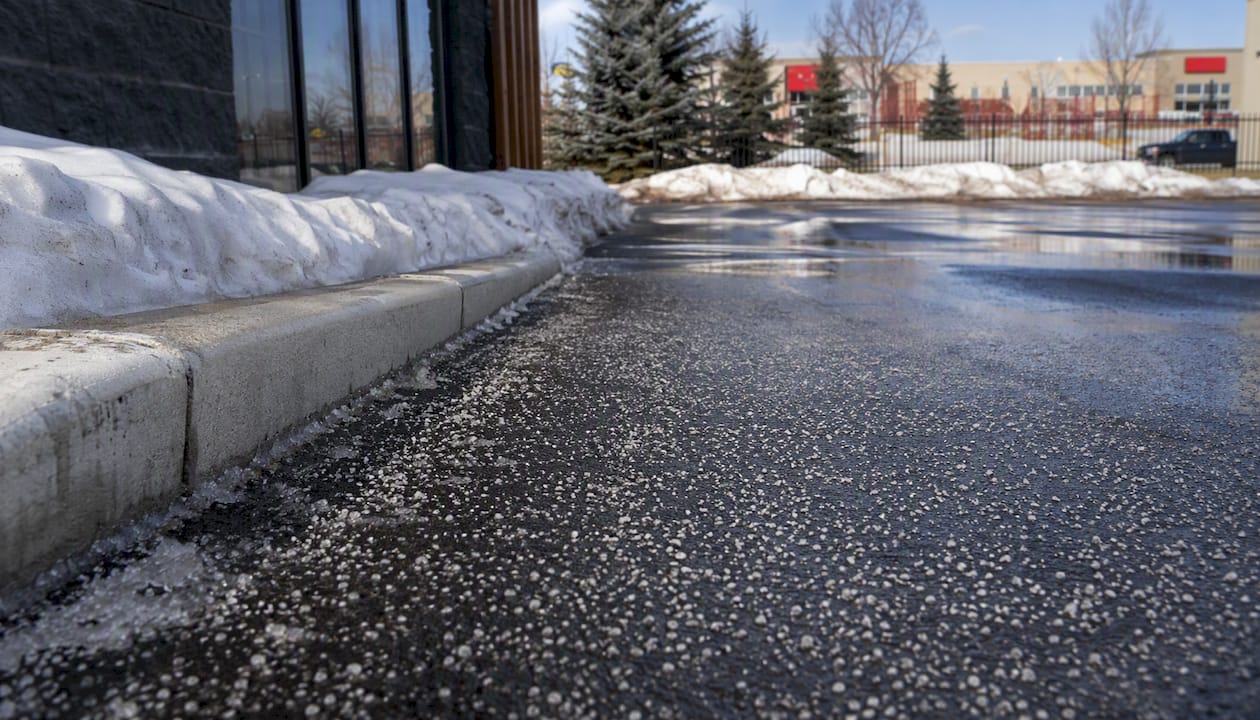
Edmonton’s freeze-thaw cycle makes ice management the wildcard. Repeated melt-and-refreeze events turn slush into hardpack that takes longer to remove than fresh snow, which is why proactive anti-icing frequently reduces total seasonal spend compared with reactive plowing of frozen surfaces.
Pro Tip: Ask your contractor to raise the trigger depth from 2 cm to 5 cm and bundle sidewalk clearing into the same visit. That single change can cut seasonal visit counts significantly without breaching municipal clearing timelines.
Which pricing model fits your property
Commercial contracts generally fall into five structures, and each shifts risk differently between you and the contractor.
- Per-push/per-visit: you pay each time crews mobilize, tied to a snowfall trigger. Predictable per event, unpredictable over a season.
- Per-inch pricing: cost scales with snowfall depth measured at the site, common for larger lots with variable accumulation.
- Hourly: billed on time on-site, typically reserved for one-off or emergency call-outs rather than full-season coverage.
- Monthly flat-rate: a fixed fee regardless of storm count, smoothing cash flow across the winter.
- Seasonal flat-rate with SLA: one price for the whole winter, usually paired with a guaranteed response window and priority queue placement.
Salting, hauling, overtime during major storms, and emergency call-outs are commonly billed as add-ons even under flat-rate contracts, so read the fine print before assuming your seasonal quote is truly all-in.
Before signing, run through this checklist:
- Confirm the trigger depth in centimetres, in writing.
- Get the guaranteed response time during business hours.
- Request proof of commercial general liability insurance.
- Confirm WSIB coverage and municipal compliance clauses.
- Clarify whether sidewalks, stairs, and loading docks are bundled or billed separately.
Property managers comparing bids should also check what to expect from a proper commercial snow removal contract before locking in a vendor for the season.
How do you build an annual snow removal budget?
Start with your baseline per-visit or monthly rate, then layer in the variables that actually cause overruns.
- Pick a baseline rate from your lot size tier (small, medium, or large).
- Estimate expected visit frequency based on your region’s typical storm count.
- Add an ice management allowance, since freeze-thaw cycles in Edmonton often push salting and de-icing costs above plowing costs alone.
- Add a hauling allowance if on-site snow storage is limited.
- Build in a 10 to 15% contingency for an extreme-weather surcharge clause.
When evaluating bids side by side, check for:
- A written guaranteed response window, not a vague “priority service” claim.
- A documented equipment roster matched to your lot’s size and layout.
- Clear pricing triggers (depth, time, or both) rather than discretionary dispatch.
- An escalation clause spelling out surcharge conditions during major storm events.
Ask every bidder directly whether their crew capacity is shared across multiple properties during a single storm. That single question exposes most hidden service gaps before they cost you a slip-and-fall claim.
What are your municipal snow clearing obligations?
In Edmonton, property owners are directly responsible for clearing snow and ice adjacent to their property, and the City’s information sheet for businesses confirms that failing to maintain sidewalks can trigger fines and enforcement action. Shovelling snow onto streets or bike lanes is also restricted under municipal rules, which contractors need to build into their haul plans.
Insurance and proof-of-coverage checklist:
- Commercial general liability insurance, current and certificate available on request.
- WSIB coverage confirmed, not just claimed verbally.
- A written certificate of insurance naming your property if your lease requires it.
Statistic Callout: Municipal enforcement isn’t theoretical. Sites with limited on-site snow storage should coordinate hauling routes or shared storage arrangements with neighbouring businesses well before the first major snowfall, since scrambling for disposal capacity mid-storm almost always costs more than planning it in October.
Why ProZone is a practical choice for Edmonton and Alberta managers
ProZone Ltd delivers commercial snow and ice management across Edmonton and the surrounding Alberta region, backed by local project experience on parking lots, loading docks, and multi-building commercial sites. Every contract is built around Alberta Safety Codes compliance, not generic substandard practices that leave property managers exposed to liability.
What to expect and require in writing:
- Certificates of insurance and WSIB coverage provided before work begins.
- A documented equipment roster matched to your site’s size and complexity.
- Sample SLA response times specified in the contract, not left to verbal promise.
Property managers who lock in site-specific snow removal estimates before the first snowfall consistently avoid the premium pricing that comes with emergency, mid-storm contractor searches.
Author perspective: what actually controls your winter budget
Secure your contract by early autumn, prioritize anti-icing over reactive plowing in freeze-thaw conditions, and negotiate a seasonal cap for extreme weather surcharges.
Get a site-specific snow removal quote from ProZone
Generic per-visit estimates only get you so far when your lot has loading docks, multiple entrances, or freeze-thaw exposure unique to Edmonton’s climate. ProZone builds pricing around your actual site layout and service priorities, not a one-size-fits-all rate card, so you know exactly what a guaranteed response window and full equipment roster will cost before winter starts.
Property managers preparing next season’s budget can request a free, site-specific commercial snow removal estimate directly through ProZone’s online form, or call to discuss priority response scheduling for multi-property portfolios. Locking in your contract early also protects you from the emergency-rate premiums that hit property managers who wait until the first storm.
Sources
- Snow Removal Services in Canada Procurement Price, Data and Insights | IBISWorld
- Snow & Ice Control – 2025 Information Sheet for Businesses
Always confirm site-specific obligations against your local bylaw before finalizing a procurement decision.
FAQ
How much does commercial snow removal cost in Canada?
Commercial snow removal typically costs $150 to $1,000 per visit or $600 to $8,000 or more per month, depending on lot size, snowfall frequency, and whether ice management is bundled in.
What is the typical pricing formula for snow removal services?
Most contractors price on a baseline rate (per visit, per month, or seasonal flat-rate) tied to a snowfall trigger depth, then add surcharges for salting, hauling, overtime, and emergency call-outs.
Is a snow removal business profitable?
Snow removal can be profitable given rising market rates, but margins depend heavily on equipment utilization across the season and managing labour costs during peak storm periods.
How do I start a snow removal business in Canada?
Starting a snow removal business generally requires commercial general liability insurance, WSIB registration, appropriate equipment, and compliance with municipal snow clearing bylaws in your service area.
Should I choose a seasonal contract or per-visit pricing?
Seasonal flat-rate contracts often save money in regions with frequent snowfall, while per-visit pricing can work better for properties in lighter-snowfall areas that can tolerate variable service timing.