
Resurfacing or sealcoating a commercial parking lot pays off when the surface is structurally sound and the only problem is wear, not water. If drainage, base compaction, or subgrade movement are already failing, resurfacing alone will not hold, and the calculation shifts toward deeper repair or partial reconstruction. Before committing capital, run a site-specific ROI calculation that prices prep work and drainage correction alongside the surface treatment, and get an on-site assessment from a contractor like ProZone to confirm which category your lot falls into.
Table of Contents
- What costs actually belong in a parking lot resurfacing ROI calculation?
- How do you calculate payback for a 50,000 sq ft lot?
- What technical and climate factors change the ROI outcome?
- When should you schedule resurfacing to protect the ROI?
- What should a resurfacing quote include before you sign?
- Do reflective or lighter surfacing materials save money long term?
- Treat pavement like an asset, not an expense line
- Get a scoped estimate and ROI calculation from a qualified contractor
- Sources
- FAQ
What costs actually belong in a parking lot resurfacing ROI calculation?
Most ROI disappointments trace back to an incomplete quote. A bid that lists only “resurfacing” per square foot hides the line items that determine whether the job lasts five years or fifteen.
A comparable quote should break out these components:
- Mobilization – equipment and crew setup, often billed as a flat fee regardless of lot size
- Milling – removing the top layer of failed asphalt before repaving
- Base and subgrade repair – fixing compaction or structural failure under the surface
- Drainage correction – regrading, catch basin work, or curb adjustments to stop ponding
- Sealcoating or resurfacing unit cost – the material and labour for the treatment itself
- Line marking – restriping stalls, accessible spaces, and fire lanes
- Traffic control – barricades, signage, and phasing for lots that stay partly operational
- Cleanup and disposal – removing millings and debris from the site
Calculate simple ROI with this sequence:
- Total the full project cost, including every item above, not just the per-square-foot surface rate.
- Estimate the added years of service life the treatment provides over doing nothing.
- Divide the deferred replacement cost, plus reduced patch and pothole spending, by that extended life to get an annualized benefit.
- Divide project cost by annualized benefit to find the payback period in years.
Low quotes that exclude milling, drainage, or base repair look attractive on paper but often force a second, larger repair within two or three years. TAC’s life-cycle guidance treats preparation scope as a direct driver of long-term cost, not an optional add-on.
How do you calculate payback for a 50,000 sq ft lot?
Here is a worked example you can adapt with your own unit prices. Assume a 50,000 square foot commercial lot in reasonable structural condition, with cracking and surface wear but no major base failure.
- Sealcoating with crack sealing: at roughly $0.20 to $0.35 per square foot including prep, total cost lands between $10,000 and $17,500. NRC’s crack sealing research shows properly specified treatment extends service life by 10 to 20 percent, targeting at least five years before the next major intervention.
- Full resurfacing (overlay): at roughly $2 to $4 per square foot, total cost runs $100,000 to $200,000, typically buying 12 to 15 years of service life on a sound base.
- Annualized benefit: divide the deferred cost of full reconstruction, often $6 to $8 per square foot, by the years of service life gained. For sealcoating at a five-year extension, that annualized benefit frequently exceeds the treatment cost several times over, which is why preventive work shows the fastest payback, often under two years.
- Sensitivity check: if the site needs drainage correction or localized base repair, add that cost before comparing options. A lot with standing water in low spots can turn a $15,000 sealcoating job into a $40,000 project once regrading is included, and skipping that step shortens sealant life well below the five-year target.
The math favours preventive treatment on structurally sound pavement almost every time. Once base or drainage problems enter the picture, the payback period for a resurfacing overlay looks better than repeated patching, because patching alone never fixes the water problem underneath.
What technical and climate factors change the ROI outcome?
Edmonton’s climate is not a footnote in this calculation. It is one of the biggest variables.
The City of Edmonton’s winter and ice report documents a winter season running roughly late October to mid April, with repeated freeze-thaw cycling and heavy de-icing material use. Both accelerate surface distress far faster than in milder climates.
Statistic callout: Preventive crack sealing extends pavement life by 10 to 20 percent, but the same research notes sealants installed with the wrong material or timing often fail within three years, erasing most of that ROI advantage.
Before pricing any resurfacing project, check these conditions:
- Drainage adequacy – water sitting on or under the surface causes freeze-thaw heaving and undermines any surface treatment
- Subgrade compaction – soft or poorly compacted base material will telegraph cracks through new asphalt within one winter
- Structural defects – alligator cracking or depressions signal base failure that resurfacing cannot fix on its own
- Material and thickness selection – TAC’s preservation guidelines tie the correct overlay thickness to traffic volume and expected loading, not a flat industry rule
De-icing salt exposure and repeated thaw cycles recreate cracks and potholes when the scope ignores drainage, which is why resurfacing without fixing the water problem tends to disappoint owners within two winters.
When should you schedule resurfacing to protect the ROI?
Timing changes sealant performance more than most property managers expect. NRC’s cold-climate research identifies late summer to mid-fall as the preferred window for crack sealing, because cracks sit near their average width and frost has not yet re-entered the subgrade.
Build these intervals into your maintenance calendar:
- Crack sealing: every 2 to 3 years, timed for late summer through mid-fall
- Sealcoating: every 3 to 5 years, depending on traffic and sun exposure
- Resurfacing trigger: once alligator cracking exceeds 15 to 20 percent of surface area, or potholes recur faster than patching can keep up
Pro Tip: Track patching invoices and work-order frequency for six months before and after any resurfacing project. That before-and-after comparison is the clearest way to prove ROI to ownership or a board, beyond visual improvement alone.
Spring work before the ground has fully dried out shortens sealant life, so resist pressure to schedule crack sealing the moment snow clears.
What should a resurfacing quote include before you sign?
A comparable bid needs to name its scope explicitly, not bury it in a lump-sum number. Property managers who ask for itemized pricing consistently negotiate better outcomes than those who accept a single per-square-foot figure.
Require every bidder to itemize:
- Milling depth and disposal method
- Excavation and base repair scope, with compaction testing results
- Drainage correction, including grading and catch basin adjustments
- Material specification, including asphalt mix design or sealcoat product
- Line marking, including accessible stall compliance under Alberta’s accessibility design guidelines
- Traffic control plan and warranty terms in writing
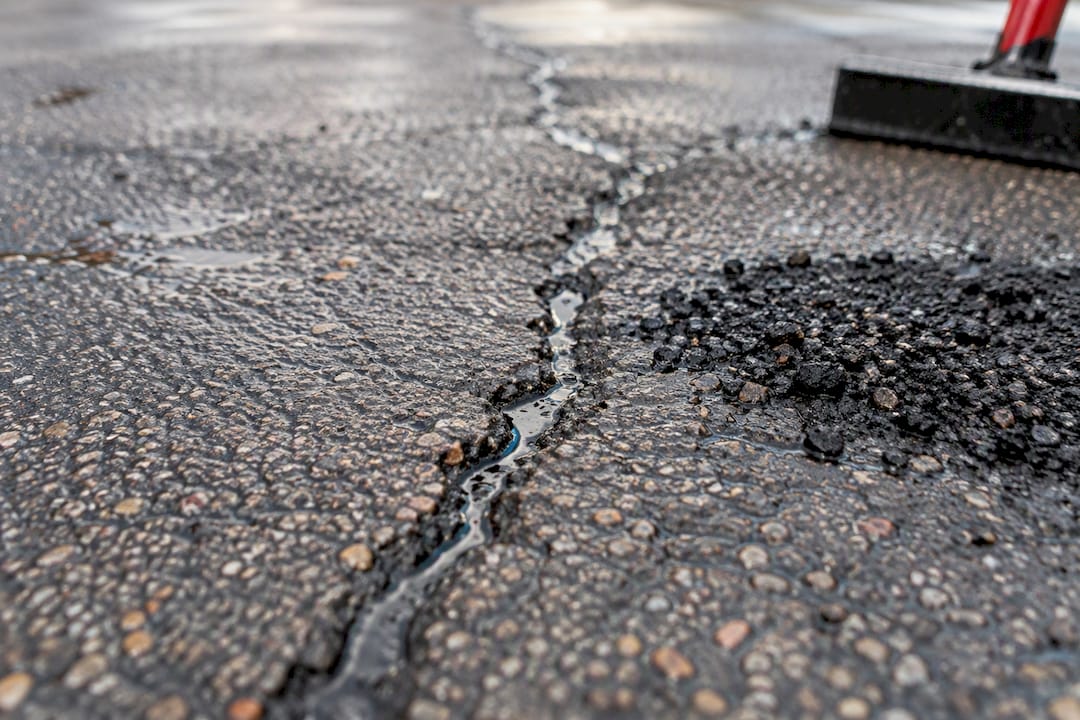
Walk the lot before committing and look for standing water after rain, alligator cracking near drainage points, and curb settling, all early freeze-thaw symptoms. Drainage failures are the single most common reason resurfacing projects underperform their projected ROI in this region.
A reputable contractor provides parking lot maintenance and resurfacing services in Edmonton and surrounding Alberta communities, offering compliance with Alberta Safety Codes and on-site consultations within 100 kilometres, enabling scoped assessments that identify drainage and base problems before they become change orders.
Do reflective or lighter surfacing materials save money long term?
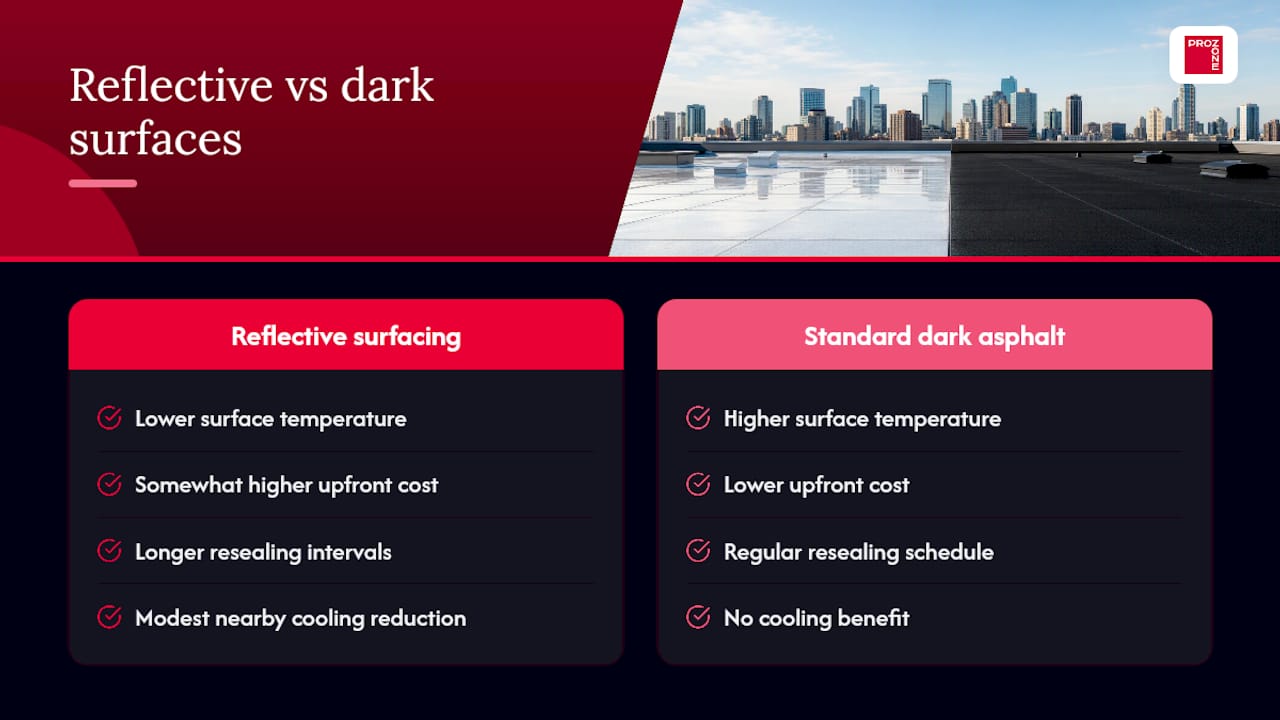
Lighter coloured sealcoat and reflective surface treatments reduce surface temperature absorption compared with standard dark asphalt, which can slow certain forms of thermal degradation over a pavement’s life. For lots with heavy summer sun exposure, that lower surface temperature translates into less rutting under vehicle loads during hot stretches.
The savings show up gradually rather than immediately. A reflective sealcoat product typically costs somewhat more per square foot upfront than a standard dark sealcoat application. Property managers recover that premium through slightly longer intervals between resealing, plus, in some cases, modest reductions in nearby building cooling loads if the lot sits close to windows or HVAC intake points.
For Edmonton specifically, the ROI case for reflective materials is more modest than in southern climates with longer, hotter summers. Freeze-thaw cycling and de-icing exposure remain the dominant factors driving pavement distress here, so the priority should stay on prep quality, drainage, and correct material specification before layering in reflective additives.
Where reflective sealcoat does make sense is on lots with poor drainage away from shade, where surface heat accelerates cracking between rainfall events. Ask your contractor whether the specific product they propose has documented performance data for cold climate cycling, not just warm-climate marketing claims, before paying the premium.
Treat pavement like an asset, not an expense line
Capital rehabilitation and routine maintenance sit in different budget categories, and mixing them up distorts your ROI tracking. Log patching spend, work-order frequency, stall downtime, and tenant complaints before and after any project to build a defensible case. Keep accessible stall markings and route compliance in scope from the start, since retrofitting them later costs more than including them in the original bid.
— ProZone
Get a scoped estimate and ROI calculation from a qualified contractor
Running these numbers yourself gets you close, but a scoped, on-site proposal is what turns an estimate into a defensible capital decision. ProZone delivers parking lot maintenance and resurfacing services across Edmonton and surrounding Alberta communities, backed by Alberta Safety Codes compliance and crews trained to price drainage correction and base repair into the same quote as the surface treatment, not as a change order six months later.
Start by pulling your own site metrics: recent patching invoices, work-order counts, and any standing water photos from the last rainy season. Then request a scoped proposal through ProZone’s asphalt services page or by phone, and ask specifically for itemized milling, compaction testing, and drainage line items so you can compare bids on equal terms. ProZone offers free on-site consultations within 100 kilometres of Edmonton, which is the fastest way to find out whether your lot is a resurfacing candidate or needs deeper work before you commit budget.
Sources
This analysis draws on NRC crack sealing guidance for life extension estimates, TAC’s life-cycle cost analysis framework for material and thickness trade-offs, the City of Edmonton’s winter and ice report for regional climate impact, and Alberta’s accessibility design guidelines for scope obligations affecting ROI.
- Sealing cracks in asphalt concrete pavements
- Guidelines for assessing pavement preservation treatments and strategies edition 2
- City of Edmonton snow and ice annual report winter 2024-2025
- Accessibility design guide 2024
FAQ
How often should a parking lot be resurfaced?
Sealcoating and crack sealing generally run on a 2 to 5 year cycle, while full resurfacing is typically needed every 12 to 20 years depending on traffic and base condition. NRC’s crack sealing research shows properly specified treatment can extend life by 10 to 20 percent, pushing that interval longer.
Is parking lot line marking profitable on its own?
Line marking rarely stands alone as an ROI driver, but skipping it after resurfacing risks accessibility non-compliance and liability exposure. Alberta’s accessibility guidelines require properly marked accessible stalls, so budget marking into the same project rather than treating it as optional.
What is the average cost to seal coat a parking lot?
Sealcoating typically runs $0.20 to $0.35 per square foot including crack sealing prep, though drainage or base issues can push that higher. Get a site-specific quote from ProZone or another qualified contractor, since regional material and labour costs vary.
How is parking lot paving depreciated?
Commercial parking lot paving is generally treated as a capital asset and depreciated over its useful life for tax and accounting purposes, separate from routine maintenance expenses like sealcoating. Consult your accountant or tax professional for the depreciation schedule that applies to your specific property and jurisdiction.