
Water new sod within 12 hours of installation so that the top 75 to 100 millimetres of soil stays moist. For the first week, run short cycles daily to keep that zone wet. Taper to deeper, less frequent watering through weeks two and three, then shift to a maintenance rhythm of roughly 2.5 centimetres per week once the turf resists a gentle tug.
Table of Contents
- Week-by-week watering schedule from day zero to maintenance
- Irrigation tools and how to confirm you’re watering correctly
- Overwatering and under-watering mistakes that stall establishment
- When to mow new sod and how watering changes afterward
- ProZone’s site-practice notes for establishing sod in cold-climate regions
- What most sod-watering advice gets wrong
- Get sod, soil, and site-prep support from ProZone
- FAQ
- Sources
Week-by-week watering schedule from day zero to maintenance
The first watering is the one that matters most. Toronto’s municipal construction specification requires initial watering within 12 hours of laying sod, with enough volume to push moisture into the top 100 millimetres of topsoil. Sod that sits dry on a hot subgrade for half a day can start losing root contact before it ever takes hold.
Days zero through seven call for frequent, shallow watering. One municipal watering programme for new sod recommends once daily for 15 to 20 minutes, increasing to twice daily in hot weather, for the first 10 days. The goal in this phase is not depth. It is preventing the thin root mat from drying out while it knits into the soil below.
- Days 0 to 10: water once a day (twice if temperatures climb), 15 to 20 minutes per zone, timed to early morning.
- Days 10 to 21: switch to every other day, with longer sessions to encourage deeper water penetration.
- Week 4 onward: move to a maintenance schedule once roots have anchored and the turf resists gentle tugging.
New sod establishment typically runs about 21 days, compared with 45 days for seeded lawns, which is why many municipal watering programmes permit new sod to be watered any day of the week during that window, even under restrictions.
Once established, the target shifts to roughly 2.5 centimetres (one inch) per week, which keeps cool-season grasses like Kentucky bluegrass out of dormancy. Split that into one or two deep sessions rather than daily sprinkling. To calculate run time, place a straight-sided container under the sprinkler and time how long it takes to collect 2.5 centimetres of water. That number becomes your weekly target.
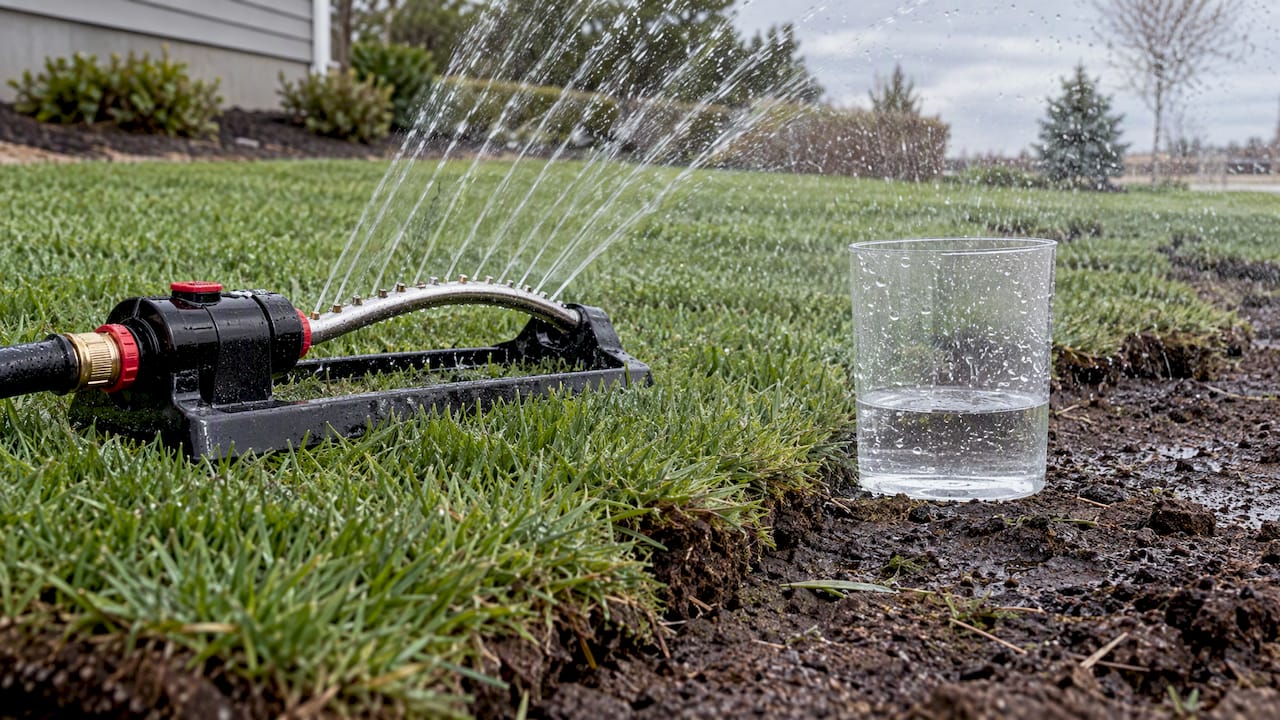
Hot, dry stretches push watering frequency back toward the week-one pattern temporarily. Cool, wet weather does the opposite: skip a cycle rather than irrigate into saturated soil. Where a municipality imposes watering restrictions, confirm whether new sod qualifies for an establishment exemption before assuming your schedule is affected.
Irrigation tools and how to confirm you’re watering correctly
Matching the tool to the lawn size and soil type avoids both runoff and dry patches. A basic hose and oscillating sprinkler suits small residential lawns and gives even, low-volume coverage. Soaker hoses work well along narrow strips or slopes where runoff is a concern. Automatic irrigation systems are worth the investment on larger properties, since they remove the guesswork around timing and duration.
On clay or compacted soils, water tends to run off before it penetrates. Cycle-and-soak irrigation, which splits a long watering session into two or three shorter bursts with breaks between, lets water absorb instead of pooling or sheeting away.
- Use a screwdriver or a soil probe to check penetration: it should slide easily to 75 to 100 millimetres during the first three weeks.
- A rain gauge or straight-sided can confirms how much water your sprinkler actually delivers in a given time.
- Check sod seams for gaps or curling, since open seams dry out faster than the rest of the lawn.
- A gentle tug test tells you when roots have taken hold. Resistance means the sod is anchoring.
Pro Tip: Check soil moisture at midday on a sunny afternoon, not right after watering, to see how the root zone is actually holding up between cycles.
Overwatering and under-watering mistakes that stall establishment
New sod fails for two opposite reasons, and both are common. Overwatering drowns the root zone, pushing out oxygen and inviting root rot. Watch for yellowing turf, a spongy or mushy feel underfoot, and soil that stays glossy with standing water hours after irrigation.
Under-watering shows up differently. Seams curl and pull apart, patches brown off first along the thinnest-laid edges, and the sod lifts easily because roots never extended into the native soil.
- Water early morning rather than evening: extended leaf wetness overnight raises the risk of fungal disease.
- Adjust frequency for soil texture: sandy soils drain fast and need shorter, more frequent cycles; clay and compacted soils need cycle-and-soak to avoid runoff.
- Treat hydrophobic or crusted soil before laying sod, since water will shed off the surface regardless of how much you apply afterward.
When to mow new sod and how watering changes afterward
Mow only once the sod has rooted firmly, generally 7 to 14 days after installation, and only when the ground is dry enough to avoid tearing the mat. Set the mower high for the first pass and never remove more than one third of the blade height at once.
- First mow: wait for firm rooting (confirmed by a gentle tug test), then cut at the higher end of your grass type’s recommended height.
- Pass direction: mow at a slight angle to the seams rather than straight along them to avoid dragging edges apart.
- Watering after mowing: water once, deeply, right after the cut to settle soil disturbed by the mower, then return to your established interval.
- Long-term rhythm: once mowing is routine, hold to the roughly 2.5-centimetre weekly maintenance target and adjust only for drought restrictions or extended rain.
ProZone’s site-practice notes for establishing sod in cold-climate regions
Grading and substrate depth decide whether a watering schedule can even succeed. ProZone confirms final grade, drainage slope, and topsoil depth before any sod or screened topsoil goes down, since sod laid over shallow or compacted subgrade dries out faster regardless of irrigation volume.
Timing from delivery to installation matters as much as the watering schedule itself. Technical sodding guidelines call for laying sod within 24 hours of delivery and rolling it after the first watering to press roots into firm contact with the soil.
- Confirm topsoil depth and drainage slope before delivery day, not after.
- Lay rolled sod within 24 hours to prevent desiccation and heat buildup inside the rolls.
- Roll newly laid sod after the initial soak to close air gaps between root mat and soil.
- Recheck moisture penetration after any freeze-thaw event, since repeated cycles can heave edges and loosen root contact.
Freeze-thaw shifts common to Edmonton-area installations change the moisture-monitoring routine, since surface thawing can mask a still-frozen root zone below. Probe checks on cold-climate projects should account for that lag, rather than relying on surface appearance alone. Readers planning a supply order can review sod availability ahead of their installation window.
What most sod-watering advice gets wrong
Most consumer guidance treats watering minutes as the goal, when the only number that matters is moisture depth. A sprinkler running for 20 minutes on sandy soil and the same sprinkler on compacted clay produce entirely different results underground, yet both follow the “20 minutes a day” instruction equally well on paper.
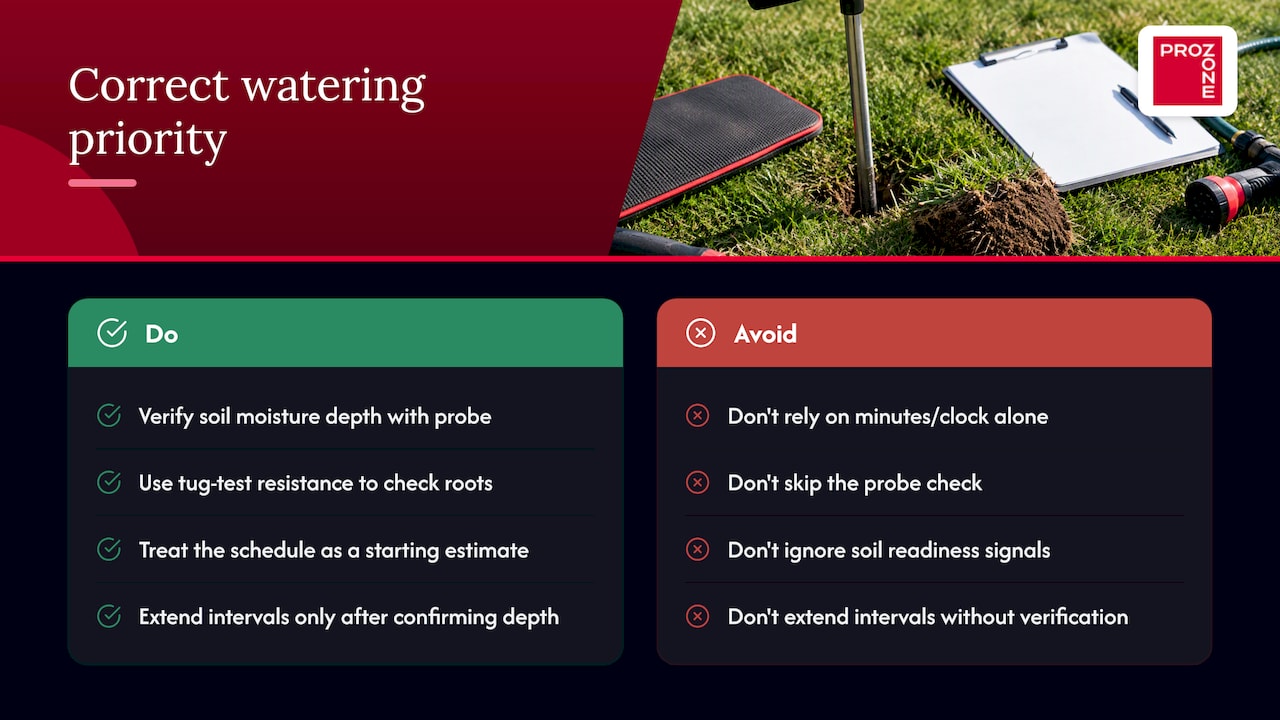
The week-by-week schedule outlined here holds up because it is anchored to measurable soil penetration and tug-test resistance rather than a fixed calendar. Readers who skip the probe check and trust the clock alone are the ones who end up with patchy establishment despite following every step.
If there is one priority to take from this, it is to verify depth before extending intervals. A schedule is only a starting estimate. The soil tells you when it is ready for the next phase, and ignoring that signal is where most establishment problems start.
— ProZone
Get sod, soil, and site-prep support from ProZone
Establishment problems usually start before the first watering, with shallow topsoil, poor grading, or sod that sat too long before laying. ProZone supplies fresh sod and screened topsoil and handles the grading and drainage work that determines whether a watering schedule can succeed at all.
- Sod and topsoil supply sized to the project, with delivery timing coordinated around the 24-hour laying window.
- On-site grading and drainage assessment before installation to reduce the chance of dry patches or standing water.
- On-site estimates and flexible delivery scheduling are typically available.
Request a free estimate through ProZone’s online services form or call ProZone directly to arrange a site assessment before your next sod delivery.
FAQ
How many minutes a day should I water new sod?
During the first 10 days, one watering session of 15 to 20 minutes per zone is typical, rising to twice daily in hot weather, based on municipal new-sod guidance. Actual minutes depend on your sprinkler’s output, so confirming depth with a soil probe matters more than the clock.
Can you overwater freshly laid sod?
Yes. Saturated soil pushes oxygen out of the root zone and can lead to root rot, shown by yellowing turf and a spongy, waterlogged feel underfoot. The fix is cycling shorter sessions rather than one long soak, which also reduces runoff on compacted soils.
How often should I water new sod through establishment?
Water daily for the first 7 to 10 days, then taper to every other day through roughly day 21, following the general establishment window municipalities use for new sod. After that, maintenance watering targets about 2.5 centimetres per week, split into one or two deep sessions.
What should new sod look like after one week?
At one week, turf should show even green colour with no browning at the seams, and the soil underneath should stay moist to a probe depth of 75 to 100 millimetres as outlined in municipal specification TS 5.00. Roots will not yet resist a gentle tug, which is normal at this stage.