
Scaling is surface flaking of the mortar layer; spalling is deeper cover loss that often exposes aggregate or rebar and is potentially structural. We assess both conditions against CSA A23.1 exposure-class guidance during inspections. If you’re seeing shallow flaking, routine maintenance usually solves it. If rebar is visible, you need a diagnostic review before winter sets in.
Table of Contents
- Scaling, spalling, delamination and popouts: what each one actually is
- How to tell scaling and spalling apart on site
- What causes scaling and spalling in the first place
- Grading severity: from cosmetic flaking to structural risk
- Repairing scaling and spalling: matching the fix to the damage
- Why early diagnosis matters more in freeze-thaw climates
- Get a professional assessment from ProZone
- FAQ
- Sources
Scaling, spalling, delamination and popouts: what each one actually is
Property managers often lump every form of concrete surface damage into one category, but each type points to a different cause and a different fix.
- Scaling: shallow loss of the top mortar layer, typically 3 to 6 millimetres deep, leaving a rough, flaky surface without exposing rebar.
- Spalling: deeper fragmentation of the concrete cover that reveals coarse aggregate or reinforcing steel and signals a possible corrosion process underway.
- Delamination: a subsurface split between layers of concrete that produces a hollow sound when tapped, even though the surface may still look intact.
- Popouts: small, cone-shaped craters that form around a single reactive aggregate particle or an air pocket near the surface.
Getting these labels right matters because a contractor who patches a spall without addressing the rebar underneath is setting up a repeat failure within a year or two.
How to tell scaling and spalling apart on site
You don’t need a lab to make a first-pass judgment. A short visual and tactile inspection tells you most of what you need to know before calling in diagnostics.
Start with what you see: exposed coarse aggregate or steel bar, rust staining bleeding from cracks, and the shape of the damaged edge (rounded and shallow suggests scaling, jagged and deep suggests spalling). Pattern matters too: scaling tends to spread evenly across a slab exposed to de-icing salt, while spalling often clusters near joints, drains, or areas with known chloride exposure.
- Sound the surface with a hammer or a dragged chain; a hollow or drummy tone over a wide area points to delamination beneath an intact-looking surface.
- Probe suspect edges with a screwdriver or similar tool; mortar that crumbles away easily confirms scaling, while resistant concrete that only fails at depth suggests a deeper spall.
- Scrape the loose material off to bare substrate and measure the resulting depth; anything beyond roughly 10 millimetres with visible aggregate warrants a closer look at the rebar.
- Check for rust bleed at cracks and spall edges, since active staining usually means corrosion is already progressing beneath the surface.
Pro Tip: Keep a dated photo log of every inspection point; a side-by-side comparison six months later tells you whether a spall is static or actively growing.
Wear eye protection and gloves when probing or chipping, and keep foot traffic clear of any area where you’ve exposed sharp edges or rebar.
What causes scaling and spalling in the first place
Scaling and spalling come from different stages of the same broader problem: water, freezing, and chloride exposure attacking concrete that wasn’t specified or finished to handle them.
- Repeated freeze-thaw cycles combined with de-icing salt expand trapped moisture in the surface pores, popping off thin layers of mortar, which is the classic mechanism behind scaling.
- Chloride ingress through cracks or porous cover reaches the rebar and starts an electrochemical corrosion process that generates expansive rust, building internal pressure that eventually cracks and spalls the cover concrete.
- Mix design plays a direct role: CSA A23.1 sets a maximum water-to-cementing-materials ratio of 0.45 and requires proper air entrainment for exterior flatwork in Class C-2 exposure, and skipping either is a major contributor to premature scaling.
- Overfinishing or excess surface water during placement weakens the top mortar layer even when the underlying mix is sound.
Air entrainment and a correctly limited W/CM ratio remain the two most accessible specification controls against scaling in freeze-thaw and chloride exposure conditions. Scaling tends to show up within one or two winters of a poor pour, while corrosion-driven spalling can take years to surface, which is why older slabs with no visible scaling can still be hiding advanced rebar corrosion.
Grading severity: from cosmetic flaking to structural risk
Not every damaged slab needs the same response, and matching the right diagnostic to the right severity band saves both money and time.
- Cosmetic scaling: thin, even flaking with no exposed aggregate; a surface repair and a sealing program usually resolve it.
- Moderate surface loss: deeper, patchy scaling or small spalls with no visible steel; worth a closer probe and, in exposed-to-salt lots, a chloride content test.
- Spall exposing rebar: visible steel, especially with rust staining, should trigger half-cell potential testing to map the extent of active corrosion before any patch goes down.
- Progressive spalling: multiple spalls growing in size or number across a season point to a structural repair, not a maintenance task.
Exposed rebar, active rust bleed, and spalls that visibly grow between inspections are the three clearest urgency signals. A quick surface patch on a slab with active corrosion underneath is a false economy: the patch will debond within a season because it never addressed the steel driving the failure.
Repairing scaling and spalling: matching the fix to the damage
The repair method has to match what’s actually happening below the surface, not just what’s visible on top.
- Mild scaling: clean the surface, apply a bonding agent, place a thin repair mortar layer, and finish with a penetrating sealer.
- Partial-depth spalling: saw-cut and remove unsound concrete down to solid substrate, then restore the profile with a polymer-modified repair mortar.
- Structural spalling with corroded rebar: expose the steel fully, clean it back to bare metal, apply an anti-corrosion coating, and rebuild the section with a repair material matched to the existing substrate under controlled curing.
Pro Tip: Ask any contractor quoting a spall repair whether they’re cleaning rebar to bare metal; if they skip that step, the patch is cosmetic, not corrosion control.
Proper surface preparation, correct curing, and a post-repair inspection are what separate a repair that lasts a decade from one that fails by the next freeze-thaw season. Each of these checks is built into the repair scope before calling a job complete, with a concrete repair workflow that follows this sequence on site.
Why early diagnosis matters more in freeze-thaw climates
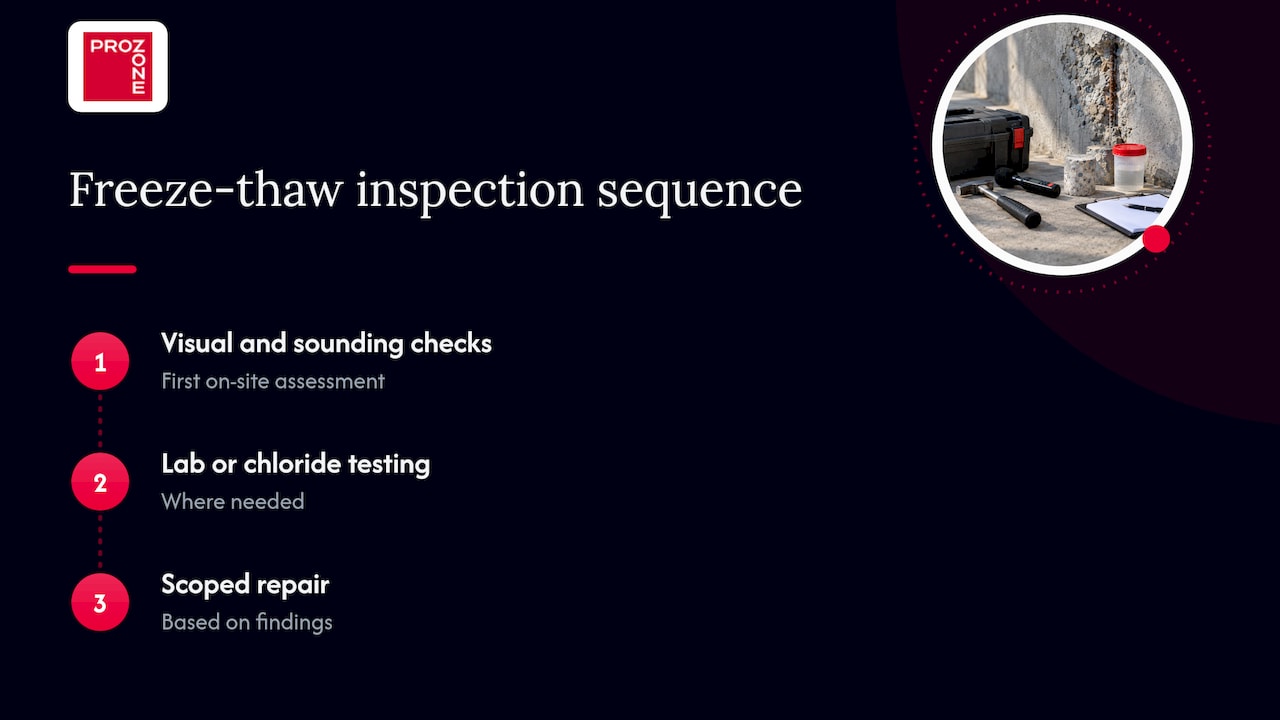
Edmonton’s freeze-thaw cycles accelerate both scaling and corrosion, and a spall left untreated through one winter is often two or three times larger by spring. Projects are staged with visual and sounding checks first, lab or chloride testing where needed, then scoped repair based on findings.
Routine inspection cadence, dated photo records, and a maintenance schedule tied to the freeze-thaw calendar catch scaling before it becomes a spall, and catch a spall before it becomes a structural line item.
— ProZone
Get a professional assessment from ProZone
A clear diagnosis now costs far less than a structural repair later. We handle the full range, from concrete services and curb and sidewalk repair to parking lot maintenance and asphalt work, backed by Alberta Safety Codes compliance and material standards that hold up against local freeze-thaw cycles.
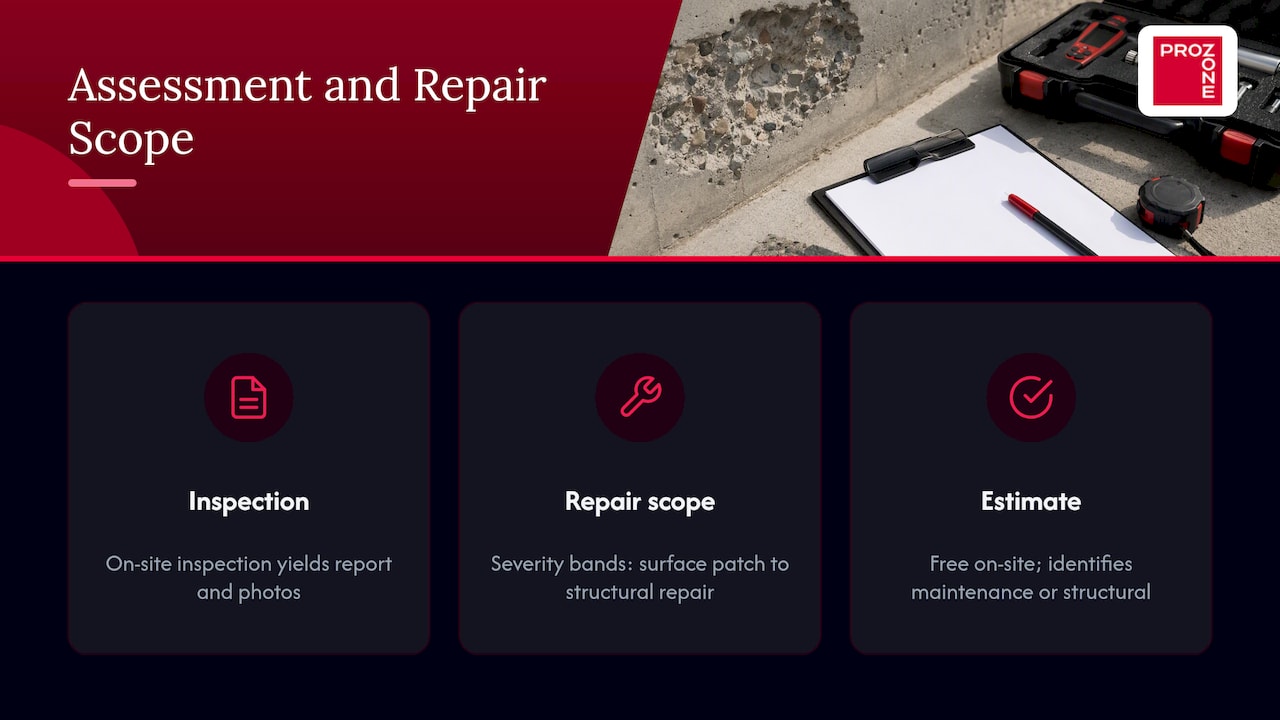
An on-site inspection provides a written report, photo documentation of problem areas, and a recommended scope broken down by severity band, from surface patch to full structural repair. Our team also supplies landscaping and hardscaping materials if your project extends beyond the concrete itself.
Call directly or submit the online form for a free on-site estimate, with a clear assessment indicating whether the issue is maintenance or structural.
FAQ
Can you fix concrete scaling?
Yes, mild scaling is usually fixed with surface cleaning, a bonding agent, a thin repair mortar layer, and a sealer. Catching it early, before it deepens into a spall, keeps the repair to a surface-level job rather than a structural one.
What is the difference between spalling and scaling?
Scaling is shallow flaking of the top mortar layer, while spalling is deeper cover loss that often exposes aggregate or rebar and can signal active corrosion. Scaling is almost always a maintenance issue; spalling that reaches rebar is a structural concern.
What is concrete scaling?
Concrete scaling is the loss of the thin surface mortar layer, usually a few millimetres deep, caused mainly by freeze-thaw cycling combined with de-icing salt exposure. It leaves a rough, flaky surface but doesn’t typically expose reinforcing steel.
What causes scaling in concrete?
Scaling is driven by repeated freezing and thawing of moisture trapped near the surface, made worse by de-icing salts and by a mix that lacks proper air entrainment or exceeds the maximum water-to-cementing-materials ratio. Overfinishing during placement can also weaken the top layer even when the mix itself is sound.
Sources
For exposure-class requirements and mix limits, CSA A23.1 guidance on durability sets the W/CM and air entrainment thresholds referenced throughout this guide. Facility managers assessing a slab that’s past simple visual inspection can reference NRC infrastructure condition assessment services for petrographic and chloride profiling methods.
For ongoing sealing and de-icer guidance, the Cement Association of Canada’s residential flatwork brochure outlines a practical maintenance cadence. Technical background on how chloride ingress drives corrosion and spalling is covered in published finite element research on moisture and chloride diffusion, and broader service-life research is available through NRC’s high-performance concrete studies.
- TAC technical guidance (Sullivan) on durability and mix requirements