
A lot grading certificate is a certified as-built survey prepared by an Alberta Land Surveyor, used by the City to verify that your finished grades match the approved plan. Your next step is simple: hire an Alberta Land Surveyor, then submit the certificate through the City of Edmonton Lot Grading Self-Serve portal to request an inspection.
Table of Contents
- What a lot grading certificate is and why Edmonton requires it
- Who must prepare the certificate and the standards surveyors follow
- Timelines and fees you must meet to keep your project on schedule
- Exact tolerances and slope rules inspectors use
- Step-by-step: preparing, ordering a survey and submitting the lot grading certificate
- Common reasons inspections fail and practical fixes to avoid reinspection
- ProZone’s practical tips for Edmonton projects: freeze-thaw, scheduling and coordination
- Why precise grading protects Edmonton’s drainage and your basement
- How we can help with grading, earthworks and surveyor coordination
- FAQ
- Sources
- Official City and professional resources to consult
What a lot grading certificate is and why Edmonton requires it
The certificate records what was actually built, not what was designed. The City compares those as-built elevations with the approved Lot Grading Plan to confirm that water leaves your lot the way the plan intended.
The Alberta Land Surveyors’ Association describes the certificate as a verified legal record of as-constructed site elevations that the City relies on. Edmonton requires it for a few practical reasons:
- It confirms that surface water drains away from your foundation instead of pooling against it.
- It protects neighbouring properties from runoff caused by a lot of sitting too high or too low.
- It keeps the municipal stormwater system from absorbing drainage it was never sized for.
- It ties your building permit to a documented, checked result rather than a verbal assurance.
Who must prepare the certificate and the standards surveyors follow
Only an Alberta Land Surveyor can prepare and certify the document. They work to the ALSA Manual of Standard Practice, which sets vertical accuracy and reporting standards. As-built surveys require redundant observations and checks to known benchmarks, and the ALSA resources document sets accuracy requirements for level circuits.
The final plan must carry specific items:
- Scale and the vertical datum used
- Survey dates
- Surface condition at the time of survey
- Legal description of the lot
The surveyor certifies the measurements, but the surveyor is not the approving authority. The City reviews the plan, inspects the site and issues the result.
Timelines and fees you must meet to keep your project on schedule
The City’s approval process has two mandatory stages, and each has a clock that starts with your building permit.
- Rough Grade: must be approved within the applicable City deadline. Confirm the current deadline with the City of Edmonton.
- Final Grade: must be approved within the applicable City deadline. Confirm the current deadline with the City of Edmonton.
- Inspection fees: the 2026 fee schedules list $160 for a single detached, semi-detached or duplex inspection and reinspection fees around $180. Multi-unit and non-residential fees are higher, and GST applies.
Fees are reviewed periodically, so confirm the current amount with City Development Services, Lot Grading before you book. If you are budgeting a whole project, our site grading cost and City fees guide covers the wider picture.
Exact tolerances and slope rules inspectors use
Inspectors work from numbers, not impressions. The City’s Residential Lot Grading Guidelines set the limits your surveyor will measure against.
Rough grade tolerance: Keep rough grade lower than final so topsoil can bring it up to design height.
- Final grade, topsoil: Keep the finished elevation within the City’s applicable tolerance.
- Final grade, finished landscaping: Keep the finished elevation within the City’s applicable tolerance.
- Slope: Maintain the slope specified in the approved plan.
- At the foundation: Grade soil to slope away from the basement wall in accordance with the approved plan.
Decorative cover changes how you measure. Slope is taken from the underlying soil, not the top of rock or mulch, and that is a common inspection mistake. A homeowner’s guide from the City also advises collecting three professional quotes before choosing a contractor.
Step-by-step: preparing, ordering a survey and submitting the lot grading certificate
The sequence below follows the City’s Final Grade steps and applies the same way at the Rough Grade stage.
- Finish rough or final grading to match the approved Lot Grading Plan, and make the site accessible.
- Hire an Alberta Land Surveyor to prepare the certificate with every required checklist element.
- Submit the electronic certificate through the Lot Grading Self-Serve portal to request inspection.
- Wait for the inspector. The scheduling time depends on workload and weather.
- Receive a Passed or Failed Inspection Report.
- If the inspection fails, correct the deficiencies and book a reinspection online. Confirm the applicable correction deadline with the City.
Three practical points apply along the way:
- Reinspection fees may apply, so a clean first visit saves money.
- Weather and workload can stretch the inspection window.
- Keep the surveyor’s final plan on file for resale and future permits.
Common reasons inspections fail and practical fixes to avoid reinspection
Most failures trace back to a short list of problems:
- Inadequate slope near the foundation
- Decorative cover hiding the true soil elevation
- Blocked access or locked gates
- Missing items on the survey plan
- Swales with inconsistent gradients
Run through this checklist before the surveyor arrives:
- Confirm topsoil is placed, spread smoothly and compacted, ready for sod, rock or mulch.
- Clear materials, vehicles and debris from the lot.
- Unlock gates and confirm access for both surveyor and inspector.
- Check that the surveyor used the correct datum and noted surface conditions.
The City labels deficiencies as left, right, front and back from a fixed perspective, so read the report with the lot’s orientation in mind. Correct a failure by the deadline stated in the inspection report, and note that a reinspection may carry a fee.
Pro Tip: Photograph the lot from each corner the day before the survey. If a question comes up later, you have dated proof of the surface condition.
ProZone’s practical tips for Edmonton projects: freeze-thaw, scheduling and coordination
Edmonton’s freeze-thaw cycles can challenge grading. Changes in soil conditions may affect the surface, so inspect and maintain drainage over time. Our crews work to Alberta Safety Codes, and we plan grading around that reality.
- Book the survey after topsoil placement but before loose planting, so as-built elevations match the finished grade.
- Compact in lifts and avoid finishing final grade right before a deep freeze.
- Choose materials that tolerate repeated freezing and thawing.
- Keep the site clear and accessible so inspectors are not turned away.
Our driveway drainage guide for glacial clay explains how local soil behaves, and the subsurface drainage explainer covers what sits beneath the surface.
Pro Tip: Sequence hardscape and landscaping crews so no one disturbs graded soil after the survey is booked.
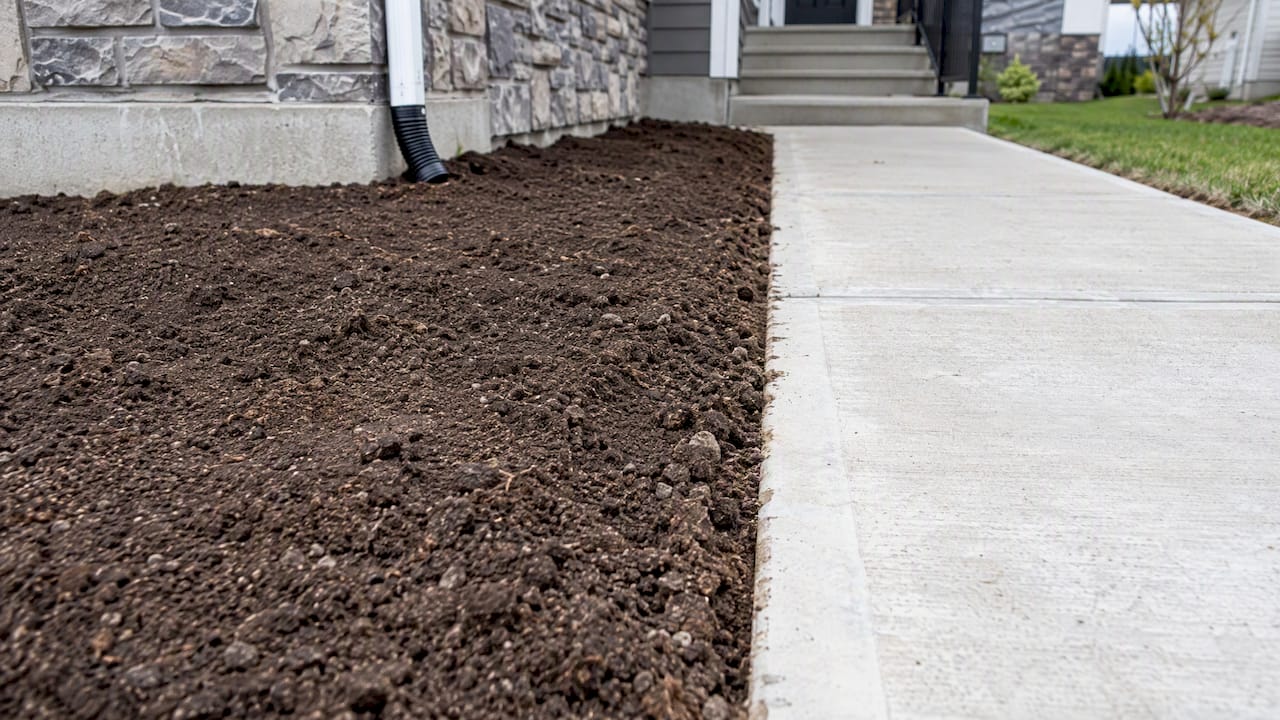
Why precise grading protects Edmonton’s drainage and your basement
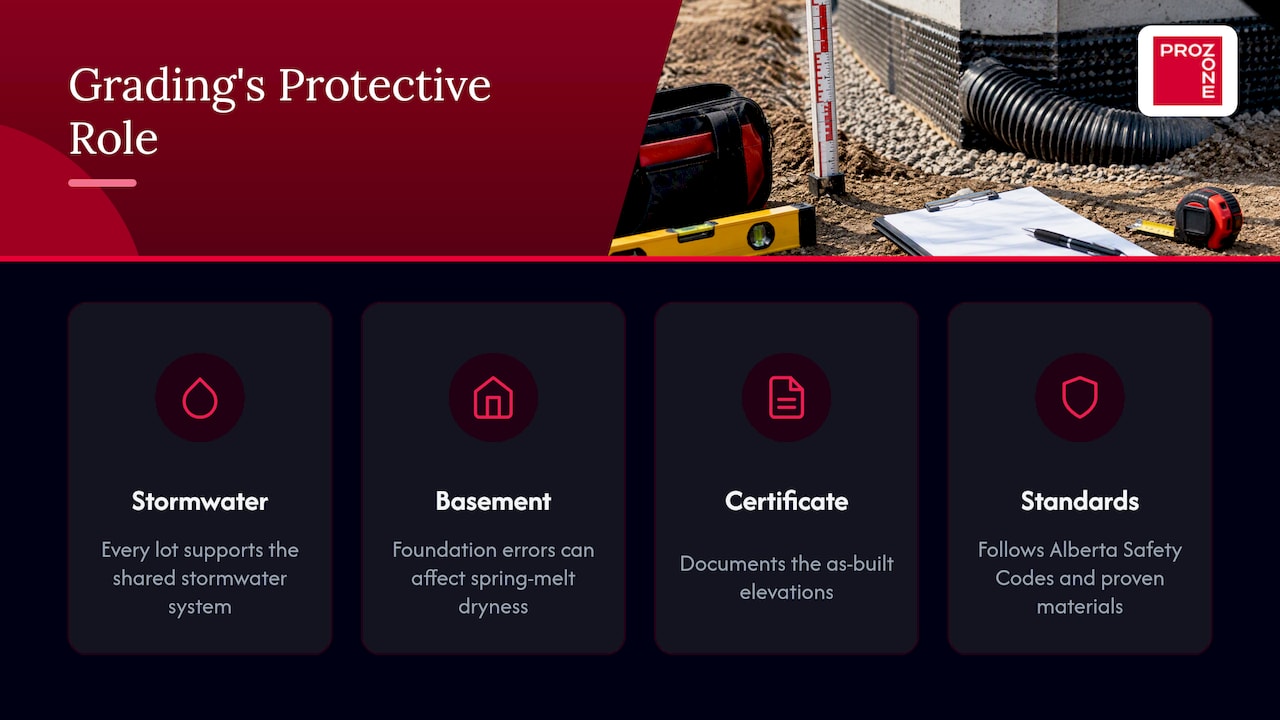
As Edmonton densifies, every lot carries more responsibility for the shared stormwater system. A few centimetres of error at the foundation line can decide whether a basement stays dry through spring melt. Correct grading can help reduce the risk of costly drainage repairs, and the certificate documents the as-built elevations.
We follow Alberta Safety Codes and use proven materials because the City’s expectations are measurable and unforgiving.
— ProZone
How we can help with grading, earthworks and surveyor coordination
We support lot grading certificate success from the first cut to the final pass. Our services cover the work that decides whether an inspection passes:
- Earthworks, excavation and compaction
- Topsoil and base material supply
- Coordination with your Alberta Land Surveyor on timing
- Materials and careful project coordination
We offer a free on-site consultation in the Edmonton region. Use the online form or call us directly for a free estimate, and we will help you coordinate with the City.
FAQ
What is a lot grading certificate in Edmonton?
It is a certified as-built survey prepared by an Alberta Land Surveyor. The City uses it to confirm your finished grades match the approved Lot Grading Plan.
How long does a lot grading inspection take?
The City usually schedules inspections depending on workload and weather, per its Final Grade Approval steps. You then receive a Passed or Failed Inspection Report.
What happens if my lot fails inspection?
Correct the deficiencies by the deadline in the inspection report, unless otherwise noted. Then book a reinspection online, and note that a reinspection fee may apply.
How much should topsoil sit below final grade at rough stage?
The City’s Lot Grading FAQ says rough grade should be left lower than final grade to allow for topsoil. That space allows for smooth, compacted topsoil.
Sources
- Residential Lot Grading Approval | City of Edmonton
- Lot Grading: Alberta Land Surveyors’ Association
Official City and professional resources to consult
Start with the City of Edmonton lot grading pages, the Residential Lot Grading Guidelines and checklist, the ALSA Manual of Standard Practice and the City fee schedules. For case-specific questions, contact City Development Services, Lot Grading directly.