
Stack parking lot snow piles on the downgradient edge of the lot, out of sightlines and away from hydrants and accessible stalls. Reserve 500 to 1,500 cubic metres per hectare, roughly 3 to 8% of paved area, as your planning baseline. Large piles often persist into spring, so route meltwater to catch basins first, and book hauling with ProZone before storage runs out.
Table of Contents
- How do you decide where piles go and how much space to reserve?
- What should you know about drainage, meltwater and road salt?
- Who is responsible for snow on your property, and what are the safety risks?
- Which equipment and tactics keep snow from compacting?
- When should you haul snow off site?
- What should you check after the snow melts?
- What we believe about snow piles in freeze-thaw climates
- Get a free site review and estimate from ProZone
- FAQ
- Sources
How do you decide where piles go and how much space to reserve?
Start with the pavement itself. Piles belong along downgradient edges, clear of pedestrian destinations, fire lanes, hydrants and accessible stalls. If your lot has EV charging, keep piles off those stalls too, since charging layouts need unobstructed access in winter.
Sun and wind matter more than most managers expect. A pile in a shaded corner under a canopy will outlast one on open pavement by weeks, so avoid shade where you can. Keep heights within the safe stacking limits of your equipment and local practice.
Planning baseline: reserve 500 to 1,500 cubic metres of snow storage per hectare of parking lot, about 3 to 8% of paved area for a 3 metre high pile.
Use that range to size your storage before the first snowfall:
- Mark storage zones on a site plan and share it with every crew.
- Choose the low end only for lots with easy hauling access.
- Plan a second pile location in case the first fills early.
- Keep pile edges clear of drains, so meltwater has a path.
What should you know about drainage, meltwater and road salt?
Treat meltwater as contaminated runoff. The Transportation Association of Canada warns that snow piles concentrate road salt, sediment and hydrocarbons, so the water leaving them should be treated rather than released straight to sensitive areas.
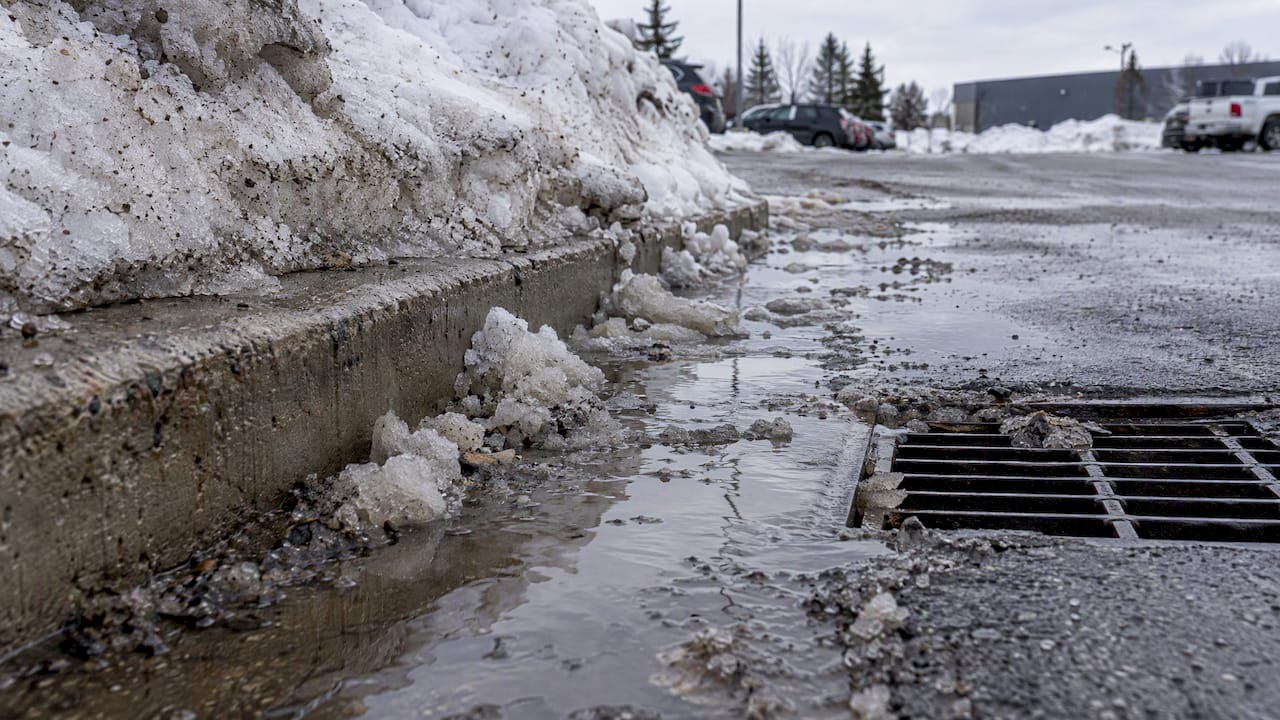
Good lot design helps. Parking lot guidance recommends slopes of 2% to 4% to limit ponding, with catch basins placed near snow piles. Lot grading standards go a step further and describe routing meltwater through oil grit separators to catch contaminants before discharge.
Canada’s Code of Practice for road salts recommends a salt management plan. Its essentials apply directly to your piles:
- Keep salt in covered storage.
- Use application technology that avoids over-spreading.
- Monitor runoff and locate piles away from vulnerable areas.
- Shorten the travel distance from pile to catch basin.
- Consider paved pads or vegetated swales in non-sensitive areas.
Pro Tip: Walk the lot on a mild winter day and watch where meltwater actually flows, then move your pile location to match.
Who is responsible for snow on your property, and what are the safety risks?
You are. In Edmonton, commercial property owners remain responsible for snow on and next to their property, and must arrange off-site hauling when on-site storage is full. Municipal procedures also set removal windows and parking ban responses, and businesses can be fined for obstructing required clearances.
Sightlines are the practical safety issue. A pile at an exit or crosswalk hides pedestrians and vehicles from each other, and a pile blocking a hydrant or accessible stall creates liability on its own. Signage and a written storage plan reduce conflicts with the public and inspectors.
Keep these records for every storm:
- Date and time of pile placement.
- Pile volumes reserved against capacity.
- Contractor name and equipment used.
- Photos of marked storage areas.
Written records protect you if a claim or inspection follows. Our guide to commercial snow removal covers how to build these expectations into a contract.
Which equipment and tactics keep snow from compacting?
Compaction is what turns a manageable pile into ice bonded to asphalt. Operational guidance says to avoid long plow routes, because repeated passes pack snow and strengthen the bond between ice and pavement. Short routes to designated storage stalls solve most of the problem.
Match equipment to the job:
- Plow trucks handle longer moves along drive aisles.
- Pushers clear high-volume open areas quickly.
- Loaders stack piles higher and re-handle snow when space tightens.
- Clearly marked storage areas keep different contractors on one plan.
In Edmonton’s climate, freeze-thaw cycles do real damage. Research notes that poorly placed piles cause ponding and pavement cracking when water refreezes in cracks, so staging matters beyond the storm itself. In spring, break large piles apart to expose more surface and speed melting, and spread storage across several smaller piles if one big pile cannot fit.
Pro Tip: Assign each storage stall a number on your site plan so crews and inspectors refer to the same location.
Our pro guide to safe and efficient snow removal goes deeper on sequencing.
When should you haul snow off site?
Haul when on-site storage is full, when sightlines or access are compromised, or when piles start to threaten drainage or infrastructure. Waiting for a pile to cause a problem is the costly option.
Disposal sites need scrutiny. Provincial guidance recommends that sites be large enough for projected loads, screened from public view and assessed for runoff impacts before accepting snow from busy parking lots. Look for sites away from sensitive water bodies, with sensible access and noise controls.
Snow melters shrink your footprint, but they come with strings attached. Portable melters need sanitary drainage and approvals and can create remediation obligations, which makes them costly for many sites.
To control hauling costs:
- Coordinate loads with neighbouring sites.
- Use municipal facilities where they accept private snow.
- Schedule hauling before capacity is exceeded, not after.
What should you check after the snow melts?
Spring is when the damage shows. Work through this sequence as soon as the pad is bare:
- Collect litter and debris from former pile pads, then sweep or wash to remove salt and hydrocarbons.
- Clean catch basins and oil grit separators immediately after melt.
- Inspect curbs, signs and pavement for cracks, heaving and edge damage.
- Schedule repairs promptly, since open cracks take on water and deteriorate through the next freeze-thaw cycle.
- Document damage and remediation for warranty and insurance purposes.
Our guides on parking lot maintenance basics and common commercial parking lot repairs help you prioritize what to fix first.
What we believe about snow piles in freeze-thaw climates
Most snow pile problems are decided before the first storm. We plan storage locations in the fall, keep plow travel short, and design meltwater routing so it reaches treatment instead of the street. We work to Alberta Safety Codes and use quality materials and equipment, because a pile that damages new pavement defeats the purpose of maintaining it. A prompt site plan review is the most practical next step you can take.
— ProZone
Get a free site review and estimate from ProZone
If your lot has outgrown its storage, we can help with a plan and the work behind it.
- Commercial snow removal and hauling
- Excavation for drainage and storage improvements
- Spring parking lot maintenance and pavement repair
Working with a contractor reduces your liability and prolongs pavement life. Use our online form or call us for an on-site consultation.
FAQ
What is a snow windrow?
A windrow is the long, narrow ridge of snow a plow leaves along the edge of a cleared lane or lot. Windrows can block sightlines and entrances, so they should be moved to designated storage areas rather than left at exits.
How long do large parking lot snow piles last?
Large piles commonly persist into spring, particularly in shaded spots, because their size and compaction slow melting. Open sun exposure and breaking piles apart in spring speed the process, and hauling removes the problem entirely when capacity is exceeded.
How much space should you reserve for snow storage?
Plan for 500 to 1,500 cubic metres per hectare, which works out to about 3 to 8% of paved area. Size toward the higher end if hauling is difficult or your region sees heavy snowfall.
Why does meltwater from snow piles need treatment?
Piles gather road salt, sediment and hydrocarbons as they sit. Routing meltwater to catch basins and, where possible, through oil grit separators keeps those contaminants out of sensitive areas, as Canada’s road salts code emphasizes.