
Installed asphalt for a commercial parking lot in Edmonton typically runs within a moderate range per square foot, with most well-specified projects landing near the middle of this range. Basic single-lift jobs sit at the low end; commercial two-lift designs with proper granular base and drainage push toward the high end, and subgrade preparation drives long-term performance more than any other line item.
That range translates into real numbers fast. Small and medium office or retail lots in typical size ranges may cost tens of thousands of dollars installed, with larger lots costing substantially more. Per-stall math (about 300 to 350 square feet per stall including aisles) is a faster gut check for owners scoping early budgets.
- Small lot (4,000 to 5,000 sq ft): costs vary but remain in the lower tens of thousands
- Medium lot (15,000 to 20,000 sq ft): costs significantly more, reflecting size and complexity
- Large lot (30,000+ sq ft): requires highest budget depending on base and drainage scope
Pro Tip: Mobilization and crew minimums are fixed costs. A 3,000 sq ft lot and a 30,000 sq ft lot don’t cost 10 times apart, because per-square-foot pricing drops as lot size grows and fixed costs spread over more area. Get quotes on projects close to your actual scale.
Table of Contents
- Why asphalt parking lot costs vary across Edmonton sites
- What are typical unit rates for asphalt paving in Edmonton?
- Sample project estimates by lot size
- What permits and bylaws affect Edmonton parking lot costs?
- How do you get accurate, comparable paving quotes?
- How long does asphalt last and what maintenance does it need?
- How does Edmonton’s freeze-thaw climate affect paving design?
- What financing options exist for parking lot paving in Edmonton?
- Budgeting tips: how much contingency should you plan for?
- How do you get a free estimate from Prozoneltd?
- Sources
- FAQ
Why asphalt parking lot costs vary across Edmonton sites
No two lots price the same, even at identical square footage. Layout efficiency, drainage complexity, and existing surface conditions swing bids by thousands of dollars before a truck ever arrives on site.
The core drivers are consistent across most commercial jobs:
- Lot size and layout efficiency (irregular shapes waste material and machine time)
- Subgrade condition and excavation depth required
- Granular base thickness (typically 150mm to 300mm in Edmonton, depending on load class)
- Asphalt thickness: single lift versus two-lift commercial design
- Drainage and stormwater management requirements
- Demolition and haul-off of existing pavement
- Site access and equipment mobilisation
- Striping, signage, and accessible-stall markings
Edmonton’s freeze-thaw cycles add a layer most southern guides ignore entirely. Paving season generally runs May through October, and contractors working outside that window face compaction and curing risks that show up as cracking within two winters.
Pro Tip: Watch for change-order triggers before they happen: skipped compaction testing, missing edge details at drainage points, and undersized granular base are the three most common reasons a “budget” bid balloons mid-project.
What are typical unit rates for asphalt paving in Edmonton?
Line-item pricing lets you sanity-check a bid instead of just comparing bottom-line totals. Here’s how Edmonton commercial paving typically breaks down per square foot, in Canadian dollars.
| Line item | Low | Typical | High |
|---|---|---|---|
| Mobilization (per project, not sq ft) | $800 | $1,800 | $4,000 |
| Demolition and haul-off | $0.75 | $1.25 | $2.50 |
| Granular base (150 to 300mm) | $0.90 | $1.60 | $2.75 |
| HMA binder and surface course | $2.25 | $3.40 | $4.50 |
| Tack coat and edge sealing | $0.15 | $0.25 | $0.40 |
| Striping and ADA markings | $0.20 | $0.45 | $0.85 |
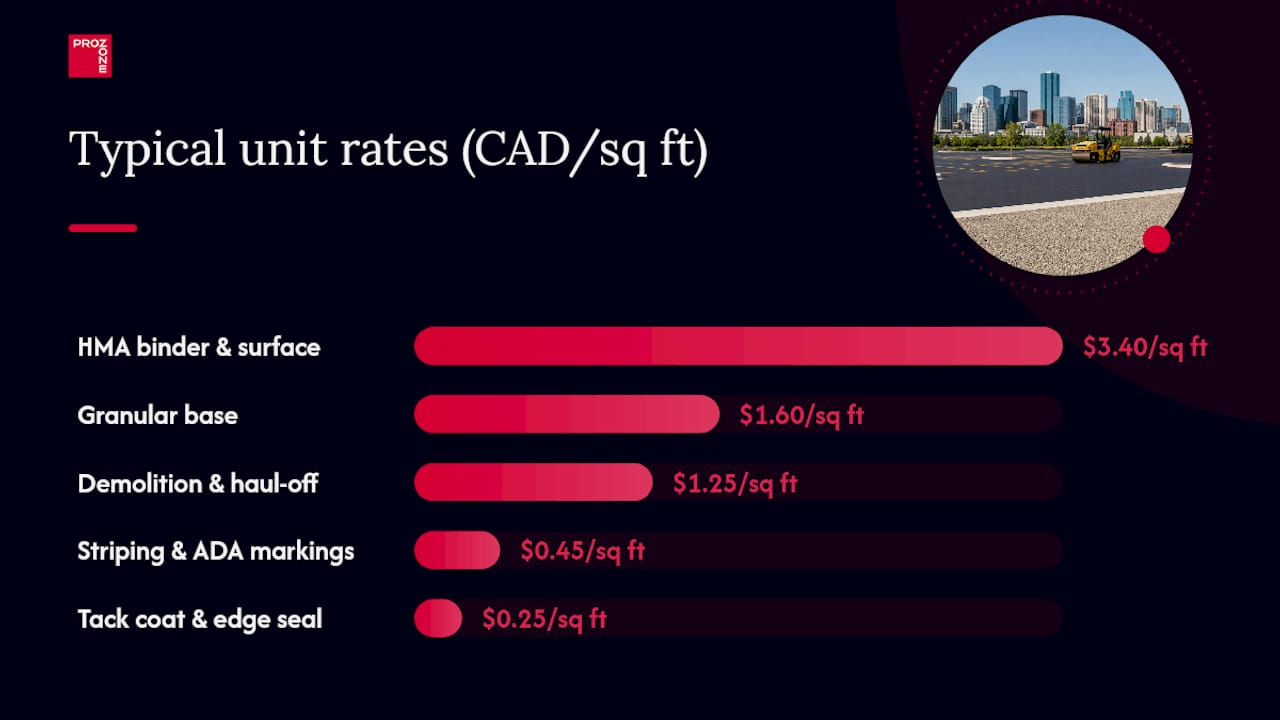
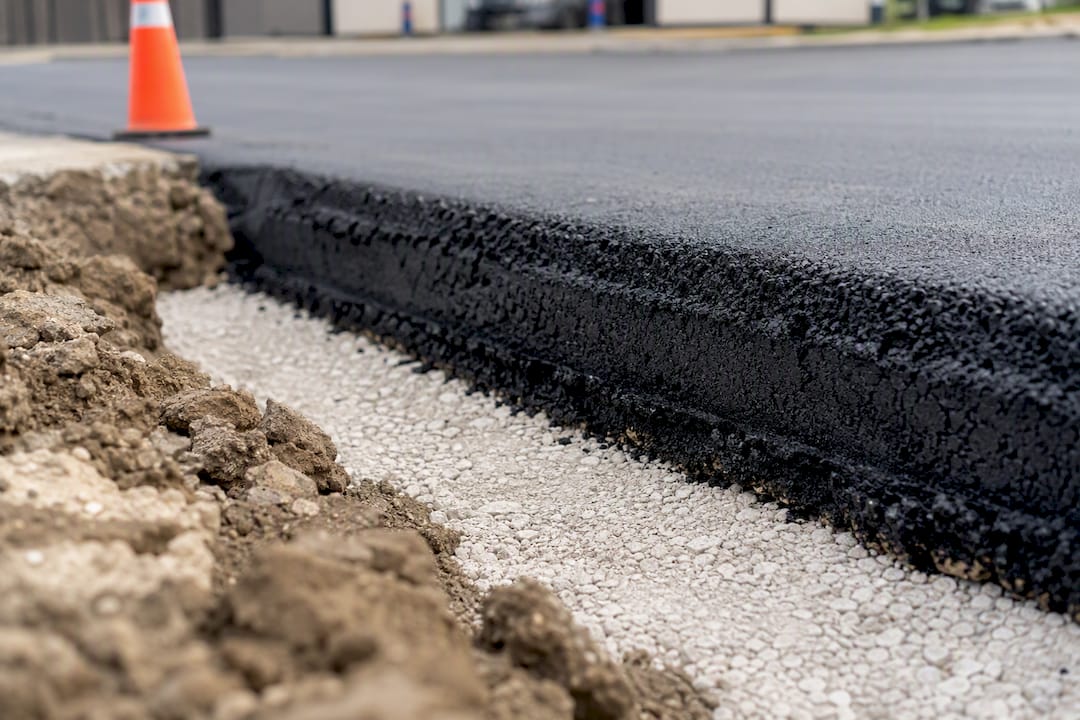
A 3-inch single-lift design suits light-duty passenger lots. A 4-inch two-lift build (binder course plus surface course) costs more upfront but extends service life meaningfully under heavier traffic and Edmonton’s frost cycles.
Pro Tip: Small jobs get hit hardest by minimum crew charges. If your lot is under 5,000 square feet, ask whether the quoted per-square-foot rate already includes mobilization, or if it’s a separate line, since bundling can hide a much higher effective rate.
Sample project estimates by lot size
Real numbers help more than formulas. These three examples assume standard commercial specs: 200mm granular base, single-lift 3-inch asphalt for small/medium, two-lift 4-inch for the large example.
| Project type | Size | Estimated total | Key assumptions |
|---|---|---|---|
| Small office lot | 4,000 to 5,000 sq ft | $18,000 to $42,500 | Minimal demo, no ADA restriping |
| Medium retail/medical lot | 15,000 to 20,000 sq ft | $67,500 to $170,000 | Full striping, 2 ADA stalls, drainage grading |
| Large retail/institutional lot | 30,000+ sq ft | $135,000 to $255,000+ | Two-lift design, full demo, stormwater tie-ins |
Add a contingency of 10 to 15% on top of any quoted total. Subgrade surprises, like unexpected soft spots or old utility conflicts, are the most common source of budget overruns on Edmonton sites.
What permits and bylaws affect Edmonton parking lot costs?
Every commercial paving project in Alberta falls under the Alberta Safety Codes Act, which requires safety-code permits and inspections for infrastructure work. Municipal development and building permits may also apply, depending on scope and whether you’re expanding an existing lot footprint.
Local land-use bylaws typically require hard surfacing, set minimum stall and aisle dimensions, cap maximum slopes, and mandate maintained, clearly marked parking areas. A development permit is generally triggered whenever a project adds vehicle access, manoeuvring space, or new parking capacity.
- Confirm whether a development permit applies to your scope
- Budget for safety-code permit and inspection fees
- Check apron and access-point requirements against your driveway connection
Pro Tip: Apply for permits before finalizing your paving schedule. Edmonton’s driveway and related permit fees and processing windows can add weeks if submitted late in the paving season.
How do you get accurate, comparable paving quotes?
Vague bids are the number one reason budgets blow up mid-project. Insist on line-item detail before comparing any two contractors’ numbers.
Send every contractor the same questionnaire:
- What is the granular base depth and compaction spec (proctor density target)?
- Is this a single-lift or two-lift asphalt design, and what’s the finished thickness?
- Does the quote include tack coat and edge sealing at all transitions?
- How is drainage and catchment handled, and is grading included?
- Are ADA stalls, signage, and striping in the base price or an add-on?
- What warranty covers workmanship, and what’s the maintenance plan?
- What’s the payment schedule, and are deposits tied to milestones?
Red flags to watch for in any bid:
- No mention of granular base depth or compaction testing
- Vague “asphalt paving” line with no thickness specified
- No reference to safety-code permits or municipal compliance
- Lump-sum pricing with no unit rates for add-ons
Pro Tip: Ask for unit prices on every add-on item, plus references and a project gallery from work completed in the last two winters. A contractor confident in their compaction work will show you the results.
How long does asphalt last and what maintenance does it need?
Realistic lifecycle planning starts with maintenance, not just installation quality. Well-built, well-maintained asphalt in Edmonton’s climate typically lasts 15 to 20 years for two-lift commercial designs, and 10 to 15 years for single-lift.
- Sealcoating: every 2 to 3 years
- Crack sealing: annually, before winter
- Restriping: every 2 to 4 years depending on traffic
- Mill-and-overlay: typically at year 12 to 18 for high-traffic lots
Pro Tip: Budget a small annual maintenance line and one mid-life overlay instead of waiting for full-depth failure. Deferred maintenance is the single fastest route to a premature reconstruction bill. For repair-specific costs, see affordable asphalt parking lot repairs in Edmonton.
How does Edmonton’s freeze-thaw climate affect paving design?
Frost heave is the leading cause of premature asphalt failure in Edmonton, and it’s a design problem, not a paving problem. Contractors address it through deeper granular base, geotextile separation fabric, and, on select sites, insulation layers like expanded polystyrene beneath the base course.
- Increased granular base thickness (often exceeding southern-market standards)
- Geotextile fabric to separate subgrade from base and prevent pumping
- Insulation layers on frost-susceptible subgrade
- Subgrade stabilization or replacement where native soil is poor
A case study of Edmonton test sections found that insulation layers can meaningfully reduce frost-heave risk, but the capital cost premium must be weighed against conventional base upgradesco.1943-7862.0001660) on a site-by-site basis. For heavily frost-susceptible sites, the upfront cost often pays back through avoided reconstruction cycles.
What financing options exist for parking lot paving in Edmonton?
Most Edmonton paving contractors work on a milestone payment schedule rather than full financing, but understanding the standard structure helps you plan cash flow. A typical schedule runs 10 to 20% deposit on contract signing, 40 to 50% at substantial completion of base and prep work, and the balance on final acceptance after striping and cleanup.
For larger commercial or municipal projects, some contractors offer progress billing tied to specific milestones: demolition complete, base compaction verified, first lift placed, final lift and striping complete. This structure protects both parties and gives property managers clear checkpoints to confirm work quality before releasing further funds.
Third-party financing through equipment or construction loan providers is available for larger capital projects, particularly for property management companies bundling paving with other capital improvements in the same fiscal year. Some commercial property owners also structure paving as a capital expense tied to a broader parking lot or site improvement budget, which can open up depreciation treatment worth discussing with an accountant.
Ask any contractor upfront what payment structure they use and whether partial payments are tied to inspected milestones rather than calendar dates. A contractor unwilling to tie payments to verified progress, like compaction testing or base inspection, is a sign to keep shopping.
Budgeting tips: how much contingency should you plan for?
Every experienced project manager builds contingency into a paving budget, because subsurface conditions rarely match assumptions perfectly.
The biggest budget risks come from what’s underground, not what’s on top. Old utility lines, unexpected soft or saturated subgrade, and buried debris from previous construction all show up only once excavation starts. A lot that looks straightforward from the surface can hide a soil problem that adds $5,000 to $15,000 in remediation.
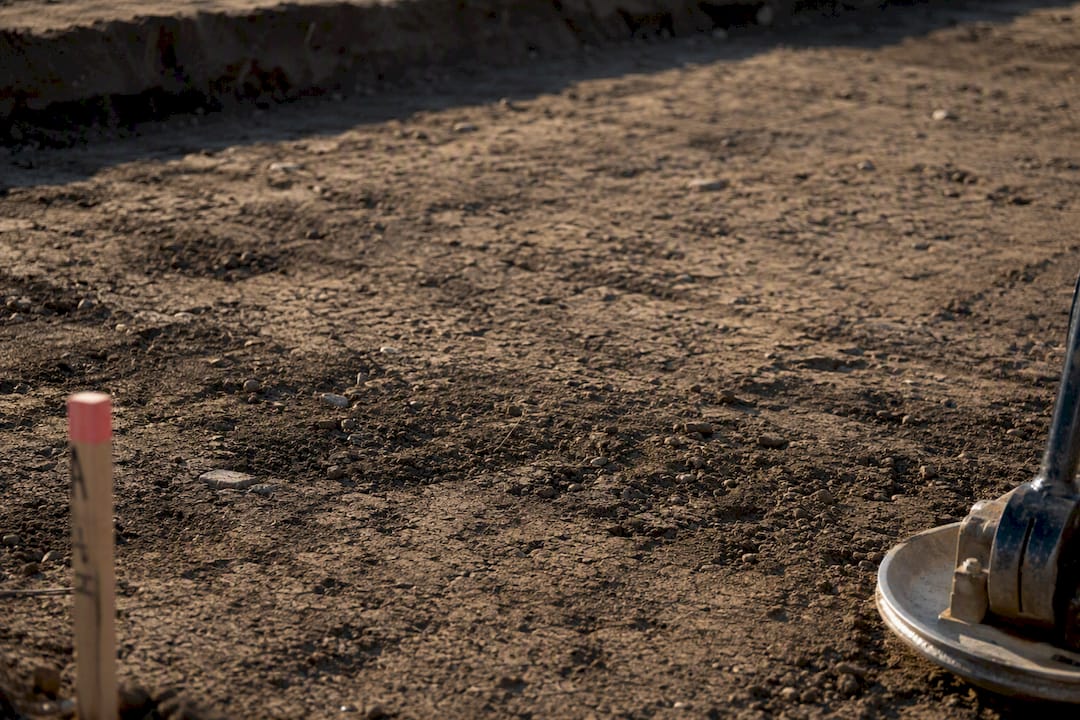
Ask your contractor whether their bid already assumes a “worst case” subgrade or a best case, since that assumption determines how much of your contingency you’ll actually need.
Timing also affects your contingency math. Projects scheduled for early spring or late fall in Edmonton carry higher weather-delay risk, which can mean remobilization fees if a crew has to pull off site and return. Building a two-week schedule buffer alongside your dollar contingency protects against both cost and calendar overruns. For a broader look at prep-stage risk, see site preparation for construction.
A commercial project manager’s take on Edmonton paving
The gap between a $4.50 per square foot bid and a $7.00 bid is almost never asphalt quality. It’s base preparation, compaction rigour, and whether the contractor actually accounts for Edmonton’s frost cycles instead of using a generic spec. Cheap bids that skip granular base depth or compaction testing don’t save money, they defer it, usually with interest, to year three or four.
Prozoneltd builds every parking lot project around Alberta Safety Codes Act compliance and material specs designed for local freeze-thaw conditions, not national averages. That’s not a marketing line, it’s the difference between a lot that lasts 18 years and one that needs reconstruction at year eight.
How do you get a free estimate from Prozoneltd?
Prozoneltd is the direct route to a paving quote built around actual Edmonton conditions, not a generic national pricing sheet. A site visit typically confirms lot dimensions, subgrade condition, and drainage needs on the spot, with a detailed written estimate following within days, not weeks.
You’ll get line-item pricing covering base depth, asphalt thickness, drainage, and striping, so you can compare it directly against any other bid using the same categories this article walks through. Every project follows Alberta Safety Codes Act permitting requirements, and Prozoneltd can support the municipal permit process directly.
Property managers choose Prozoneltd for documented references, a completed project gallery, and material specs built specifically for Edmonton’s frost cycles rather than adapted from warmer-climate standards. For municipal or larger commercial sites, review road construction services for municipalities and commercial properties or call Prozoneltd directly to schedule a site visit and start your free estimate today.
Sources
Before finalizing a budget, verify current requirements directly:
- Permits and Alberta’s safety code system
- Land use bylaw C-1260-79: Part 9, Section 71 parking requirements
- Parking lot asphalt paving cost 2026: $/sqft, per-stall math, ADA compliance & 20-yr lifecycle | Buildcalchub
FAQ
What is the average cost of an asphalt driveway in Edmonton?
Residential driveway asphalt typically runs $3 to $7 per square foot, but that figure applies to residential-scale jobs and doesn’t reflect commercial parking lot pricing, which factors in heavier base specs and larger-scale mobilization.
How much does it cost to pave a 1,000 square foot driveway?
Asphalt driveway costs vary depending on base preparation, thickness, and site access, with rates typically ranging per square foot in a moderate range.
Is 2 inches of asphalt enough for a driveway or parking lot?
Two inches is thin for most applications; residential driveways typically need 3 inches minimum, and commercial parking lots need 3 to 4 inches across one or two lifts to handle vehicle loads and Edmonton’s freeze-thaw stress.
Is it cheaper to pour concrete or asphalt for a parking lot?
Asphalt is generally cheaper to install than concrete for comparable parking lot scopes, though concrete can last longer with less frequent maintenance. See a full cost and durability comparison for your specific site conditions.
Does lot size affect the per-square-foot asphalt price in Edmonton?
Yes. Mobilization and fixed crew costs spread over more area as lots get larger, so a 20,000 square foot lot typically costs less per square foot than a 4,000 square foot lot with the same specs.