
TL;DR:
- Construction site cleanup ensures safety, compliance, and project efficiency by removing hazards, waste, and debris. Regular, organized cleanup practices prevent incidents, lower costs, and support regulatory adherence throughout all project phases. Effective cleanup planning, especially in Edmonton’s climate, requires early infrastructure and accountability to maintain site quality and safety.
Construction site cleanup is the systematic process of removing debris, managing waste streams, and maintaining a safe, organised environment throughout every phase of a project. The role of construction site cleanup extends well beyond aesthetics. It directly determines whether a site meets Alberta Safety Codes, passes inspections, and delivers on schedule. For site managers in Edmonton, where freeze-thaw cycles compound debris hazards from october through april, a structured cleanup programme is not optional. It is a core project management discipline.
What is the role of construction site cleanup in daily site safety?
Daily cleanup is the single most effective tool for preventing slip, trip, and fall incidents on active sites. Good housekeeping practices are statistically linked to fewer incidents and lower insurance costs. That correlation is direct: clear walkways and properly stored materials remove the conditions that cause injuries before they occur.
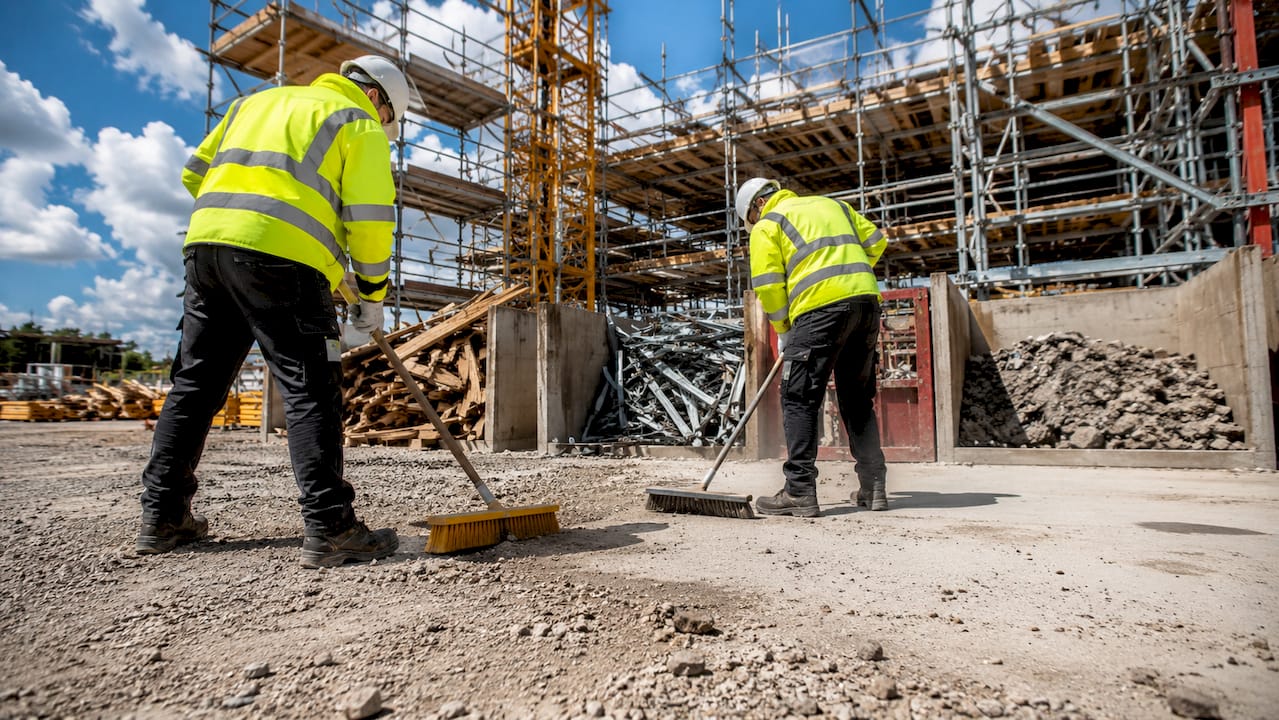
Best practice calls for a mandatory 15-minute sweep at the end of every shift, combined with a weekly comprehensive review to prevent hazard accumulation. These are not suggestions. They are the minimum standard for sites operating under OSHA guidelines and Alberta Occupational Health and Safety legislation.
Combustible debris is a fire risk that site managers often underestimate. Sawdust, cardboard, and solvent-soaked rags accumulate quickly near active trades. Regular removal keeps emergency exits clear and fire suppression equipment accessible.
Accountability structures make cleanup stick. Toolbox talks that address housekeeping, checklist sign-offs by zone supervisors, and photo audits of site conditions create a verifiable record and embed cleanliness into daily work culture rather than treating it as an afterthought.
Pro Tip: Assign each trade a defined cleanup zone rather than leaving housekeeping as a shared responsibility. Shared responsibility with no named owner is the fastest path to an uncleaned site.
Key daily cleanup priorities include:
- Clear all walkways and access routes at shift end
- Remove combustible materials from heat sources and electrical panels
- Return tools and materials to designated storage areas
- Inspect and restock spill kits and first aid stations
- Log cleanup completion on the daily site checklist
What role does construction site waste management play in compliance and cost control?
Construction, demolition, and excavation activities generate approximately 62% of total waste in comparable developed markets. That figure reflects the scale of the problem and explains why Canadian environmental regulators, including those administering Alberta’s Environmental Protection and Enhancement Act, require formal waste management plans on commercial projects.
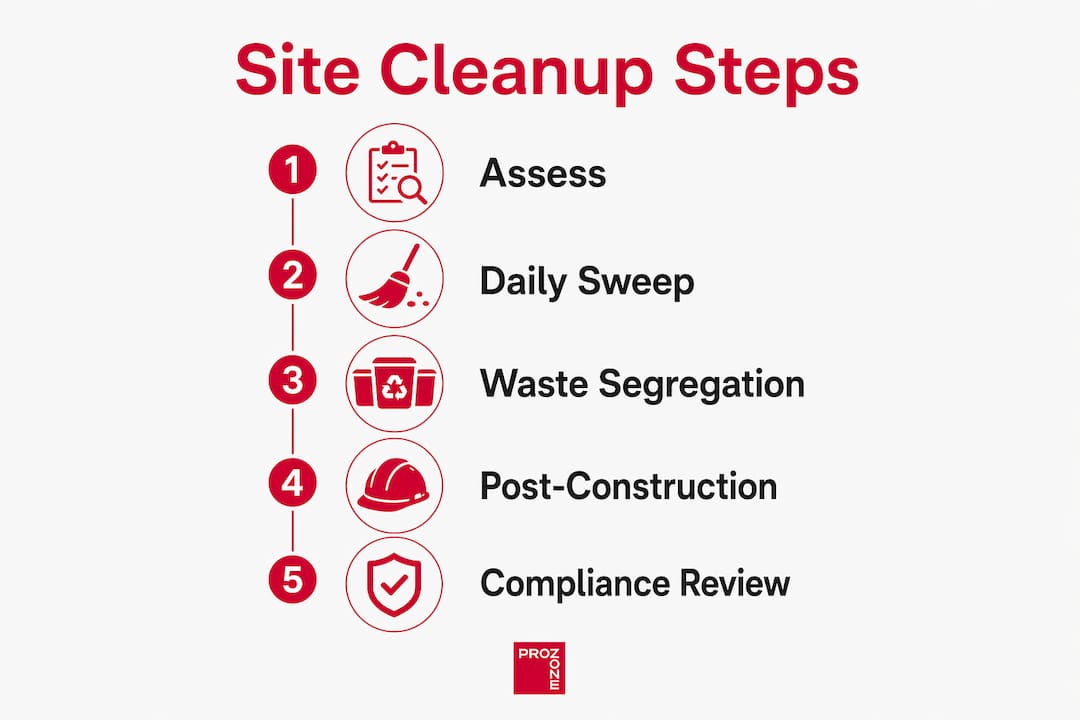
Waste segregation is the foundation of both compliance and cost control. Mixed waste significantly increases processing and disposal costs. Separating concrete, wood, metal, drywall, and hazardous materials at the point of generation reduces tipping fees and keeps the site compliant with municipal and provincial disposal requirements.
Industry leaders recommend two measurable targets for every project:
- 20% reduction in total waste volume compared to the project baseline, achieved through accurate material ordering and phased delivery schedules
- 50% diversion rate for debris through reuse or recycling, directing materials like clean concrete and structural steel away from landfill
Accurate material ordering upfront is more effective than relying solely on recycling after the fact. Ordering precisely what the project requires eliminates the surplus that becomes waste. This is waste prevention, not waste management, and it saves money at the source.
On-site processing technology changes the economics further. Mobile crushing and sorting units allow concrete rubble and aggregate to be reprocessed and reused on the same site. This reduces both transport costs and landfill fees, which are rising across Alberta as tipping rates increase.
| Waste stream | Segregation method | Typical diversion outcome |
|---|---|---|
| Concrete and masonry | Dedicated skip or crusher | Reuse as sub-base aggregate |
| Structural steel and rebar | Labelled metal bin | Recycled through scrap dealers |
| Clean timber | Separate container | Reused or chipped for biomass |
| Drywall and gypsum | Isolated bin, no contamination | Recycled into new board |
| Hazardous materials | Sealed, labelled containers | Licensed disposal contractor |
Why is post-construction cleanup essential for project readiness?
Post-construction cleanup is a distinct phase, not a continuation of daily housekeeping. It targets fine dust, adhesive residues, paint overspray, and protective film that trades leave behind after rough and finish work is complete. Thorough final cleaning prevents inspection failures and protects HVAC systems from clogging, which directly affects occupancy readiness and tenant satisfaction.
HVAC protection is a frequently overlooked cost driver. Construction dust infiltrates ductwork during finishing trades. If that dust is not removed before commissioning, it circulates through the building, damages equipment, and triggers warranty claims. A proper post-construction clean eliminates that risk before the system runs.
Inspection readiness depends on the quality of final cleaning. Municipal building inspectors and commissioning agents assess surface conditions, fixture cleanliness, and floor protection removal as part of occupancy approval. Sites that skip or rush the final clean routinely face re-inspection fees and delayed occupancy permits.
Post-construction cleanup tasks that site managers must verify:
- Remove all protective films from windows, fixtures, and flooring
- Clean HVAC grilles, diffusers, and return air plenums
- Wipe all surfaces including sills, ledges, and cabinet interiors
- Remove adhesive residue from tile, glass, and hardware
- Conduct a final walk-through with the client before handover
Specialised cleaning contractors are often required for this phase. General labourers trained in rough cleanup do not have the equipment or techniques for detail cleaning to occupancy standard. Budgeting for a dedicated final clean crew is a project management decision, not an optional upgrade.
How can site managers implement site cleanup best practices?
Integrating cleanup into daily workflow, rather than scheduling it only at project end, boosts morale and reduces equipment damage from debris contact. The 15-minute end-of-shift reset across all zones is the most practical mechanism for achieving this. It requires no additional budget. It requires scheduling discipline and clear accountability.
Zone-based assignment is the most effective organisational model. Each trade or subcontractor owns their zone. The general contractor’s site supervisor verifies completion before signing off the daily log. This structure removes ambiguity and creates a direct line of accountability from worker to manager.
Pro Tip: Use a digital site management platform to track cleanup task completion in real time. Photo-verified checklist items are harder to dispute and create a defensible record if a safety incident occurs.
The table below compares reactive cleanup (end-of-project only) against proactive, integrated cleanup:
| Factor | Reactive cleanup | Proactive integrated cleanup |
|---|---|---|
| Safety incident rate | Higher, debris accumulates | Lower, hazards removed daily |
| Disposal costs | Higher, mixed waste | Lower, segregated streams |
| Project timeline | Delays at handover | Consistent progress |
| Inspection outcomes | Higher re-inspection risk | Cleaner first-pass results |
| Worker morale | Lower, chaotic environment | Higher, organised site |
Labelled waste containers placed at the point of generation are the single most effective infrastructure investment for waste segregation. Workers segregate correctly when the correct bin is within reach. When it is not, everything goes into the nearest container regardless of type.
Reviewing sustainable material choices early in the project planning phase also reduces the volume of waste generated. Materials with lower off-cut rates and higher recyclability reduce the burden on site cleanup crews throughout the build.
What cleanup challenges does Edmonton’s climate create for site managers?
Edmonton’s freeze-thaw cycle creates site conditions that amplify every standard cleanup challenge. Temperatures shift repeatedly across the freezing point from october through april. Each cycle loosens aggregate, creates ice patches on walkways, and traps debris under snow that becomes a hazard when it thaws.
Ice management and debris removal must be coordinated, not treated as separate tasks. Snow ploughed to the site perimeter buries construction waste. When that snow melts in spring, the debris reappears across access routes and drainage channels simultaneously. Planning snow storage locations away from material staging areas prevents this problem.
Cleanup challenges specific to Edmonton’s climate include:
- Ice formation on cleared walkways within hours of cleanup in sub-zero conditions
- Frozen debris that cannot be swept or collected until temperatures rise
- Mud and aggregate tracking from thaw cycles contaminating clean areas
- Reduced effectiveness of standard cleaning equipment below minus 15 degrees Celsius
- Drainage blockages from debris and ice combining at site perimeters
Equipment selection matters in cold weather. Standard push brooms and wheeled skips perform poorly on frozen ground. Heated water pressure washers, rubber-edged snow ploughs, and insulated waste containers maintain effectiveness across Edmonton’s temperature range. Scheduling cleanup tasks during the warmest part of the day, typically between 10 a.m. and 2 p.m. in winter months, reduces the risk of re-freezing before the shift ends.
For site preparation and safety compliance in Alberta’s climate, planning cleanup infrastructure before mobilisation is the standard that separates well-run projects from those that accumulate avoidable hazards.
ProZone’s view: cleanup is a management standard, not a task
Site cleanup reveals how a project is actually managed. A clean site does not happen by accident. It reflects scheduling discipline, clear accountability structures, and a management team that understands the connection between daily housekeeping and project outcomes.
The sites I have seen fall behind on cleanup share a common pattern. Cleanup is treated as something that happens when there is time, rather than as a fixed part of the daily schedule. Debris accumulates. Segregation breaks down. By the time the project reaches final cleanup, the cost of correction is significantly higher than the cost of prevention would have been.
The 2026 targets of 20% waste volume reduction and 50% diversion are achievable on Edmonton projects. They require planning before mobilisation, not improvisation during construction. Waste infrastructure, zone assignments, and accountability tools must be in place on day one.
Ongoing site cleanliness also signals quality to clients, inspectors, and subtrades. A well-maintained site attracts better subcontractor performance and reduces the friction that causes delays. That is not a soft benefit. It is a measurable project management outcome.
— ProZone
How ProZone supports Edmonton site managers with cleanup and compliance
ProZone delivers construction and site maintenance services across Edmonton and the surrounding Alberta region, with teams certified to Alberta Safety Codes and trained in current environmental compliance requirements. Site managers working on commercial, municipal, and infrastructure projects can access construction services tailored for Edmonton that include site preparation, earthworks, and waste management coordination built around the region’s climate demands.
ProZone’s approach prioritises compliance from day one. Waste segregation planning, cleanup scheduling, and safety documentation are integrated into every project scope. Contact ProZone directly through the online form at prozoneltd.ca or call for a free project cleanup consultation and estimate. Certified teams are available for both new project mobilisation and mid-project cleanup remediation across the Edmonton area.
FAQ
What is the role of construction site cleanup in safety?
Construction site cleanup removes slip, trip, and fire hazards that cause the majority of preventable site incidents. Daily end-of-shift sweeps and weekly reviews are the minimum standard under Alberta Occupational Health and Safety requirements.
How often should a construction site be cleaned?
Best practice requires a 15-minute cleanup sweep at the end of every shift and a comprehensive weekly review. High-activity zones may require additional mid-shift clearing.
What are the benefits of cleanup crews on construction sites?
Dedicated cleanup crews reduce disposal costs through proper waste segregation, lower incident rates by maintaining clear access routes, and improve inspection outcomes by keeping the site in a consistently verifiable condition.
How does construction site waste management support compliance?
Segregating waste streams on site reduces disposal costs and meets the requirements of Alberta’s Environmental Protection and Enhancement Act. Projects targeting a 50% diversion rate through recycling and reuse demonstrate measurable regulatory compliance.
Why does post-construction cleanup matter for project handover?
Final detail cleaning removes fine dust and adhesive residues that cause inspection failures and HVAC damage. Skipping this phase delays occupancy permits and increases the risk of warranty claims after handover.