TL;DR:
- Property maintenance in Alberta is essential to prevent costly damage from freeze-thaw cycles and meet safety codes. Investing in preventive upkeep saves more in lifecycle costs and enhances tenant satisfaction compared to reactive repairs. Proper documentation improves property value and reduces risk during transactions.
Property maintenance is defined as the systematic practice of inspecting, repairing, and preserving a building’s physical systems and surfaces to protect its long-term value. For property owners and investors in Alberta, the question of why invest in property maintenance has a clear financial answer: every $1 spent on preventive maintenance saves $5–$8 in lifecycle costs. That ratio makes maintenance one of the highest-return activities available to any real estate investor. Alberta’s freeze-thaw climate, Alberta Safety Codes requirements, and competitive rental market make this discipline not optional but foundational.
Why invest in property maintenance: the financial case
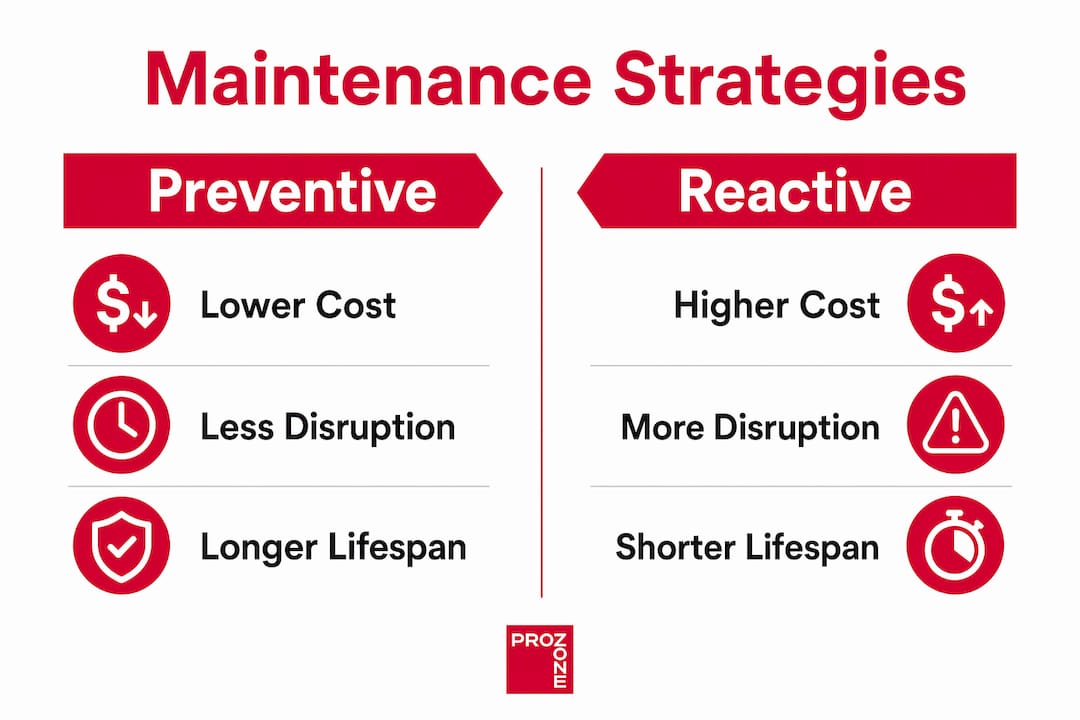
Proactive maintenance delivers measurable financial returns that reactive repair strategies cannot match. Emergency repairs cost 2–3 times more than scheduled preventive work. That gap exists because emergency call-outs carry premium labour rates, and the failure of one system frequently damages adjacent materials. A burst pipe, for example, does not just require a plumber. It also requires drywall replacement, flooring restoration, and mould remediation.
The financial logic extends beyond individual repair events. Emergency call-outs incur collateral damage costs such as flooring and drywall restoration that inflate the total bill well beyond the primary repair. Scheduled maintenance eliminates most of that collateral exposure by catching failures early. Proactive technicians scan for subtle signs such as failing seals and moisture buildup before damage escalates into a capital event.
Reactive vs. preventive maintenance: cost comparison
| Maintenance type | Relative cost | Disruption risk | System lifespan impact |
|---|---|---|---|
| Reactive (emergency) | 2–3x higher | High | Shortened |
| Preventive (scheduled) | Baseline | Low | Extended |
| Deferred (ignored) | Highest long-term | Severe | Severely shortened |
Net Operating Income (NOI) is the rental revenue remaining after operating expenses. Consistent maintenance directly protects NOI by reducing unplanned expenditures and keeping units rentable. Maintenance correlates directly with higher NOI and tenant retention, which means a well-maintained property generates more predictable cash flow year over year.
Pro Tip: Schedule HVAC, plumbing, and roofing inspections annually before the heating season begins. Catching a failing heat exchanger in september costs a fraction of an emergency furnace replacement in january.
What are the specific maintenance challenges for Alberta properties?
Alberta’s climate creates maintenance demands that property owners in milder regions never face. Freeze-thaw cycles, where temperatures cross 0°C repeatedly through autumn and spring, force water into micro-cracks in concrete and asphalt. When that water freezes, it expands and widens the crack. Freeze-thaw cycles cause structural damage without proper maintenance, and Edmonton properties are exposed to this cycle dozens of times each year.
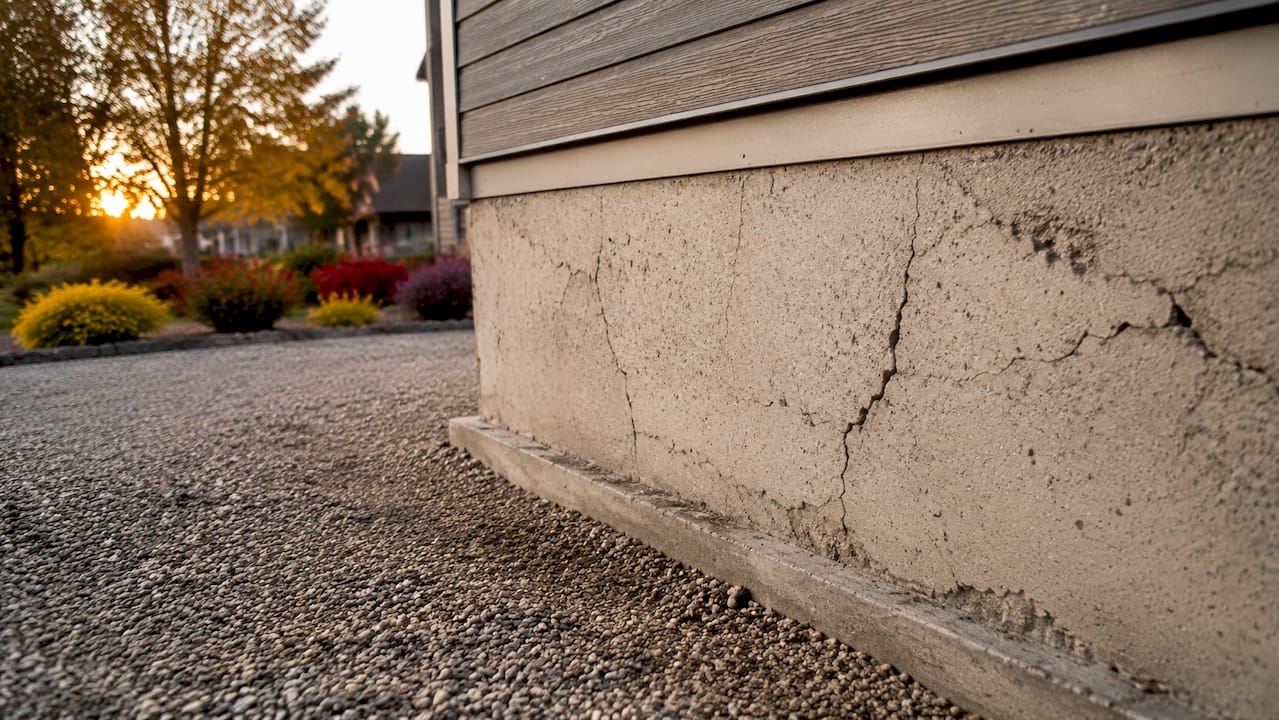
The consequences are not cosmetic. Spalled concrete walkways create liability exposure under Alberta Safety Codes. Heaved asphalt in parking lots accelerates vehicle damage and increases slip-and-fall risk. Drainage systems blocked by frost or debris redirect meltwater toward foundations, where it causes settlement and moisture infiltration. Each of these failures is preventable with a structured seasonal maintenance programme.
Priority maintenance tasks for Alberta’s climate
- Concrete and asphalt surfaces: Seal cracks before freeze-thaw season. Apply appropriate sealants to parking lots, walkways, and driveways each autumn. Maintaining concrete surfaces correctly extends pavement life by years and avoids full replacement costs.
- Drainage systems: Clear catch basins and downspout extensions before spring melt. Blocked drainage is the leading cause of foundation moisture problems in Edmonton.
- Roofing and exterior cladding: Inspect flashings, sealants, and cladding joints after each major temperature swing. Ice damming causes water infiltration that damages insulation and interior finishes.
- Snow removal and sanding: Timely snow clearing and application of traction materials such as rock chips for winter sanding reduce liability and protect surface coatings from ice-melt chemical damage.
- Winterizing mechanical systems: Drain irrigation lines, protect exposed pipes, and service boilers before temperatures drop below freezing.
Prozoneltd works to Alberta Safety Codes standards on all concrete, asphalt, and earthworks projects in Edmonton and the surrounding region. That certification matters because substandard materials and improper installation accelerate exactly the freeze-thaw failures described above.
Pro Tip: Book your asphalt crack-sealing and concrete joint repairs in late august or early september. Sealants require temperatures above 10°C to cure properly, and that window closes quickly in Alberta.
How does maintenance improve tenant satisfaction and occupancy?
Well-maintained properties attract responsible, long-term tenants. Buildings with consistent maintenance schedules achieve higher rental yields and attract higher-quality tenants. The connection is direct: tenants who see prompt repairs and clean common areas renew leases. Tenants who wait weeks for a broken heater to be fixed do not.
Tenant turnover is one of the most underestimated costs in residential and commercial real estate. Vacancy periods, lease-up commissions, cleaning, and minor refurbishment between tenants can consume two to three months of rental income per turnover event. Reducing turnover by even one cycle per unit per decade produces significant cumulative savings.
The following factors drive tenant retention through maintenance:
- Response time: Tenants rate maintenance responsiveness as a top factor in lease renewal decisions. A 24-hour response to urgent repairs signals professionalism and care.
- Preventive upkeep visibility: Clean, well-lit parking lots, freshly sealed walkways, and functioning common-area lighting communicate that the property is managed actively.
- Complaint resolution: A documented work-order system that closes requests quickly reduces frustration and early lease terminations.
- Seasonal readiness: Properties that are snow-cleared promptly and heated reliably through Alberta winters retain tenants who value reliability over lower rent elsewhere.
Consistent upkeep lowers tenant turnover and reduces vacancy periods, stabilising rental income across the portfolio. For commercial properties, the stakes are higher still. A retail or office tenant who experiences repeated HVAC failures or parking lot hazards will not renew a multi-year lease.
What documentation strategies increase resale value and reduce risk?
Sophisticated investors treat maintenance as capital preservation, not merely an operating expense. Documented maintenance histories increase market value and attract premium buyers by signalling reduced risk. A buyer reviewing two comparable properties will pay more for the one with organised inspection records, service contracts, and repair receipts.
Home and commercial property inspectors penalise properties with deferred maintenance. A single inspection flag for a deteriorated roof membrane or cracked foundation wall can reduce an appraised value by multiples of the actual repair cost. Buyers factor in not just the repair but the uncertainty of what else may have been neglected.
Maintenance documentation: impact on resale outcomes
| Documentation level | Buyer perception | Appraisal impact | Negotiation position |
|---|---|---|---|
| Full records, scheduled service | Low risk, premium asset | Positive | Strong |
| Partial records, reactive repairs | Moderate risk | Neutral to negative | Weak |
| No records, visible deferred maintenance | High risk | Discounted | Very weak |
A property maintained with regular, documented upkeep commands a premium price because buyers perceive less risk. That premium is not speculative. It reflects the real cost savings a buyer inherits when systems are in good condition and records confirm it. Infrastructure such as plumbing, electrical, and drainage underpins real estate wealth and requires constant attention to preserve that value through ownership transitions.
The role of maintenance in property value is well established in investment analysis. Properties with maintenance contracts and seasonal inspection programmes consistently outperform neglected assets at resale, refinancing, and during due diligence reviews.
ProZone’s perspective on maintenance as an investment discipline
Property owners in Alberta who delay minor repairs consistently face the same outcome: a small problem becomes a capital expense. A cracked concrete apron left unsealed through one winter becomes a full replacement project by spring. A slow roof drain becomes a structural moisture claim. The pattern repeats across every building system.
Proactive maintenance is a yield stability tool in Alberta’s competitive rental market. When vacancy rates tighten, well-maintained properties fill faster and at stronger rents. When the market softens, they retain tenants who have no compelling reason to leave. The maintenance programme becomes a competitive advantage that shows up directly in NOI.
The most common misconception I encounter is that maintenance is a cost to minimise. Operators who treat it that way spend more over any five-year period than those who schedule and document everything. The preventative maintenance approach pays for itself repeatedly, and the records it generates add value at every transaction.
Partnering with contractors who understand Alberta Safety Codes and regional climate conditions is not a preference. It is a risk management decision. Substandard materials and improper installation accelerate the exact failures that maintenance programmes are designed to prevent.
— ProZone
Prozoneltd’s construction and maintenance services for Alberta properties
Prozoneltd delivers certified construction and infrastructure maintenance services across Edmonton and Alberta, working to Alberta Safety Codes on every project. Services cover concrete screeds, asphalt laying, earthworks, drainage, snow removal, and landscaping material supply. Each service is designed to address the specific demands of Alberta’s climate, from freeze-thaw resistant concrete finishes to properly graded drainage systems that protect foundations through spring melt.
Property owners and managers who want a structured maintenance approach can review construction services for Edmonton managers to understand the full scope of what Prozoneltd offers. For commercial property maintenance in Alberta, Prozoneltd provides scheduled service programmes backed by documented quality standards. Contact Prozoneltd directly through the online form at prozoneltd.ca or call for a free estimate on your next maintenance or construction project.
FAQ
What is the ROI of preventive property maintenance?
Investing $1 in preventive maintenance saves $5–$8 in lifecycle costs by reducing emergency repairs and extending building system life. That ratio makes preventive maintenance one of the strongest returns available in property investment.
How does Alberta’s climate affect property maintenance needs?
Freeze-thaw cycles in Edmonton and surrounding areas cause repeated expansion and contraction in concrete, asphalt, and building envelopes. Without seasonal inspections and timely repairs, these cycles accelerate structural deterioration and increase liability exposure under Alberta Safety Codes.
Does maintenance history affect property resale value?
Documented maintenance records signal reduced risk to buyers and appraisers, which supports higher valuations and stronger negotiating positions. Properties without maintenance histories are typically discounted to account for unknown deferred repair costs.
How does maintenance reduce tenant turnover?
Consistent upkeep and fast repair response reduce tenant complaints and early lease terminations. Fewer vacancy periods and more predictable NOI result directly from maintenance programmes that keep tenants satisfied and renewing leases.
What maintenance tasks should Alberta property owners prioritise each year?
Crack sealing on concrete and asphalt before freeze-thaw season, drainage clearing before spring melt, roofing inspections after major temperature swings, and HVAC servicing before the heating season are the four highest-priority annual tasks for Alberta properties.