
Many property managers view asphalt resurfacing as an expensive, optional upgrade rather than a strategic maintenance investment. This misconception leads to premature pavement failure and costly emergency replacements. Resurfacing actually extends pavement life by years while enhancing your property’s curb appeal and safety. This guide explains what asphalt resurfacing is, which methods work best for different conditions, how to budget effectively, and how to prepare your Edmonton commercial property for a successful project that protects your investment.
Table of Contents
- Understanding Asphalt Resurfacing And Why It Matters
- Common Asphalt Resurfacing Methods And When To Use Them
- Budgeting For Asphalt Resurfacing Projects In Edmonton
- Preparing Your Commercial Property For Asphalt Resurfacing
- How ProZone Ltd. Supports Edmonton Commercial Properties With Asphalt Resurfacing
- Frequently Asked Questions About Asphalt Resurfacing
Key takeaways
| Point | Details |
|---|---|
| Resurfacing extends pavement life | Applying a new asphalt layer restores structural integrity and adds years to your pavement’s lifespan |
| Multiple methods available | Mill and overlay, thin overlay, and micro-surfacing each suit different pavement conditions and budgets |
| Cost-effective alternative | Resurfacing costs significantly less than full replacement while delivering comparable durability |
| Climate-specific benefits | Edmonton’s freeze-thaw cycles make proactive resurfacing essential for preventing accelerated deterioration |
| Planning prevents problems | Proper budgeting and site preparation minimize disruptions and ensure high-quality results |
Understanding asphalt resurfacing and why it matters
Asphalt resurfacing means applying a fresh asphalt layer over your existing pavement base. Unlike patch repairs that address isolated damage, resurfacing restores the entire surface and creates a uniform, durable driving surface. Full replacement involves removing all pavement layers down to the base, while resurfacing preserves the foundation and only replaces the top wearing course.
Commercial property owners choose resurfacing because it delivers 70-80% of replacement’s lifespan at 40-50% of the cost. Your existing base remains intact, saving time and money while still achieving a like-new appearance. Resurfacing works best when your pavement shows surface wear like minor cracking, fading, or rough texture but the underlying structure remains sound.
Edmonton’s climate creates unique challenges for asphalt pavements:
- Freeze-thaw cycles expand cracks and accelerate deterioration
- Temperature swings between summer heat and winter cold stress pavement bonds
- Snow removal equipment wears surface layers faster than in milder climates
- Spring moisture infiltration weakens pavement from below
Resurfacing addresses these climate-specific issues by sealing the surface against moisture penetration and restoring the pavement’s flexibility to handle temperature changes. The new layer acts as a protective shield, preventing Edmonton’s harsh weather from reaching and damaging your base layers.
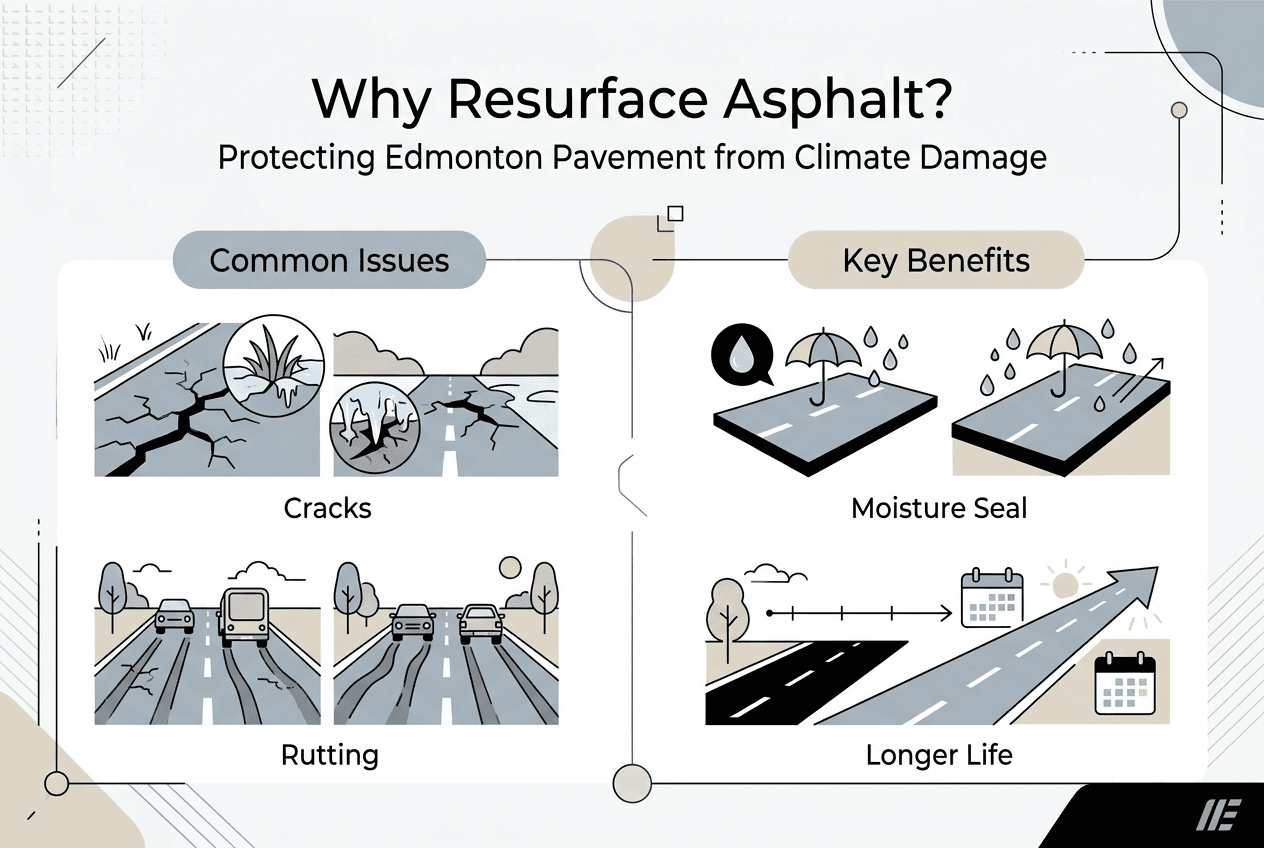
Pro Tip: Schedule pavement assessments in spring after freeze-thaw damage becomes visible but before summer heat makes repairs urgent. This timing gives you leverage to plan budgets and negotiate with contractors during their slower season.
Typical conditions treated by resurfacing include surface oxidation, hairline cracking networks, minor rutting under two inches, and worn traffic lane patterns. If you see alligator cracking, deep potholes, or significant base failure, you likely need more extensive repairs before resurfacing becomes viable.
Common asphalt resurfacing methods and when to use them
Three primary techniques dominate commercial asphalt resurfacing, each optimized for specific pavement conditions and performance goals. Understanding which method matches your situation prevents overspending on unnecessary work or underinvesting in inadequate solutions.
Mill and overlay removes one to three inches of existing asphalt using specialized milling equipment, then applies a new asphalt layer of equal or greater thickness. This method works best for pavements with moderate surface damage, rutting, or drainage issues. Milling creates a level base and allows you to adjust grades for better water flow. The process costs more than other methods but delivers the longest lifespan and handles heavy traffic loads effectively.
Thin overlay applies a new asphalt layer directly over existing pavement without milling. This approach suits pavements in good structural condition showing only minor surface wear, oxidation, or cosmetic aging. Thin overlays typically add one to two inches of new asphalt and cost 30-40% less than mill and overlay. The main limitation involves grade changes, as adding height affects drainage patterns, curb reveals, and door clearances.
Micro-surfacing applies a thin polymer-modified asphalt emulsion that fills surface cracks and restores skid resistance. This preventive treatment works for pavements with minimal damage needing cosmetic refresh and minor crack sealing. Micro-surfacing costs the least and completes quickly but provides shorter lifespan extension than structural methods. Consider it for pavements under 10 years old showing early aging signs.
| Method | Best For | Typical Cost | Lifespan Added | Key Advantage |
|---|---|---|---|---|
| Mill and overlay | Moderate damage, rutting | $3.50-$5.50/sq ft | 12-15 years | Corrects drainage and grades |
| Thin overlay | Minor wear, good base | $2.00-$3.50/sq ft | 8-12 years | Cost-effective surface renewal |
| Micro-surfacing | Preventive maintenance | $1.00-$2.00/sq ft | 5-7 years | Quick application, minimal disruption |
Matching method to pavement condition requires professional assessment. A qualified contractor examines your pavement’s structural integrity, drainage patterns, and traffic loads to recommend the optimal approach. They use core samples to verify base condition and identify hidden deterioration that surface inspection misses.
Pro Tip: Avoid choosing resurfacing methods based solely on upfront cost. A thin overlay on pavement needing milling fails within two to three years, forcing you to pay twice. Invest in proper assessment first, then select the method that delivers the best long-term value for your specific conditions.
Common mistakes include applying overlays over unstable bases, ignoring drainage corrections, and selecting micro-surfacing for pavements beyond preventive maintenance stage. Each error shortens your new surface’s lifespan and wastes your investment. Different methods suit different conditions, and matching technique to need optimizes both durability and cost-efficiency.
Budgeting for asphalt resurfacing projects in Edmonton
Realistic budgeting starts with understanding the five major cost drivers that determine your project’s total investment. Surface area obviously affects cost, but pavement condition, chosen method, required preparation work, and site access challenges create significant price variations even for similar-sized projects.
Surface area multiplies per-square-foot costs. A 10,000 square foot parking lot at $4 per square foot costs $40,000, while a 50,000 square foot lot reaches $200,000. Economies of scale reduce per-unit costs on larger projects, so bundling multiple areas into one contract typically saves 10-15% compared to phased work.
Pavement condition determines preparation requirements. Severely cracked areas need removal and base repair before resurfacing. Failed drainage requires grading corrections. Unstable sections demand soil stabilization. These preparatory costs add $1-$3 per square foot beyond basic resurfacing rates.
Typical price ranges for commercial asphalt resurfacing in Edmonton vary by method and project scope:
| Project Size | Mill and Overlay | Thin Overlay | Micro-surfacing |
|---|---|---|---|
| Under 5,000 sq ft | $5.00-$6.50/sq ft | $3.00-$4.50/sq ft | $1.50-$2.50/sq ft |
| 5,000-20,000 sq ft | $4.00-$5.50/sq ft | $2.50-$3.50/sq ft | $1.25-$2.00/sq ft |
| Over 20,000 sq ft | $3.50-$5.00/sq ft | $2.00-$3.00/sq ft | $1.00-$1.75/sq ft |
Follow these steps to prepare an accurate budget:
- Commission professional pavement assessment to identify all required repairs and optimal resurfacing method
- Obtain detailed quotes from three qualified contractors including itemized breakdowns of materials, labor, and preparation work
- Add 15-20% contingency for unexpected conditions discovered during excavation or milling
- Factor in business disruption costs like temporary signage, traffic control, and potential revenue loss during construction
- Review contractor insurance, bonding, and warranty terms to avoid hidden long-term costs
- Confirm whether quotes include line striping, sealcoating, and final cleanup or if these require separate budgeting
Hidden costs frequently surprise property managers who skip thorough pre-project evaluation. Underground utility conflicts require relocation work. Poor drainage needs catch basin adjustments. Contaminated soil demands environmental remediation. Curb and sidewalk damage discovered during milling adds concrete repair costs. Each issue can increase budgets by thousands of dollars if not identified upfront.
Strategic planning and proper budgeting prevent cost overruns and ensure project success. Request contractors provide written estimates detailing assumptions about existing conditions, scope boundaries, and change order procedures. This documentation protects you from unexpected charges and creates accountability for agreed pricing.
Pro Tip: Schedule resurfacing projects in spring or fall when contractors have more availability and competitive pricing. Summer peak season increases costs by 15-25% due to high demand, while winter work faces weather delays and cold-temperature application challenges.
Preparing your commercial property for asphalt resurfacing
Thorough preparation separates smooth, on-schedule projects from chaotic, delayed disasters. Property managers who invest time in pre-construction planning minimize business disruption, avoid safety incidents, and achieve higher quality results than those who simply hire contractors and hope for the best.
Start with comprehensive site inspection identifying all existing damage beyond surface wear. Document cracked curbs, damaged catch basins, failed sidewalk sections, and deteriorated striping requiring replacement. Photograph problem areas and share images with contractors during bidding to ensure quotes reflect actual conditions. This documentation also creates baseline records for warranty claims if issues recur.
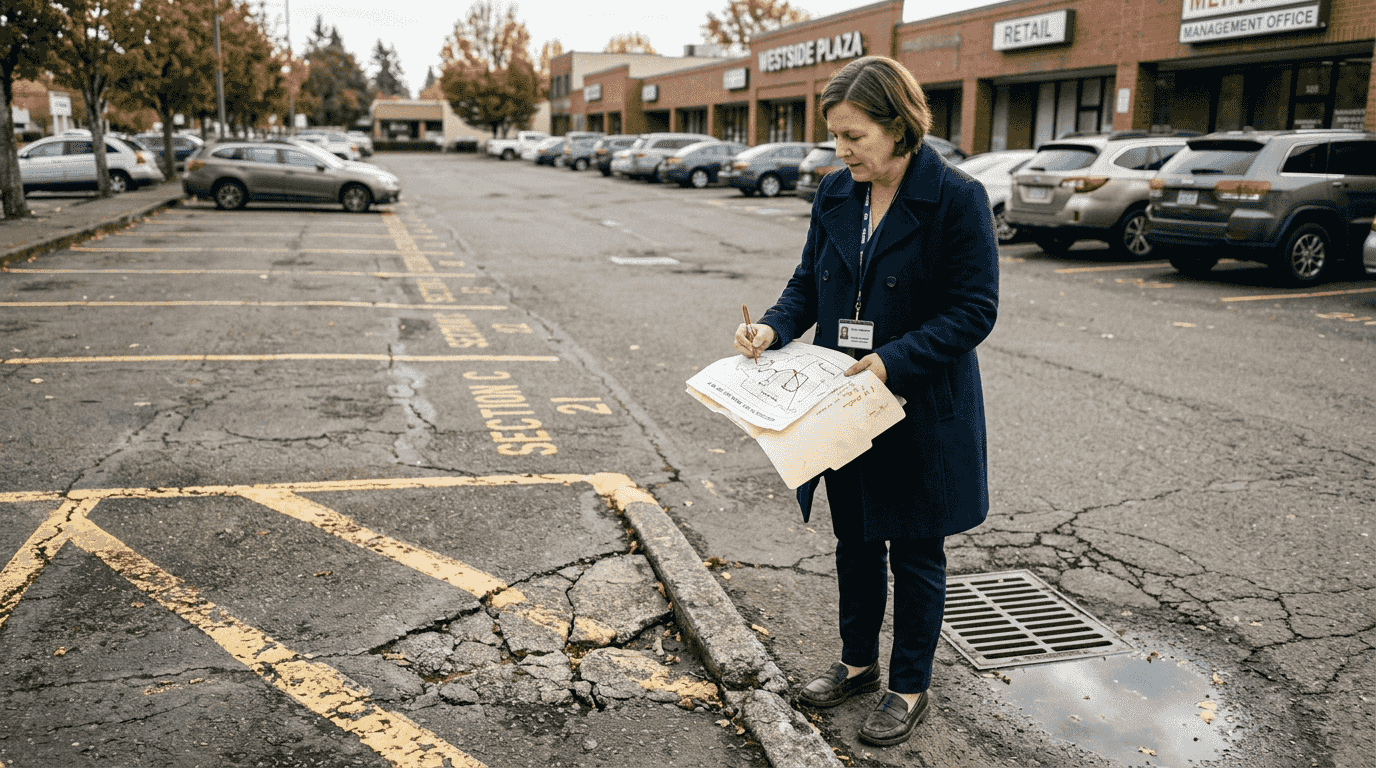
Scheduling requires balancing construction efficiency against business operations. Retail properties schedule work during overnight hours or slower weekdays. Office complexes choose holiday periods or summer when occupancy drops. Industrial sites coordinate around shipping schedules and production cycles. Factor in cure times, as fresh asphalt needs 24-48 hours before heavy traffic and seven days before maximum load capacity.
Clearing vehicles and notifying stakeholders prevents delays and conflicts:
- Send written notices to all tenants, customers, and employees at least two weeks before construction starts
- Post temporary signage directing traffic to alternative entrances and parking areas
- Coordinate with delivery services to reschedule or redirect shipments during construction
- Arrange temporary parking accommodations if resurfacing eliminates all on-site spaces
- Update website and phone messages with construction alerts and alternative access information
Drainage and curb conditions directly affect resurfacing quality and longevity. Water pooling indicates grade problems requiring correction before overlay application. Damaged curbs allow edge raveling that undermines new asphalt. Clogged catch basins cause moisture infiltration beneath pavement. Address these issues first, even if it increases upfront costs, because they determine how long your resurfacing investment lasts.
Working closely with contractors on timelines and specifications ensures everyone shares the same expectations. Review project schedules identifying daily work areas, traffic control plans, and completion milestones. Confirm asphalt mix specifications match your climate and traffic loads. Verify compaction standards and quality control testing procedures. Establish communication protocols for weather delays, unexpected conditions, and change order approvals.
Pro Tip: Designate one point person with authority to make decisions and communicate with contractors. Multiple contacts create confusion, while delayed approvals stall projects and increase costs. Empower your representative to resolve minor issues immediately without committee review.
Proper preparation and clear communication reduce delays and enhance resurfacing quality. Property managers who treat preparation as seriously as the construction work itself consistently achieve better outcomes at lower total costs than those who shortcut planning to save time.
How ProZone Ltd. supports Edmonton commercial properties with asphalt resurfacing
Navigating asphalt resurfacing decisions becomes simpler when you work with experienced local contractors who understand Edmonton’s unique climate challenges and commercial property requirements. ProZone Ltd. brings comprehensive expertise in road construction and pavement solutions specifically designed for Alberta’s demanding conditions.
Our integrated approach combines asphalt resurfacing with complementary services like concrete sidewalk and curb repairs, ensuring your entire property infrastructure receives coordinated attention. This eliminates the hassle of managing multiple contractors and creates seamless transitions between pavement, curbs, and pedestrian areas. Our team specializes in commercial property needs, from retail centers requiring overnight work to industrial facilities demanding minimal operational disruption.
Choosing a local provider means faster response times, familiarity with Edmonton municipal requirements, and accountability to the community we serve. Our comprehensive road construction services extend beyond resurfacing to include full pavement management programs that maximize your infrastructure investment over decades, not just years.
Pro Tip: Consult with contractors during budget planning phases, not just when you’re ready to start work. Early conversations identify cost-saving opportunities and optimal timing that reactive emergency repairs never allow.
Frequently asked questions about asphalt resurfacing
What exactly is asphalt resurfacing and how does it work?
Asphalt resurfacing applies a new asphalt layer over existing pavement to restore appearance and structural integrity. Contractors either mill away damaged surface first or apply overlay directly, depending on pavement condition. The new layer bonds to the existing base, creating a renewed driving surface that extends pavement life by 8-15 years depending on method and traffic loads.
What signs indicate my commercial pavement needs resurfacing?
Watch for widespread surface cracking covering more than 25% of pavement area, faded or oxidized asphalt turning gray, minor rutting under two inches deep, and rough texture causing vehicle vibration. If you see alligator cracking, deep potholes, or significant settling, you likely need more extensive repairs before resurfacing becomes viable. Annual spring inspections catch problems while resurfacing still works.
How long does a typical resurfacing project take to complete?
Most commercial resurfacing projects complete in three to seven days depending on size and complexity. A 10,000 square foot parking lot typically takes two to three days including milling, overlay, and striping. Larger projects or those requiring extensive preparation work extend timelines to one to two weeks. Weather delays can add days, especially during Edmonton’s unpredictable spring and fall seasons.
What’s the difference between resurfacing and complete repaving?
Resurfacing preserves your existing pavement base and replaces only the top layer, while repaving removes all asphalt down to the subgrade and rebuilds from scratch. Resurfacing costs 40-50% less and completes faster but requires structurally sound base layers. Repaving addresses failed bases and severe structural damage that resurfacing cannot fix. Most commercial properties need resurfacing every 12-15 years and full repaving every 25-30 years.
How long will my pavement last after resurfacing?
Properly executed resurfacing extends pavement life by 8-15 years depending on method, traffic loads, and maintenance practices. Mill and overlay typically lasts 12-15 years, thin overlay provides 8-12 years, and micro-surfacing adds 5-7 years. Regular maintenance like crack sealing and sealcoating every three to four years maximizes lifespan. Heavy truck traffic and poor drainage reduce longevity regardless of resurfacing method.
Can resurfacing be done in winter in Edmonton?
Asphalt installation requires minimum temperatures above 50°F for proper compaction and bonding. Edmonton winters make resurfacing impractical from November through March. Spring and fall offer ideal conditions with moderate temperatures and lower contractor demand. Summer works but peak season pricing increases costs by 15-25%. Plan projects for April through October, with May, June, and September typically offering the best combination of weather and pricing.