
Many property managers assume parking lot paving is straightforward, just pouring asphalt and forgetting about it. This misconception leads to premature failures, costly emergency repairs, and safety hazards. Parking lot paving involves careful planning, material selection, and ongoing maintenance, especially in Edmonton’s challenging freeze-thaw climate. This guide explains what parking lot paving truly entails, compares asphalt versus concrete for local conditions, breaks down lifecycle costs, and provides maintenance strategies to protect your investment for decades.
Table of Contents
- What Is Parking Lot Paving And Why Is It Important?
- The Process Of Parking Lot Paving: Step-By-Step Explained
- Asphalt Vs Concrete Parking Lots: Choosing The Right Surface For Edmonton Climates
- Cost Breakdown And Maintenance: Extending Your Parking Lot’s Lifespan
- Professional Parking Lot Paving And Maintenance Services In Edmonton
Key takeaways
| Point | Details |
|---|---|
| Parking lot paving defined | Installing or resurfacing durable surfaces using asphalt or concrete to support traffic, enhance safety, and improve property appearance. |
| Material choice matters | Asphalt offers flexibility against Edmonton’s freeze-thaw cycles while concrete provides longer lifespan but higher upfront costs. |
| Proactive maintenance saves money | Sealcoating every 2-3 years and timely repairs can reduce lifecycle costs by up to 80% compared to reactive repaving. |
| Climate drives decisions | Edmonton’s short paving season and freeze-thaw cycles require careful material selection and drainage planning. |
| Process involves multiple steps | Site preparation, grading, compaction, material spreading, finishing, and striping ensure long-lasting results. |
What is parking lot paving and why is it important?
Parking lot paving is the process of installing or resurfacing a durable surface designed to support vehicle traffic, enhance safety, and improve property aesthetics. This process goes far beyond simply laying down material. It requires proper site preparation, drainage planning, and material selection tailored to your property’s specific needs and local climate conditions.
The main goals of parking lot paving include:
- Supporting vehicle traffic loads without cracking or rutting
- Providing safe, level surfaces that prevent accidents and liability issues
- Improving curb appeal and property value for commercial spaces
- Ensuring proper drainage to prevent water damage and ice formation
- Meeting local accessibility and safety regulations
Property managers typically choose between three main paving materials. Asphalt remains the most popular option due to its flexibility and cost effectiveness. Concrete offers superior longevity but comes with higher installation costs. Permeable concrete provides excellent drainage but may not suit heavy commercial traffic. Each material responds differently to Edmonton’s climate, making your choice crucial for long-term performance.
Durable paving prevents numerous problems that plague poorly maintained lots. Cracks allow water infiltration, leading to base erosion and pothole formation. Uneven surfaces create trip hazards and accessibility compliance issues. Faded markings confuse drivers and increase accident risk. These problems compound quickly in Edmonton’s harsh climate, where freeze-thaw cycles accelerate deterioration and shorten pavement lifespan without proper material selection and maintenance.
Edmonton’s climate significantly influences paving decisions. Temperature swings from minus 30°C winters to plus 30°C summers stress pavement materials. Water that seeps into cracks expands when frozen, widening gaps and breaking down the surface layer. The short construction season, typically May through October, limits when paving work can occur. Understanding these factors helps you choose materials and maintenance schedules that maximize your investment.
The process of parking lot paving: step-by-step explained
Professional parking lot paving follows a systematic methodology to ensure lasting results. Understanding each step helps you evaluate contractor proposals and set realistic expectations for your project timeline and outcomes.
-
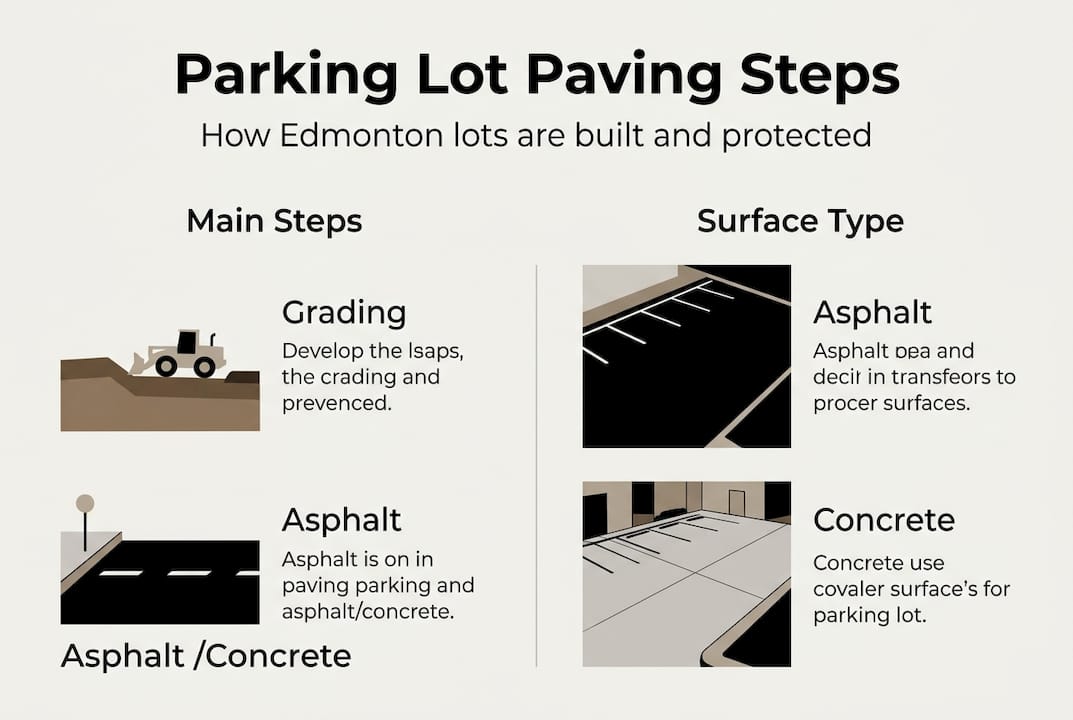
Site preparation begins with removing debris, vegetation, and damaged materials. Contractors use milling machines to grind away old asphalt surfaces, creating a clean base for new material. This step identifies underlying drainage or structural issues that need addressing before paving begins.
-
Grading establishes proper slope and drainage patterns. Water must flow away from buildings and toward drainage systems to prevent pooling and ice formation. Contractors compact the sub-base using heavy rollers, then add layers of aggregate stone. This foundation supports the weight of vehicles and prevents settling that causes cracks.
-
Asphalt delivery and spreading requires precise timing and temperature control. Hot mix asphalt arrives at 135-163°C and must be spread immediately. Paving machines distribute material evenly across the prepared surface. Thickness varies based on expected traffic loads, typically 5-8 cm for standard commercial lots.
-
Compaction uses heavy steel rollers to compress the asphalt while still hot. Multiple passes with different roller types eliminate air pockets and create a dense, stable surface. Proper compaction determines how well your lot resists rutting and cracking under traffic loads.
-
Finishing includes painting striping, marking parking spaces, adding accessibility symbols, and installing wheel stops or curbs. These elements ensure safety, maximize space efficiency, and maintain compliance with local regulations. Fresh paint needs 24-48 hours to cure before vehicles can use marked areas.
Typical resurfacing projects take 1-3 days depending on lot size and complexity. Full new construction with extensive grading and drainage work may require one to two weeks. Weather delays can extend timelines, especially in Edmonton’s unpredictable spring and fall seasons. Planning your parking lot installation during optimal weather windows ensures quality results.
Pro Tip: Schedule paving work for mid-summer when temperatures stay consistently warm. Asphalt needs at least 10°C ambient temperature for proper curing, and cooler fall weather increases the risk of premature surface damage.
Asphalt vs concrete parking lots: choosing the right surface for Edmonton climates
Edmonton’s extreme freeze-thaw cycles create unique challenges that heavily influence which paving material performs best. Your choice affects not just initial costs but maintenance requirements and total lifecycle expenses over decades of use.
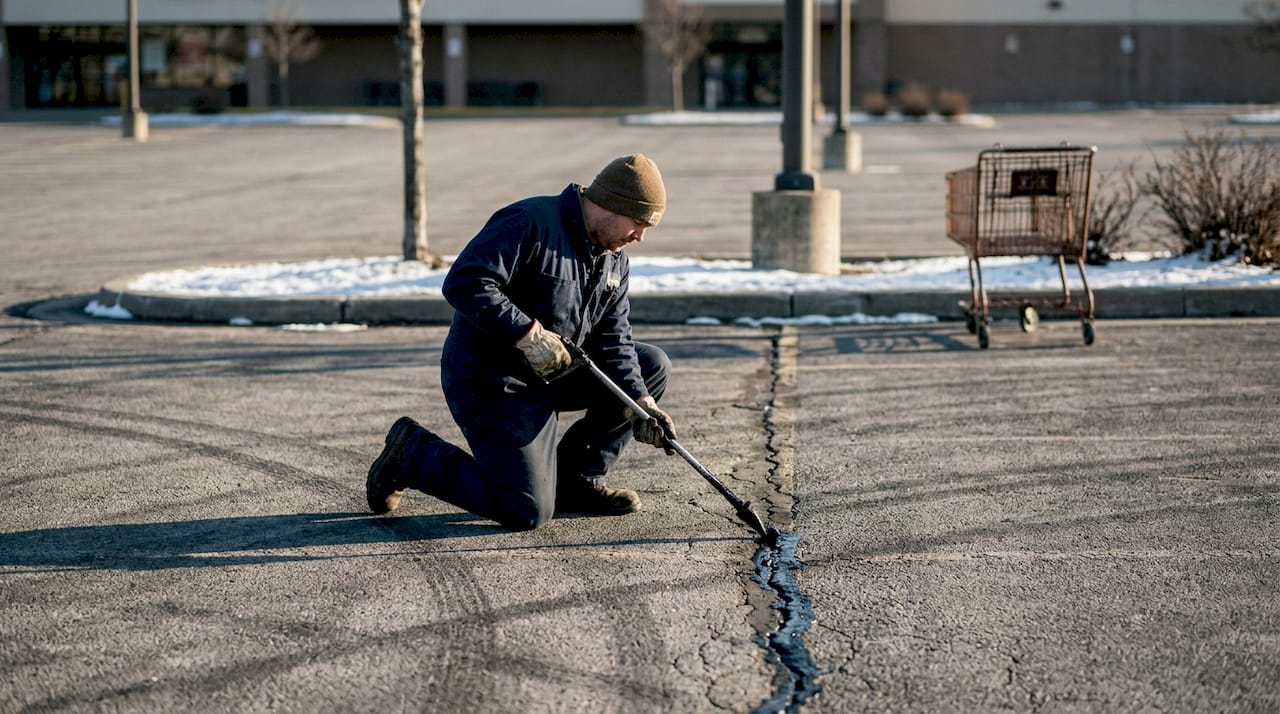
Asphalt is preferred in Edmonton for its flexibility against freeze-thaw damage. The material expands and contracts with temperature changes without cracking as readily as rigid surfaces. Installation costs run lower, typically $2-5 per square foot for standard commercial applications. Asphalt lots can handle traffic within 24-48 hours after installation. However, this material requires more frequent maintenance, including sealcoating every 2-3 years and crack filling to prevent water infiltration.
Concrete offers superior longevity, lasting 30-50 years compared to asphalt’s 15-30 year lifespan. The rigid surface resists rutting from heavy vehicles and requires less frequent maintenance once properly installed. Installation costs run higher at $4-8 per square foot, and curing takes 7-14 days before vehicles can use the surface. Edmonton’s freeze-thaw cycles pose greater risks for concrete, as water trapped in surface cracks expands when frozen and causes spalling or joint deterioration.
| Factor | Asphalt | Concrete |
| — | — |
| Initial cost per sq ft | $2-5 | $4-8 |
| Typical lifespan | 15-30 years | 30-50 years |
| Freeze-thaw resistance | Excellent (flexible) | Moderate (prone to cracking) |
| Maintenance frequency | Every 2-3 years | Every 5-10 years |
| Installation time | 1-3 days | 7-14 days cure time |
| Best for Edmonton | High traffic, budget conscious | Low traffic, long-term investment |
Permeable concrete presents an alternative that allows water to drain through the surface, reducing runoff and ice formation. This option works well for environmental sustainability goals and areas with strict stormwater management requirements. However, permeable concrete has lower flexural strength at 2.4 MPa compared to standard concrete, making it less suitable for heavy commercial traffic. The material also requires specialized maintenance to prevent pore clogging that eliminates drainage benefits.
Lifecycle cost analysis reveals surprising insights. While concrete costs more upfront, its longer lifespan and lower maintenance needs can offset initial expenses for properties planning 30+ year ownership. Asphalt’s lower entry cost appeals to properties with shorter planning horizons or tighter budgets, but you must factor in regular sealcoating and eventual resurfacing. Understanding these trade-offs helps you choose the material that aligns with your financial goals and property plans.
Pro Tip: If you choose concrete for Edmonton conditions, specify air-entrained concrete with at least 5-8% air content. These tiny air bubbles provide space for water expansion during freezing, significantly reducing crack formation.
Cost breakdown and maintenance: extending your parking lot’s lifespan
Understanding the full financial picture helps you budget appropriately and make maintenance decisions that maximize return on investment. Initial paving costs represent just the beginning of your parking lot’s financial lifecycle.
Resurfacing costs run $1-3 per square foot and add 8-15 years of life to existing lots with sound structural bases. New paving installations range from $3-8 per square foot depending on material choice, site preparation needs, and drainage requirements. Sealcoating, applied every 2-3 years, costs $0.15-0.25 per square foot and protects asphalt from oxidation and water damage. Crack filling runs $1-3 per linear foot and prevents small issues from becoming expensive repairs.
Proactive maintenance strategies deliver massive cost savings over reactive approaches. Regular inspections identify problems when repairs cost hundreds rather than thousands. Sealcoating extends asphalt life by 3-5 years per application. Timely crack filling prevents water infiltration that destroys the base layer and requires complete reconstruction.
Proactive maintenance over 15 years costs $55,000-80,000 versus reactive repaving at $250,000-400,000 for a 50,000 square foot lot.
This comparison shows maintenance delivers 70-85% cost savings compared to waiting for failure and emergency repaving. The numbers become even more compelling when you factor in business disruption, liability risks from damaged surfaces, and lost customer goodwill from poor lot conditions.
Maintenance best practices include:
- Inspect your lot twice yearly, in spring after freeze-thaw and fall before winter
- Sealcoat asphalt surfaces every 2-3 years when surface shows minor wear
- Fill cracks immediately when they appear, before water infiltration damages the base
- Repair potholes within days to prevent expansion and liability issues
- Maintain proper drainage by keeping catch basins clear and slopes intact
- Repaint striping every 2-3 years for safety and compliance
Parking lot condition ratings use the PASER scale from 1 (failed) to 10 (new). Acting when your lot rates 7-8 maximizes return on maintenance investment. At this stage, preventive treatments cost 10-15% of reconstruction while adding significant life. Waiting until ratings drop to 4-5 means you have missed the cost-effective intervention window and face expensive structural repairs.
Pro Tip: Create a dedicated parking lot maintenance fund by setting aside $0.10-0.15 per square foot annually. This reserve ensures you can address issues promptly without scrambling for emergency budget approvals when problems arise.
Tracking maintenance costs over time reveals patterns that inform smarter decisions. Document all repairs, treatments, and their costs. Note which areas require frequent attention, as these may indicate underlying drainage or base problems. Following best practices for parking lot maintenance transforms your lot from a liability into an asset that enhances property value and tenant satisfaction.
Professional parking lot paving and maintenance services in Edmonton
Applying everything you have learned requires working with contractors who understand Edmonton’s unique climate challenges and local regulations. ProZone Ltd brings decades of experience in commercial parking lot paving, resurfacing, and maintenance across the Edmonton region. Our team specializes in solutions tailored to Alberta’s extreme weather conditions, ensuring your investment delivers maximum lifespan and performance.
We offer comprehensive services including new parking lot construction, asphalt resurfacing, concrete repair, and ongoing maintenance programs. Our expertise extends to road construction for municipalities and commercial properties, ensuring proper integration with existing infrastructure. We also provide concrete sidewalk repair and curb installation to complete your property’s exterior improvements. Understanding asphalt road benefits and construction methods helps us recommend the right approach for your specific situation. Contact ProZone Ltd today for a detailed assessment and customized solution that protects your property investment for decades.
FAQ
What is the lifespan of a properly paved parking lot?
Properly paved and maintained asphalt parking lots last 15-30 years depending on traffic volume, climate exposure, and maintenance quality. Concrete lots can reach 30-50 years with appropriate care. Edmonton’s freeze-thaw cycles tend to shorten these ranges by 10-20% compared to milder climates, making material choice and maintenance even more critical for maximizing lifespan.
How often should commercial parking lots be resurfaced or sealcoated?
Sealcoating should occur every 2-3 years for asphalt surfaces to protect against oxidation and water damage. Resurfacing typically becomes necessary every 8-15 years when surface wear reaches the point where sealcoating no longer provides adequate protection. Regular parking lot maintenance including crack filling and pothole repair extends the time between major resurfacing projects and reduces total lifecycle costs.
What are the main challenges of parking lot paving in Edmonton’s climate?
Freeze-thaw cycles cause the most damage, as water infiltrating cracks expands when frozen and breaks apart pavement layers. This process creates potholes and accelerates surface deterioration. Good drainage systems and flexible materials like asphalt reduce damage risk by allowing slight movement without cracking. The short paving season from May through October limits construction timing and can delay urgent repairs until weather permits.
Is permeable concrete a good choice for commercial lots in Edmonton?
Permeable concrete allows water drainage but has lower flexural strength at 2.4 MPa compared to standard concrete. This makes it suitable primarily for low-traffic applications like overflow parking or pedestrian areas rather than heavy commercial use. Edmonton’s freeze-thaw cycles can also clog the pores over time, reducing drainage effectiveness. Verify strength ratings and maintenance requirements before choosing permeable concrete for commercial paving projects.