
Many property managers view curb installation as a simple aesthetic upgrade, but this perception misses its critical role in outdoor infrastructure maintenance. Properly installed curbs enhance safety, manage drainage, and protect pavement edges from deterioration. Understanding the installation process, material choices, and maintenance requirements helps Alberta facility owners make informed decisions that extend property lifespan and reduce long-term costs. This guide breaks down what curb installation involves and why it matters for your property.
Table of Contents
- Key takeaways
- Understanding curb installation and its benefits
- Materials and processes used in curb installation
- Maintenance, repair, and longevity of installed curbs
- How curb installation improves facility management and property value
- Explore professional curb installation and concrete flatwork services
- Frequently asked questions about curb installation
Key Takeaways
| Point | Details |
|---|---|
| Drainage and safety | Proper curb installation channels water away from structures and shields edges from erosion, improving overall safety. |
| Curb material options | Concrete, asphalt, and stone offer different durability, costs, and aesthetics suitable for Alberta climates; concrete is most common for commercial properties. |
| Spring inspections advised | Schedule curb inspections in early spring after freeze thaw cycles to catch damage before it worsens. |
| Key installation steps | Site preparation, forming, pouring or assembling, and finishing are the core steps that define curb alignment and stability. |
Understanding curb installation and its benefits
Curb installation involves placing structural borders along pavements, roadways, or landscaped areas to create clear boundaries and functional separation between different property zones. These installations serve multiple purposes beyond simple visual appeal. Curb installation enhances aesthetics, drainage control, and functional separation of spaces in construction projects.
The primary benefits include aesthetic appeal that creates professional property presentation, boundary definition that separates vehicular and pedestrian zones, improved drainage that channels water away from structures, and protection for pavement edges against erosion and cracking. For Alberta facilities, these advantages directly impact operational costs and safety compliance.
Three main curb types dominate Alberta installations:
- Concrete curbs offer superior durability and resistance to freeze-thaw cycles common in Alberta winters
- Asphalt curbs provide flexible installation and easier repairs but require more frequent maintenance
- Stone curbs deliver premium aesthetics and exceptional longevity at higher initial costs
Each material type serves specific property needs based on traffic volume, budget constraints, and aesthetic requirements. Concrete remains the most popular choice for commercial properties due to its balance of cost, durability, and performance in harsh weather.
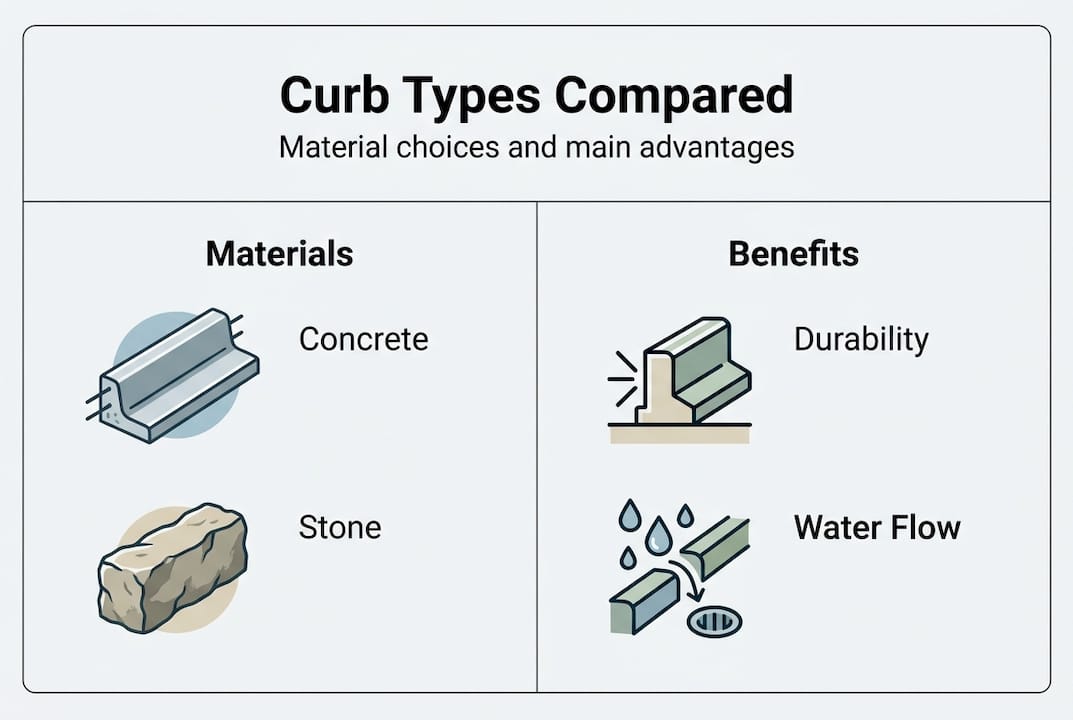
Curbs play a vital role in directing water flow to prevent erosion and surface water pooling. Without proper curb systems, stormwater accumulates on parking surfaces, accelerating pavement deterioration and creating safety hazards. This drainage function becomes especially critical during spring thaw when rapid snowmelt can overwhelm inadequate drainage systems. Regular attention to parking lot repairs to keep tabs on includes monitoring curb integrity.
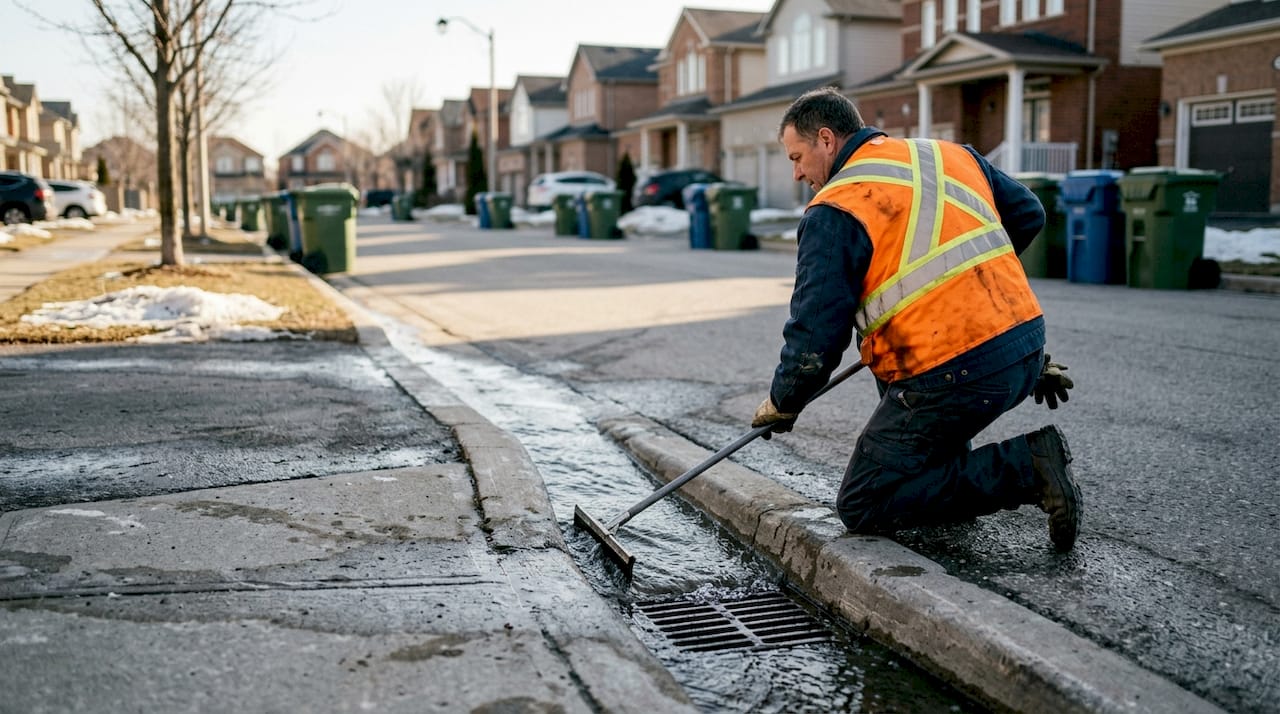
Pro Tip: Schedule curb inspections in early spring after freeze-thaw cycles to catch damage before minor cracks become major failures requiring full replacement.
Materials and processes used in curb installation
Concrete, stone, and asphalt are common materials employed for curbs in construction. Each material offers distinct advantages and limitations for Alberta’s climate conditions.
Concrete curbs dominate commercial installations because they withstand temperature extremes, resist chemical damage from de-icing salts, and maintain structural integrity for 20 to 30 years with proper maintenance. Asphalt curbs cost less initially and integrate seamlessly with asphalt paving but typically last only 10 to 15 years before requiring replacement. Stone curbs provide unmatched aesthetic appeal and can last 50 years or more, though installation costs run significantly higher.
The installation process follows six critical steps:
- Site preparation involves excavating the curb line to proper depth, typically 6 to 8 inches below finished grade, and compacting the base material
- Forming requires setting wooden or metal forms to define curb dimensions and ensure proper alignment along the entire run
- Pouring or assembling involves placing concrete or positioning pre-cast units while maintaining consistent height and grade
- Finishing includes smoothing surfaces, creating joints, and adding texture for slip resistance
- Curing protects newly poured concrete from rapid moisture loss and temperature fluctuations for at least seven days
- Final inspection verifies proper drainage slopes, joint placement, and surface quality before accepting the installation
Alberta’s environmental factors significantly influence material selection and installation timing. Ground freezing penetrates 4 to 6 feet deep during winter, requiring proper base preparation to prevent frost heave. Drainage needs intensify during spring runoff when rapid snowmelt can overwhelm inadequate systems. Winter durability depends on material selection, with concrete offering superior freeze-thaw resistance compared to asphalt.
| Material | Freeze-Thaw Resistance | Typical Lifespan | Initial Cost | Best Application |
|---|---|---|---|---|
| Concrete | Excellent | 20-30 years | Moderate | High-traffic commercial areas |
| Asphalt | Good | 10-15 years | Low | Budget-conscious installations |
| Stone | Excellent | 50+ years | High | Premium properties, heritage sites |
Installation timing matters in Alberta. Schedule concrete pours when temperatures remain above 50°F for at least seven days to ensure proper curing. Avoid late fall installations that risk freeze damage before concrete reaches full strength. Understanding concrete flatwork guide for Alberta managers helps coordinate curb installation with broader paving projects.
Pro Tip: Add air entrainment to concrete mixes for Alberta installations to create microscopic air pockets that accommodate freeze-thaw expansion without cracking.
Maintenance, repair, and longevity of installed curbs
Curb damage stems from three primary causes. Weathering from freeze-thaw cycles creates surface scaling and internal cracking as trapped moisture expands during freezing. Impact damage occurs when vehicles strike curbs during parking maneuvers or snow removal operations. Erosion undermines curb foundations when drainage systems fail or soil settlement creates voids beneath the curb base.
Regular maintenance and repair extend curb lifespan and maintain landscape and pavement safety. Facility managers should implement these routine practices:
- Clean debris from curb lines and drainage channels quarterly to maintain water flow
- Seal cracks smaller than one-quarter inch within 30 days of discovery to prevent water infiltration
- Inspect drainage patterns after heavy rain events to identify pooling or flow problems
- Remove vegetation growing against curbs that traps moisture and accelerates deterioration
- Apply concrete sealers every three to five years to reduce water absorption
Deciding between repair and replacement depends on damage extent and curb condition. Minor surface cracks respond well to crack sealing and surface patching. Moderate damage with multiple cracks or small sections of spalling may warrant partial replacement of affected segments. Extensive deterioration with structural failure, widespread cracking, or significant settlement requires full curb replacement.
| Damage Type | Repair Option | Replacement Needed | Decision Factor |
|---|---|---|---|
| Hairline cracks | Crack sealing | No | Cracks under 1/4 inch wide |
| Surface scaling | Patching compound | No | Damage less than 1 inch deep |
| Multiple cracks | Section replacement | Partial | Damage concentrated in specific areas |
| Structural failure | Not feasible | Full | Loss of load-bearing capacity |
| Widespread spalling | Not cost-effective | Full | Damage exceeds 30% of surface area |
Winter care protects curbs from Alberta’s harshest conditions. Apply de-icing products sparingly, choosing calcium magnesium acetate over sodium chloride when possible to reduce concrete damage. Avoid piling snow directly against curbs where repeated freeze-thaw cycles concentrate. Direct snow removal equipment operators to maintain clearance from curb faces to prevent impact damage. Schedule spring inspections to assess winter damage before minor issues escalate.
Maintaining comprehensive records of curb repairs helps identify problem areas requiring proactive replacement. Properties implementing structured maintenance programs following year-round parking lot maintenance principles report 40% longer curb service life compared to reactive maintenance approaches.
How curb installation improves facility management and property value
Properly installed curbs deliver measurable benefits for property managers beyond basic functionality. These improvements directly impact operational efficiency, safety compliance, and asset valuation.
Safety enhancement ranks as the primary benefit. Curbs create clear visual and physical separation between pedestrian walkways and vehicle traffic zones, reducing accident risk. Well-defined boundaries guide traffic flow and prevent vehicles from encroaching on landscaped areas or building foundations. Properly installed curbs enhance safety, accessibility, and drainage management throughout commercial properties.
Drainage efficiency improves dramatically with proper curb systems. Curbs channel stormwater toward catch basins and drainage inlets, preventing pooling on parking surfaces. This water management reduces pavement deterioration from standing water and ice formation. Properties with effective curb drainage systems report 30% fewer pothole repairs and 25% longer pavement service life.
Property curb appeal increases through neat, professional infrastructure presentation. Clean curb lines create visual order and demonstrate property care to tenants, customers, and investors. This aesthetic impact translates directly to market value, with properties featuring well-maintained curbs commanding 5% to 8% higher lease rates in competitive markets.
“Curb installation represents one of the highest-return infrastructure investments for commercial properties. The combination of safety improvements, drainage management, and aesthetic enhancement delivers value far exceeding installation costs while reducing long-term maintenance expenses.”
Facility management advantages from proper curb installation include:
- Reduced liability exposure from clearly defined pedestrian and vehicle zones
- Lower maintenance costs through improved drainage and pavement protection
- Simplified snow removal with defined plow boundaries
- Enhanced accessibility compliance through proper grade transitions
- Decreased landscaping maintenance from contained planting beds
- Improved property inspections scores from municipal authorities
These operational benefits compound over time, making curb installation a strategic investment rather than a maintenance expense. Properties planning comprehensive improvements should explore curb and sidewalk services in Edmonton to coordinate multiple infrastructure upgrades efficiently.
Accessibility compliance depends heavily on proper curb design and installation. Curb ramps must meet specific slope requirements, typically not exceeding 8.33% grade, with detectable warning surfaces at transitions. Facilities serving public populations face regulatory requirements for accessible routes, making professional curb installation essential for compliance.
Explore professional curb installation and concrete flatwork services
Understanding curb installation principles helps property managers make informed decisions, but professional execution ensures durability and compliance with Alberta building standards. Expert installation teams bring specialized equipment, material knowledge, and quality control processes that deliver superior long-term performance.
ProZone Ltd specializes in comprehensive concrete flatwork and curb installation services throughout Edmonton and surrounding areas. Our teams handle everything from initial site assessment through final inspection, ensuring installations meet regional climate requirements and municipal codes. We coordinate curb installation with related services including parking lot paving, sidewalk construction, and drainage system improvements for seamless project execution.
Professional installation eliminates common problems like improper drainage slopes, inadequate base preparation, and premature cracking from incorrect concrete mixes. Our experience with Alberta’s freeze-thaw cycles ensures material specifications and installation techniques suited to local conditions. Explore our concrete flatwork guide for Alberta managers for detailed information on coordinating multiple concrete projects.
Facility managers benefit from our turnkey approach to concrete sidewalk repair & curb installation that minimizes disruption to property operations. We also supply landscaping materials for Alberta commercial properties to support complete outdoor infrastructure improvements.
Frequently asked questions about curb installation
What exactly does curb installation involve?
Curb installation creates structural borders along pavements or landscaped areas using concrete, asphalt, or stone materials. The process includes excavating the curb line, preparing a compacted base, setting forms to define dimensions, pouring or placing materials, and finishing surfaces for durability and appearance.
How do curbs improve property drainage?
Curbs channel stormwater toward drainage inlets by creating barriers that direct flow along defined paths. This prevents water from spreading across parking surfaces where it accelerates pavement deterioration. Proper curb systems reduce standing water, ice formation, and erosion around building foundations.
What signs indicate a curb needs repair or replacement?
Watch for cracks wider than one-quarter inch, surface scaling or spalling, sections settling below adjacent pavement, water pooling against curbs, or visible gaps between curb and base. Minor cracks warrant sealing, while extensive damage affecting more than 30% of the curb surface typically requires replacement.
How long does curb installation take?
Typical commercial curb installation requires two to five days depending on project size. This includes one day for excavation and base preparation, one day for forming and pouring, and three to seven days for concrete curing before opening to traffic. Weather conditions and material choices affect timelines.
What winter protection do Alberta curbs need?
Apply concrete sealers before winter to reduce moisture absorption and salt damage. Use de-icing products sparingly, choosing less aggressive formulations when possible. Avoid piling snow directly against curbs and instruct snow removal operators to maintain clearance from curb faces. Schedule spring inspections to assess freeze-thaw damage promptly.