
TL;DR:
- Regular maintenance ensures public sidewalks are safe and accessible for all users, especially in freeze-thaw climates like Edmonton. Fragmented responsibility causes inconsistent upkeep, increasing hazards and liability risks. Implementing clear standards and proactive planning improves safety, accessibility, and community trust.
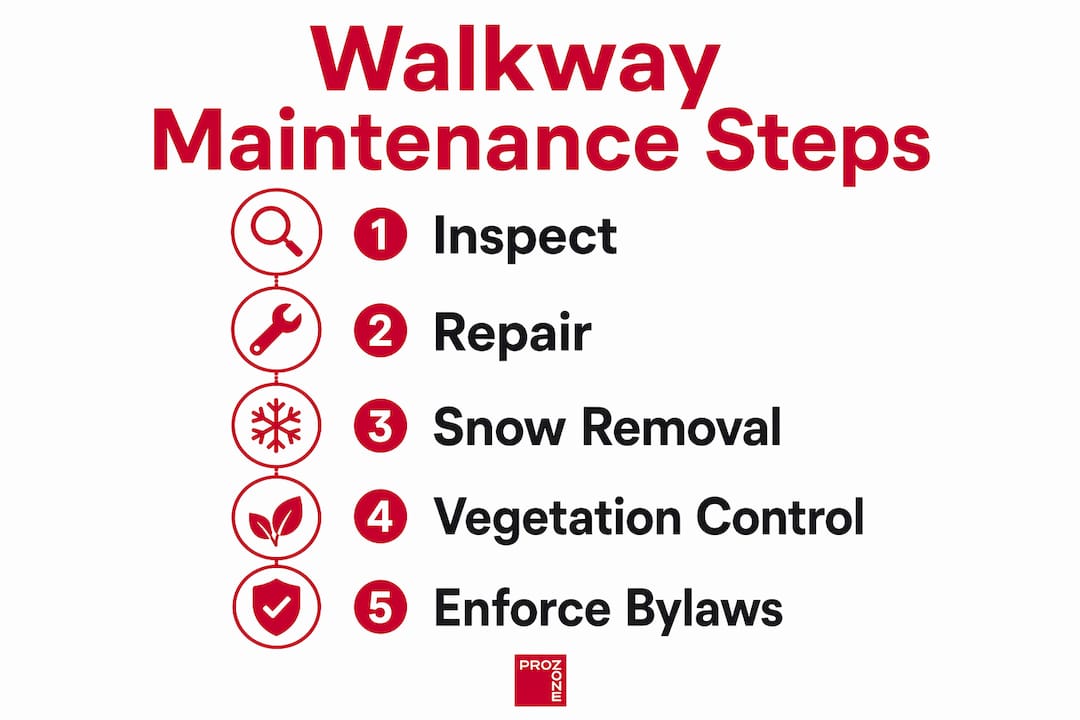
Public walkway maintenance is defined as the ongoing cycle of inspection, repair, snow and ice removal, vegetation control, and surface restoration that keeps pedestrian networks safe and accessible for all users. Urban planners and community advocates who understand why maintain public walkways is a non-negotiable operational priority will make better decisions about budgets, governance structures, and service contracts. Neglected walkways do not simply look poor. They create measurable safety hazards, exclude people with mobility challenges, and erode civic trust. In Edmonton’s climate, where freeze-thaw cycles can crack concrete and compact snow into ice within hours, the stakes are especially high.
Why maintain public walkways: safety and accessibility benefits
Sidewalk maintenance directly reduces pedestrian crash rates. Sidewalks on both sides of a street can reduce pedestrian crash rates by about half compared to roads without them. That figure only holds when those sidewalks are complete and consistently maintained. A cracked, heaved, or ice-covered surface negates the safety benefit entirely.
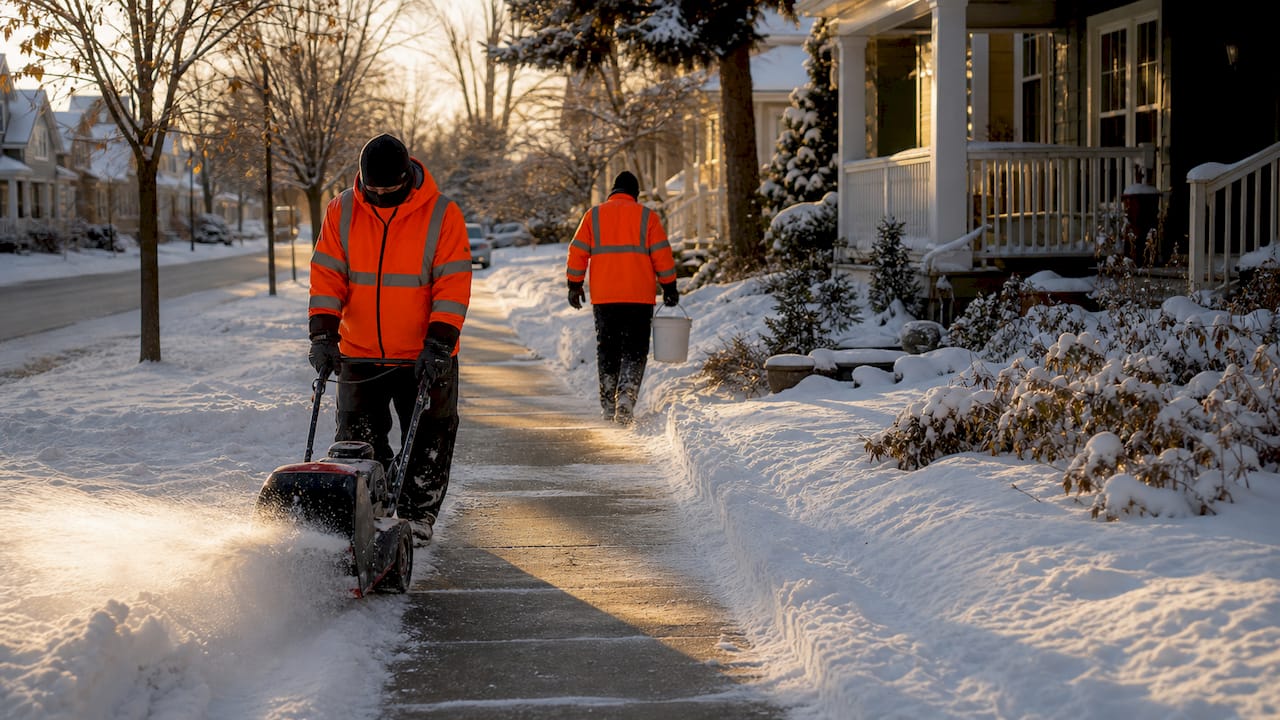
Accessibility is the second critical dimension. People using wheelchairs, walkers, strollers, or canes depend on continuous, clear pathways. Maintained pedestrian infrastructure is critical for enabling active lifestyles, improving accessibility, and meeting public health goals. When a single segment of a route is blocked by ice, overgrown vegetation, or a heaved panel, the entire route becomes unusable for those users.
The key hazards that regular upkeep prevents include:
- Ice and compacted snow that create slip-and-fall risks, particularly for seniors and people with mobility aids
- Cracked or heaved concrete panels that catch wheels and canes and cause trips
- Overgrown vegetation that narrows effective path width and obscures sight lines
- Standing water and drainage failures that refreeze overnight in Edmonton’s shoulder seasons
- Missing or damaged curb cuts that block wheelchair and stroller access at intersections
Pro Tip: Schedule walkway inspections in early spring and late autumn in Edmonton. Freeze-thaw cycles do the most structural damage during these transition periods, and catching cracks early prevents full panel replacement later.
The CDC’s community design strategies confirm that safe, convenient pedestrian infrastructure, including well-maintained sidewalks, crosswalks, and lighting, is a prerequisite for activity-friendly communities. Communities that invest in upkeep see higher rates of walking and cycling to everyday destinations. That translates directly into reduced vehicle traffic, lower emissions, and measurable public health gains.
How does governance affect walkway maintenance quality?
Fragmented responsibility is the primary cause of inconsistent walkway upkeep. Many municipalities suffer from fragmented responsibility, causing reactive patching instead of proactive maintenance. When no single entity owns the full maintenance cycle, gaps persist and hazards accumulate.
The table below compares two common governance models and their practical outcomes:
| Governance model | Responsibility | Typical outcome |
|---|---|---|
| Property-owner mandate | Adjacent owner clears and repairs | Inconsistent; depends on owner compliance and enforcement |
| Consolidated municipal oversight | City manages all maintenance | Consistent standards; requires dedicated funding |
| Hybrid model | Owner clears snow; city repairs structure | Moderate consistency; requires clear regulatory boundaries |
The City of Minneapolis provides a well-documented example of the property-owner mandate model. Minneapolis mandates property owners keep sidewalks clear to a minimum width of approximately 7 feet, remove snow and ice, trim vegetation, and cover repair costs. This explicit standard reduces disputes and gives both owners and inspectors a measurable threshold to work from. Edmonton planners can draw directly from this model when drafting or revising local bylaws.
The critical weakness of any property-owner model is enforcement. Without consistent inspection and penalty structures, compliance drops and the network becomes patchy. Consolidated accountability for sidewalks is the most reliable way to avoid hazards caused by fragmented jurisdiction. Cities that have moved toward centralised maintenance funding report fewer liability claims and more consistent accessibility outcomes.
Pro Tip: When drafting maintenance bylaws, specify both a minimum clearance width and a response time after a weather event. Minneapolis’s 7-foot standard and a 24-hour snow clearance window give property owners and enforcement officers a clear, measurable target.
Planners reviewing Edmonton’s municipal sidewalk standards should confirm that local bylaws align with current accessibility requirements and that enforcement mechanisms are funded and active.
What are the social and community benefits of well-kept walkways?
Well-maintained public walkways function as social infrastructure, not just transportation corridors. A 2026 NYU study found that consistent care and governance of public spaces supports social connection, civic trust, and community cohesion. Sidewalks are integral to that finding. They are the most frequently used public space in any neighbourhood.
The social benefits of maintaining community pathways extend well beyond safety:
- Social connection: Clean, accessible walkways encourage residents to walk, meet neighbours, and use local businesses, strengthening community bonds.
- Civic trust: Visible upkeep signals that public institutions are functioning. Neglected infrastructure signals the opposite and reduces residents’ confidence in local government.
- Neighbourhood pride and property values: Well-kept pathways contribute to the overall aesthetic quality of a street, which influences how residents and visitors perceive the area.
- Equity and inclusion: Clear maintenance requirements improve equity by ensuring sidewalks remain usable by people with disabilities, children, and seniors. Neglected networks disproportionately exclude these groups.
- Green infrastructure integration: Walkways bordered by maintained vegetation, tree canopy, and drainage swales improve thermal comfort and stormwater management simultaneously.
The equity dimension deserves particular emphasis. Incomplete and inadequate sidewalk networks due to ad hoc planning and lack of enforcement increase crash risk and suppress walking, especially among disadvantaged groups. Communities that treat walkway upkeep as a social equity issue, not just a maintenance task, allocate resources more consistently and achieve better long-term outcomes.
How should planners apply walkway maintenance best practices?
Effective walkway upkeep requires a planned, standards-based approach rather than reactive repairs triggered by complaints or liability claims. The following steps reflect current best practice for urban planners and community advocates working in Edmonton’s climate context.
-
Establish measurable operational thresholds. Define minimum clearance width, maximum response time after a weather event, and surface condition standards. Minneapolis’s 7-foot clearance rule is a proven benchmark. Edmonton’s freeze-thaw season demands that snow and ice response times be shorter than in milder climates.
-
Assign consolidated accountability. Decide whether maintenance responsibility sits with the municipality, adjacent property owners, or a hybrid structure. Document the decision in bylaw and fund enforcement. Sidewalks cannot be treated as set-and-forget assets; ongoing oversight is required to prevent gaps and hazards.
-
Plan for climate-specific material selection. In Edmonton, concrete panels exposed to repeated freeze-thaw cycles require air-entrained mixes and proper joint spacing to resist cracking. Asphalt pathways need flexible binders suited to temperature extremes. Consult climate considerations in groundworks when specifying materials for new installations or major repairs.
-
Budget for proactive maintenance, not just reactive repair. Deferred maintenance compounds costs. A cracked panel that costs a few hundred dollars to repair becomes a full-panel replacement at several times that cost if left through another winter. Planners should build lifecycle replacement schedules into capital budgets.
-
Engage property owners and the community with consistent messaging. Clear communication about maintenance responsibilities, timelines, and standards reduces non-compliance. Publish maintenance schedules, provide property owners with written standards, and use consistent signage during repair periods.
-
Integrate winter maintenance planning before the season begins. Edmonton’s winters are long and variable. Pre-season contracts for safe winter maintenance ensure equipment and materials are in place before the first significant snowfall, not after.
Pro Tip: Map your entire pedestrian network in a GIS platform before setting maintenance priorities. Identifying missing segments, poor surface conditions, and accessibility gaps in one view allows you to allocate resources where they have the greatest safety and equity impact.
Planners looking for a practical framework can also review guidance on how to plan city sidewalks for a structured approach to network planning and governance.
ProZone’s perspective on walkway maintenance in Edmonton
The most common gap I observe in Edmonton’s walkway networks is not a lack of intent. It is a lack of accountability structure. Municipalities and property managers often understand that maintenance matters, but without a documented standard and a funded enforcement mechanism, upkeep defaults to whoever complains loudest. That produces patchy results and growing liability exposure.
Quality of materials is the second major variable. Substandard concrete mixes and poorly specified asphalt binders fail faster in Alberta’s climate. A walkway built to Alberta Safety Codes with properly air-entrained concrete will outlast a cheaper installation by many years, even under identical traffic and weather conditions. The upfront cost difference is real but modest compared to the lifecycle savings.
Balancing aesthetics with functional accessibility is a challenge that planners underestimate. A visually attractive walkway with decorative pavers or tight joint spacing can become a hazard if those materials are not rated for freeze-thaw exposure. Function must lead the specification process, with aesthetics working within those constraints.
Seasonal coordination is the practical skill that separates effective maintenance programmes from reactive ones. In Edmonton, the window between the last freeze and the first snowfall is short. Planners who schedule concrete repairs in late summer and pre-position winter maintenance contracts in september are consistently better positioned than those who respond to conditions as they develop.
— ProZone
ProZone’s walkway maintenance and construction services in Edmonton
Prozoneltd delivers concrete and sidewalk construction and maintenance services across Edmonton and the surrounding region, working with municipalities, property managers, and commercial clients. All work meets Alberta Safety Codes, and materials are specified for Edmonton’s freeze-thaw climate. Prozoneltd’s scope covers the full maintenance cycle: initial inspection, concrete repair and panel replacement, asphalt pathway work, vegetation clearance, and winter snow and ice management. For property managers and municipal planners who need a single accountable contractor across multiple sites, Prozoneltd provides coordinated scheduling and documented quality standards. Review the full range of Edmonton infrastructure solutions available, or contact Prozoneltd directly for a free estimate and site consultation.
FAQ
What does public walkway maintenance include?
Public walkway maintenance includes regular inspection, surface repair, snow and ice removal, vegetation trimming, drainage management, and curb cut upkeep. The goal is to keep pedestrian networks safe, accessible, and continuous for all users.
How does walkway neglect affect pedestrian safety?
Neglected walkways create trip hazards, ice surfaces, and blocked routes that increase crash and injury risk. Incomplete sidewalk networks raise pedestrian crash rates and disproportionately affect people with disabilities, seniors, and children.
Who is responsible for maintaining public walkways?
Responsibility varies by jurisdiction. Some cities, like Minneapolis, place the duty on adjacent property owners with a defined clearance standard. Other municipalities consolidate maintenance under a single city department. Edmonton planners should confirm local bylaw requirements and enforcement structures.
Why are walkways important for people with disabilities?
Continuous, well-maintained walkways are the primary independent travel route for people using wheelchairs, walkers, and mobility aids. A single blocked or damaged segment breaks the entire route. Measurable maintenance standards are the most reliable way to protect this access.
What maintenance standard should urban planners use as a benchmark?
Minneapolis’s requirement of approximately 7 feet of clear sidewalk width, combined with a defined snow removal response window, is a well-documented and enforceable benchmark. Planners in Edmonton should adapt this standard to account for local freeze-thaw conditions and Alberta Safety Codes requirements.