
Improper landscaping material installation causes costly repairs, project delays, and compliance headaches for property managers and contractors across Alberta. The province’s unique freeze-thaw cycles and heavy clay soils create challenges that demand specialized knowledge and precise execution. This comprehensive guide walks you through essential materials, preparation techniques, installation methods, and verification steps to ensure your landscaping projects deliver lasting results. Whether you’re managing commercial properties, designing public spaces, or overseeing residential developments, these proven strategies will help you navigate Alberta’s demanding climate and regulatory requirements.
Table of Contents
- Key takeaways
- Essential materials and preparation for Alberta landscaping projects
- Step-by-step installation methods for common landscaping materials
- Troubleshooting, common mistakes, and verification for lasting results
- Professional landscaping and construction services for Alberta projects
- FAQ
Key Takeaways
| Point | Details |
|---|---|
| Drainage and soil prep | Address clay soil by loosening and amending with quality topsoil and aerating to improve drainage and reduce frost heave. |
| CSA rated climate materials | Choose CSA rated hardscape materials that meet freeze thaw resistance and select climate adapted vegetation such as Kentucky Bluegrass blends. |
| Local regulations | Edmonton and Calgary require positive drainage away from structures and the submission of as constructed grade certificates for commercial and multi family projects. |
| Professional installation | Professional installation is recommended for complex or public projects to ensure proper technique and lasting results. |
Essential materials and preparation for Alberta landscaping projects
Alberta’s heavy clay soils and dramatic seasonal temperature shifts require careful material selection and thorough site preparation. Clay soil dominates the Edmonton and Calgary regions, presenting drainage challenges that can undermine even the best installation work. Before laying any fresh grass sod installation or hardscape materials, you must address soil conditions through loosening, leveling, and amending with quality topsoil.
Soil preparation starts with understanding your specific conditions. Clay soils compact easily and drain poorly, creating waterlogged conditions that kill vegetation and cause frost heaving. Aerate clay soils annually in early spring or fall to improve water penetration and root development. For sod installations, remove existing vegetation, loosen compacted areas to 6 inches depth, and add 2-4 inches of quality topsoil to create proper growing conditions.
Drainage infrastructure separates successful projects from costly failures. Install heavy-duty landscaping fabric beneath hardscapes to prevent soil migration while allowing water flow. Use gravel backfill around retaining walls and beneath paver bases to channel water away from structures. Every project must maintain positive drainage with minimum 2% slope away from buildings and foundations.
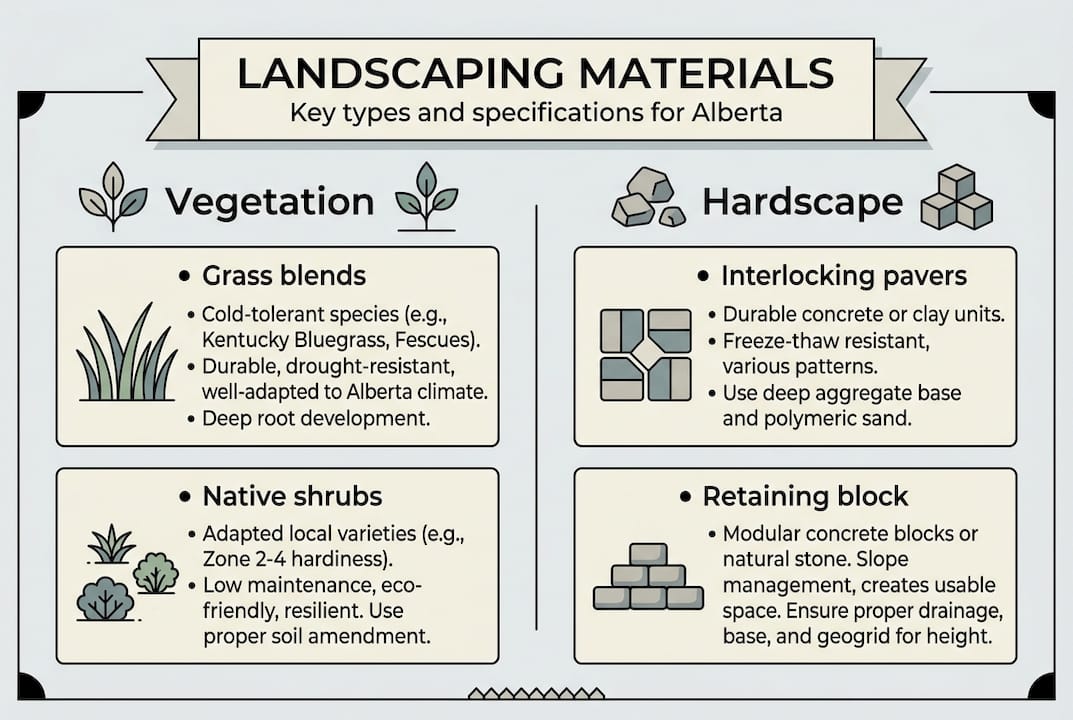
Material selection directly impacts longevity and maintenance requirements. For vegetation, Kentucky Bluegrass blends thrive in Alberta’s climate, offering cold hardiness and drought tolerance once established. Hardscape materials must meet CSA standards for freeze-thaw resistance. The table below compares essential materials for typical Alberta landscaping projects:
| Material type | Recommended product | Key specification | Typical cost range |
|---|---|---|---|
| Sod | Kentucky Bluegrass blend | Cold-hardy, drought-tolerant | $0.60-$0.90/sq ft |
| Base material | Crushed limestone 3/4" | Compactable, drains well | $45-$65/tonne |
| Geotextile fabric | Non-woven polypropylene | 4 oz/sq yd minimum | $0.15-$0.30/sq ft |
| Pavers | CSA-rated interlocking concrete | Freeze-thaw tested | $8-$18/sq ft installed |
| Retaining wall blocks | Concrete or natural stone | Rated for frost heaving | $35-$85/sq ft installed |
Local regulations add another layer of requirements. Edmonton and Calgary enforce specific standards for lot grading, drainage, and landscaping securities on commercial and multi-family properties. Projects must demonstrate positive drainage away from structures and submit as-constructed grade certificates upon completion. Working with landscaping materials alberta commercial properties suppliers who understand these requirements saves time and prevents compliance issues.
Pro Tip: Order materials 10-15% over calculated needs to account for cuts, waste, and future repairs. Quality suppliers will accept returns of unopened, undamaged products.
With materials selected and site preparation complete, you’re ready to move into the installation phase where proper technique determines project success.
Step-by-step installation methods for common landscaping materials
Installation technique separates amateur work from professional results. Each material type demands specific methods to perform reliably in Alberta’s climate. Let’s examine proven approaches for the three most common landscaping installations: sod, pavers, and retaining walls.
Sod installation follows a precise sequence:
- Complete all soil preparation, grading, and irrigation installation before ordering sod. Fresh sod deteriorates rapidly and must be installed within 24 hours of delivery.
- Water the prepared soil bed thoroughly the day before installation to create moist but not muddy conditions.
- Lay sod in a brick pattern, staggering joints and butting edges tightly without overlapping. Start along straight edges like sidewalks or driveways.
- Roll the entire installation with a water-filled lawn roller to eliminate air pockets and ensure root-to-soil contact.
- Water immediately after installation, applying 1 inch of water daily for the first week, then transitioning to deep, infrequent watering.
- Avoid foot traffic for 2-3 weeks until roots establish in the underlying soil.
Interlocking paver installation requires attention to base preparation and edge restraints. Alberta’s freeze-thaw cycles make interlocking pavers flex rather than crack, unlike rigid concrete that often fails. Begin by excavating to proper depth: typically 7-9 inches for pedestrian areas, 12-14 inches for vehicular traffic. Install geotextile fabric over native soil, then add crushed gravel base material in 3-inch lifts, compacting each layer to 95% density. Top with 1 inch of washed sand bedding layer, screed level, then lay pavers in your chosen pattern. Install edge restraints before final compaction. Sweep polymeric sand into joints and compact with a plate tamper.
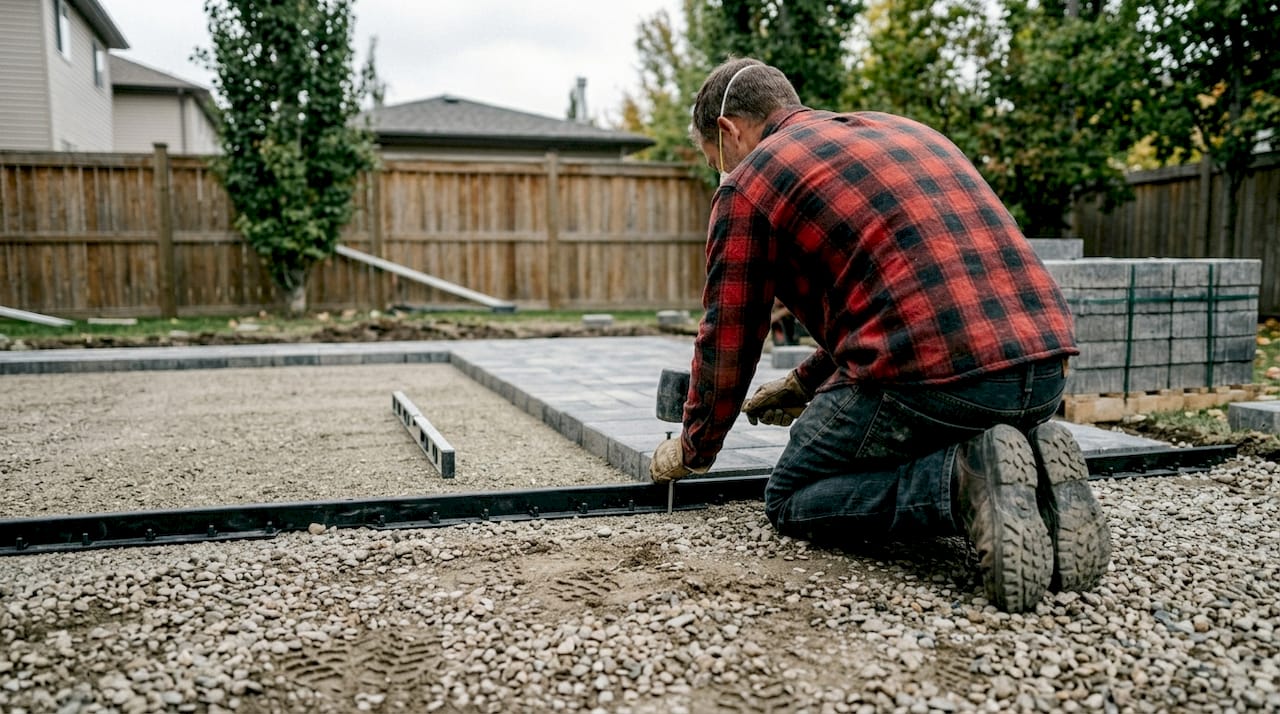
The comparison between interlocking pavers and poured concrete reveals why pavers dominate Alberta installations:
| Factor | Interlocking pavers | Poured concrete |
|---|---|---|
| Freeze-thaw performance | Excellent, individual units flex | Poor, cracks develop quickly |
| Repair and maintenance | Simple, replace individual units | Difficult, requires cutting and patching |
| Installation timing | Install spring through fall | Limited to warm weather only |
| Initial cost | Higher upfront investment | Lower initial cost |
| Lifespan in Alberta climate | 25-30 years typical | 10-15 years before major repairs |
| Drainage | Permeable options available | Impermeable, requires drainage planning |
Retaining wall construction demands structural integrity and proper drainage. For walls under 4 feet height, use 6×6 treated posts or modular block systems designed for freeze-thaw conditions. Excavate below frost line (minimum 4 feet in Alberta), install compacted gravel base, and ensure each course sits level. Backfill with clean gravel, not clay soil, and install perforated drain tile at the base to channel water away. Walls over 4 feet require engineering and permits in most Alberta municipalities.
Slope management applies across all installations. Maintain minimum 2% grade away from structures, increasing to 5% for the first 10 feet from foundations when possible. This prevents water accumulation that causes frost heaving and material failure.
Pro Tip: Wait 4-6 weeks after rough grading before installing final landscaping. This settling period reveals low spots and drainage issues you can correct before committing to expensive materials.
Understanding proper installation techniques prevents the common mistakes that plague Alberta landscaping projects. Let’s examine how to identify and avoid these costly errors.
Troubleshooting, common mistakes, and verification for lasting results
Even experienced contractors fall victim to installation errors that compromise project longevity. Recognizing these mistakes before they cause problems saves thousands in remediation costs and protects your professional reputation.
The five most common installation mistakes in Alberta landscaping projects:
- Installing inadequate drainage systems or ignoring water management entirely, leading to pooling, frost heaving, and premature material failure
- Using thin or poorly compacted base materials beneath hardscapes, causing settling, shifting, and uneven surfaces within the first year
- Selecting non-rated materials that lack proper freeze-thaw testing, resulting in cracking, spalling, and complete replacement needs
- Ignoring municipal grading requirements and failing to obtain necessary permits, creating compliance issues and project delays
- Rushing installation without allowing proper settling time after rough grading, missing critical drainage problems
Drainage failures top the list of installation problems. Alberta’s clay soils drain slowly, and without proper slope and subsurface drainage, water accumulates and freezes. This creates frost heaving that lifts pavers, cracks retaining walls, and kills vegetation. Every project must maintain positive lot grading with minimum 2% slope away from structures. Edmonton requires positive drainage and as-constructed grade certificates for multi-family and commercial developments.
Material selection mistakes prove equally costly. Using standard concrete pavers instead of CSA-rated products designed for freeze-thaw cycles leads to rapid deterioration. Similarly, installing landscape fabric in city right-of-ways without proper specifications violates municipal standards. Always verify that materials meet local requirements and carry appropriate ratings for Alberta’s climate.
Safety and compliance warning: Commercial and public landscaping projects in Edmonton require posted securities for sod, planting beds, and trees. Projects must pass final inspection before security release. Failure to comply results in securities forfeiture and potential legal liability. Always verify current requirements with municipal authorities before beginning work.
Annual maintenance extends installation lifespan significantly. For vegetated areas on clay soils, aerate once yearly in early spring or fall to maintain healthy root development and water penetration. Inspect hardscapes each spring for settling, shifting, or drainage issues. Address problems immediately rather than allowing them to compound.
Verification procedures ensure compliance and quality. Document site conditions before, during, and after installation with photographs and measurements. For projects requiring permits, schedule inspections at required stages rather than waiting until completion. Maintain records of material sources, installation dates, and weather conditions during construction. This documentation protects you if questions arise and demonstrates professional standards.
Working with experienced suppliers streamlines the verification process. Companies specializing in choosing the right landscape supplier understand Alberta’s requirements and stock appropriate materials. They provide product specifications, installation guidance, and compliance documentation that simplifies your workflow.
For alberta commercial landscaping materials projects, professional installation becomes essential rather than optional. The complexity of drainage systems, regulatory requirements, and liability exposure makes DIY approaches risky. Professional installers bring specialized equipment, trained crews, and insurance coverage that protects property owners and managers.
Recognizing when projects exceed DIY capabilities prevents costly mistakes. Small, flat residential projects suit experienced homeowners with proper tools. However, any project involving slopes, retaining walls over 3 feet, commercial properties, or public spaces demands professional expertise. The investment in qualified installation pays dividends through reduced maintenance, extended material lifespan, and compliance with regulatory requirements.
With installation complete and verification procedures finished, consider how professional services can elevate your next landscaping project.
Professional landscaping and construction services for Alberta projects
Complex landscaping installations demand expertise that goes beyond basic DIY skills. ProZone Ltd. specializes in construction services for Edmonton managers who need reliable, compliant solutions for challenging projects. Our team understands Alberta’s unique climate demands and regulatory landscape, delivering installations that perform reliably through harsh winters and dramatic seasonal transitions.
We offer comprehensive solutions from road construction for municipalities to precision grading and fresh grass sod products installation. Our services ensure proper drainage design, material selection, and installation techniques that meet or exceed municipal standards. Whether you’re managing multi-family developments, commercial properties, or public spaces, our experienced crews deliver results that protect your investment and satisfy regulatory requirements. Contact us for a free consultation on your next landscaping project.
FAQ
What is the best time to install sod in Alberta?
Late spring and early fall provide optimal conditions for sod installation in Alberta. These periods offer moderate temperatures and adequate moisture that support rapid root establishment before temperature extremes arrive. Avoid installation during summer heat or approaching freeze dates.
How do Alberta freeze-thaw cycles affect landscaping materials?
Freeze-thaw cycles cause rigid materials like poured concrete to crack while flexible interlocking pavers accommodate movement without damage. Water trapped in materials expands when frozen, creating internal pressure that fractures non-rated products. Always select CSA-rated materials tested specifically for freeze-thaw performance.
What are the key municipal regulations for landscaping installation in Edmonton and Calgary?
Edmonton requires positive drainage slopes and landscaping securities for multi-family developments, with as-constructed grade certificates submitted after completion. Calgary mandates 2% slope drainage from foundations and similar grading documentation. Both cities enforce strict standards for public and commercial projects with inspection requirements before final approval.
When should I hire a professional for landscaping installation?
Professional installation becomes essential for projects involving slopes, retaining walls over 4 feet, or commercial and public properties. Professionals bring specialized equipment, regulatory knowledge, and insurance coverage that protects property owners from liability. DIY approaches suit only simple, flat residential projects where compliance requirements are minimal.
Recommended
- Gallery of Landscaping, Asphalt & Concrete Projects in Edmonton | ProZone
- Landscaping materials for Alberta commercial properties
- Best materials for outdoor landscaping in Edmonton
- Landscaping & Paving Blog: Tips, Trends & Maintenance in Alberta | ProZone
- Natural stone backsplash guide for elegant renovations– SurfacesGalore