
TL;DR:
- True landscape construction includes grading, drainage, hardscaping, and infrastructure, not just planting.
- Edmonton’s harsh climate demands specialized materials and construction techniques for durability.
- Investing in professional landscape construction reduces long-term repair costs and enhances property value.
Most commercial property owners in Edmonton think landscape construction means laying sod and planting a few trees near the entrance. That assumption costs money. Real landscape construction covers grading, drainage systems, hardscaping, lighting infrastructure, and material selection, all of which directly affect safety, regulatory compliance, and long-term property value. Edmonton’s climate adds another layer of complexity that separates a well-built outdoor space from one that crumbles after two freeze-thaw cycles. If you manage or own commercial property here, understanding what landscape construction actually involves is not optional. It shapes every decision from budget planning to contractor selection, and it determines whether your outdoor spaces hold up for years or become a recurring liability.
Table of Contents
- Defining landscape construction: More than just greenery
- Key components and materials in commercial landscape construction
- The landscape construction process: From planning to completion
- Why professional landscape construction matters for Edmonton properties
- A smarter approach to landscape construction for Edmonton managers
- Ready to enhance your Edmonton property?
- Frequently asked questions
Key Takeaways
| Point | Details |
|---|---|
| More than aesthetics | Landscape construction enhances safety, compliance, and infrastructure for commercial properties. |
| Material matters in Edmonton | Choosing the right materials is vital for long-term performance in harsh local conditions. |
| Professional process benefits | A carefully managed process reduces risks and protects your outdoor investment. |
| Plan for the climate | Integrate Edmonton-specific needs like freeze-thaw durability and drainage from the start. |
Defining landscape construction: More than just greenery
Landscape construction is the professional practice of designing, building, and maintaining outdoor environments to serve specific functional and aesthetic purposes. It is not simply about making a property look attractive. For commercial properties, it is about creating outdoor spaces that work, that are safe, that comply with local codes, and that hold their value over time.
The scope of a true landscape construction project includes a wide range of disciplines working together:
- Site grading and earthworks: Reshaping the land to direct water flow and prevent pooling or erosion
- Drainage systems: Installing subsurface and surface drainage to protect foundations and paved areas
- Hardscaping: Building patios, retaining walls, pathways, curbs, and paved surfaces
- Irrigation: Designing and installing systems that keep planted areas healthy without wasting water
- Lighting infrastructure: Embedding conduit and fixtures for safety and visibility
- Softscaping: Selecting and placing plants, turf, mulch, and other organic materials
- Amenity installation: Benches, bike racks, signage bases, and other functional features
Professionals approach each of these elements with a planning phase that accounts for permits, utility locates, soil conditions, and drainage calculations. In Edmonton, this planning phase also has to factor in Alberta’s building codes and municipal bylaws that govern everything from impervious surface ratios to accessibility requirements under the Alberta Building Code.
The professional process matters because mistakes at the planning stage are expensive to fix after construction begins. A drainage system installed without proper slope calculations will fail. A retaining wall built without engineered drawings may not meet city inspection standards. These are not hypothetical risks. They are common outcomes when landscape construction is treated as a simple landscaping job rather than a structured construction process.
“Landscape construction involves integrating hardscapes, infrastructure, and specialized materials for lasting results.” This is why the landscaping materials overview for Alberta commercial properties covers far more than just decorative choices.
For commercial property managers, the functional benefits of professional landscape construction are direct. A well-graded site reduces slip-and-fall risks in wet seasons. Proper drainage protects your asphalt and concrete from premature failure. Thoughtful hardscaping improves traffic flow for both vehicles and pedestrians. And a professionally finished exterior signals to tenants, clients, and visitors that the property is well managed.
When you work with a contractor who also offers landscaping supply services, you gain the advantage of material expertise built into the project from day one, not sourced as an afterthought.
Key components and materials in commercial landscape construction
Understanding the objectives of landscape construction leads naturally to which components and materials make projects successful. Each element serves a purpose, and material selection is one of the most consequential decisions in any commercial project.
Here is a breakdown of the core components you will encounter in most commercial landscape construction projects:
- Hardscapes: Paved surfaces, walkways, retaining walls, curbs, and edging
- Softscapes: Turf, trees, shrubs, groundcovers, and mulched planting beds
- Drainage infrastructure: Catch basins, French drains, swales, and grading
- Site lighting: Pathway lights, security lighting, and decorative fixtures
- Amenities: Seating areas, planters, bollards, and waste enclosures
Material selection shapes both the durability and the maintenance burden of each component. Stone, concrete, and wood each serve unique roles in durable landscape construction projects, and choosing the wrong material for a specific application leads to premature failure.
| Material | Best application | Key advantage | Limitation |
|---|---|---|---|
| Concrete | Pathways, curbs, pads | High durability, low maintenance | Can crack under freeze-thaw stress |
| Natural stone | Feature walls, steps, edging | Aesthetic appeal, longevity | Higher upfront cost |
| Asphalt | Parking areas, service roads | Cost-effective, flexible | Requires periodic sealing |
| Treated wood | Decking, planters, fencing | Warm appearance, workable | Shorter lifespan in wet climates |
| Mulch | Planting beds, tree rings | Moisture retention, weed control | Annual replenishment needed |
| Turf (sod) | Open green areas, medians | Immediate coverage, erosion control | Irrigation-dependent |
For pathways and decorative borders, limestone is a popular and practical choice in Edmonton. Products like limestone for pathways in the 10 to 20mm range provide excellent drainage and a clean, professional finish. For larger feature areas or erosion control, decorative limestone options in the 30 to 65mm range offer both function and visual interest.
Pro Tip: Never skip the base layer. In Edmonton’s climate, the compacted granular base beneath any hardscape is what determines longevity. A properly prepared base absorbs freeze-thaw movement and prevents surface cracking. Cutting costs here is the single most common reason commercial hardscapes fail within five years.
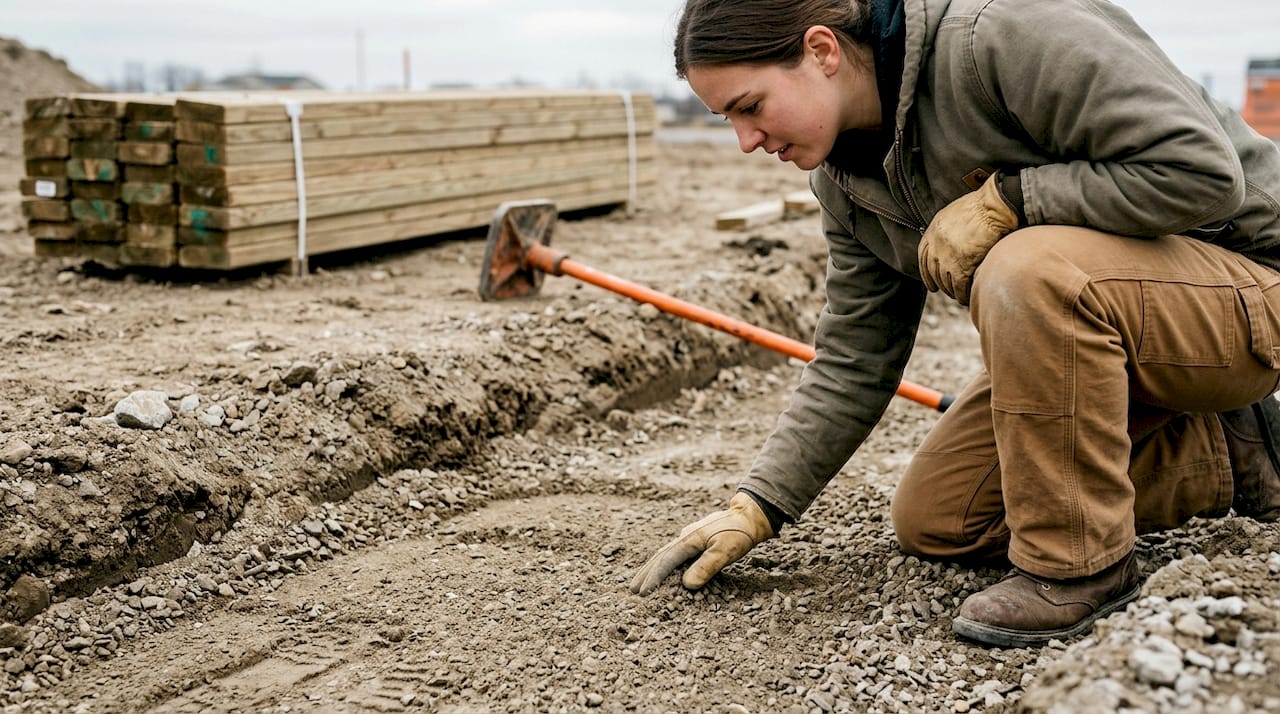
Site preparation is not glamorous work, but it is where the real investment in durability happens. Proper excavation depth, compaction testing, and base material selection are the invisible factors that separate a landscape that lasts 20 years from one that needs repairs in year three.
The landscape construction process: From planning to completion
Once you know what goes into your project, it is key to understand the process that delivers results. Commercial landscape construction follows a structured sequence, and skipping steps creates compounding problems down the line.
Here is how a professional project typically unfolds:
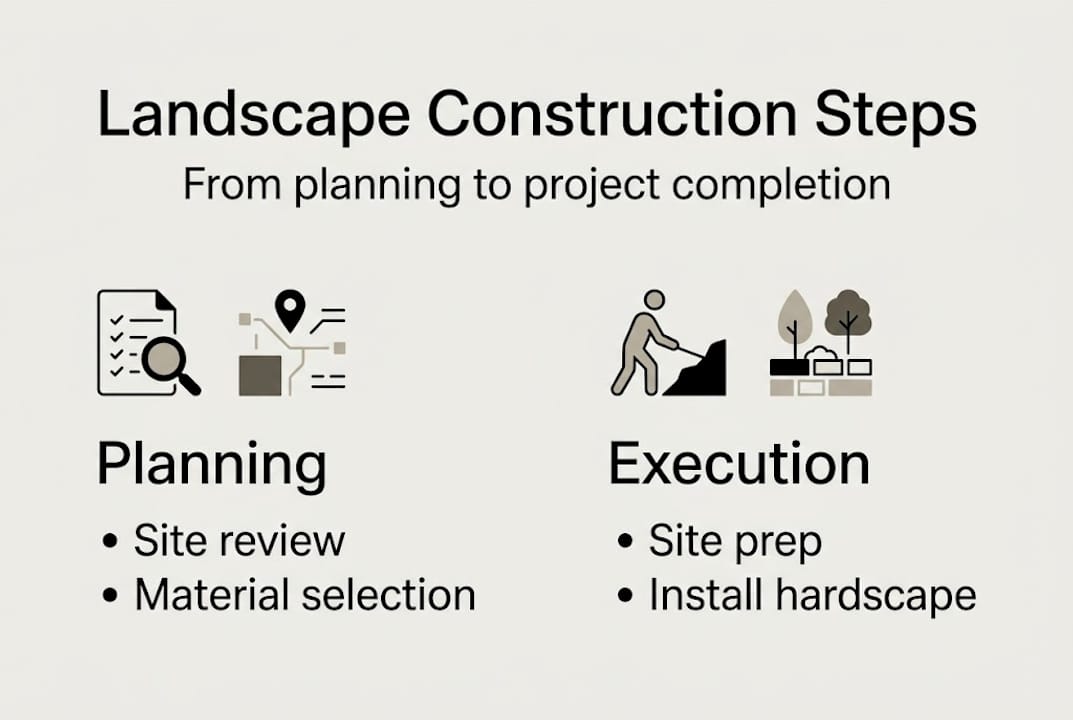
- Initial site assessment: Evaluate existing conditions, soil type, drainage patterns, utility locations, and access constraints
- Concept design: Develop a layout that meets functional requirements, aesthetic goals, and budget parameters
- Material specification: Select materials suited to the site’s use, climate exposure, and maintenance capacity
- Permits and approvals: Submit drawings for city review where required, including grading plans and drainage calculations
- Site preparation: Clear, excavate, and grade the site to design specifications
- Construction phase: Install hardscapes, drainage, irrigation, lighting, and softscapes in the correct sequence
- Inspection and quality check: Verify drainage performance, structural integrity, and code compliance
- Maintenance planning: Establish a seasonal maintenance schedule to protect the investment
Professional contractors manage this sequence with clear timelines and documented milestones. This matters for commercial property managers who need to coordinate construction around tenant operations, parking availability, and seasonal weather windows. A professional process ensures compliance and minimizes maintenance risk, which translates directly to lower operating costs over the life of the property.
| Factor | DIY or unqualified contractor | Professional contractor |
|---|---|---|
| Permit compliance | Often missed | Built into process |
| Material sourcing | Retail pricing, limited options | Trade pricing, wider selection |
| Timeline reliability | Unpredictable | Milestone-based scheduling |
| Drainage accuracy | Frequently inadequate | Engineered and tested |
| Long-term durability | Higher failure rate | Designed for Edmonton’s climate |
| Warranty and accountability | Minimal | Contractual obligations |
Pro Tip: Ask any contractor for their sequencing plan before work begins. If they cannot explain why drainage goes in before hardscaping, or why compaction testing happens before paving, that is a signal their process is not structured enough for a commercial project.
When sourcing local landscaping materials through your contractor, confirm that material specifications match your project’s engineering requirements, not just the visual design. The right material at the wrong specification is still the wrong material.
Why professional landscape construction matters for Edmonton properties
Now that the construction process is clear, consider how local expertise elevates success for your property. Edmonton presents a set of environmental conditions that make professional execution more important here than in many other Canadian cities.
The city sits in a continental climate zone where temperatures can swing from plus 30 degrees Celsius in summer to minus 30 in winter. That 60-degree range puts enormous stress on outdoor materials. Freeze-thaw cycles demand specialized materials and construction techniques to maintain the integrity of outdoor spaces. Water that infiltrates a poorly sealed surface will expand when it freezes, forcing cracks open from the inside. This is not a slow process. A single hard winter can destroy a poorly built pathway or retaining wall.
Here is what professional landscape construction addresses that generic contractors often miss:
- Frost depth compliance: Edmonton’s frost depth reaches approximately 1.5 to 2 meters, meaning footings and base layers must be sized accordingly
- Drainage design for spring melt: Snowmelt volumes are significant, and drainage systems must handle peak flow without flooding paved areas or building perimeters
- Salt-resistant materials: De-icing products used in winter maintenance accelerate concrete deterioration, so material selection must account for chemical exposure
- Accessibility in all seasons: Ramps, curb cuts, and surface textures must remain functional even after freeze-thaw cycling
- Regulatory compliance: Edmonton’s Land Use Bylaw and the Alberta Building Code set specific requirements for grading, drainage, and accessible design
“Professionally built landscapes are not just more attractive. They are a measurable risk management tool for commercial property owners.”
From a financial perspective, the numbers support professional investment. Commercial properties with well-maintained, professionally constructed outdoor spaces consistently attract higher-quality tenants and command stronger lease rates. Deferred maintenance on landscape infrastructure, particularly drainage and hardscaping, leads to liability exposure from slip-and-fall incidents and accelerated deterioration of adjacent structures like parking lots and building foundations.
Safety and accessibility features are far easier to integrate correctly during initial construction than to retrofit later. A property manager who builds these elements in from the start avoids the much higher cost of corrective work after a complaint or inspection.
A smarter approach to landscape construction for Edmonton managers
Most Edmonton property managers we talk to have one thing in common: they chose the lowest bid on their last landscape construction project, and they are still paying for it. Not in obvious ways, but in annual repair budgets that quietly exceed what a proper build would have cost in the first place.
The logic of lowest-bid selection feels sound on paper. You are managing costs. You have budget pressures. But landscape construction in Edmonton is not a commodity service. The difference between a contractor who understands frost depth and one who does not shows up in year two, not at project completion. By then, the contract is closed and the liability is yours.
The smarter frame is total cost of ownership. A project built correctly with advanced landscape planning and quality materials will require less intervention over a 10-year period than a cheaper build that needs patching, re-grading, or drainage correction every spring. When you factor in the cost of tenant disruption, liability risk, and emergency repairs, the professional option is almost always the lower-cost choice over time.
There is also a planning discipline that separates experienced commercial contractors from residential ones. Commercial sites have more users, more traffic, and more regulatory scrutiny. A contractor who builds driveways for homeowners is not automatically qualified to design and build a commercial parking lot with proper drainage, accessible routes, and engineered curbing. The scope is different. The stakes are higher. And the consequences of getting it wrong are more visible and more expensive.
Our perspective: invest in the planning phase. The hours spent on proper site assessment, drainage modeling, and material specification save multiples of that time in corrective work later.
Ready to enhance your Edmonton property?
If you manage commercial property in Edmonton, the outdoor environment is part of your infrastructure, not just your curb appeal. The right construction partner brings technical knowledge of local conditions, access to quality materials, and a structured process that protects your investment from the first day of construction through every Alberta winter that follows.
ProZone Ltd works with property managers and commercial owners across Edmonton on projects that range from site grading and drainage to full landscape builds. Explore our Edmonton construction services to see the full range of what we deliver. For properties that need road or access improvements, our commercial road construction services are built for municipal-grade durability. And for properties dealing with deteriorating walkways or curbing, our sidewalk and curb repair team is ready to assess and restore your site. Reach out to discuss your project and get a clear picture of what professional landscape construction looks like for your specific property.
Frequently asked questions
What does landscape construction include for commercial properties?
Commercial landscape construction covers design, site prep, hardscapes, drainage, plantings, lighting, and ongoing maintenance planning for commercial outdoor spaces. It integrates both infrastructure and aesthetics to serve functional and regulatory requirements.
Why should I hire a professional landscape construction company in Edmonton?
Professionals ensure compliance with regulations, long-term durability against harsh climates, and quality materials for lasting results. Professional services minimize maintenance risks and protect your property’s long-term value.
How does Edmonton’s climate affect landscape construction?
Edmonton’s freeze-thaw cycles demand specialized materials and construction techniques to maintain the integrity of outdoor spaces. Climate-smart choices in base layers, drainage, and surface materials are critical to preventing premature failure.
What is the typical timeline for a commercial landscape construction project?
Timelines vary but typically range from several weeks to a few months, depending on project size, permit requirements, and site complexity. Larger projects with engineered drainage or significant hardscaping generally require more time for proper sequencing and inspection.