
TL;DR:
- Consistent assessment and timely repairs prevent costly structural damage from Edmonton’s freeze-thaw cycles.
- Sealcoating every two to three years is a cost-effective way to protect concrete surfaces.
- Integrating inspections with maintenance planning extends concrete lifespan and reduces emergency repairs.
Neglected concrete does not just look bad. It creates real liability, and in Edmonton’s climate, small cracks can turn into serious structural failures within a single winter. A cracked sidewalk or sunken parking slab is not just an eyesore — it is a slip-and-fall waiting to happen, and the repair bill that follows rarely stays small. Property managers who rely on reactive fixes instead of a structured routine consistently spend more money and face more disruptions. This guide gives you a practical, Edmonton-specific maintenance checklist built around the freeze-thaw reality of Alberta winters, so you can protect your surfaces, reduce risk, and make smarter decisions about where your maintenance budget goes.
Table of Contents
- How to assess your concrete: The critical criteria
- The ultimate concrete maintenance checklist
- Repair and seal: Options, costs, and expert tips
- Seasonal strategies for Edmonton’s climate
- What most checklists miss: Integrating inspection with long-term strategy
- Get professional help to optimize your maintenance checklist
- Frequently asked questions
Key Takeaways
| Point | Details |
|---|---|
| Prioritize early assessment | Regular inspections help spot damage before it becomes a costly emergency. |
| Follow a set checklist | Using a structured routine reduces risk and prolongs the life of concrete surfaces. |
| Invest in proactive repairs | Sealcoating and crack repairs are cost-effective and protect against expensive replacements. |
| Adapt for Edmonton’s climate | Seasonal strategies and drainage checks tackle freeze-thaw cycles and local challenges. |
| Partner with professionals | Leverage expert help for inspections and repairs that keep your property safe and appealing. |
How to assess your concrete: The critical criteria
Once you have committed to consistent care, the first step is identifying problem areas before they cause headaches. Skipping this step means you are always reacting, never planning. A proper assessment gives you a baseline so you can track change over time and prioritize repairs by urgency.
Every assessment should cover these core areas:
- Cracks: Look for hairline cracks, wide structural cracks, and map cracks (a web-like pattern that signals surface deterioration). Measure width where possible. Anything wider than 6 mm deserves immediate attention.
- Spalling: This is when the surface layer flakes or chips away, often triggered by freeze-thaw cycles or salt damage. Spalling weakens the surface fast and exposes the aggregate underneath.
- Sunken or heaved sections: Uneven slabs are trip hazards. They also signal underlying issues like soil erosion or poor compaction during the original pour.
- Drainage patterns: Watch where water goes after rain or snowmelt. Pooling water is a major warning sign. Poor drainage accelerates deterioration through freeze-thaw cycles in Edmonton winters, where water trapped in cracks expands and breaks concrete from the inside out.
- Curbs, sidewalks, and high-traffic zones: These areas take the most punishment. Assess them separately and more frequently than interior slabs.
Edmonton’s freeze-thaw reality: The city experiences dozens of freeze-thaw cycles each year. Water seeps into micro-cracks, freezes, expands by roughly 9%, and forces cracks wider with each cycle. This is why drainage is not just a comfort issue — it is a structural one. Ensuring proper slope toward drains and keeping debris clear is one of the highest-impact steps you can take before winter arrives.
Pro Tip: Combine your visual inspection with a simple moisture test. Press a plastic sheet flat against a concrete section and tape the edges. After 24 hours, condensation under the sheet means moisture is moving through the slab. This is especially useful for covered parking areas where you cannot rely on rain to reveal drainage problems.
Do your full assessment at least twice a year: once in spring after the thaw, and once in late fall before the ground freezes. Spring checks reveal what winter did. Fall checks let you seal and repair before conditions worsen. Understanding the benefits of concrete repair done at the right time versus deferred maintenance is what separates managers who control costs from those who are always chasing them.
Document everything with photos and notes. A simple spreadsheet with location, issue type, severity, and date gives you a record that helps contractors quote accurately and helps you justify capital maintenance budgets to ownership.
The ultimate concrete maintenance checklist
With assessment results in hand, you are ready to act. Stick to this checklist to avoid future emergencies and keep your surfaces performing year after year.
- Monthly: Visual walk-through. Walk all concrete surfaces including sidewalks, ramps, stairs, and parking areas. Look for new cracks, surface staining, standing water, or any change from the previous month. Flag anything that has changed.
- Monthly: Clear debris and drains. Remove leaves, gravel, and dirt from drain grates and surface joints. Blocked drains are one of the fastest ways to accelerate concrete damage in Edmonton’s wet spring and early fall periods.
- Seasonal (spring and fall): Full structural inspection. Use your assessment criteria from the previous section. Photograph and log every issue. Compare to prior records.
- Seasonal (spring): Clean all surfaces. Pressure wash to remove winter salt residue, sand, and organic buildup. Salt left on concrete continues to damage the surface even after winter ends.
- Seasonal (fall): Seal exposed cracks. Before freeze-thaw cycles begin, seal any open cracks. Hairline and shrinkage cracks respond well to polyurethane or epoxy injection, which prevents moisture from entering and expanding during freezing temperatures.
- Annual: Check curbs, stairs, and ramps specifically. These elements face concentrated wear and often show damage before flat surfaces do. Inspect for crumbling edges, exposed rebar, and uneven surfaces.
- Annual: Sealcoating assessment. Determine whether your surfaces are due for resealing. Most concrete benefits from resealing every two to three years depending on traffic volume and exposure.
- Annual: Review drainage infrastructure. Check that all slopes still direct water away from structures and toward drains. Settlement and frost heave can shift grades over time.
For a detailed breakdown of how to execute each repair task, the concrete repair step-by-step process is worth reviewing before you engage a contractor.
Pro Tip: Do not default to full replacement when spot repairs will do the job. Patching a localized spall or sealing a crack costs a fraction of slab replacement. The key is catching issues early, before the damage spreads to adjacent sections. A 30-centimeter crack that gets sealed costs almost nothing. That same crack left for two winters can undermine an entire slab. Pair your checklist with solid winter concrete protection practices to maximize the value of every repair you make.
Repair and seal: Options, costs, and expert tips
Applying your checklist means facing actual repairs. Here is how to pick the best fix and protect your property budget from unnecessary overruns.
There are three primary repair approaches for commercial concrete surfaces:
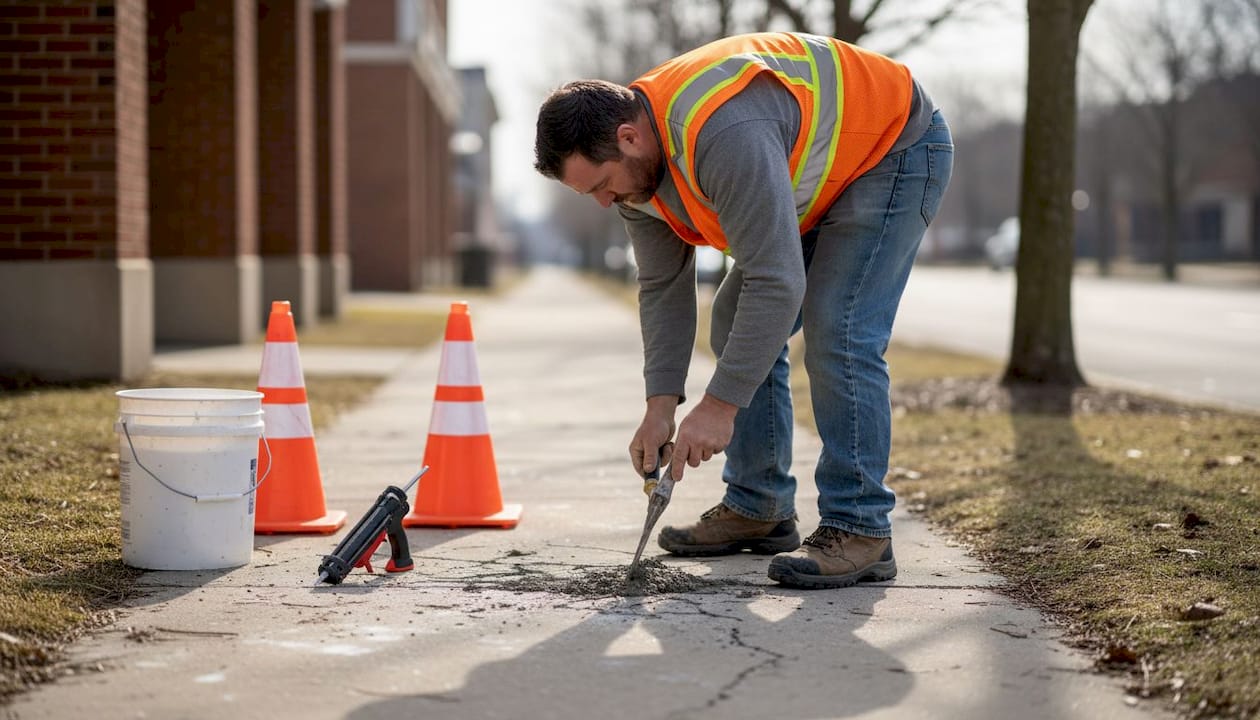
- Surface patching: Best for spalling, shallow cracks, and edge damage. Uses a polymer-modified mortar or concrete mix to fill and level the damaged area. Cost-effective for localized issues.
- Crack injection: Polyurethane or epoxy is injected under pressure into the crack, bonding the concrete back together or creating a flexible seal. Ideal for structural cracks that need to be stabilized without full replacement.
- Slab replacement: Required when a section has failed structurally, when rebar is exposed and corroding, or when settlement has created a trip hazard that cannot be corrected by grinding alone. This is the most expensive option and should be a last resort.
| Repair method | Cost per sq ft | Best for | Lifespan |
|---|---|---|---|
| Surface patching | $3 to $6 | Spalling, shallow damage | 5 to 10 years |
| Crack injection | $4 to $8 | Structural cracks | 10 to 20 years |
| Slab replacement | $8 to $15 | Failed sections | 20 to 30 years |
| Sealcoating | $0.50 to $2 | Preventive protection | 2 to 3 years |
Sealcoating every 2 to 3 years protects against moisture, salt, and UV exposure at a cost of $0.50 to $2 per square foot. Compare that to full slab replacement at $8 to $15 per square foot and the math is obvious. Sealcoating is not a luxury. It is the most cost-effective line of defense you have.
When deciding which method to use, ask these questions:
- Is the damage structural or cosmetic? Cosmetic damage gets patched or sealed. Structural damage needs injection or replacement.
- How large is the affected area? Small isolated spots favor patching. Widespread deterioration may indicate a systemic drainage or base failure.
- Is there active water infiltration? If yes, address drainage first, then repair. Sealing over a wet crack will not hold.
For a clearer picture of what different repairs will cost for your specific property, reviewing resources on budgeting for repairs helps you set realistic expectations before getting quotes. If you are unsure whether a crack needs injection or monitoring, the guide on crack repair options breaks down the decision criteria clearly.
Seasonal strategies for Edmonton’s climate
Concrete in Edmonton faces unique climate pressure. Your approach should shift with the seasons to stay ahead of damage rather than chasing it.
| Season | Priority tasks | Notes |
|---|---|---|
| Winter | Drainage management, anti-slip treatment, limit salt use | Use sand or calcium magnesium acetate instead of rock salt where possible |
| Spring | Full inspection, pressure washing, crack sealing, patching | Best time to assess winter damage and repair before summer heat |
| Summer | Sealcoating, slab replacement, major overhauls | Ideal curing conditions; plan large projects for July and August |
| Fall | Crack sealing, drain clearing, pre-winter inspection | Last chance to seal before freeze-thaw cycles begin |
Summer is your window for major work. Concrete cures best in warm, dry conditions, and contractors have more scheduling flexibility. Concrete slab replacement is best done in summer and fall, which aligns with the City of Edmonton’s own repair scheduling for roadway infrastructure. Grinding surface protrusions and addressing trip hazards also fits naturally into summer maintenance cycles.
Winter requires a different mindset entirely. The goal is not repair. The goal is protection and hazard management. Focus on:
- Keeping drains clear of ice and debris
- Applying anti-slip treatments to stairs, ramps, and high-traffic walkways
- Monitoring known problem areas after each freeze-thaw event
- Avoiding aggressive de-icing salts that accelerate spalling
Spring and fall are transition seasons and your most productive maintenance windows. Spring reveals what winter did. Fall is your last chance to seal before conditions deteriorate. Do not skip either inspection cycle.
For Edmonton property managers, it also helps to know your reporting options. If adjacent municipal concrete infrastructure is creating drainage problems on your property, you can report issues through 311. Understanding road repair methods used by the city gives you context for what to expect from municipal maintenance timelines. For your own asphalt surfaces adjacent to concrete areas, reviewing an asphalt repair workflow helps you coordinate both surface types under a single maintenance schedule.
What most checklists miss: Integrating inspection with long-term strategy
Here is the uncomfortable truth about most maintenance checklists: property managers treat them as a task list to check off, not as a diagnostic tool connected to a long-term preservation plan. You inspect, you note the crack, you move on. The crack gets sealed next time someone gets around to it. That is not a strategy. That is managed neglect.
The managers who get the best return on their concrete investment do something different. They connect each inspection finding to a treatment timeline. A hairline crack noted in spring gets scheduled for sealing before fall. A section showing early spalling gets flagged for sealcoating in the next summer cycle. Nothing sits in a log without a follow-up date attached.
Diamond grinding is a good example of a technique that rarely appears in standard checklists but delivers real value. It corrects surface irregularities and trip hazards without the cost of slab replacement, and it extends the life of surfaces that would otherwise be condemned to replacement within a few years. Pairing annual visual checks with periodic diamond grinding where surfaces are showing wear is a hybrid approach that most managers overlook entirely.
Pro Tip: Set two calendar reminders per surface zone: one for inspection and one for the treatment that follows. Do not let inspection findings sit without a scheduled response. The gap between noting a problem and acting on it is where maintenance budgets quietly explode.
Reviewing the full paving process overview gives you a stronger foundation for understanding when surfaces are approaching end-of-life versus when they can be preserved with targeted treatment.
Get professional help to optimize your maintenance checklist
With practical tools and genuine insight, your next step is turning strategy into consistent action. A checklist is only as good as the team executing it. ProZone Ltd works with property managers across Edmonton to conduct site assessments, build customized maintenance schedules, and deliver repairs that hold up through Alberta winters.
Whether you need a one-time inspection or an ongoing maintenance partnership, the right starting point is a conversation about your specific surfaces and their current condition. Explore the full range of construction services for Edmonton managers available through ProZone, or go directly to the Edmonton concrete contractor service page to understand what a professional assessment covers. For properties with aging walkways or damaged edges, the sidewalk and curb repair service is a natural first step. Reach out to ProZone to schedule a site visit and get a tailored maintenance plan built around your property’s real needs.
Frequently asked questions
How often should concrete surfaces be inspected for maintenance?
Inspect all concrete surfaces at least twice a year, ideally in spring and fall, to catch early damage and prepare for seasonal weather changes. Annual inspections and 311 reports are standard practice even at the municipal level in Edmonton.
What should I do if I find small cracks in my concrete?
Small non-structural cracks can be monitored, but sealing with polyurethane or epoxy is recommended to block moisture intrusion before Edmonton’s freeze-thaw cycles turn a minor crack into a major failure.
Is sealcoating really worth the investment for my property?
Yes. Sealcoating every 2 to 3 years at $0.50 to $2 per square foot is significantly more cost-effective than full slab replacement at $8 to $15 per square foot, making it one of the smartest preventive investments available.
How does Edmonton’s winter climate affect concrete maintenance?
Freeze-thaw cycles in Edmonton winters force water trapped in cracks to expand, rapidly widening damage. Proper drainage, prompt crack sealing, and anti-slip treatments are essential to prevent rapid surface deterioration between November and March.