
TL;DR:
- Municipal construction includes publicly funded infrastructure projects such as roads, water systems, public buildings, and streetscape improvements. These projects are prioritized through long-term Capital Improvement Plans based on asset condition, safety, regulatory requirements, community impact, and economic factors. Advances in technology are now enabling faster project completion and the integration of sustainable, multi-benefit design principles.
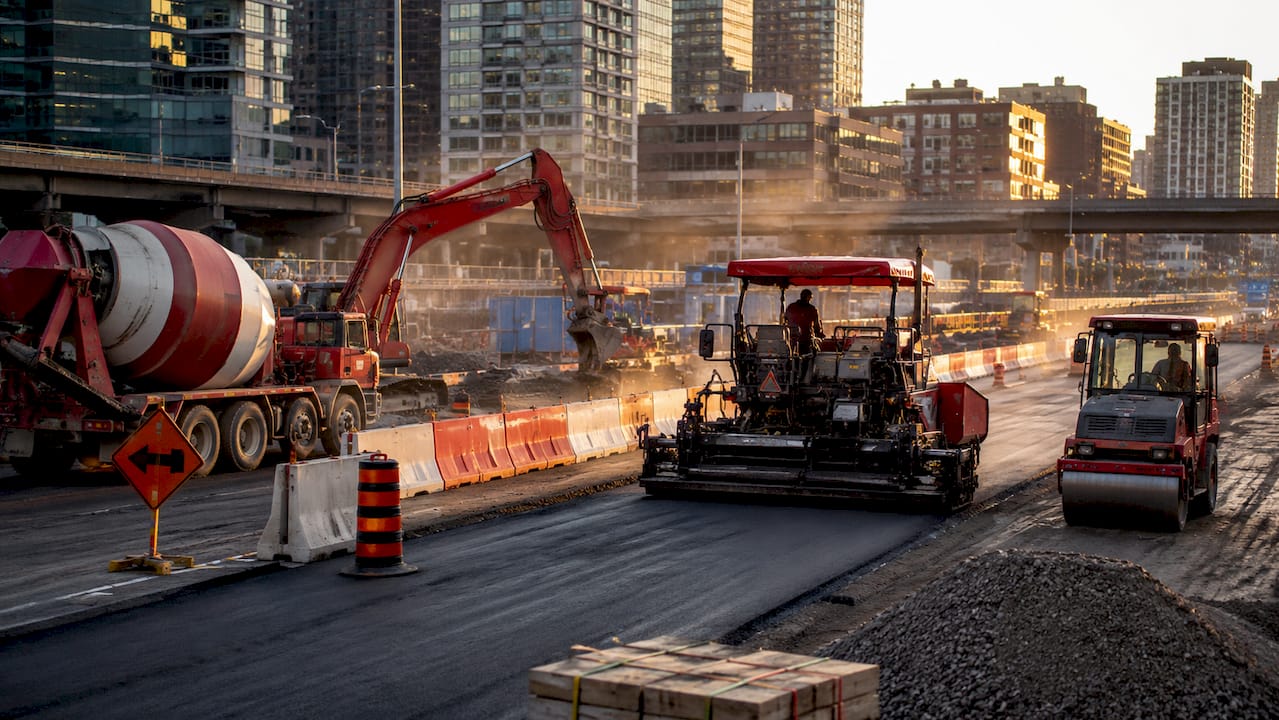
Municipal construction is defined as publicly funded infrastructure and facility work undertaken by a city, town, or regional government to serve community needs. The field spans four core categories: transportation infrastructure, public buildings, utility systems, and urban streetscape improvements. Real-world examples of municipal construction in 2026 include the RiverRenew tunnel in Alexandria, Virginia, the Kautz Road widening in Geneva, Illinois, and Aberdeen’s $20.6 million Public Works facility in South Dakota. Each project illustrates how civil engineering municipal work translates policy priorities into physical assets that communities rely on for decades.
1. What are the main examples of municipal construction?
Municipal construction covers any capital project that a government body commissions, funds, and owns. The four primary categories are transportation infrastructure, public buildings and civic facilities, water and wastewater systems, and urban streetscape improvements.
- Transportation infrastructure includes road widenings, bridge replacements, and tunnels. The Kautz Road project in Geneva, Illinois, is a current public construction case study: a $6.2 million corridor widening that added multi-use paths, improved drainage, and upgraded signage.
- Public buildings and facilities include civic centres, fire halls, libraries, and operations yards. Aberdeen’s new Public Works facility, valued at $20.6 million, is a government building example that consolidates vehicle maintenance, storage, and administrative functions under one roof.
- Water and wastewater systems cover treatment plants, watermain replacements, and combined sewer overflows. The RiverRenew tunnel in Alexandria, Virginia, is one of the most cited municipal infrastructure examples of this decade, designed to capture combined sewer overflows before they reach the Potomac River.
- Urban streetscape and stormwater improvements include sidewalk reconstruction, green infrastructure corridors, and accessible pedestrian networks. Kennedy Street in Washington, D.C., is a documented city development project that integrates bioretention planters, permeable paving, and improved crosswalks in a single corridor.
Pro Tip: When reviewing a city’s capital budget, sort projects by category first. Transportation and utility projects typically consume 60–75% of capital spending, which tells you where the largest procurement opportunities and engineering challenges concentrate.
2. How municipal capital improvement plans prioritise projects
A Capital Improvement Plan (CIP) is the formal document a municipality uses to schedule and fund major construction over a multi-year horizon. Best practice calls for a 5-year funded plan nested within a 10–20 year long-range outlook, updated annually as asset condition data and revenues change.
Projects do not enter a CIP based on political preference alone. Municipalities score each candidate against objective criteria to maximise public value and fiduciary responsibility. The standard scoring framework includes:
- Asset condition — physical state of the existing infrastructure, rated through inspection data
- Safety risk — documented hazards to users, workers, or adjacent properties
- Regulatory mandates — compliance deadlines set by provincial, federal, or environmental authorities
- Community impact — population served, economic benefit, and equity considerations
- Economic impact — effect on local employment, tax base, and development potential
Funding for municipal construction projects rarely comes from a single source. The Kautz Road widening illustrates this clearly: 78% of the $6.2 million project cost was covered by external transportation and enhancement programmes, with local financing covering the remainder. That funding structure is typical of mid-sized road projects across North America.
“Capital Improvement Plans should be viewed as strategic investment portfolios, not wish lists, to maximise public value and fiduciary responsibility.” — Municipal Capital Improvement Planning Guide
Public engagement also shapes CIP outcomes. Bond referendums require voter approval in many jurisdictions, which means community communication is a planning tool, not an afterthought. Projects with visible safety benefits and clear cost-per-household figures consistently earn stronger political support.
3. Technology accelerating municipal construction timelines
Modern technology is the primary reason large-scale municipal projects now complete in roughly half the time they once required. The RiverRenew tunnel in Alexandria is the clearest current example: the project completed in approximately 8 years versus the typical 15, with the tunnel boring machine advancing 130 feet in a single day at peak performance. That pace would have been unachievable with conventional open-cut excavation in a dense urban environment.
Beyond tunnelling, real-time construction management tools have changed how project teams coordinate across multiple trades and subcontractors. Digital dashboards allow project managers to track daily progress, flag utility conflicts, and adjust sequencing without waiting for weekly site meetings. The result is fewer costly delays and better documentation for public accountability.
Pre-construction coordination is equally critical in urban settings. The Jackson Area Improvement Project in Villa Park, Illinois, required bypass pumping and temporary access permits under bridges before a single shovel broke ground. Identifying those constraints in the design phase, rather than during construction, prevented schedule overruns and protected adjacent school operations.
Municipal bids increasingly include additive alternates to manage budget uncertainty. Aberdeen’s Public Works facility bid included alternates for additional storage and insulation, allowing the city to expand scope if final bids came in under budget. This approach gives procurement officers flexibility without requiring a full re-tender.
Pro Tip: Specify additive alternates for any scope element that is desirable but not critical. It costs nothing to include them at tender and can capture significant value if the base bids are favourable.
In Alberta, freeze-thaw cycles add a layer of complexity that technology alone cannot solve. Material selection, subgrade preparation, and construction scheduling must all account for ground movement between October and April. Contractors working to Alberta Safety Codes and using premium-grade aggregates deliver measurably longer service lives than those cutting costs on base materials.
4. Sustainability and multi-benefit design in public projects
The most forward-looking municipal construction projects now deliver multiple community benefits from a single capital investment. Multi-benefit infrastructure designs manage stormwater, reduce urban heat islands, and improve accessibility simultaneously, rather than treating each goal as a separate project.
Kennedy Street in Washington, D.C., is the benchmark example. The streetscape reconstruction integrated bioretention planters, permeable paving sections, improved crosswalks, and tree canopy expansion within a standard road reconstruction budget. The result is a corridor that handles a 100-year storm event, reduces surface temperatures, and meets full accessibility standards.
The table below compares conventional and multi-benefit design approaches across four performance dimensions:
| Performance dimension | Conventional design | Multi-benefit design |
|---|---|---|
| Stormwater management | Piped to storm sewer | Infiltrated on-site via bioretention |
| Urban heat island effect | Unaddressed | Reduced through tree canopy and permeable surfaces |
| Accessibility compliance | Minimum code standard | Integrated throughout corridor |
| Long-term maintenance cost | Higher (pipe repairs, resurfacing) | Lower (reduced runoff, longer pavement life) |
Green building materials are central to this shift. Eco-paving solutions such as rubber-modified asphalt and permeable concrete reduce surface runoff by allowing water to infiltrate rather than sheet-flow to storm sewers. Cities that have adopted these materials report measurable reductions in downstream flooding and lower annual maintenance budgets. Research on eco-paving cost savings confirms that upfront material premiums are typically recovered within 5–7 years through reduced repair frequency.
For city planners and architects working on municipal landscaping projects, the lesson is clear: specify multi-benefit outcomes in the project brief, not as optional enhancements. Contractors who understand both civil engineering requirements and landscape performance can deliver these outcomes without significant cost premiums.
The RiverRenew tunnel also demonstrates climate-resilient design at the infrastructure scale. The project was engineered for 100-year storms projected for 2100, with the structure positioned above future floodplain elevations. That level of forward planning is now considered standard practice for major utility infrastructure in climate-exposed jurisdictions.
My perspective on where municipal construction is heading
The most significant shift I observe in municipal construction is the move from reactive replacement to proactive asset management. Cities that treat their CIPs as living documents, updating project scores annually based on inspection data, consistently deliver better outcomes than those that lock in a five-year list and defend it politically regardless of changing conditions.
In Alberta, the freeze-thaw climate demands this discipline more than almost anywhere else in Canada. A road base that performs adequately in Vancouver will fail prematurely in Edmonton without proper compaction depths and aggregate specifications. I have seen projects bid at attractive prices that required full-depth reclamation within eight years because the subgrade preparation did not meet the conditions. The cost of that failure always exceeds the original savings.
Technology adoption is accelerating, but the human coordination layer remains the limiting factor on most projects. Tunnel boring machines and real-time dashboards are only as effective as the pre-construction planning that precedes them. The projects that consistently finish on time are the ones where utility conflicts, access constraints, and community impacts were resolved on paper before mobilisation.
Sustainability requirements are no longer optional in most Canadian municipalities. Green infrastructure and permeable paving are moving from pilot projects to standard specifications. The civil engineering students entering the field today will spend most of their careers designing and managing projects where stormwater performance, heat island reduction, and lifecycle cost are primary design criteria, not secondary considerations.
— ProZone
How Prozoneltd supports municipal construction in Edmonton
Municipal construction in Edmonton demands contractors who understand Alberta Safety Codes, freeze-thaw subgrade behaviour, and the procurement standards that public clients require. Prozoneltd delivers road construction services for municipalities and commercial properties across the Edmonton region, covering asphalt laying, earthworks, concrete flatwork, and site preparation. Every project is executed with premium-grade materials and documented quality control, meeting the standards that public sector clients and their engineers expect. If you are planning a municipal project or need a qualified contractor for an upcoming tender, contact Prozoneltd directly for a free estimate through the online form at prozoneltd.ca.
FAQ
What is municipal construction?
Municipal construction is publicly funded infrastructure and facility work commissioned by a city, town, or regional government. Common categories include roads, bridges, water systems, public buildings, and streetscape improvements.
What are the most common types of municipal projects?
The most common types are transportation infrastructure (roads and bridges), water and wastewater systems, public buildings such as civic centres and operations facilities, and urban streetscape and stormwater improvements.
How do cities fund large municipal construction projects?
Cities typically combine local financing with provincial and federal grants. The Kautz Road widening in Geneva, Illinois, covered 78% of its $6.2 million cost through external transportation and enhancement programmes, which reflects a standard funding model for mid-sized projects.
How long does a major municipal construction project take?
Timelines vary significantly by project type. Large tunnel projects historically required 15 years, but modern tunnel boring technology and aggressive planning have reduced that to approximately 8 years, as demonstrated by the RiverRenew project in Alexandria, Virginia.
What is a Capital Improvement Plan in municipal construction?
A Capital Improvement Plan is a multi-year schedule that prioritises and funds major public construction projects. Best practice structures it as a 5-year funded plan within a 10–20 year horizon, updated annually based on asset condition data, revenue changes, and community priorities.