
TL;DR:
- Site preparation involves clearing, testing, and conditioning land to ensure stable foundations before construction. Alberta’s climate and soil conditions demand thorough planning, including soil testing, grading, and drainage to prevent future structural problems. Proper permits and inspections are essential to comply with provincial and municipal regulations and avoid costly delays.
Site preparation is defined as the systematic process of clearing, testing, grading, and conditioning land before any construction or landscaping work begins. For property owners and project managers in Alberta, understanding what is site preparation means understanding the difference between a project that finishes on schedule and one that stalls mid-build. Alberta’s freeze-thaw cycles, varied soil types, and strict municipal permitting requirements under the Safety Codes Act make thorough site prep non-negotiable. Skipping or rushing this phase leads to foundation settlement, drainage failures, and costly work stoppages that no budget absorbs easily.
What does site preparation involve? The core stages explained
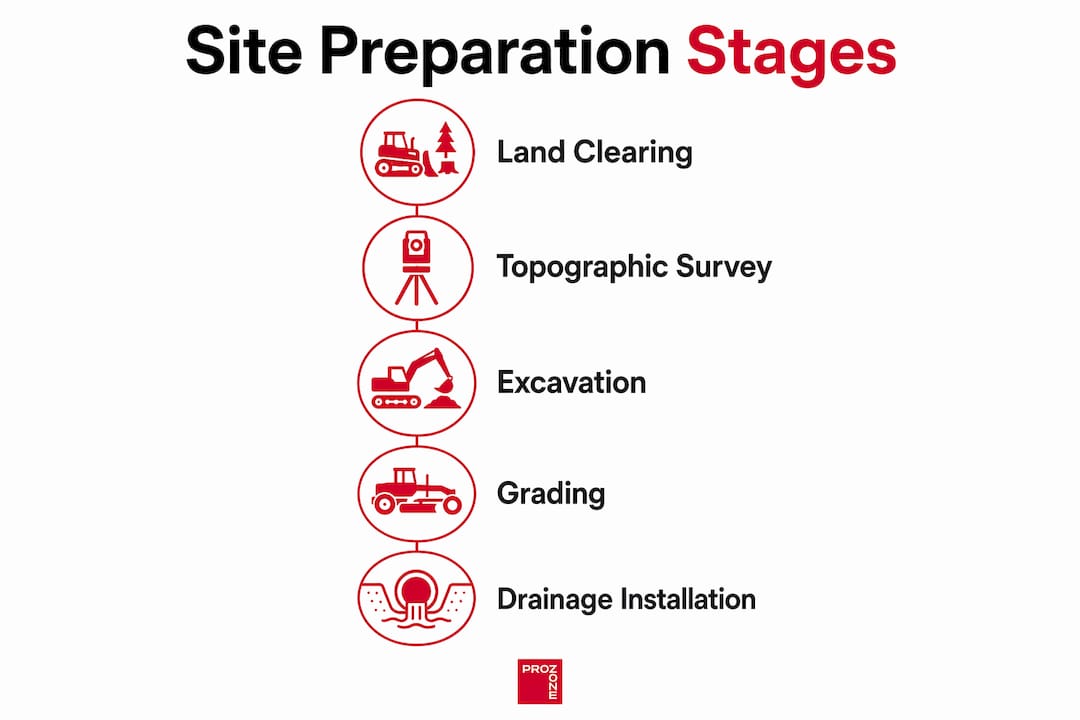
Site preparation is a sequential process, not a single task. Each stage builds on the last, and skipping one creates compounding problems downstream. The industry term for the full scope is “earthworks and site conditioning,” which covers everything from initial clearing through final compaction checks.
Stage 1: Land clearing and demolition
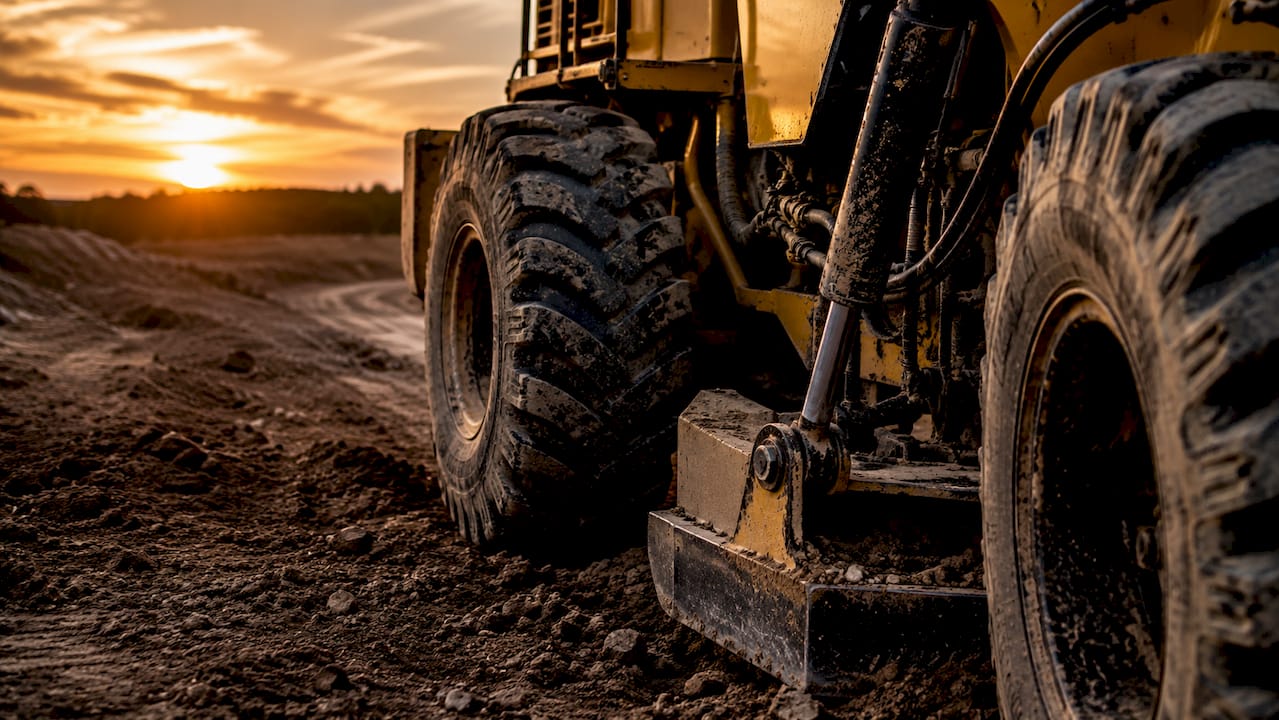
Clearing removes all surface obstacles: trees, shrubs, existing structures, and debris. Stumps and root systems require full extraction, not just cutting at grade, because decomposing organic matter beneath a slab causes uneven settlement over time. Any buried materials, such as old foundations or abandoned septic tanks, must be identified and removed before grading begins.
Stage 2: Topographic surveying and soil testing
A topographic survey maps the existing grades and drainage patterns across the site. Soil testing follows immediately, assessing bearing capacity, moisture content, and compressibility. Soil testing is essential to adapt construction to local climate and terrain challenges, particularly in Alberta where conditions shift dramatically between the prairies, foothills, and mountain regions. A site that looks stable on the surface can conceal expansive clay or loose fill that will shift under load.
Stage 3: Excavation
Excavation removes soil to the depth required for foundations, utility trenches, and drainage infrastructure. The depth varies by project type and local frost depth requirements. For Edmonton-area projects, frost penetration typically dictates deeper footings than in warmer Canadian climates. Prozoneltd’s site excavation guide covers excavation depths and safety protocols specific to the region.
Stage 4: Grading
Grading reshapes the land surface to achieve the specified elevations and slopes. Proper grading directs water runoff effectively, preventing pooling around foundations that causes erosion and structural damage. In Alberta’s climate, standing water adjacent to a foundation freezes, expands, and exerts lateral pressure that cracks concrete over multiple seasons.
Stage 5: Drainage planning and installation
Drainage systems, including swales, catch basins, and perforated pipe, are installed during site prep, not after construction. Retrofitting drainage is expensive and disruptive. For concrete flatwork specifically, crushed fill up to 20mm ensures uniform bearing, and dampening the subgrade before placement prevents premature cracking.
Pro Tip: Request a compaction test report after grading is complete. A standard Proctor compaction test confirms the subgrade meets the density required for your specific foundation type before any concrete or asphalt is placed.
Why does Alberta’s climate make site preparation more demanding?
Alberta’s geography creates site preparation challenges that do not exist in milder Canadian provinces. The province spans prairie flatlands, river valleys, foothills, and mountain terrain, each with distinct soil behaviour and drainage characteristics.
Freeze-thaw cycling is the single greatest threat to unprepared sites in the Edmonton region. Soil that retains excess moisture expands when it freezes and contracts when it thaws. This movement, called frost heave, lifts and shifts foundations, cracks slabs, and displaces buried utilities. Frost heave and foundation settlement are preventable with site-specific soil testing and proper drainage planning before ground is broken.
Alberta’s clay-heavy soils, common across much of the Edmonton metropolitan area, are particularly susceptible to volume change with moisture fluctuation. Sandy or gravelly soils in foothills areas drain freely but may lack the bearing capacity needed for heavy structures without engineered fill. Neither condition is a barrier to building. Both require a tailored response informed by geotechnical data.
Key climate-driven site preparation considerations for Alberta projects include:
- Frost depth compliance: Footings must extend below the local frost line, which varies by municipality and terrain.
- Drainage slope minimums: Grades must direct surface water away from structures at a minimum slope to prevent freeze-thaw damage at the foundation perimeter.
- Soil moisture management: Subgrade moisture must be controlled before concrete placement to prevent cracking in Alberta’s dry summers and freeze-prone autumns.
- Seasonal timing: Earthworks performed on saturated spring soils risk compaction failure. Experienced crews schedule grading for appropriate moisture windows.
“Alberta’s varied topography and climate effects like frost heave demand tailored soil testing for each individual site. A single standard approach applied across different terrain types will produce inconsistent and often inadequate results.”
HR Pacific
How do permits and regulations govern site preparation in Alberta?
Regulatory compliance is not a formality in Alberta. It is a legal requirement that directly controls when and how site preparation work proceeds. Alberta municipal guidelines require property owners to obtain development permits with detailed site plans before any site alteration begins.
The Safety Codes Act governs construction standards province-wide, while individual municipalities apply their own Land Use Bylaws on top of provincial requirements. Edmonton, for example, requires grading plans that demonstrate positive drainage away from all structures and toward approved municipal drainage infrastructure. Submitting incomplete documentation delays permit issuance, which delays every subsequent phase.
Permit applications typically require:
- Two copies of building and site plans showing existing and proposed grades, drainage directions, and setbacks.
- A grading and drainage plan prepared or reviewed by a qualified professional.
- Utility location documentation confirming all buried services have been identified and protected.
- Inspection scheduling at defined project milestones, including after excavation and after backfill.
Municipal inspections require documented compliance with Land Use Bylaws and the Safety Codes Act at each preparation phase. Failure to meet requirements causes costly rework or delays approvals, sometimes by weeks. The financial impact of a single failed inspection compounds quickly when crews and equipment are standing by.
Regulatory callout: Development permits in Alberta are site-specific. A permit issued for one project phase does not automatically authorise subsequent phases. Confirm inspection sign-off at each milestone before proceeding.
What are the best practices and common pitfalls in site preparation?
Site preparation is often underestimated. Thorough prep work is the primary defence against foundation failures and project delays in Alberta’s unpredictable soil conditions. The following practices separate projects that finish well from those that generate claims and disputes.
Commission a geotechnical survey before breaking ground
Early geotechnical surveys identify risks such as unstable soils or underground utilities that are crucial for avoiding mid-project stoppages. A geotechnical report costs a fraction of what a single unplanned stoppage costs in crew time, equipment rental, and schedule penalties. Treat it as mandatory, not optional.
Map and protect all buried utilities
Utility mapping and relocation before digging prevents accidental damage and work delays. In Alberta, all excavation requires a locate request submitted to Alberta One-Call before any ground disturbance. Locates must be documented and coordinated with local authorities to satisfy both safety and compliance requirements. Striking an unmarked gas or electrical line stops a project immediately and creates serious liability.
Implement erosion and sediment control from day one
Exposed soil on a cleared site erodes rapidly during Alberta’s spring melt and summer rain events. Silt fencing, sediment traps, and temporary seeding protect adjacent properties and watercourses. Municipal bylaws in most Alberta jurisdictions require erosion control measures to be in place before clearing begins, not after.
Control soil compaction and moisture for concrete bases
For concrete driveways, a minimum 100mm slab thickness is the professional standard for residential applications in Alberta, with 150mm required for heavier vehicle loads. Forms must be anchored at 1-metre intervals and the subgrade dampened before placement. Dry subgrade draws moisture from fresh concrete, weakening the slab from the bottom up.
Common pitfalls to avoid:
- Grading toward structures rather than away from them.
- Backfilling excavations with unsuitable material such as topsoil or organic fill.
- Skipping compaction testing after fill placement.
- Failing to account for utility relocations in the project schedule.
- Using inexperienced crews for clearing and grading. Inexperienced labour overlooks proper site prep techniques and increases the risk of future settlement and structural failure.
Pro Tip: Use construction measurement tools to verify grades and compaction levels at multiple points across the site, not just at the centre. Edge conditions are where drainage failures and settlement most often originate.
Why site preparation deserves more budget and attention than most projects give it
After working on construction and infrastructure projects across the Edmonton region, one pattern stands out clearly. Projects that run over budget and over schedule almost always trace the root cause back to inadequate site preparation, not to design changes or material costs.
The pressure to break ground quickly is real. Clients want visible progress, and earthworks do not photograph as impressively as a rising structure. This creates a consistent temptation to compress the prep phase. The result is predictable: drainage problems surface in the first wet season, slabs crack after the first freeze-thaw cycle, and inspectors flag grading that does not meet bylaw requirements.
Alberta’s regulatory environment actually protects project owners who follow the process. The Safety Codes Act and municipal inspection checkpoints exist to catch problems before they become embedded in finished construction. Treating inspections as obstacles rather than quality gates is a costly mindset. Every inspection passed cleanly is a documented defence against future liability.
The projects that finish on time and within budget share one characteristic: the site preparation phase received the same planning rigour as the structural work above grade. Soil reports were commissioned early, permits were submitted with complete documentation, and experienced crews handled grading and compaction. That investment at the front end consistently delivers better outcomes at the back end.
— ProZone
Prozoneltd’s site preparation services for Alberta projects
Prozoneltd delivers professional site preparation for construction projects across Edmonton and the surrounding Alberta region, with full adherence to the Safety Codes Act and local Land Use Bylaws. The team handles land clearing, grading, excavation, drainage installation, and compaction to the documented standards that municipal inspectors require at each project milestone. Prozoneltd supplies quality materials including fractured washed stone for drainage and engineered fill suited to Alberta’s soil conditions. Whether the project is a commercial development, municipal infrastructure, or a residential landscaping build, Prozoneltd provides a free estimate and a clear scope before any work begins. Contact Prozoneltd directly through the online form to discuss your project requirements.
FAQ
What is site preparation in construction?
Site preparation is the process of clearing, grading, testing, and conditioning land before construction begins. It includes excavation, drainage planning, soil compaction, and regulatory permit compliance.
Why is site preparation important in Alberta specifically?
Alberta’s freeze-thaw cycles and clay-heavy soils create frost heave and drainage risks that make thorough site prep critical. Skipping proper soil testing and grading leads to foundation settlement and structural damage after the first winter.
What permits are required for site preparation in Alberta?
Most Alberta municipalities require a development permit with a detailed site plan and grading plan before any site alteration begins. Inspections under the Safety Codes Act are required at defined milestones throughout the preparation process.
How long does the site preparation process take?
Duration depends on site size, soil conditions, and permit timelines. A straightforward residential lot may take one to two weeks, while a commercial site with complex drainage or contaminated soil can require several months of preparation work.
What happens if site preparation is done incorrectly?
Inadequate site preparation causes foundation settlement, slab cracking, drainage failures, and failed municipal inspections. These outcomes result in expensive rework, project delays, and potential legal liability for property owners and contractors alike.