
Mulch falls into two categories: organic and inorganic. Choose organic mulch, like cedar or spruce bark, when a bed needs soil improvement, and choose inorganic material, like gravel, for paths or low-maintenance zones. Apply 2 to 4 inches in most beds, and hold off on winter mulch until the ground actually freezes.
Table of Contents
- Organic mulch types for landscaping beds: what to use and why
- Inorganic mulch options: gravel, rock, and rubber trade-offs
- How to choose mulch by purpose
- Mulch depth, timing, and cold-climate rules
- Longevity and maintenance: how long mulch lasts and when to refresh
- How to apply mulch the right way
- ProZone’s perspective on material quality and sourcing
- Get your mulch and landscaping materials from ProZone
- Sources
- FAQ
Organic mulch types for landscaping beds: what to use and why
Organic mulches break down over time and feed the soil as they go. That decomposition is the entire point: it adds organic matter, improves drainage in clay soils, and holds moisture through dry stretches. The trade-off is that you will be replacing organic mulch more often than inorganic material.
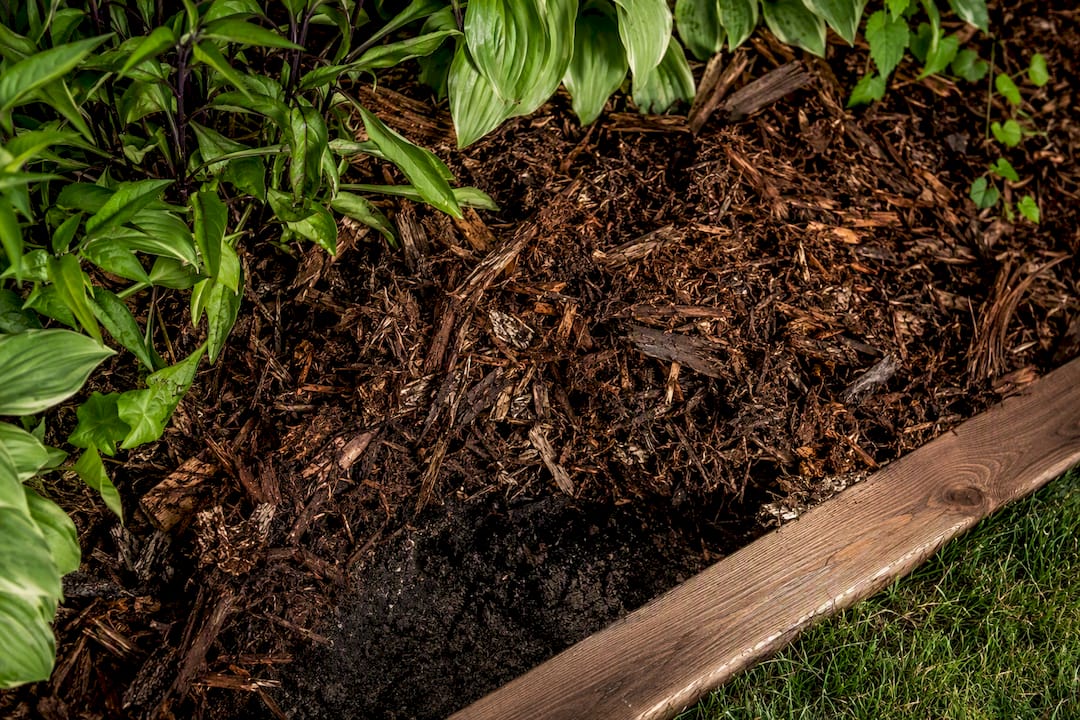
Cedar mulch resists rot better than most bark products and holds its colour through a full season, sometimes two, making it a common choice for entryway beds and foundation plantings. Spruce mulch decomposes a bit faster than cedar but costs less and works well as a general-purpose bark for perennial beds and shrub borders. Shredded bark, sold loose or bagged, breaks down within one to two seasons and needs more frequent topping up.
Beyond bark products, several organic materials deserve a spot in any homeowner’s toolkit:
- Wood chips, especially arborist chips from a local tree service, are often free and work well around trees and in naturalized areas where a rougher look is fine.
- Shredded leaves are one of the most cost-effective mulches available. Collected in autumn, they break down into rich humus and suit almost any bed.
- Straw insulates well and is a Prairie standby for winter vegetable bed protection, though it can carry weed seed if not sourced carefully.
- Grass clippings work as mulch only when dried and pulled from a lawn that has not been treated with herbicide.
- Compost functions as both soil amendment and light mulch, best used in a thin top layer rather than a full 3 inch depth.
- Pine needles suit acid loving plants like rhododendrons and blueberries and mat down less than most bark products.
- Seaweed, where collection is legal on Maritime coastlines, brings trace minerals and breaks down quickly.
Cedar typically lasts 2 to 3 years before it needs a full refresh, while shredded bark and wood chips usually run 1 to 2 seasons before colour fades and volume drops. Locally sourced material such as shredded leaves and arborist chips often outperforms bagged decorative bark on cost and soil-building value, which matters if you are mulching more than a small bed.
Inorganic mulch options: gravel, rock, and rubber trade-offs
Inorganic mulch does not decompose, which is exactly why it fits certain jobs and fails at others. Gravel, crushed rock, decomposed granite, and rubber mulch all deliver decades of service without replacement. None of them build soil, and that is a real limitation in a planting bed.
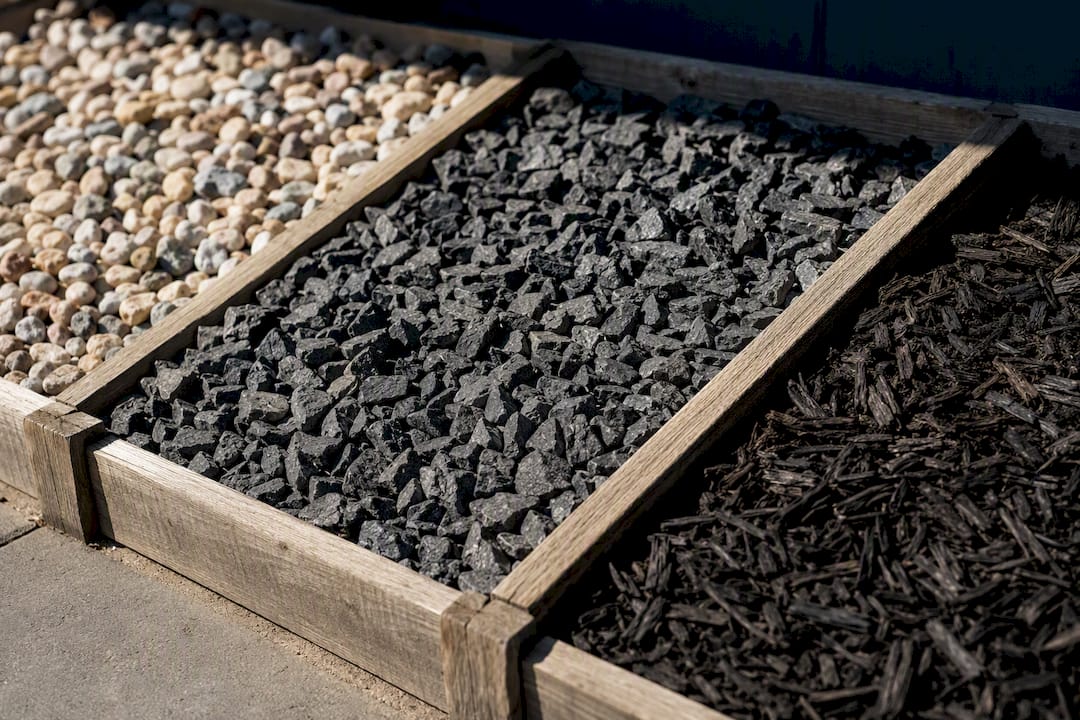
Stone mulches raise soil temperature by absorbing and radiating heat, which can stress moisture-sensitive perennials in July but helps heat-loving plants like lavender or sedum establish faster in spring. Extension guidance draws a clear line between the two mulch families and flags a specific caution: black plastic sheeting and many woven landscape fabrics block oxygen and water exchange, so they are generally not recommended as a permanent layer under gravel or rock.
Inorganic mulch works best where you want:
- A permanent, low-maintenance surface for a path, driveway border, or dry creek bed.
- A fire-resistant buffer near a structure, since stone will not ignite the way bark or straw can.
- A defined edge between hardscape and planting beds where organic material would migrate.
The downside shows up over time. Gravel migrates into lawns and jams mower blades, leaves get trapped between stones and need raking out, and once you decide to switch a gravel bed back to soil, removing every last piece of rock is a genuinely difficult job. Rubber mulch carries its own concerns around heat retention and leaching in direct sun, so it suits play areas and utility strips more than ornamental beds near the house.
How to choose mulch by purpose
Matching mulch to the job matters more than picking a trendy material. Work through these criteria before buying anything:
- Vegetable beds: use straw, shredded leaves, or compost. These break down fast, feed the soil each season, and pose no risk of resin or dye leaching near food crops.
- Ornamental and perennial beds: cedar or spruce bark gives a tidy, consistent look that holds up through wind and rain without matting.
- Trees and shrubs: wood chips spread in a wide, flat ring work better than bagged bark, since they mimic the natural leaf litter these root systems evolved with.
- Paths and high-traffic zones: gravel or crushed rock handles foot traffic and drainage far better than any organic mulch, which compacts and turns muddy underfoot.
- Fire-conscious properties: decomposed granite or rock mulch near structures reduces fuel load compared to bark or straw.
Soil building, weed suppression, appearance, durability, drainage, and fire risk rarely point to the same material, so pick the criterion that matters most for that specific bed rather than using one mulch type across the whole property. A homeowner mulching a vegetable patch and a front walkway on the same afternoon should expect to buy two different products, not one all-purpose bag.
Mulch depth, timing, and cold-climate rules
Depth is where most homeowners get mulch wrong, applying either a token half-inch that does nothing for weed suppression or a smothering pile that starves roots of oxygen. The standard guideline across extension literature is a settled depth of 2 to 4 inches for most organic mulches in ornamental and shrub beds.
Winter mulch follows a different rule entirely, and it is one Edmonton homeowners get wrong every fall. Apply winter mulch only after the ground has actually frozen, not before the first frost warning. Mulching too early creates a warm, insulated pocket that attracts voles looking for winter shelter, and those voles will happily chew through bark and root systems all season.
| Application | Settled depth | Timing note |
|---|---|---|
| Perennial and shrub beds | 2 to 4 inches | Apply spring or fall |
| Winter perennial protection | 2 to 4 inches | After ground freezes |
| Vegetable beds | 2 to 3 inches | After transplanting |
| Paths and walkways (gravel) | 3 to 4 inches over base | Any season |
Keep every mulch type roughly 10 cm away from tree trunks and building foundations. Piling mulch against a trunk traps moisture against bark, invites rot and pests, and stresses the tree exactly where it can least afford it. For homeowners working through recommended mulch depth for landscaping projects in Edmonton’s freeze-thaw climate, the same clearance rule applies regardless of material.
Longevity and maintenance: how long mulch lasts and when to refresh
Every mulch has a shelf life, and ignoring it causes more problems than skipping mulch altogether. Cedar bark holds its structure and colour for roughly 2 to 3 years, while lighter shredded bark and wood chips typically need replacing after 1 to 2 seasons as they compress and grey out. Gravel and crushed rock, by contrast, need no replacement, only periodic raking to redistribute displaced stone.
Watch for a few warning signs that a bed needs attention:
- A grey, faded surface layer that has lost its original colour and texture.
- A compacted crust that water beads on instead of soaking through.
- A musty, sour smell, which signals anaerobic breakdown starting deep in the pile.
- Visible fungal mats or excessive insect activity underneath the top layer.
Refresh most organic mulch annually or every second year, depending on how quickly it has broken down. Skip dyed mulches where the colour matters less than the chemical binder holding the dye in place, and avoid hay, fresh manure, and black walnut wood chips entirely, since black walnut contains juglone, hay carries weed seed, and fresh green material can tie up soil nitrogen as it decomposes.
Pro Tip: Fluff compacted mulch with a rake every spring before adding a fresh layer. This breaks the crust that blocks water and air, and it means you need less new material to hit your target depth.
How to apply mulch the right way
Getting depth and material right does little good if the application itself is sloppy. Follow these steps in order:
- Clear the bed first. Pull weeds, remove old debris, and check that soil is lightly moist, not bone dry, before you spread anything.
- Skip fresh green material. Grass clippings and green plant matter should be dried first, or they will mat down and rot instead of breaking down cleanly.
- Spread to settled depth, not loose depth, since organic mulch compresses noticeably within the first few weeks.
- Leave a 10 cm clearance ring around every trunk and stem. Avoid volcano mulching, the habit of piling bark up against a trunk in a cone shape, which suffocates bark tissue and invites rot.
- Anchor lightweight mulches like straw or shredded leaves with a light rake pass or a thin top layer of heavier bark if the bed sits in a windy spot.
- Handle bulk bags carefully. A cubic yard of wet mulch or gravel is heavy enough to strain a back if lifted wrong, so use a wheelbarrow and split loads rather than hauling full bags across the yard.
Set a calendar reminder to check depth again in six months. Mulch that looked perfect in May often needs a top-up by October, especially after a wet summer accelerates decomposition.
ProZone’s perspective on material quality and sourcing
Most mulch problems trace back to inconsistent sourcing, not poor technique. Bagged material that has sat in a hot supplier yard for months arrives already broken down, undermining the depth and longevity numbers homeowners plan around.
Bulk supply of spruce mulch, black mulch, and cedar mulch is available for properties in the Edmonton area, with materials screened for consistent particle size to help maintain proper depth during application. Cedar suits ornamental beds that need colour retention through a full Alberta season. Spruce works as a durable, budget-conscious option for larger beds and borders. Black mulch, a dyed bark product, holds its tone longest in high-visibility front yard beds.
Material handling matters as much as material choice. ProZone follows Alberta Safety Codes standards for bulk material handling and delivery, a standard that generic suppliers cutting corners on load safety and storage often skip.
— ProZone
Get your mulch and landscaping materials from ProZone
Skip the guesswork on sourcing and delivery timing. Bulk quantities of spruce mulch, black mulch, and cedar mulch are available for delivery, with scheduling tailored to individual project timelines. If your beds also need drainage stone or edging alongside mulch, browse the full landscaping supplies and delivery options to bundle materials into one order.
For homeowners who would rather have the job done right the first time, ProZone’s crews install material to Alberta Safety Codes standards, with the depth and clearance practices covered above built into every job. Contact ProZone through the online form or call directly to request a free estimate on material supply, delivery, or full installation for your next landscaping project.
Sources
- Mulching in Canada: Winter mulch, materials & timing
- Mulches for home grounds
- Should you use mulch and what are the pros and cons of different types of mulch?
FAQ
What are the three types of mulching?
Mulches generally fall into organic (bark, wood chips, straw, leaves, compost), inorganic (gravel, crushed rock, rubber), and living mulch (dense ground cover plants), though most homeowners work primarily with the organic and inorganic categories.
What mulch should not be used?
Avoid dyed bark of unknown origin, hay, fresh manure, and black walnut wood chips, since black walnut contains juglone and hay often carries weed seed. Black plastic sheeting is also discouraged as a permanent mulch layer because it blocks oxygen and water movement into the soil.
What is the longest lasting type of mulch?
Gravel, crushed rock, and decomposed granite last the longest since they do not decompose at all. Among organic options, cedar mulch typically holds up 2 to 3 years, longer than shredded bark or wood chips.
How do I know what type of mulch I need?
Match the mulch to the job: organic material like cedar or spruce bark for beds that need soil improvement, straw or compost for vegetable gardens, and gravel or crushed rock for paths and low-maintenance zones. ProZone’s best materials for outdoor landscaping in Edmonton guide breaks down local material choices by application.