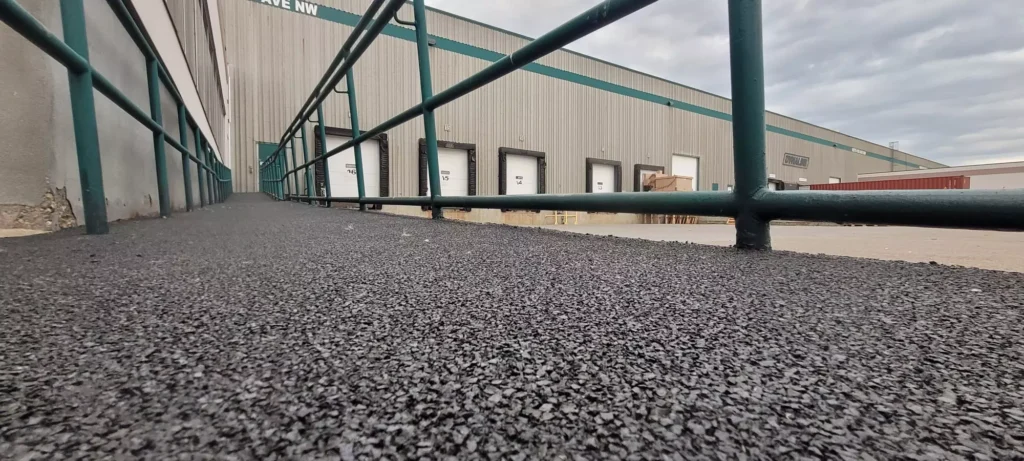
Outdoor surfaces around commercial properties take a lot of abuse throughout the year. In Edmonton, sidewalks, patios, and walkways are constantly exposed to heavy foot traffic, freezing temperatures, and seasonal moisture. Over time, these conditions can cause serious deterioration in traditional surfaces used in concrete construction, leaving property owners searching for more flexible and durable alternatives. One modern solution that continues to grow in popularity is rubber paving. This innovative surface material is designed to restore damaged outdoor areas while providing better flexibility and durability than traditional materials. Many property owners turn to rubber systems after repeated asphalt repair projects fail to fully address cracks and surface damage. Rubber surfaces are often installed directly over existing structures, making them a practical upgrade for aging sidewalks and outdoor spaces that were originally built through traditional concrete construction methods.
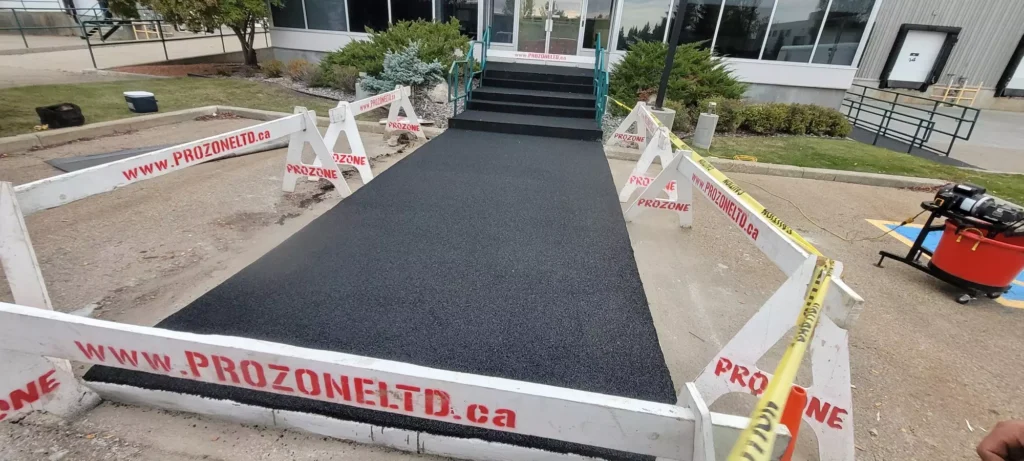
Table of contents
What are the disadvantages of rubber paving?
Although rubber paving offers many advantages, there are a few limitations that property owners should consider before installing it. One of the main drawbacks is that rubber surfaces may not be suitable for every high-traffic application, particularly in heavy industrial environments where extremely large loads are common. Another factor is that rubber surfaces typically rely on an existing base. If the underlying surface from previous concrete construction or asphalt installations has structural damage, it may require asphalt repair or base preparation before installation. Without proper preparation, even flexible materials may experience uneven settling. Despite these limitations, rubber paving remains an excellent solution for many outdoor surfaces when installed on a properly prepared base.
Is rubber paving expensive?
Compared to many traditional materials, rubber paving can be surprisingly cost-effective. While the upfront price may sometimes be slightly higher than basic surface repairs, the long-term savings often make it a worthwhile investment for commercial and residential property owners. Rubber surfaces are designed to last longer and require fewer repairs, which means property owners can avoid repeated maintenance costs that often occur with traditional materials.
Comparing costs with traditional surfaces
Traditional surfaces built through concrete construction or asphalt installations often require frequent maintenance. Cracks, potholes, and surface damage can develop over time, requiring repeated asphalt repair or resurfacing to maintain safety and appearance. Rubber paving, however, offers a flexible surface that resists cracking and shifting. Because it adapts better to temperature changes, it can significantly reduce the need for ongoing repairs. Over time, this can lower the total maintenance costs associated with maintaining outdoor surfaces. For many property owners, the reduced need for frequent asphalt repair makes rubber paving a financially practical alternative.
How long does rubber paving last?
When installed correctly, rubber paving systems can last many years with minimal maintenance. Their flexible structure allows them to withstand heavy use and the constant freeze-thaw cycles common in Alberta. These temperature changes can cause severe damage to traditional surfaces used in concrete construction, but rubber materials adapt more easily to environmental changes.
Durability in Alberta’s climate
Rubber surfaces expand and contract naturally as temperatures change. This flexibility helps prevent the cracking and structural damage commonly seen in rigid materials like poured concrete. Because of this durability, many property owners use rubber systems to extend the life of areas that would otherwise require constant asphalt repair. In many cases, rubber surfaces remain functional and visually appealing for well over a decade when installed on a stable base. Their resistance to cracking and weather damage makes them an excellent option for outdoor surfaces exposed to heavy seasonal changes.
What are the benefits of rubber paving?
Rubber paving offers several advantages compared with traditional materials used in concrete construction. One of the most important benefits is flexibility. Unlike rigid surfaces, rubber can expand and contract without cracking when temperatures fluctuate. Another major benefit is safety. Rubber surfaces provide natural traction, making them slip-resistant even during wet or icy conditions. This added grip can improve safety for pedestrians walking on stairs, sidewalks, and patios. Rubber paving is also environmentally friendly. Many installations are made from recycled rubber materials, helping reduce waste while offering a durable alternative to repeated asphalt repair or surface replacement. Because of these benefits, rubber surfaces are becoming an increasingly popular option for commercial properties seeking durable and sustainable paving solutions.