
Choose edging that restrains the driveway surface, supports a compacted base and let’s water escape, or the edge fails long before the surface does. Concrete curbs or a cast key work best for permanent driveways. Interlocking pavers need a rigid restraint system, and heavy-duty steel suits narrow decorative strips. Plastic and timber rarely survive repeated vehicle loads and freeze-thaw cycles. If your site has drainage or grading problems, involve a contractor before you pick a material.
Table of Contents
- Material guide: concrete, pavers, metal, plastic, timber and gravel
- Matching edging to your surface, traffic and drainage
- Installation essentials: base, compaction and edge restraint
- Drainage and freeze-thaw: why grading decides edge survival
- Maintenance and winter care that actually protects the edge
- What professionals check before laying any edging
- Get a free estimate for your driveway edging project
- Sources
- FAQ
Material guide: concrete, pavers, metal, plastic, timber and gravel
Material choice matters less than most homeowners assume. What matters is how each material behaves once frost, meltwater and tire loads start working against it.
Concrete curbs offer the most permanence. Poured in place or cast as a continuous key alongside the driveway slab, they resist lateral spreading under vehicle weight and typically last decades when the base beneath them is sound. Installation involves excavation, a compacted granular base and formed concrete, so it’s closer to a construction job than a weekend project.
Interlocking pavers perform structurally as well as their base allows. With proper compaction and a rigid restraint at the edge, they resist shifting and offer far more aesthetic range: colour, pattern and texture options that poured curbs can’t match.
Steel and aluminium edging suits narrow, decorative borders rather than full driveway containment. It resists snowplough contact better than plastic and holds a crisp line, though it can heave in poorly drained soil if not anchored deeply enough.
Plastic roll edging is inexpensive and fine for garden beds, but it deforms and cracks under vehicle traffic and cold temperatures. Timber offers a natural look for low-traffic driveway margins but, even pressure-treated, tends to rot or warp within a few freeze-thaw seasons.
Gravel ribbons and permeable patterns need a different edging logic altogether, since the edge must contain loose aggregate while still allowing water through rather than damming it.
- Concrete: highest durability, highest upfront cost, best for full vehicular containment.
- Pavers: strong when base is correct, widest design flexibility.
- Steel or aluminium: good for narrow lines, moderate plough resistance.
- Plastic or timber: lowest cost, shortest service life under vehicle loads.
Matching edging to your surface, traffic and drainage
Before comparing brands or finishes, work through your site conditions. The right edging depends on what the driveway carries and where the water goes, not on appearance alone.
- Identify your surface type and expected vehicle load, since a two-car residential driveway and a delivery-truck approach need different restraint strength.
- Check the slope. Any section grading back toward the house or garage needs a trench drain, not just edging.
- Decide how much maintenance you’re willing to do; concrete needs almost none, timber needs regular attention.
- Confirm how you clear snow. Plough blades and heavy shovelling favour rigid materials over plastic or thin timber.
- Set a budget band. Basic plastic or timber can run under a few hundred dollars for materials; poured concrete curbing and professional base work cost considerably more but last much longer.
Pro Tip: If more than one section of your driveway drains toward a structure, treat that as a drainage project first and an edging project second.
Installation essentials: base, compaction and edge restraint
Edging only performs as well as what’s underneath it. Skipping base preparation is the most common reason edges heave, crack or separate from the driveway surface within a year or two.
- Excavate to the depth appropriate for your climate and traffic load; residential driveways in freeze-thaw regions typically need a deeper total section than a garden path because subgrade performance drives long-term durability.
- Widen the excavation beyond the finished edge to give paver restraints proper support.
- Place granular base material in lifts of about 50 millimetres, compacting each lift before adding the next rather than compacting one thick layer at the end.
- Verify compaction with a plate compactor pass that leaves no visible movement underfoot.
- Install the edge restraint: a concrete key for curbs, anchored steel or aluminium channel for metal edging, or spiked plastic/composite restraint set at consistent intervals for pavers.
For pavers, bedding sand goes down after the base and gets screeded level before units are placed; joints are then filled with polymeric sand to lock everything together. Where a paved section meets an unpaved one, a continuous rigid restraint with a concrete key stops the edge from migrating outward under repeated tire loads.
- Excavation should extend at least 150 millimetres beyond the finished edge on each side for proper restraint support.
- Compaction in 50 millimetre lifts, verified rather than assumed, is the industry standard.
- Trench or French drains belong wherever surface water would otherwise pool against the driveway or a structure.
Drainage and freeze-thaw: why grading decides edge survival
Edging cannot fix bad grading. It can only contain water that’s already been directed correctly, so drainage planning has to come first.
Canada treats a 5% slope as ideal for moving water away from structures, with 2% as the common minimum. A driveway graded flatter than that, or sloping back toward the garage, needs intervention rather than hope.
Trench and French drains are the standard fix, typically 20 to 30 centimetres deep with a porous pipe bedded in gravel, installed where the desirable grade simply isn’t achievable. They redirect runoff away from entry points but don’t guarantee protection against extreme rainfall.
Freezing climates compound the problem. NRC building research notes that frost heaving and differential subgrade movement are common where moisture sits in the base, and that adding granular fill of a recommended depth improves support through thaw cycles and reduces uneven heaving.
- Edging installed without a drainage allowance can trap water against the driveway edge, accelerating frost heave right where you least want it.
- Uniform, well-compacted subgrade limits the differential movement that cracks curbs and pops pavers.
- Work that touches the municipal boulevard often needs a permit or curb-cut approval, so check with your municipality before digging.
Maintenance and winter care that actually protects the edge
A spring inspection after the thaw catches most problems while they’re still small. Look for gaps between edging and pavement, heaved sections and cracked joints, and address them before another freeze-thaw cycle widens them.
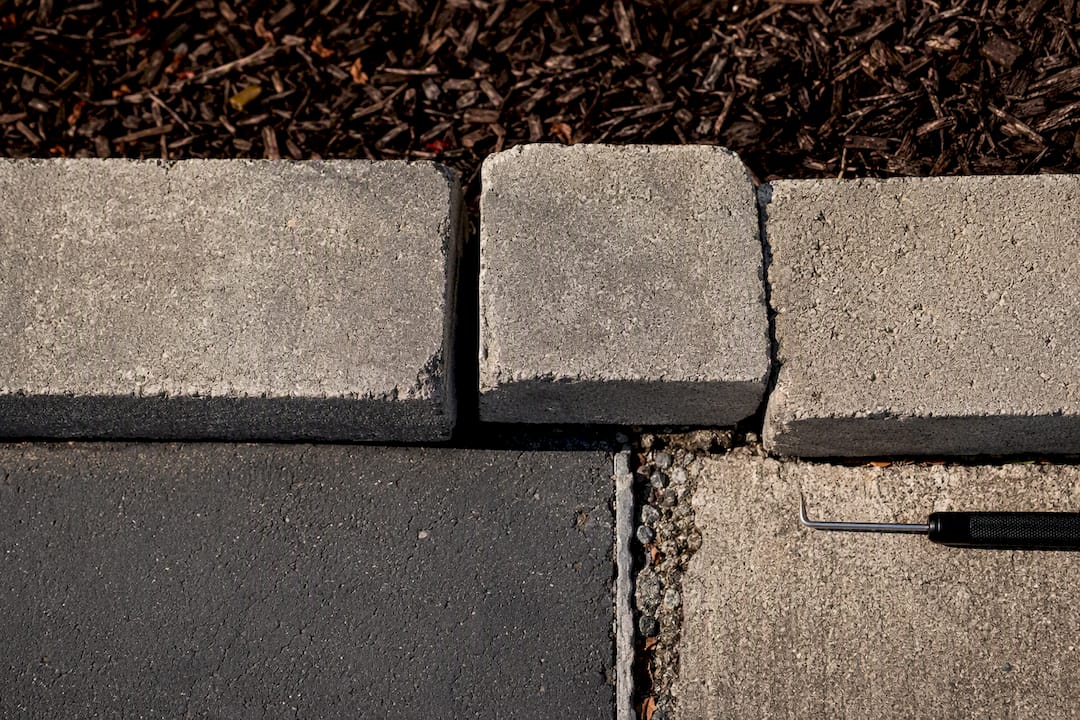
Snow clearing is where edges take the most damage. Mark the edge with visible stakes so plough operators or anyone shovelling knows where the hard surface ends, similar to the approach described in guidance on marking driveway edges to prevent plough damage.
Avoid coal-tar based sealants. Research on runoff from sealed surfaces shows coal-tar products can sharply elevate PAH levels in runoff, while asphalt-based alternatives carry far lower concentrations.
- Top up polymeric sand joints on pavers each spring if you see gaps.
- Reset or replace individual heaved pavers rather than waiting for the whole run to shift.
- Call a professional when heaving affects more than isolated units, since that usually points to a subgrade problem, not just a surface one.
Pro Tip: Keep a small reserve of matching paver units or curb repair mix on hand so seasonal touch-ups don’t turn into a mismatched patch job.
What professionals check before laying any edging
Base and drainage decisions come before any conversation about material or colour. That order isn’t a preference, it’s what determines whether the job survives its first winter.
A thorough site assessment involves verifying subgrade condition, confirming compaction depth and lift sequencing, and selecting restraint materials rated for plough contact and repeated freeze-thaw movement. Municipal compliance gets checked at the same time, particularly where work approaches a boulevard or existing curb line.
If your driveway shows a reverse slope, standing water or visible heaving, that’s a drainage and grading problem, not an edging one, and it calls for a site visit before any material gets ordered.
— ProZone
Get a free estimate for your driveway edging project
Professional services for driveway edging projects include site assessment, subgrade and base work, concrete and asphalt edge restoration, drainage correction, and the supply of edging, stakes and fabric for do-it-yourself installs. Whether you’re planning a full concrete curb, a paver restraint system or just need drainage fixed before you commit to a material, the groundwork is the same.
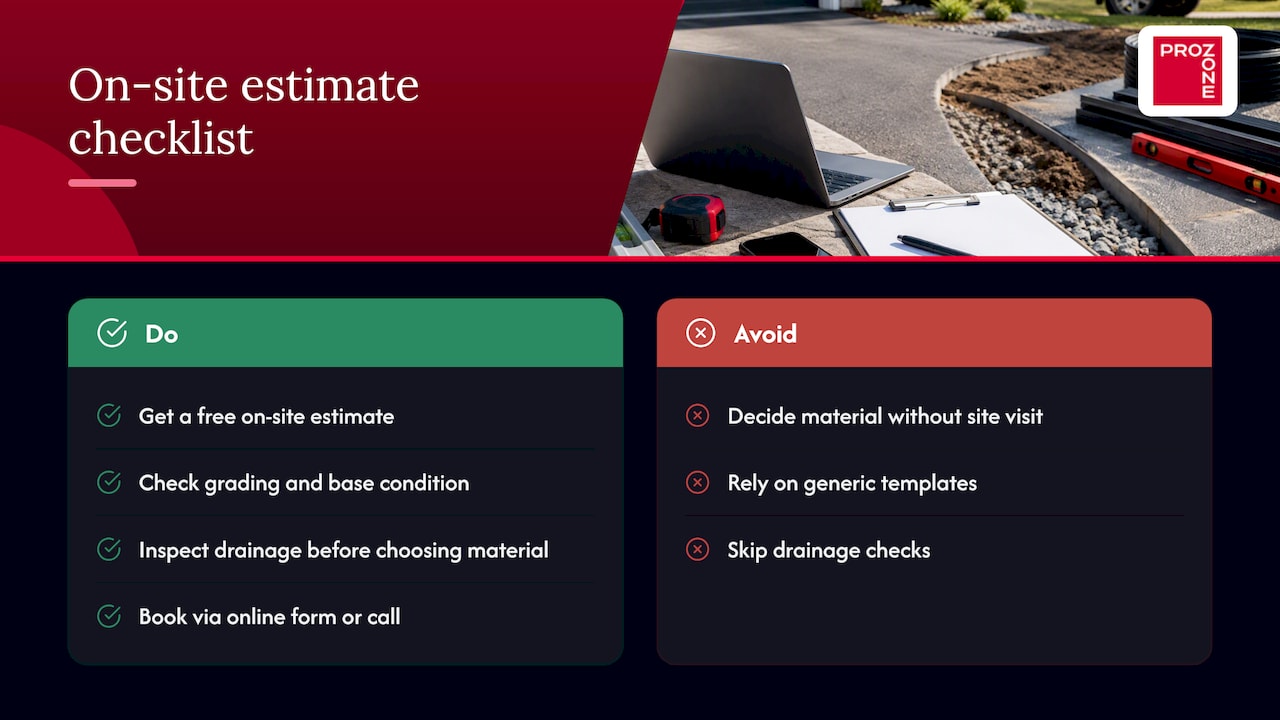
A free on-site estimate covers grading, existing base condition and drainage checks so the recommendation matches your actual site, not a generic template. Free consultations within 100 kilometres are often offered because edging decisions made without seeing the site tend to fail early.
Browse the full range of driveway and edging services or order edging, stakes and landscaping supplies directly. To book a free estimate, use the online form or call ProZone directly.
Sources
FAQ
What is the best edging for a driveway?
Concrete curbing or a cast concrete key offers the longest service life for driveways carrying regular vehicle traffic, particularly in freeze-thaw climates. Interlocking pavers with a rigid restraint are a strong second choice when a compacted base is installed correctly.
What is the cheapest way to edge a driveway?
Plastic roll edging or basic timber edging cost the least upfront, but both have short lifespans once vehicle weight and freeze-thaw cycles come into play. For a driveway that sees regular traffic, cheaper materials often mean more frequent replacement rather than real savings.
What is the 3 inch edging rule?
There isn’t a single recognized “3 inch rule” in driveway edging standards; the figure varies by source and material. What’s consistently supported is that the base must extend beyond the finished edge, generally a base extending well beyond the finished edge on each side is needed to give paver restraints proper support.
What is the best plant for driveway edging?
The article doesn’t cover ornamental planting choices, since driveway edging here refers to structural containment materials like concrete, pavers, metal, plastic and timber rather than landscaping plants. For plant-based borders, the same drainage and grading principles still apply to avoid water pooling against the driveway.
How deep should the base be under driveway edging?
Base depth depends on climate and traffic load, but adding roughly 150 millimetres (6 inches) of clean granular fill is recommended in freezing climates to improve support through thaw cycles, according to NRC building research. Compaction should happen in lifts of about 50 millimetres rather than all at once.