
TL;DR:
- Proactive asphalt maintenance extends surface life and enhances property value in Edmonton’s harsh climate.
- Regular crack sealing, sealcoating, and debris removal prevent costly repairs and structural failure.
- Building a scheduled maintenance program reduces liability, operational disruptions, and long-term costs.
Edmonton’s commercial asphalt faces a brutal combination of freeze-thaw cycles, heavy vehicle traffic, and UV exposure that can cut surface life in half without the right care. The difference between a parking lot that lasts 25 years and one that crumbles in 12 comes down to decisions made early and often. Property managers who treat asphalt maintenance as a strategic investment rather than a reactive expense consistently see better outcomes, lower repair bills, and stronger curb appeal. This article walks you through the criteria, actions, and comparisons you need to build a maintenance program that actually works for Edmonton conditions.
Table of Contents
- Key criteria for effective asphalt maintenance
- The top maintenance actions: What, why, and when
- Comparing maintenance strategies: Routine vs. reactive
- Adapting maintenance for Edmonton’s climate
- How to measure success and make smart decisions
- Our take: Why Edmonton managers should rethink ‘minimum maintenance’
- Get expert help for your Edmonton asphalt
- Frequently asked questions
Key Takeaways
| Point | Details |
|---|---|
| Proactive maintenance pays | Routine inspections and timely interventions can double your commercial asphalt’s lifespan. |
| Edmonton conditions require adaptation | Local climate and heavy traffic make seasonal planning and material choice critical. |
| Sealcoating is essential | Sealcoat every 2-3 years to protect against sun, moisture, and oil damage for lasting surfaces. |
| Track and measure results | Regularly monitor surface integrity and repair costs to ensure your program delivers ROI. |
Key criteria for effective asphalt maintenance
With the challenge set, let’s break down what you need to look for before choosing any maintenance approach.
Commercial asphalt in Edmonton doesn’t fail randomly. It fails because specific stressors go unaddressed. Understanding those stressors is the first step toward building a maintenance program that holds up. The three biggest factors are climate, traffic volume, and how quickly you catch problems.
Edmonton’s climate is particularly punishing. Temperatures swing from below -30°C in winter to above 30°C in summer, and that range creates constant expansion and contraction in the asphalt surface. Every freeze-thaw cycle forces water into micro-cracks, expands them, and weakens the base layer. UV radiation degrades the binder that holds aggregate together, making surfaces brittle over time. Precipitation adds moisture that accelerates oxidation. None of these forces take a break, which means your maintenance program can’t afford to either.
Traffic volume is the second major factor. Heavy delivery trucks, snowplows, and concentrated turning movements at lot entrances put stress on edges and high-use lanes that standard residential asphalt simply isn’t designed for. Routing heavy equipment away from edges and using load-bearing specifications for high-traffic zones reduces premature cracking significantly.
Budgeting is the third factor most managers underestimate. Emergency repairs cost two to three times more than scheduled ones. Setting aside a dedicated maintenance budget, even a modest one, prevents the scramble when a pothole opens up mid-winter. Reviewing your asphalt and concrete maintenance basics before finalizing your budget helps you allocate funds where they have the most impact.
Key criteria to evaluate before choosing any maintenance approach:
- Climate exposure: How many freeze-thaw cycles does your site experience per season?
- Traffic class: Are you managing light passenger vehicles, heavy trucks, or a mix?
- Current surface condition: Are cracks hairline or structural? Is the base compromised?
- Drainage quality: Poor drainage accelerates every form of asphalt damage.
- Maintenance history: When was the last sealcoat or crack fill applied?
- Budget structure: Do you have a recurring maintenance line item or only emergency funds?
Note that there are no official city guidelines for private commercial parking lots in Edmonton. That means your program should be built on industry best practices adapted to local climate conditions, not a checklist from the city.
Pro Tip: Set a calendar reminder for two inspections per year: one in late April after the spring thaw, and one in late August before temperatures drop. These two windows give you the clearest picture of damage and the best conditions for repair work.
The top maintenance actions: What, why, and when
Once you understand the criteria, it’s time to look at the specific maintenance actions that matter most in Edmonton.
Not all maintenance tasks carry equal weight. Some protect the surface from future damage, others address existing failures, and a few are so simple that managers often skip them without realizing the cost. Here’s how to prioritize.
-
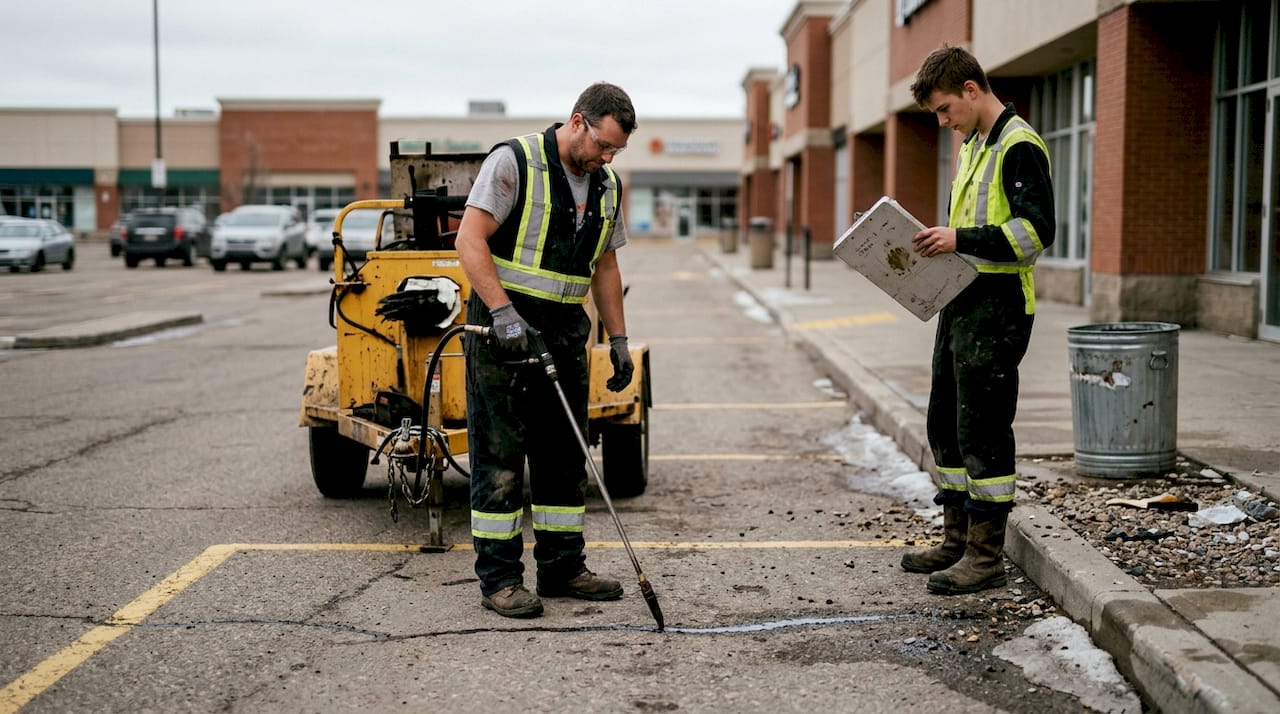
Crack sealing. Cracks are entry points for water, and water is asphalt’s worst enemy. A hairline crack in spring becomes a two-inch gap by fall if left untreated. Sealing cracks as soon as they appear, ideally when they’re still narrow, prevents water infiltration and base erosion. This is the single highest-return maintenance task you can perform.
-
Sealcoating. Sealcoating every 2-3 years protects against UV radiation, moisture penetration, and oil spills while restoring surface flexibility and appearance. Apply it after completing any crack repairs, and only when temperatures are above 10°C (50°F) with no rain forecast for 24 hours. For a full breakdown of the process, the guide to sealcoating asphalt covers application methods and material choices specific to Alberta.
-
Pothole repair. Potholes are both a liability risk and a structural warning sign. A pothole means the base layer has already been compromised. Patching the surface without addressing the base is a temporary fix. Proper pothole repair involves cutting out the damaged area, compacting new base material, and applying a hot-mix or cold-mix patch depending on the season. Review parking lot repair steps to understand when each method applies.
-
Cleaning and debris removal. Sand, gravel, and organic debris trap moisture against the surface and accelerate oxidation. Regular sweeping, especially after winter sanding operations, removes abrasive material that grinds into the surface under traffic. It’s a low-cost task with a surprisingly strong impact on surface longevity. For a summary of the common commercial repairs that follow neglected cleaning, the pattern is consistent: debris leads to surface wear, which leads to cracking.
Case scenario: A retail center with a high-traffic main entrance sealcoats that specific zone every 18 months rather than the standard two-to-three-year cycle for the rest of the lot. The result is a surface that holds up under daily delivery traffic without the cracking and raveling that typically appear within five years on untreated high-use areas.
Pro Tip: Schedule sealcoating and crack filling for late May through early September in Edmonton. Temperatures are reliably above 10°C, humidity is manageable, and you have enough dry days to allow proper curing before fall rains arrive.
Comparing maintenance strategies: Routine vs. reactive
Knowing what to do is only half the challenge. The real difference comes from how you structure your approach. Here’s why the strategy you choose matters.
There are two ways to manage commercial asphalt: you plan ahead, or you respond to failures. Both approaches cost money. The question is which one costs less and causes fewer headaches.
| Factor | Routine maintenance | Reactive maintenance |
|---|---|---|
| Annual cost | Predictable, lower per year | Unpredictable, higher when failures occur |
| Surface lifespan | 20-25 years | 10-15 years |
| Aesthetics | Consistently clean and professional | Patchy, inconsistent appearance |
| Liability risk | Low, hazards addressed proactively | High, potholes and cracks create slip/trip risks |
| Operational disruption | Minimal, planned around business hours | Significant, emergency repairs close sections |
| Tenant/client perception | Positive, signals property care | Negative, signals neglect |
Commercial asphalt lifespan runs 15 to 25 years with proper maintenance. Neglect cuts that figure roughly in half, and consistent sealcoating combined with crack sealing adds 3 to 7 years beyond the baseline.
“The managers who call us for emergency work almost always say the same thing: they knew the surface was deteriorating but kept pushing the repair to next year’s budget. By the time they call, a $3,000 maintenance job has become a $15,000 reconstruction.”
When deciding which approach fits your property, consider these factors:
- Property type: High-visibility commercial properties lose tenant confidence faster when surfaces look neglected.
- Traffic intensity: Heavy-use lots deteriorate faster and need more frequent intervention to stay ahead of damage.
- Ownership horizon: If you plan to hold the asset long-term, routine maintenance is clearly the better financial decision.
- Insurance requirements: Some insurers require documented maintenance records to cover slip-and-fall claims.
For more detail on the financial case, extending asphalt lifespan breaks down the cost comparison over a 20-year period. The benefits of regular repairs also covers how proactive programs affect property value and tenant retention.
Adapting maintenance for Edmonton’s climate
But Edmonton isn’t just any city. Local conditions mean you’ll need targeted adjustments for best results.
Edmonton averages over 100 freeze-thaw cycles per year. Each cycle stresses the asphalt surface in ways that warmer climates simply don’t experience. Water expands by roughly 9% when it freezes, and that expansion inside a crack applies enormous pressure to the surrounding material. Over a season, what starts as a surface crack can become a structural failure.
UV radiation is a less obvious but equally damaging force. Edmonton receives significant solar exposure, especially in summer, and UV breaks down the asphalt binder that holds the aggregate together. Without sealcoating, surfaces oxidize and become brittle within a few years of installation. Moisture compounds this by penetrating the oxidized surface and weakening the base.
| Weather event | Recommended action | Timing |
|---|---|---|
| Spring thaw | Full inspection, crack sealing | Late April to mid-May |
| Summer heat | Sealcoating, line repainting | June to August |
| Pre-winter | Pothole patching, drainage check | September to October |
| Post-snowplow season | Debris removal, edge inspection | Late March to April |
| Heavy rain event | Drainage inspection, surface check | Within 48 hours |
High-traffic areas need sealing every 1-2 years, and heavy loads should be kept away from lot edges where the base is thinnest and most vulnerable to edge cracking.
Materials suited for Edmonton’s temperature extremes include:
- Polymer-modified asphalt: Handles both extreme cold and summer heat better than standard mixes.
- Rubberized crack filler: Stays flexible at low temperatures, preventing re-cracking through winter.
- Coal tar or asphalt-based sealers: Both perform well in Alberta’s climate, though product selection should match surface age and condition.
- Cold-mix patching compound: Useful for emergency winter repairs when hot-mix plants are not operating.
For a broader material and cost comparison, asphalt vs concrete in Alberta covers how each material performs under Edmonton conditions. If you’re evaluating a full replacement, asphalt paving in Canada provides current cost benchmarks and installation standards.
How to measure success and make smart decisions
You’ve put your plan into action. But how do you know it’s working, and when is it time to get help?
A maintenance program without measurement is just spending money and hoping. Tracking a few key indicators tells you whether your investment is actually protecting the surface or just delaying the same problems.
What to track on every inspection:
- Surface integrity: Look for new cracks, raveling (surface aggregate loosening), and edge deterioration.
- Crack density: Count and map cracks by zone. An increase in crack density signals accelerating deterioration.
- Slip and trip hazards: Raised edges, depressions, and loose material create liability exposure.
- Drainage performance: Standing water after rain indicates drainage problems that will accelerate base failure.
- Curb appeal: Faded markings, oil stains, and patchy sealcoat affect tenant and customer perception.
A practical monthly inspection routine:
- Walk the full perimeter and all travel lanes, noting any new cracks or surface changes.
- Check all drainage inlets and channels for blockages.
- Photograph any new damage with date stamps for your maintenance records.
- After each spring thaw, complete a detailed inspection of the entire surface.
- Commission a professional assessment every one to two years to catch subsurface issues that visual checks miss.
- Review your repair spend annually against a replacement cost benchmark to track return on maintenance investment.
Consistent sealcoating and crack sealing can add 3 to 7 years to surface life, but only when applied on a regular schedule rather than as a one-time fix. For a structured approach to tracking surface condition over time, the asphalt maintenance inspection guide provides a field-ready checklist. For properties approaching the end of their surface life, parking lot life extension covers pulverization and resurfacing options that can defer full replacement.
Pro Tip: Ask your maintenance contractor for a written condition report after each professional assessment. Insurance adjusters and property appraisers view documented maintenance records favorably, and they can reduce your exposure in slip-and-fall claims.
Our take: Why Edmonton managers should rethink ‘minimum maintenance’
Bringing these practical recommendations together, let’s share an honest perspective from years in the field.
The appeal of reactive maintenance is understandable. You’re managing budgets, tenant requests, and a dozen other priorities. Asphalt doesn’t send an invoice until it fails. So it gets pushed to next quarter, then next year, then until the pothole is too big to ignore.
Here’s what we’ve seen consistently: the properties that defer maintenance the longest end up paying the most. Not just in repair costs, but in operational disruption, liability exposure, and the harder-to-quantify damage to tenant and client perception. A cracked, faded parking lot signals that a property isn’t being managed well. That signal matters to tenants deciding whether to renew.
Edmonton’s climate makes the reactive approach especially costly. Other cities might get away with a few years of deferred maintenance. Here, one bad winter can turn a manageable surface into a reconstruction project. The freeze-thaw cycle doesn’t negotiate.
Proactive programs don’t just protect the surface. They protect the asset. A well-maintained parking lot contributes to property value, reduces insurance risk, and keeps operations running without emergency closures. As explained in asphalt paving explained, the materials and methods used at installation set a baseline, but maintenance determines how long that baseline holds.
The managers who get the best long-term results are the ones who treat their asphalt budget like a facility investment, not a repair fund.
Get expert help for your Edmonton asphalt
If you want the certainty of a professional result and less stress, ProZone can help.
ProZone Ltd works with commercial property managers and owners across Edmonton to build maintenance programs that match your site’s specific traffic patterns, surface condition, and budget. Whether you need a one-time assessment or an ongoing service agreement, our team brings local expertise to every project. From understanding asphalt paving through to full-scale resurfacing, we cover the full range of commercial asphalt and concrete services. We also support road construction for commercial properties and infrastructure upgrades across the Alberta region. Reach out to request a site-specific maintenance plan, and see how our construction services in Edmonton can help you protect your investment for the long term.
Frequently asked questions
How often should commercial asphalt in Edmonton be sealcoated?
Sealcoating every 2-3 years is the standard recommendation, but high-traffic zones like entrances and drive lanes benefit from reapplication every 1 to 2 years to stay ahead of wear.
Does regular maintenance really double asphalt lifespan?
Yes. Commercial asphalt lasts 15-25 years with consistent maintenance, while neglected surfaces often fail in half that time due to accelerated cracking and base erosion.
What is the best time of year to repair asphalt in Edmonton?
Spring (late April to May) and late summer (July to August) offer the best conditions, with temperatures reliably above 10°C for sealcoating and enough dry days for proper curing.
Are there official city guidelines for private parking lot maintenance in Edmonton?
No. The City of Edmonton’s roadway repair guidelines apply to public roads, not private lots. Private commercial properties should follow industry best practices adapted to Edmonton’s specific climate conditions.