
Many property managers assume one parking lot surface always outperforms the other, but the reality is far more nuanced. The optimal choice between asphalt and concrete depends on traffic patterns, climate exposure, drainage quality, and long-term budget planning. This guide provides Alberta property managers, commercial owners, and municipal authorities with an evidence-based framework to evaluate both materials, focusing on durability factors, lifecycle costs, and installation best practices tailored to Alberta’s demanding freeze-thaw conditions.
Table of Contents
- Understanding Asphalt And Concrete: Materials And Performance
- Comparing Durability And Maintenance Considerations
- Cost Considerations And Site-Specific Decision Factors
- Best Practices For Installation And Long-Term Upkeep In Alberta
- Explore Professional Parking Lot And Road Construction Services In Alberta
- Frequently Asked Questions
Key takeaways
| Point | Details |
|---|---|
| Material performance varies by load | Concrete excels under heavy traffic while asphalt offers flexibility for lighter loads |
| Initial costs differ significantly | Asphalt requires lower upfront investment but concrete reduces long-term maintenance expenses |
| Drainage determines lifespan | Poor drainage can reduce pavement life by up to 30% regardless of material choice |
| Climate impacts both surfaces | Alberta’s freeze-thaw cycles demand specific design features like expansion joints and proper subbase |
| Lifecycle analysis matters most | Total cost over 20-30 years often favors different materials than initial price suggests |
Understanding asphalt and concrete: materials and performance
Asphalt and concrete represent fundamentally different approaches to pavement construction. Asphalt consists of aggregate bound with petroleum-based binder, creating a flexible surface that adapts to minor ground movements. This flexibility makes asphalt roads popular for projects with tight budgets and moderate traffic. However, this same flexibility becomes a liability under heavy loads or poor drainage, leading to rutting and premature cracking.
Concrete pavement uses cement to bind aggregate into a rigid slab. This rigidity provides exceptional load-bearing capacity, making concrete flatwork ideal for commercial properties with heavy vehicle traffic. The downside appears when ground movement or temperature extremes create stress points. Without properly designed expansion joints, concrete develops cracks that compromise structural integrity and aesthetics.
Alberta’s climate presents unique challenges for both materials. Winter temperatures plunge well below freezing while summer heat can exceed 30°C. This temperature swing creates repeated freeze-thaw cycles that test pavement durability. Water infiltrates small cracks, freezes, expands, and gradually enlarges those cracks into serious structural problems.
Key material considerations for Alberta conditions:
- Asphalt softens in extreme heat, increasing rutting risk in loading zones
- Concrete requires saw-cut joints every 4-6 meters to control cracking
- Both materials need proper subbase depth to prevent frost heave damage
- Traffic volume determines whether flexibility or rigidity serves better
The choice between materials should consider site conditions, traffic volume, and budget constraints rather than assuming one material universally outperforms the other. Property managers must evaluate their specific operational needs against each material’s strengths and limitations.
“Material selection represents just one factor in pavement performance. Proper design, quality installation, and proactive maintenance often matter more than the base material choice.”
Understanding these fundamental differences helps property managers frame their evaluation around actual site requirements rather than generic assumptions about material superiority.
Comparing durability and maintenance considerations
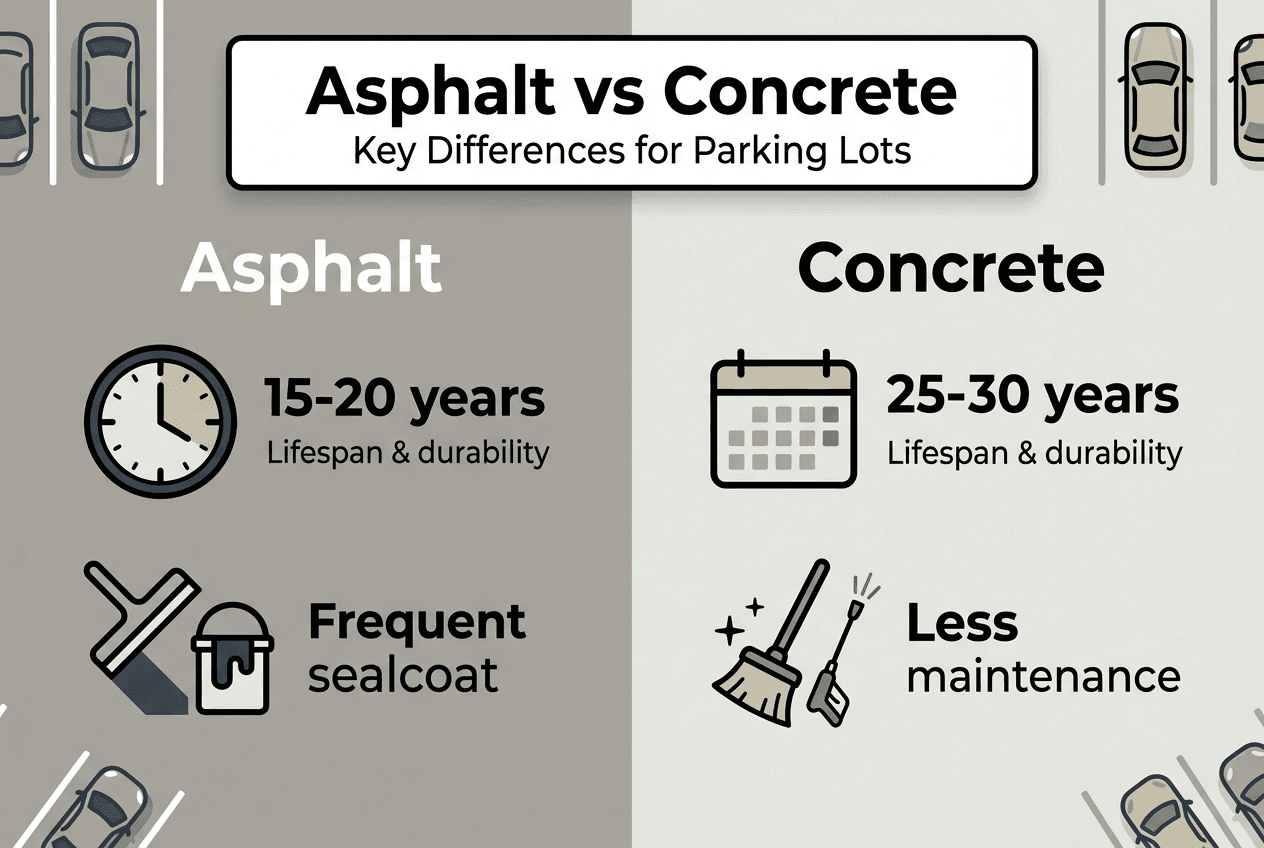
Durability differences between asphalt and concrete become apparent when examining typical service lives and maintenance demands. Concrete parking lots typically last 25-30 years with minimal intervention, while asphalt surfaces require replacement after 15-20 years even with diligent maintenance. This longevity advantage makes concrete attractive for high-traffic commercial properties and municipal facilities planning decades ahead.
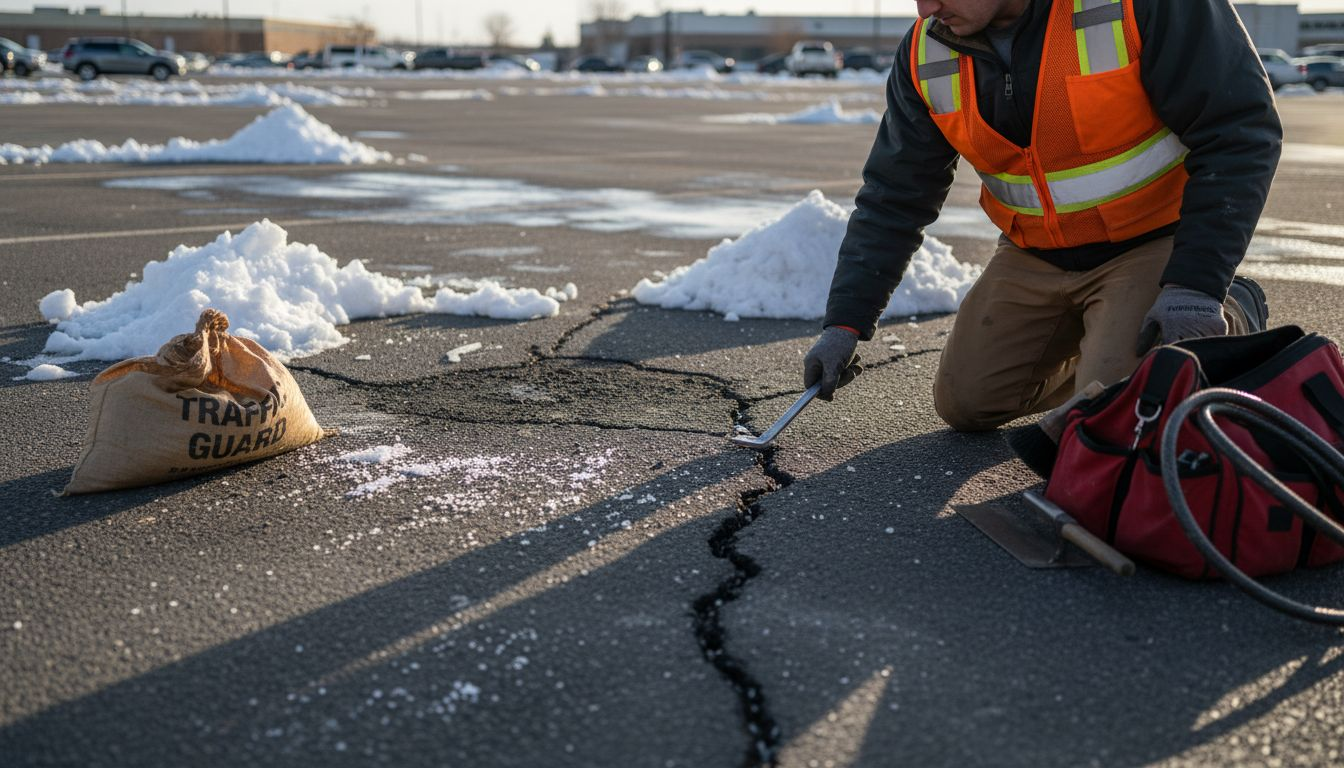
Maintenance requirements tell a different story. Asphalt demands regular attention including seal coating every 2-3 years and prompt crack filling to prevent water infiltration. These recurring costs add up over time but remain relatively affordable per intervention. Concrete requires less frequent maintenance but repairs prove more expensive and complex when problems develop.
Drainage quality emerges as the single most critical factor affecting pavement lifespan regardless of material choice. Poor drainage reduces lifespan by up to 30% by allowing water to undermine the subbase and accelerate freeze-thaw damage. Property managers who invest in proper drainage infrastructure see dramatically better performance from both asphalt and concrete surfaces.
| Factor | Asphalt | Concrete |
|---|---|---|
| Typical lifespan | 15-20 years | 25-30 years |
| Maintenance frequency | Every 2-3 years | Every 5-10 years |
| Repair complexity | Low to moderate | Moderate to high |
| Freeze-thaw vulnerability | High without sealant | Moderate with joints |
| Heavy load performance | Moderate, prone to rutting | Excellent load distribution |
The parking lot maintenance approach you adopt directly impacts total ownership costs. Asphalt surfaces benefit from preventive maintenance that costs relatively little but must occur consistently. Missing seal coating windows allows oxidation and water damage that accelerates deterioration exponentially.
Concrete maintenance focuses on joint and crack management. Properly sealed joints prevent water infiltration and maintain load transfer between slabs. When cracks do appear, prompt repair prevents them from spreading and creating larger structural problems. Signs your asphalt needs repairs include alligator cracking, edge deterioration, and standing water after rain.
Pro Tip: Schedule annual spring inspections after freeze-thaw cycles end. Identifying and repairing minor damage before summer traffic increases prevents small problems from becoming expensive failures.
Alberta’s climate particularly challenges asphalt durability. Winter sand and de-icing chemicals accelerate surface degradation while summer heat softens the binder. Asphalt lifespan in Canadian climates depends heavily on maintenance consistency and traffic management during temperature extremes.
Property managers must weigh immediate maintenance costs against long-term replacement expenses. Asphalt’s lower barrier to entry comes with higher ongoing attention requirements, while concrete demands patience through higher initial investment for reduced long-term intervention.
Cost considerations and site-specific decision factors
Initial installation costs create the most visible difference between asphalt and concrete parking lots. Asphalt typically costs 30-40% less to install, making it attractive for projects with limited capital budgets or shorter planning horizons. This cost advantage explains why many commercial properties and municipalities choose asphalt despite concrete’s superior longevity.
Long-term cost analysis reveals a more complex picture. While concrete requires higher upfront investment, reduced maintenance frequency and extended lifespan often deliver better value over 25-30 years. Budget limitations may favor asphalt initially, but lifecycle cost analysis frequently tips the scale toward concrete for permanent installations with heavy traffic.
Site conditions dramatically influence cost-effectiveness beyond base material prices. Properties with poor drainage require extensive subbase work regardless of surface choice, but water problems affect asphalt more severely. Investing in proper drainage infrastructure adds 15-25% to initial costs but extends pavement life substantially for both materials.
| Cost Factor | Asphalt Impact | Concrete Impact |
|---|---|---|
| Installation per square meter | Lower baseline cost | 30-40% higher initial investment |
| Annual maintenance budget | Higher recurring costs | Lower routine expenses |
| Major repair frequency | Every 8-12 years | Every 15-20 years |
| Drainage infrastructure | Critical for longevity | Important but less urgent |
| Traffic management during cure | Minimal downtime | 7-10 day cure period |
Site evaluation checklist for material selection:
- Assess average daily traffic volume and vehicle weights
- Evaluate existing drainage patterns and water management
- Calculate available capital budget versus annual maintenance capacity
- Determine expected facility lifespan and future expansion plans
- Review local climate data for freeze-thaw cycle frequency
- Consider aesthetic requirements and property image goals
Traffic patterns provide crucial decision-making data. Loading zones with heavy trucks benefit from concrete’s superior load distribution, while employee parking with lighter vehicles performs well with properly maintained asphalt. Mixed-use lots sometimes justify hybrid approaches with concrete in high-stress areas and asphalt in lighter zones.
Pro Tip: Request lifecycle cost analysis from contractors comparing both materials over 25 years. Include installation, maintenance, repairs, and replacement costs adjusted for inflation to make truly informed decisions.
Freeze-thaw exposure varies significantly across Alberta. Edmonton experiences different climate patterns than Calgary or rural areas, affecting material performance. Properties in areas with more dramatic temperature swings may find concrete’s crack resistance justifies the premium, while milder microclimates allow asphalt to perform adequately with proper maintenance.
Year-round maintenance planning influences total ownership costs substantially. Properties that defer maintenance see accelerated deterioration requiring premature replacement. Conversely, proactive maintenance programs extend useful life well beyond typical ranges, improving return on investment for both materials.
Financial planning must account for opportunity costs and operational disruption. Concrete’s longer cure time delays facility use but eliminates frequent maintenance closures. Asphalt allows faster return to service but requires periodic access restrictions for seal coating and repairs. Your operational model determines which disruption pattern proves less costly.
Best practices for installation and long-term upkeep in Alberta
Proper installation determines pavement performance more than material choice alone. Both asphalt and concrete require adequate subbase preparation, typically 150-200mm of compacted granular material for parking lots. This foundation distributes loads and prevents frost heave, the primary cause of premature pavement failure in Alberta’s climate.
Drainage design must direct water away from pavement edges and prevent pooling. Minimum 2% slope ensures water runoff, while catch basins and drainage channels handle heavy precipitation. Properties that skimp on drainage infrastructure inevitably face expensive pavement repairs within 5-7 years regardless of surface material quality.
Critical installation requirements:
- Subbase compaction to 95% standard Proctor density
- Proper grading to eliminate low spots and standing water
- Edge restraints to prevent lateral movement and cracking
- Adequate pavement thickness for expected load conditions
- Quality control testing during installation phases
Concrete installation demands particular attention to expansion joints. Asphalt’s flexibility makes it susceptible to rutting under heavy loads or poor drainage, while concrete’s rigidity leads to cracking without properly designed expansion joints. Saw-cut joints every 4-6 meters allow thermal expansion and contraction without stress cracks.
Asphalt maintenance begins immediately after installation. New asphalt needs 6-12 months to cure fully before seal coating. After initial curing, seal coating every 2-3 years protects the binder from oxidation and water infiltration. Crack filling should occur annually, addressing any openings before they expand through freeze-thaw cycles.
Concrete and asphalt repair approaches differ significantly. Asphalt allows partial depth repairs and overlay options that extend life economically. Concrete repairs require full-depth replacement of damaged sections, making early intervention crucial to prevent small problems from spreading.
Pro Tip: Alberta’s freeze-thaw cycles make fall the critical maintenance window. Complete crack sealing and surface treatments before winter to prevent water infiltration and ice damage during cold months.
Winter maintenance strategies protect pavement investments. Minimize de-icing chemical use, as chlorides accelerate concrete deterioration and asphalt binder breakdown. Sand provides traction without chemical damage, though spring cleanup becomes more intensive. Protecting concrete through winter requires sealed joints and proper drainage to prevent freeze-thaw damage.
Regular inspections identify problems before they become expensive failures. Spring inspections after freeze-thaw cycles reveal winter damage requiring prompt attention. Fall inspections ensure surfaces enter winter in good condition with sealed cracks and proper drainage. Comprehensive asphalt maintenance programs include quarterly visual inspections and annual professional assessments.
“Preventive maintenance costs roughly 10% of reactive repairs. Properties that invest in regular upkeep see 40-50% longer pavement life compared to those that defer maintenance until problems become obvious.”
Documentation supports long-term asset management. Photograph conditions annually, track maintenance activities, and record weather events that may impact pavement. This history helps predict future needs and justify budget requests for major repairs or replacement when the time comes.
Contractor selection matters as much as material choice. Experienced installers understand Alberta’s climate challenges and design appropriate solutions. Request references from similar projects, verify proper licensing and insurance, and ensure warranties cover both materials and workmanship for adequate periods.
Explore professional parking lot and road construction services in Alberta
Choosing between asphalt and concrete represents just the first step toward a durable, cost-effective parking surface. Professional installation, quality materials, and expert design ensure your investment delivers maximum value over decades of Alberta weather and heavy use.
ProZone Ltd specializes in road construction for municipalities and commercial properties throughout Edmonton and surrounding areas. Our experienced team understands Alberta’s unique climate challenges and designs pavement solutions that withstand freeze-thaw cycles, heavy loads, and demanding traffic patterns.
Whether you need new parking lot construction, major repairs, or ongoing maintenance programs, our concrete contractor services and asphalt road expertise deliver reliable results. We provide comprehensive site evaluation, lifecycle cost analysis, and customized recommendations based on your specific traffic patterns, budget constraints, and long-term facility plans. Contact ProZone Ltd today to discuss how professional pavement solutions protect your property investment and serve your operational needs for years to come.
Frequently asked questions
Which surface is better for heavy municipal traffic?
Concrete provides superior performance for heavy municipal traffic including buses, maintenance vehicles, and loaded trucks. Its rigid structure distributes loads effectively without rutting, and the 25-30 year lifespan reduces long-term replacement costs despite higher initial investment.
How does Alberta’s freeze-thaw cycle affect pavement choice?
Freeze-thaw cycles challenge both materials by expanding water in cracks and joints. Concrete handles these cycles better with proper expansion joints, while asphalt requires consistent seal coating to prevent water infiltration. Asphalt lifespan decreases significantly without preventive maintenance in freeze-thaw climates.
What maintenance schedules should I expect for each material?
Asphalt requires seal coating every 2-3 years plus annual crack filling and inspection. Concrete needs joint sealing every 5-7 years and crack repairs as they appear. Both materials benefit from annual spring inspections after winter damage occurs.
Can drainage solutions extend the life of my parking lot?
Proper drainage extends pavement life by 30% or more regardless of surface material. Water undermines subbase stability and accelerates freeze-thaw damage, making drainage infrastructure one of the highest-return investments for parking lot longevity.
When is it more cost-effective to choose concrete over asphalt?
Concrete proves more cost-effective for facilities with 20+ year planning horizons, heavy traffic loads, or limited maintenance budgets. Despite 30-40% higher installation costs, reduced maintenance frequency and extended lifespan deliver better lifecycle value for permanent installations.
How do winter protection strategies differ between materials?
Protecting concrete in winter focuses on sealed joints and minimal chemical de-icer use. Asphalt benefits from fall seal coating and crack sealing before freeze-thaw cycles begin. Both materials perform better with sand traction instead of salt-based chemicals.