
Many property managers view sealcoating as cosmetic touch-up work, a quick fix to make parking lots look presentable. This misconception costs commercial properties thousands in premature asphalt replacement. Sealcoating is actually a protective barrier that shields asphalt from oxidation, water infiltration, and chemical damage, extending pavement life by years. For Alberta property managers facing harsh winters and heavy traffic, understanding sealcoating fundamentals translates directly into lower maintenance costs and higher tenant satisfaction. This guide explains what sealcoating truly accomplishes, how to prepare surfaces correctly, and how to maintain your investment for maximum return.
Table of Contents
- What Is Sealcoating And Why Is It Essential For Asphalt?
- How To Prepare Asphalt For Effective Sealcoating
- Sealcoating Maintenance And Frequency Recommendations
- Common Challenges And Solutions In Sealcoating Asphalt
- Enhance Your Property’s Asphalt With ProZone’s Expert Sealcoating Services
- Frequently Asked Questions
Key takeaways
| Point | Details |
|---|---|
| Protection over appearance | Sealcoating creates a waterproof barrier against oxidation, UV damage, and chemical spills that degrade asphalt structure. |
| Preparation determines success | Thorough cleaning, crack repair, and surface drying are non-negotiable steps before sealcoat application. |
| Strategic timing matters | Apply sealcoat every 2-3 years during warm, dry weather for optimal adhesion and curing. |
| Maintenance extends benefits | Regular inspections and crack sealing between sealcoating cycles maximize pavement longevity. |
| Professional application pays off | Expert assessment and application prevent costly failures from improper materials or weather timing. |
What is sealcoating and why is it essential for asphalt?
Sealcoating applies a liquid protective layer over asphalt pavement, creating a barrier against elements that break down the binder holding aggregate together. Think of it as sunscreen for your parking lot. Without this protection, UV rays oxidize the asphalt binder, turning flexible pavement brittle and gray. Water seeps into microscopic cracks, freezing and expanding during Alberta winters, creating the potholes that frustrate tenants and damage vehicles.
The protective benefits extend beyond weather resistance. Sealcoating restores the dark, uniform appearance of asphalt, enhancing curb appeal and property value while preventing oil and gas spills from penetrating the surface. For commercial properties, this dual function of protection and aesthetics directly impacts tenant retention and lease rates. Properties with well-maintained parking lots signal professional management and attention to detail.
Many managers dismiss sealcoating as optional cosmetic work, prioritizing repairs only after visible damage appears. This reactive approach costs significantly more than preventive maintenance. Understanding asphalt road composition and benefits reveals why early protection matters. Asphalt consists of aggregate bound by petroleum-based binder that degrades when exposed to oxygen, water, and chemicals. Sealcoating slows this degradation dramatically.
The top five benefits of professional sealcoating include:
- Protection from oxidation and UV damage that causes brittleness
- Enhanced appearance with rich black color that improves property perception
- Cost savings by preventing expensive repairs and premature replacement
- Extended pavement lifespan, often doubling service life with proper maintenance
- Improved safety through better visibility of parking lines and reduced trip hazards
Property managers who implement proactive sealcoating programs report maintenance cost reductions of 30 to 40 percent over ten-year periods compared to reactive repair strategies. The investment in sealcoating pays for itself multiple times through avoided major repairs.
Sealcoating is not just about making asphalt look good. It’s a critical maintenance step that prevents water infiltration, oxidation, and chemical damage, protecting your infrastructure investment and avoiding costly premature replacement.
How to prepare asphalt for effective sealcoating
Surface preparation determines whether sealcoating lasts two years or fails within months. Proper surface preparation is crucial for effective sealcoating, including cleaning, repairing cracks and potholes, and ensuring the surface is dry. Skipping preparation steps wastes money and creates a false sense of security about pavement condition.
Follow these preparation steps in order for successful sealcoat application:
- Remove all debris, dirt, vegetation, and loose material using power sweeping or blowing equipment.
- Clean oil spots and fuel spills with degreasing agents, as sealcoat will not adhere to contaminated surfaces.
- Inspect the entire surface for cracks wider than one-quarter inch and all potholes regardless of size.
- Fill cracks using hot rubberized crack filler or cold-pour crack sealant appropriate for crack width.
- Repair potholes by removing loose material, applying tack coat, and compacting hot mix asphalt.
- Allow all repairs to cure completely, typically 24 to 48 hours depending on product and weather.
- Verify the surface is completely dry with no standing water or moisture in cracks.
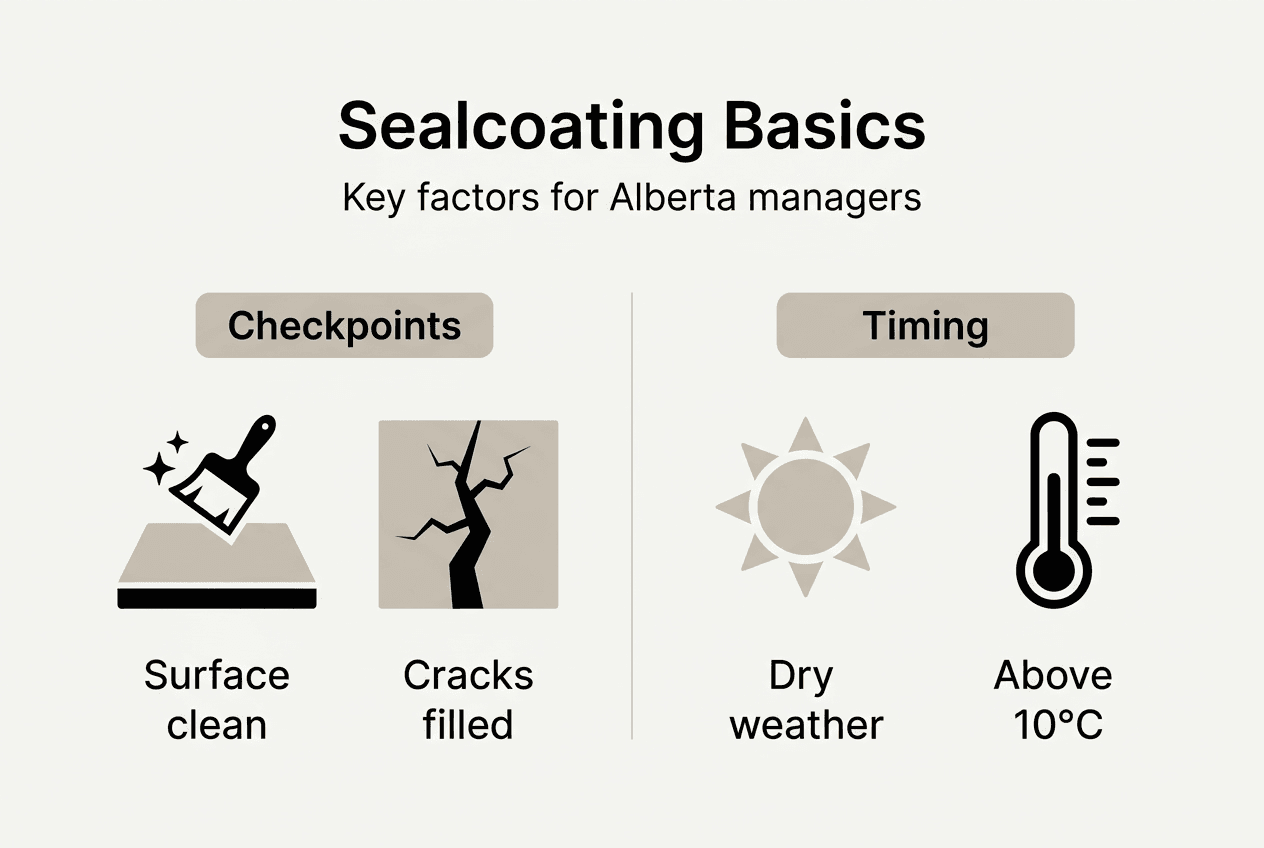
Timing preparation around weather conditions is crucial for Alberta properties. Surface temperature must reach at least 50°F and remain above this threshold during application and curing. Morning dew or recent rain can prevent proper adhesion even if the surface appears dry. Professional applicators use moisture meters to confirm readiness.
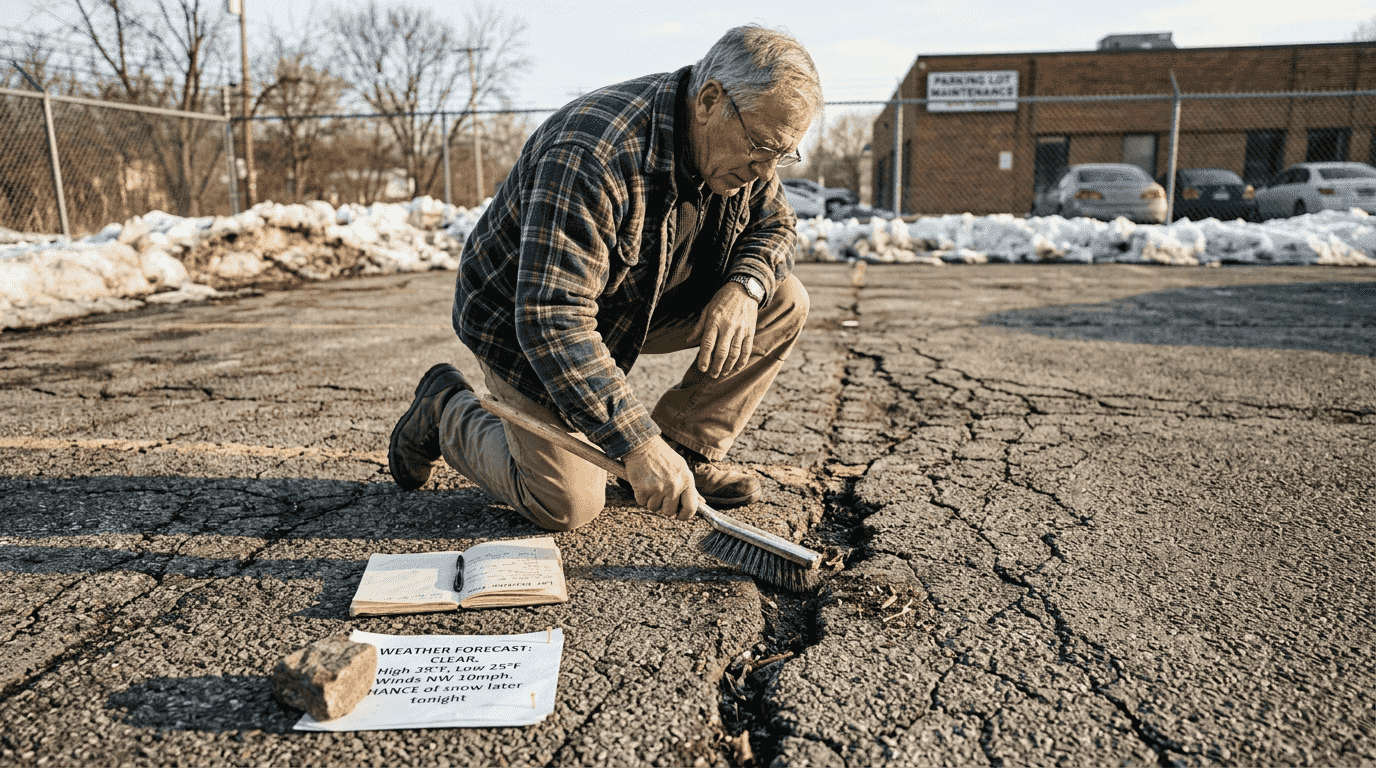
Pro Tip: Schedule annual spring inspections to identify and repair damage from winter freeze-thaw cycles before sealcoating season begins, ensuring surfaces are ready when optimal weather arrives.
Poor preparation leads to predictable failures. Sealcoat applied over dirty surfaces peels within months. Unsealed cracks allow water to undermine the sealcoat from below, creating bubbles and delamination. Understanding commercial parking lot repairs helps identify issues requiring attention before sealcoating. Investing in thorough asphalt repair techniques before sealcoating ensures the protective layer bonds properly and performs as intended.
The financial impact of inadequate preparation is significant. Reapplying failed sealcoating costs the same as doing it right initially, but you lose the protection period and may incur additional damage during the failure period. Proper preparation adds minimal cost compared to application labor and materials, making it the highest return investment in the entire process.
Sealcoating maintenance and frequency recommendations
Determining optimal sealcoating frequency requires evaluating traffic volume, climate exposure, and previous maintenance history. Regular sealcoating, typically every 2-3 years, is recommended depending on traffic volume, climate, and sealcoat quality. Alberta’s temperature extremes and winter conditions accelerate asphalt degradation, often pushing properties toward the shorter interval.
The following comparison table shows recommended sealcoating intervals based on use conditions:
| Traffic Level | Mild Climate | Harsh Climate (Alberta) |
|---|---|---|
| Low (residential, light commercial) | Every 3-4 years | Every 2-3 years |
| Moderate (retail, office parks) | Every 2-3 years | Every 2 years |
| Heavy (shopping centers, industrial) | Every 2 years | Every 1-2 years |
| Very Heavy (truck terminals, distribution) | Every 1-2 years | Annually |
Between sealcoating applications, ongoing maintenance preserves both the sealcoat and underlying asphalt. Neglecting interim care defeats the purpose of sealcoating by allowing small problems to become major failures. Implement these maintenance tasks to maximize sealcoat performance:
- Clean surfaces regularly to remove debris that traps moisture against pavement
- Patch small areas of sealcoat damage immediately to prevent water infiltration
- Seal new cracks as they appear rather than waiting for the next sealcoating cycle
- Avoid oil and fuel spills, cleaning them promptly when they occur
- Monitor drainage to prevent standing water that degrades sealcoat edges
Pro Tip: Integrate sealcoating into a comprehensive pavement management strategy that includes crack sealing, patching, and drainage maintenance to reduce total ownership costs by 40 percent or more compared to reactive repair approaches.
Understanding extending asphalt life expectancy reveals how sealcoating fits into broader pavement preservation. Sealcoating works best as one component of systematic care rather than a standalone solution. Properties that combine regular sealcoating with prompt crack repair and proper drainage maintenance achieve asphalt service lives of 25 to 30 years, while those relying on sealcoating alone or reactive repairs see failure at 12 to 15 years.
Following a detailed asphalt maintenance guide helps property managers develop schedules that align sealcoating with other preservation activities. Coordinating crack sealing in spring, sealcoating in summer, and drainage improvements in fall creates an efficient maintenance rhythm that keeps pavement in excellent condition year-round.
Common challenges and solutions in sealcoating asphalt
Even with proper preparation, sealcoating projects encounter problems that reduce effectiveness or require corrective work. Recognizing common issues and their causes helps property managers avoid expensive mistakes and ensure quality results.
The most frequent causes of sealcoating failure include:
- Inadequate surface cleaning leaving dirt or oils that prevent adhesion
- Moisture in the asphalt or on the surface during application
- Applying sealcoat when temperatures are too low or rain is imminent
- Using diluted or low-quality sealcoat materials to reduce costs
- Insufficient curing time before allowing traffic back onto the surface
- Failure to repair structural damage before sealcoating
Visible signs of sealcoating problems include peeling at edges, bubbling or blistering across surfaces, uneven coating thickness creating light and dark patches, and poor adhesion where sealcoat can be scraped off easily. These failures typically appear within the first year, indicating application or preparation errors rather than normal wear.
Regular inspections and maintenance, including crack sealing, are essential to maximize the benefits of sealcoating and extend asphalt life. Professional assessment before sealcoating identifies structural issues requiring repair rather than cosmetic coverage. Applying sealcoat over failing base material or significant cracking wastes money without addressing underlying problems.
Best practices to prevent sealcoating problems include:
- Schedule professional inspection 30 days before planned sealcoating to identify needed repairs
- Use only contractor-grade sealcoat materials meeting ASTM D5727 or similar standards
- Verify weather forecasts show at least 24 hours of dry conditions above 50°F
- Allow proper curing time, typically 24 to 48 hours, before permitting any traffic
- Apply sealcoat in two thin coats rather than one thick application for better adhesion
- Maintain detailed records of application dates, products used, and surface conditions
Understanding asphalt crack filling guide principles helps distinguish between cracks requiring repair before sealcoating and minor surface crazing that sealcoat will adequately protect. Cracks wider than one-quarter inch or showing vertical displacement need structural repair, while hairline cracks benefit from sealcoat protection alone.
Recognizing asphalt repair services needs before sealcoating prevents wasted investment. Sealcoating cannot fix structural failures, extensive cracking, or base problems. Properties showing these conditions require repair or reconstruction in affected areas before sealcoating makes financial sense. Professional assessment determines whether sealcoating is appropriate or if more extensive intervention is needed.
Early detection of sealcoat degradation allows timely maintenance rather than waiting for complete failure. Fading color, small areas of wear in high-traffic zones, and minor edge peeling can be addressed with spot repairs and cleaning, extending the time until full reapplication is needed. Properties that monitor sealcoat condition and perform minor touch-ups achieve longer intervals between major applications.
Enhance your property’s asphalt with ProZone’s expert sealcoating services
Protecting your commercial property’s asphalt investment requires expertise, quality materials, and precise timing. ProZone Ltd brings decades of experience in commercial asphalt maintenance to Edmonton and surrounding Alberta communities, delivering sealcoating solutions tailored to your property’s specific traffic patterns and climate exposure.
Our comprehensive approach begins with thorough surface assessment, identifying repairs needed before sealcoating to ensure lasting results. We develop customized maintenance schedules that align sealcoating with crack sealing, patching, and drainage improvements, maximizing your pavement investment. Understanding the benefits of asphalt roads and proper preservation techniques, our team applies contractor-grade materials during optimal weather windows for superior adhesion and durability. Whether you manage retail centers, office parks, or industrial facilities, our maintenance programs are designed around your operational needs. Discover proven strategies for extending asphalt lifespan and explore our expertise in commercial parking lot repairs. Contact ProZone for a professional assessment and customized maintenance plan that keeps your asphalt protected, attractive, and cost-effective for years to come.
Frequently asked questions
What is the best time of year to sealcoat asphalt in Alberta?
Sealcoating should occur during warm, dry periods typically between late spring and early fall when temperatures consistently stay above 50°F. Avoid sealcoating when rain is forecast within 24 hours or when overnight temperatures may drop below 40°F. Proper drying and curing time is critical for adhesion, requiring at least 24 to 48 hours of favorable weather after application. Most Alberta properties find June through August offers the most reliable conditions.
How often should commercial asphalt be sealcoated?
Sealcoating frequency typically ranges from every two to three years depending on traffic volume, climate exposure, and previous maintenance quality. High-traffic commercial properties in harsh climates may need annual application, while light-use areas can extend to three or four years between treatments. Regular inspections help adjust this schedule based on actual pavement condition rather than arbitrary timelines. Consistent maintenance between sealcoating cycles extends intervals and reduces total costs.
What are signs that my asphalt needs sealcoating?
Faded gray color instead of rich black, visible surface cracks, areas where water pools rather than draining, and rough texture from aggregate exposure all indicate sealcoating need. Oil spots that have penetrated the surface and parking stripe paint that has faded significantly also suggest protection has degraded. Consulting professionals for inspection upon noticing these signs prevents minor issues from becoming expensive repairs. Learn more about asphalt damage signs that warrant immediate attention.
Can I apply sealcoating myself, or should I hire a professional?
DIY sealcoating is possible for small residential areas but risks improper surface preparation, incorrect material dilution, and poor weather timing that lead to premature failure. Commercial properties benefit significantly from professional application that ensures thorough crack repair, proper surface cleaning, contractor-grade materials, and optimal application conditions. Professionals also provide warranties and have equipment for efficient, uniform coverage that DIY methods cannot match. The cost difference is minimal compared to the risk of failed application requiring complete redo.