
TL;DR:
- Construction quality control ensures work complies with specifications, reducing errors and rework costs. Implementing a structured, three-phase system with inspections and digital records improves defect detection and accountability. Addressing common reactive habits and climate challenges like Edmonton’s freeze-thaw cycles enhances project durability.
Construction quality control (QC) is the systematic process of verifying that work complies with design specifications, regulatory requirements, and client expectations to deliver safe, durable, and defect-free structures. Avoidable errors in construction projects account for 5% to 20% of total project value, with rework alone consuming up to 20% of project budgets. That figure makes QC one of the highest-return investments on any site. This construction quality control guide covers the three-phase QC system, site inspection procedures, performance metrics, and the digital tools that Alberta professionals need to stay compliant with Alberta Safety Codes and deliver work that holds up through Edmonton’s freeze-thaw cycles.
What is a construction quality control program?
Construction QC is defined as the set of operational activities used to detect and correct defects during construction. It differs from quality assurance (QA), which focuses on defect prevention through systems and training before work begins. QA sets the standards; QC confirms the work meets them. Both must function together for lasting project stability.
The global market for construction quality control services reached $8.5 billion in 2024 and is projected to reach $15.7 billion by 2033. That growth reflects how seriously the industry now treats structured QC programmes. Treating QC as a cost centre is a mistake. The Cost of Quality (COQ) framework shows that late-stage remediation can cost up to 100 times more than catching a defect early.
ISO 9001 provides the internationally recognised framework for quality management systems in construction. Alberta Safety Codes set the provincial compliance floor for structural, electrical, and civil works. Any credible quality control in construction guide must reference both, because they define the minimum documentation and inspection standards your programme must meet.
What are the essential phases of a QC programme?
A three-phase QC system structures inspections around preparatory, initial, and follow-up stages. Each phase has a distinct purpose and prevents a different class of defect.
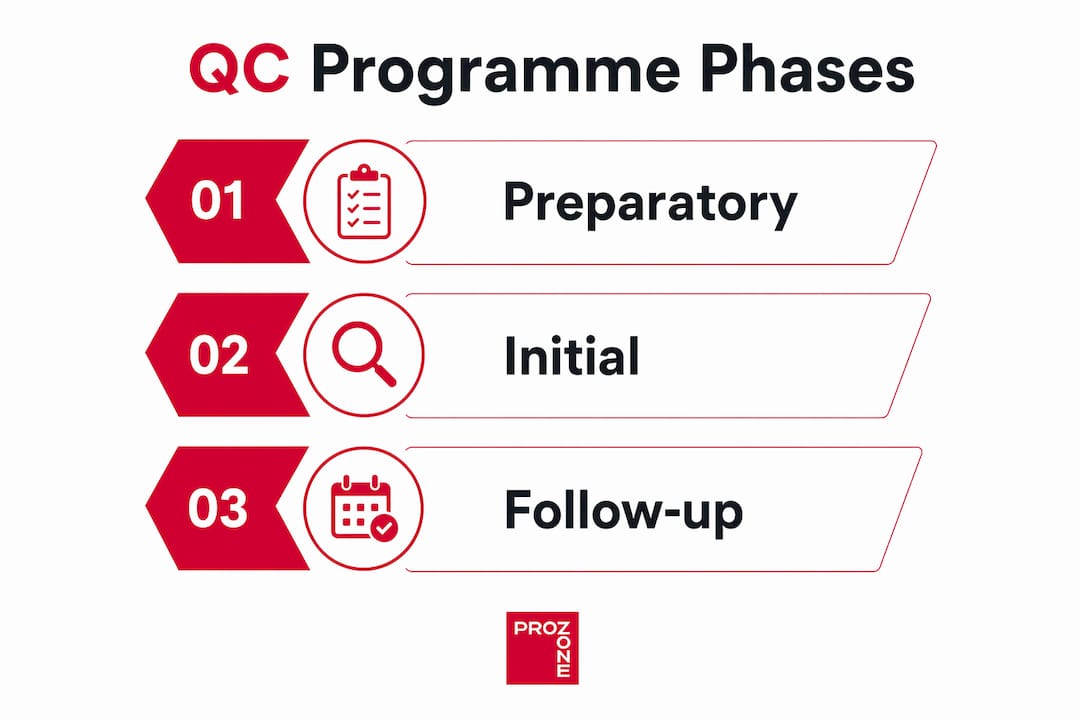
Preparatory phase
The preparatory phase happens before any physical work begins. The QC manager reviews specifications, confirms material certifications, and verifies crew qualifications. This is where Inspection and Test Plans (ITPs) are issued. An ITP lists every activity that requires inspection, the standard it must meet, and whether it carries a hold point or a witness point.
- Hold point: Work must stop. A formal sign-off is required before proceeding.
- Witness point: The inspector is notified and may attend, but work can continue if the inspector does not appear within a set window.
- Review point: Documents are checked; no physical attendance required.
Initial phase
The initial phase covers the first work unit of each new activity. First-work inspections catch defects before they replicate across the full scope. A concrete pour inspected at the first panel prevents the same mix error from appearing in every subsequent panel. This phase is underused on many sites, yet it delivers the highest defect-reduction return per inspection hour.
Follow-up phase
The follow-up phase runs continuously through the remaining scope. Inspectors verify that the standards confirmed in the initial phase are maintained. Frequency depends on risk: high-risk activities such as structural welding or post-tensioning require more frequent checks than routine earthworks.
| Phase | Trigger | Key output |
|---|---|---|
| Preparatory | Before work starts | Approved ITP, material certs, crew sign-off |
| Initial | First work unit | First-work inspection report, hold-point release |
| Follow-up | Ongoing | Inspection logs, non-conformance reports (NCRs) |
Pro Tip: Issue ITPs at least 48 hours before work begins. Last-minute ITPs are rarely read and almost never acted on before the crew starts.
How to implement effective inspections and testing procedures
Structured inspections follow a repeatable sequence. Skipping steps is where most quality failures originate.
- Pre-task planning meeting. Hold a 15-minute meeting before each new trade phase. Pre-task meetings eliminate 60% to 70% of defects by aligning crews with specifications and hold points before work starts. Cover the ITP, the inspection sequence, and who to contact if a non-conformance is found.
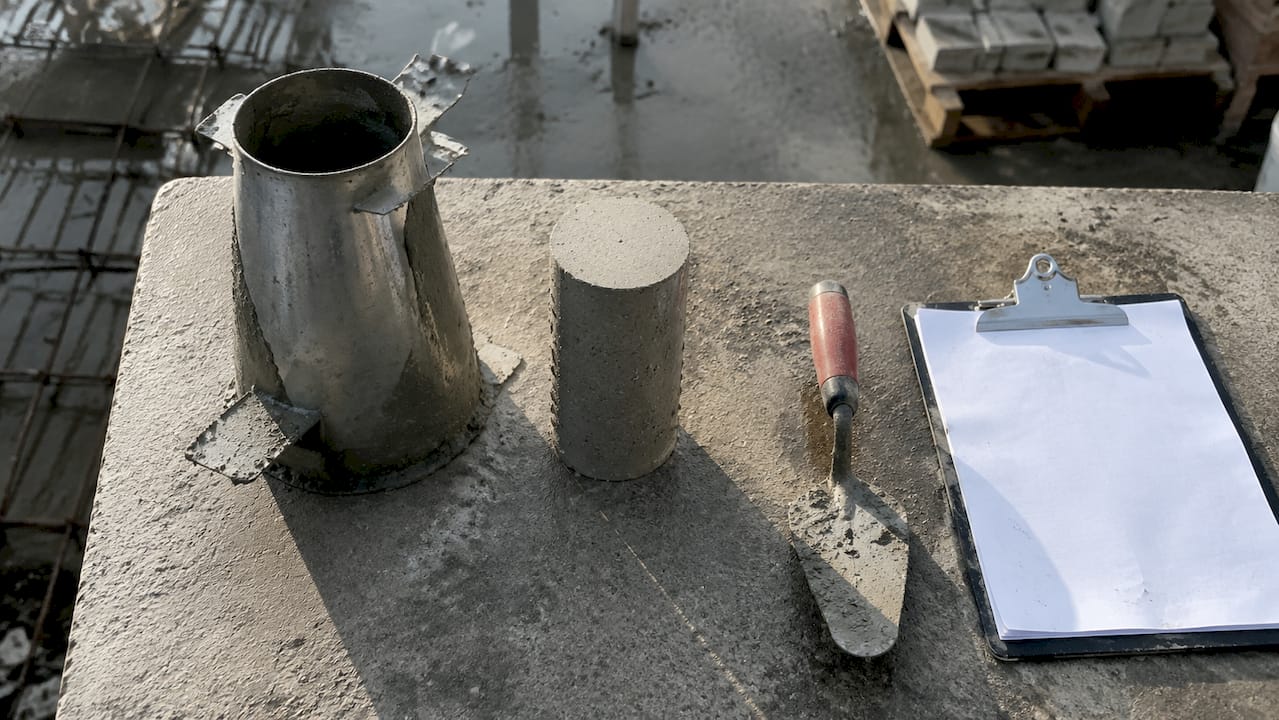
- Material verification. Confirm batch tickets, mill certificates, or mix designs match the approved submittals. For concrete, check the slump test result against the specified range before the pour begins.
- In-process inspection. Inspect at each hold point. For structural concrete, this means checking formwork, reinforcement placement, and cover depth before the pour. For asphalt, check temperature at delivery and compaction density during rolling.
- Hold-point release. A rigorous hold-point system requires a documented sign-off before the crew proceeds. No verbal approvals. No retroactive sign-offs.
- Post-activity testing. Cube compressive strength tests for concrete, weld inspection records for structural steel, and compaction test reports for earthworks all belong in the project file immediately after testing.
- Non-conformance reporting. When a test fails or an inspection reveals a defect, raise an NCR within 24 hours. Assign a corrective action owner and a resolution deadline.
Common material tests used in Alberta construction include slump tests for fresh concrete workability, cube or cylinder compressive strength tests at 7 and 28 days, and ultrasonic or visual weld inspections for structural steel. For pavement inspections, nuclear density gauges measure compaction against the specified Proctor density.
Pro Tip: Photograph every hold-point inspection with a timestamp and GPS tag. A photo taken after the fact is not evidence. A photo taken before the pour is.
How to monitor and measure QC performance
Quality control performance is measurable. Tracking the right metrics separates a reactive programme from a preventative one.
The industry benchmark for defect rate per inspection on well-managed projects is under 5%. A rate above 10% signals a systemic quality issue, not an isolated incident. When defect rates exceed 10%, the root cause is almost always in the preparatory phase: inadequate specifications, unqualified crews, or missing ITPs.
Key metrics to track on every project:
- Defect rate per inspection: Number of defects found divided by total inspections completed.
- NCR resolution time: Average days from NCR raised to corrective action closed. Targets vary by project, but anything over 14 days indicates a bottleneck.
- Hold-point compliance rate: Percentage of hold points released with documented sign-offs versus those bypassed.
- Rework cost as a percentage of contract value: Directly measures the financial impact of quality failures.
Digital platforms assist in maintaining what the Building Safety Act 2022 calls the Golden Thread of evidence. The Golden Thread is a continuous, auditable record of every decision, inspection, and test result from design through occupation. Paper-based systems cannot reliably produce this record. Digital audit trails can, and they provide legal protection when disputes arise.
Understanding construction software terminology helps QC managers select platforms that integrate with their existing workflows. The right platform captures inspection data in the field, links it to the relevant ITP item, and generates NCRs automatically when a test result falls outside the specified range.
What common challenges arise in construction QC and how to address them?
Most QC failures share a common root: the team inspects work after it is complete rather than preventing defects before they occur. Reactive inspection is the single most expensive habit in construction quality management.
The reactive trap. When inspections happen only after a trade finishes, defects are already embedded in the structure. Correcting them requires demolition, rework, and delay. Pre-task planning meetings and first-work inspections break this cycle before it starts.
Inspecting in quality. No inspection programme can substitute for correct workmanship. If a crew consistently produces defects that inspectors catch and correct, the problem is training or supervision, not inspection frequency. Address the source, not the symptom.
Cultural resistance to digital tools. Site teams accustomed to paper-based checklists often resist digital platforms. The solution is not to mandate the platform from day one. Start with one activity, demonstrate that digital sign-offs are faster than paper, and let the crew experience the benefit directly.
Communication gaps between trades. When the concrete crew does not know the structural engineer’s cover-depth requirement, defects are inevitable. The ITP and the pre-task meeting are the two tools that close this gap. Both require the QC manager to be present, not just to send documents by email.
Prozoneltd reinforces process discipline through adherence to Alberta Safety Codes and documented quality standards on every project. For municipal and commercial construction in Edmonton, that means every inspection is logged, every hold point is formally released, and every NCR is tracked to closure.
Pro Tip: Assign NCR ownership to the trade supervisor, not the QC manager. The QC manager verifies the fix. The supervisor is accountable for producing it. This distinction prevents the QC team from becoming the de facto rework crew.
Quality control in Edmonton’s freeze-thaw environment: a field perspective
Edmonton’s climate creates quality control challenges that standard guides rarely address directly. Freeze-thaw cycling, which can shift ground temperatures by 40°C or more between seasons, accelerates concrete deterioration, heaves asphalt, and compromises compaction in earthworks. Managing QC in this environment requires a more aggressive inspection schedule than southern Canadian projects typically demand.
First-work inspections matter more here than anywhere else. A concrete mix that performs adequately in mild conditions may fail within two freeze-thaw cycles if the water-cement ratio is slightly high or the curing period is shortened. Catching that error at the first panel costs almost nothing. Replacing a deteriorated slab after one winter costs significantly more.
Digital audit trails have changed how Prozoneltd manages compliance on Alberta projects. Every inspection record, test result, and corrective action is timestamped and linked to the relevant specification clause. When a municipal client or a safety codes officer requests documentation, the response takes minutes, not days. That speed is not just convenient. It demonstrates that the quality programme is real, not retrospective.
The industry is moving toward integrating QA and QC as a single continuous process rather than treating them as separate departments. Prozoneltd’s approach reflects that direction. Upfront quality planning, crew qualification checks, and material pre-approval happen before mobilisation. Inspections during construction confirm that the plan is being followed. The result is fewer NCRs, less rework, and projects that perform through Alberta winters.
— ProZone
Prozoneltd’s quality standards for Alberta construction projects
Prozoneltd delivers construction and infrastructure maintenance services across Edmonton and the surrounding region, with quality control built into every phase of work. Every project follows Alberta Safety Codes requirements, uses certified materials, and applies documented inspection procedures from preparatory through follow-up phases. For concrete work, Prozoneltd’s concrete flatwork guide for Alberta details the mix specifications and curing standards used on commercial and municipal projects. Teams use digital inspection records to maintain a complete audit trail on every contract. Contact Prozoneltd directly through the online form at prozoneltd.ca for a free estimate and to discuss quality control requirements for your next project.
FAQ
What is the difference between QA and QC in construction?
Quality assurance (QA) focuses on preventing defects through systems, training, and process design before work begins. Quality control (QC) detects defects through inspections and testing during construction.
What defect rate per inspection is acceptable?
The industry benchmark for well-managed projects is under 5% defect rate per inspection. Rates above 10% indicate a systemic problem requiring root-cause analysis, not just more inspections.
What is a hold point in a construction inspection?
A hold point is a mandatory stop in the work sequence where a formal inspection and documented sign-off are required before the crew proceeds. Work cannot continue until the hold point is released.
What is the Golden Thread in construction documentation?
The Golden Thread is a continuous, auditable record of all decisions, inspections, and test results from design through occupation, required under the Building Safety Act 2022. Digital platforms create this record reliably; paper systems cannot.
How do pre-task planning meetings reduce defects?
Pre-task meetings held before each new trade phase align crews with specifications and inspection points. Research shows these meetings can eliminate 60% to 70% of defects by addressing potential errors before work starts.