
COR certification in Alberta is a provincial safety credential that proves your company runs an audited health and safety management system (HSMS), and it is fast becoming a bid requirement on public and institutional contracts. Employers with 10 or more staff must pass an external audit through a certifying partner; employers with 10 or fewer can use the SECOR self-assessment route instead. The next move is simple: contact a Certifying Partner or visit Alberta to register.
Here is what determines your path:
- 10+ employees: external audit required, standard COR route
- 10 or fewer employees: SECOR self-assessment, overseen by a Certifying Partner
- Both paths: administered under Partnerships in Injury Reduction (PIR)
Pro Tip: Don’t wait until a tender requires COR to start the process. Certification, from system build to certificate issuance, commonly runs several months, so employers bidding on 2026 municipal contracts should be registering with a Certifying Partner now.
Table of Contents
- What is COR certification in Alberta and why does it matter?
- Do you need COR or SECOR, and how long does certification take?
- How do you get a COR in Alberta?
- How do you maintain and renew a COR?
- What financial and procurement benefits does COR deliver?
- How do you choose the right Certifying Partner and auditor?
- What does an audit-ready evidence trail actually look like?
- Do COR requirements differ by industry or company size?
- What government and industry resources support COR applicants?
- Why the audit itself matters more than the certificate on the wall
- Sources
- FAQ
What is COR certification in Alberta and why does it matter?
COR (Certificate of Recognition) and its smaller cousin SECOR (Small Employer Certificate of Recognition) are Alberta’s formal recognition that a company’s safety program meets a provincial standard, not just a set of good intentions on paper. The program runs under Partnerships in Injury Reduction, a joint effort between the Alberta government and industry associations called Certifying Partners, who train, audit, and co-sign certificates.
Owners, general contractors, and municipal procurement teams increasingly treat COR as table stakes rather than a bonus qualification. Industry guidance describes COR as having become a de facto licence to operate on many public and institutional jobs, meaning contractors without it simply do not make the bid list.
The financial angle matters too. COR is the gateway to Workers’ Compensation Board premium incentives through PIR, which rewards companies whose claim costs come in under industry-predicted targets.
Do you need COR or SECOR, and how long does certification take?
Eligibility hinges on headcount, and the distinction changes both the process and the paperwork.
- 10 or more employees: you require the full external audit route to earn COR. An accredited auditor reviews your HSMS on site and scores it against Alberta’s audit standard.
- 10 or fewer employees: you can pursue SECOR instead, a self-assessment overseen by your Certifying Partner rather than a third-party auditor.
- New systems: if your HSMS hasn’t built up an operational track record yet, your Certifying Partner may issue a 1-year COR until you can demonstrate consistent implementation.
- Established systems: standard certification is valid for several years.
Most employers building a system from scratch should budget three to six months of documented operational evidence before an audit is realistic, longer for companies with high subcontractor turnover or multiple job sites.
How do you get a COR in Alberta?
Getting certified is a five-step sequence, and skipping steps is the single biggest reason companies fail their first audit.
- Choose and register with a Certifying Partner. Alberta has 13 Certifying Partners, each affiliated with specific industries. Confirm their training requirements before you commit; some CPs mandate specific courses your supervisors must complete.
- Build your health and safety management system. Your HSMS needs to cover the nine core elements Alberta audits against, from hazard assessment to emergency response planning, and you need at least three months of operational evidence showing the system actually functions, not just exists on paper.
- Complete required training. Assign named staff to safety-coordinator and supervisor roles and get them through your CP’s approved courses.
- Undergo the external audit. Your CP maintains an approved auditor list. To pass, you need 80% overall and a minimum of 50% in every individual audit element, a threshold set by Alberta. A strong overall score with one weak element still fails.
- Certifying Partner review and issuance. Your CP conducts quality assurance on the audit report before submitting for certificate issuance, which typically adds a few weeks to the timeline.
Pro Tip: Build your evidence trail into daily site operations rather than assembling it the week before your audit. Auditors can tell the difference between a system that runs year round and one staged for their visit.
How do you maintain and renew a COR?
A COR is valid for three years, but it is not a “certify and forget” credential. Alberta requires maintenance audits in each of the two calendar years following certification, and those audits must score at least 60% overall to be accepted.
Full recertification at the end of the three-year cycle resets the clock, and it requires the same 80% overall, 50% per element standard as your original audit.
- Year 1: certification audit (80% overall, 50% per element)
- Year 2: maintenance audit (60% overall minimum)
- Year 3: maintenance audit (60% overall minimum), followed by full recertification
Partnerships in Injury Reduction also runs the On-Site Audit Review (OSAR) process, which can occur within four months of an external audit to validate both the audit findings and the auditor’s performance. If your file is selected, treat it as a normal compliance check rather than a penalty, but be ready to walk PIR staff through the same documentation your original auditor reviewed.
What financial and procurement benefits does COR deliver?
The clearest business case for COR is the WCB premium incentive. Under PIR, COR-certified employers who keep claim costs below industry-predicted targets can earn WCB premium discounts, with maximum discounts offered depending on performance and program criteria., depending on performance and program criteria.
Beyond the premium math, COR reshapes who you can even bid to.
- Bid eligibility: many municipal, institutional, and large commercial project owners now list COR as a mandatory prequalification item.
- Reduced cost of risk: fewer lost-time incidents, fewer insurance claims, less downtime on active job sites.
- Operational discipline: a functioning HSMS tends to catch equipment and procedural gaps before they become incidents, particularly valuable on freeze-thaw sensitive concrete and asphalt work where timing errors are costly.
None of this is decorative. The insight underlying the program is that COR enforces operational rigour, not paperwork for its own sake, and that rigour is what shows up in fewer claims and better bid access.
How do you choose the right Certifying Partner and auditor?
Not all Certifying Partners fit every business the same way, and picking the wrong one costs you time and money you didn’t need to spend.
- Industry fit: a CP that specializes in your sector understands your typical hazard profile and won’t force you through generic training irrelevant to your work.
- Local accessibility: Edmonton and area employers should confirm the CP has auditors who regularly work in the region, not just head office staff who fly in.
- Advisory support: CPs that offer strong coaching alongside training typically shorten the path to a first pass.
- QA transparency: ask directly how the CP reviews audit reports before submission, and how they handle a borderline score.
Red flags include vague answers about their auditor roster, no clear timeline for report turnaround, or an inability to name industry-specific training options.
Pro Tip: Ask a prospective Certifying Partner how many audits in your specific trade they’ve reviewed in the past year. A CP that mostly certifies office environments will not know what “adequate” hazard documentation looks like on an active asphalt crew.
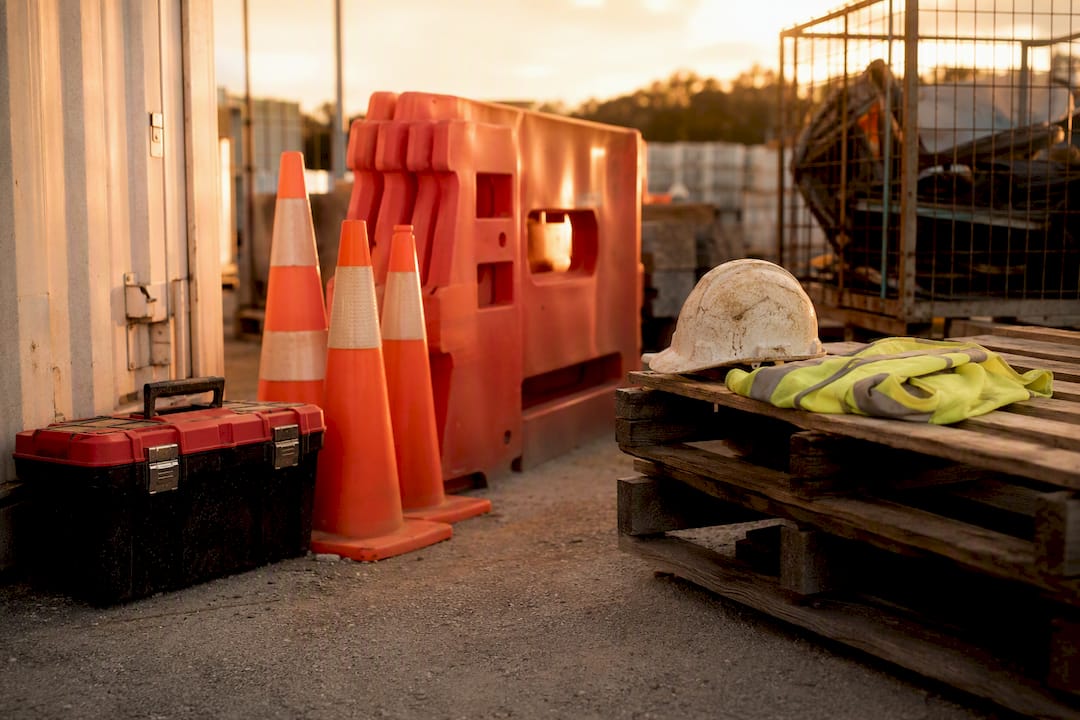
What does an audit-ready evidence trail actually look like?
The most common reason companies fail an audit isn’t a weak safety culture, it’s a paper trail with holes in it. Auditors want to trace an issue from the moment it was flagged through to a documented, closed corrective action, and gaps in that chain sink scores fast, according to Safety Evolution’s analysis of COR audits.
- Dated hazard assessments and Field Level Hazard Assessments (FLHAs) for every job site, updated when conditions change, not filed once and forgotten.
- Training records tied to named individuals, with certificates and renewal dates tracked, not a general claim that “the crew is trained.”
- Inspection logs covering equipment, site conditions, and PPE, with a consistent cadence auditors can verify week over week.
- Incident investigations with visible corrective action closure, showing who was assigned the fix and when it was completed.
For Edmonton and area construction and road maintenance work, build freeze-thaw evidence directly into your inspection logs. Documenting material performance and site condition changes tied to seasonal temperature swings gives auditors the locally relevant operational control they’re specifically looking for.
Pro Tip: Set a recurring calendar reminder for weekly inspection log reviews rather than relying on memory. Inconsistent record dates are one of the most frequent, and most avoidable, reasons audits lose points on documentation completeness.
Do COR requirements differ by industry or company size?
The audit framework is the same nine-element structure across Alberta, but the practical weight of each element shifts depending on your sector and headcount. A road and concrete contractor working through Edmonton’s freeze-thaw cycles needs strong evidence around equipment inspection, seasonal material handling, and traffic control plans. A landscaping or general maintenance operation faces lighter equipment-hazard documentation but still needs the same rigour around training records and incident closure.
Company size changes the process more than the standard itself. A 12-person operation crossing the SECOR threshold into full COR territory often struggles because their documentation habits were built for a self-assessment, not an external auditor’s scrutiny. Larger contractors running multiple crews across several sites face a different challenge: consistency. An auditor sampling three job sites expects the same hazard assessment quality and inspection cadence at each one, and uneven supervision between crews is a common source of lost points.
Seasonal contractors, common in Alberta’s construction and snow removal sectors, face an added wrinkle. Audits scheduled during off-season months may lack current operational evidence, so Certifying Partners often recommend timing your audit window to coincide with active field work whenever possible. Multi-trade companies, meanwhile, sometimes need to demonstrate that their HSMS scales across distinct hazard types, from excavation to surface application work, under one coherent system rather than a patchwork of site-specific rules.
What government and industry resources support COR applicants?
Alberta’s system is deliberately built around support rather than leaving employers to interpret standards alone. Start with Alberta.ca’s Get a Certificate of Recognition page, which lists current program requirements, the full roster of Certifying Partners, and links to find one matched to your industry.
The Alberta Association for Safety Partnerships (AASP) operates as a Certifying Partner covering a broad range of industries and offers training and advisory support for companies building their first HSMS. The Alberta Construction Safety Association (ACSA) serves as the sector-specific Certifying Partner for construction and road work, with training programs designed around the hazards ProZone’s own crews encounter daily, from excavation safety to traffic control certification.
Both organizations, along with the other Certifying Partners under PIR, provide template documents, coaching calls, and pre-audit reviews that catch gaps before a real auditor does. Employers building a system from nothing should lean on this support early. A CP’s advisory team has seen hundreds of audits and can flag a weak element in your draft HSMS long before it costs you points in the real review.
Why the audit itself matters more than the certificate on the wall
The mistake most Alberta employers make with COR is treating it as a paperwork exercise to satisfy a procurement checkbox. That framing gets companies through their first audit and then leads to a predictable failure two years later at maintenance review, because the HSMS was built to pass a test, not to run a jobsite.
The conventional advice, “get your documents in order before the audit,” undersells what actually separates companies that sail through recertification from those that scramble. The real differentiator is whether hazard assessments, inspection logs, and corrective actions are generated as a byproduct of normal operations or manufactured retroactively. Auditors can tell the difference within the first hour of a site visit.
For Edmonton area contractors specifically, the freeze-thaw cycle is not a footnote, it’s a recurring operational hazard that shows up in concrete curing schedules, asphalt compaction windows, and equipment wear. Folding that seasonal reality into your ongoing inspection cadence does double duty: it satisfies auditors looking for locally relevant controls, and it genuinely reduces the incidents that drive up your WCB claim costs in the first place.
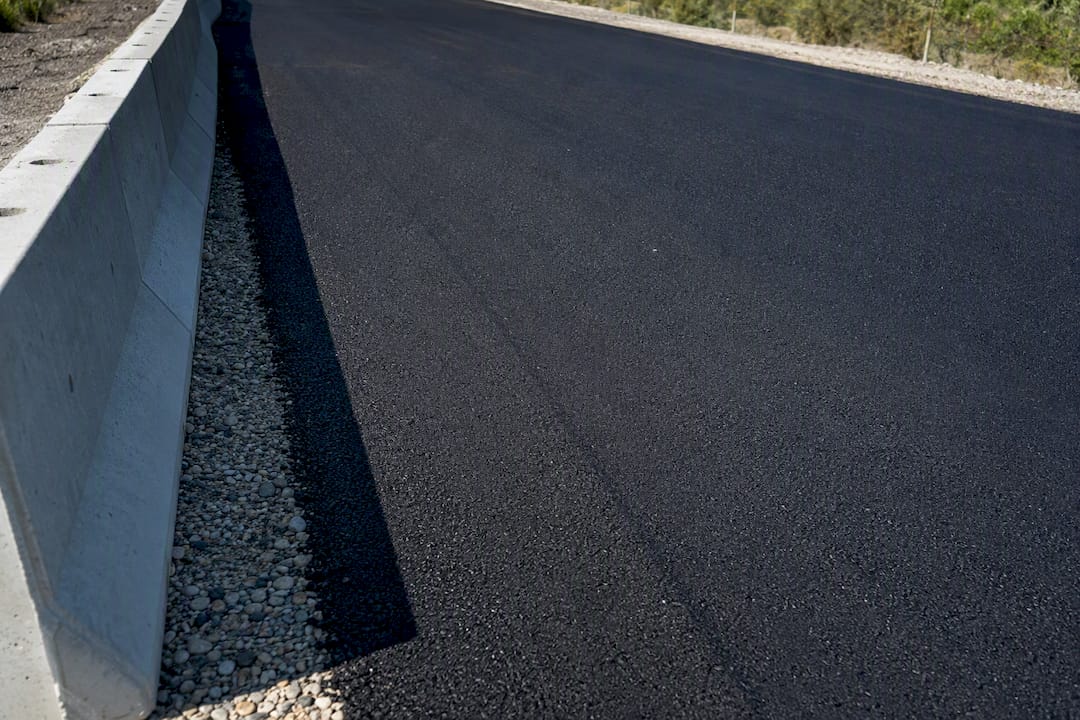
Prioritize building the evidence habit before you prioritize the audit date. The certificate follows naturally once the system is real.
Sources
- Alberta
- COR certification — Peden Safety (cor-certification)
- COR certification Alberta: a step-by-step guide for contractors — SafeBlu
FAQ
How do you get a COR certificate in Alberta?
Register with a Certifying Partner, build a health and safety management system covering the nine core elements, complete required training, and pass an external audit scoring at least 80% overall with 50% minimum per element.
Is COR mandatory in Alberta?
COR is not legally mandatory for every business, but many municipal, institutional, and large commercial project owners now require it for bid eligibility, making it a practical necessity for contractors seeking that work.
What is COR certification in Canada?
COR (Certificate of Recognition) is a provincially administered safety credential, run in Alberta under Partnerships in Injury Reduction, that certifies an employer’s health and safety management system has been independently audited and meets the provincial standard.
Is COR certification worth it?
What’s the difference between COR and SECOR?
COR requires an external audit and applies to employers with 10 or more employees, while SECOR is a self-assessment option for employers with 10 or fewer employees, overseen by a Certifying Partner rather than a third-party auditor.
Building your safety documentation is only half the equation. If your crews are running road construction, asphalt paving, or concrete work through an Alberta winter, your operational controls need to match the same standard your COR auditor expects to see on paper. ProZone runs its Edmonton area projects to Alberta Safety Codes as a baseline, not an add-on, using quality materials and documented procedures that hold up under freeze-thaw stress rather than generic contractor shortcuts that fail an audit or a job site. Whether you need a contractor for municipal and commercial road construction or want to see how a properly documented safety program shows up in the finished work, contact ProZone through the online form or call directly for a free estimate on your next project.