
Grading shapes the ground to a specified slope or contour to control drainage and prepare a surface for construction, while leveling removes elevation variation to produce a uniform surface for irrigation, lawns, or building pads. According to industry guidance, many projects combine both: grade first for drainage, then level specific pads or lawn areas to tolerance. The right choice comes down to three factors:
- Drainage requirement: if water must move away from a structure or across a field, you need grading. If the surface must hold water evenly or drain uniformly, leveling follows.
- Precision and tolerance: leveling for a sports field or agricultural plot demands tighter tolerances than rough grading for a road base.
- Depth of work: grading typically works within the upper soil layers; excavation handles deeper voids before grading begins.
Table of Contents
- What does leveling actually do, and when do you need it?
- What is grading, and why does it drive construction outcomes?
- How grading and leveling relate to excavation
- Grading vs leveling: a side-by-side comparison
- How do you decide between grading and leveling for your project?
- What equipment and methods are used for grading and leveling?
- Why grading matters more in freeze-thaw climates
- What quality grading and leveling actually look like on site
- ProZone handles grading and leveling for Alberta projects
- Sources
- FAQ
What does leveling actually do, and when do you need it?
Leveling removes high and low spots across a defined area to bring the entire surface to a consistent elevation. The goal is uniformity, not slope. A lawn that puddles after rain, a farm field with uneven irrigation coverage, or a building pad that needs a flat base before concrete placement are all candidates for leveling.
Typical applications include:
- Residential lawns and sports turf where surface drainage must be even
- Agricultural fields where irrigation efficiency depends on a consistent plane
- Building pads and floor slabs requiring tight elevation tolerances
- Recreational surfaces such as baseball diamonds and soccer pitches
Equipment ranges from a simple box blade on a tractor for small lawns to laser-guided scrapers for large agricultural or sports fields. Precision tools such as laser grading systems and GPS increase accuracy and are commonly required for crop fields, sports fields, and fine construction pads. For a residential lawn, a string line and a hand level may be sufficient; for a 20-hectare canola field, GPS-controlled equipment is the practical standard.
Tolerances matter. A lawn can tolerate small variations in elevation over a few metres. A concrete building pad typically requires very tight elevation tolerances. Knowing your tolerance before you hire determines both the equipment and the operator skill level you need.
What is grading, and why does it drive construction outcomes?
Grading sculpts the ground to establish controlled slopes for drainage and construction, directing stormwater away from foundations, stabilising soils, and reducing erosion risk. It is slope-focused work, not flat-surface work. A graded surface has a deliberate fall, measured in percentage or ratio, that moves water to a specific outlet.
On construction sites, grading produces either a finished grade (the final surface visible after landscaping) or a sub-grade (the compacted layer beneath pavement or concrete). In engineering practice, grading establishes finished contours or sub-grade for foundations, roads, and drainage; regrading adjusts levels up or down where needed.)
Common grading applications include:
- Foundation perimeters graded to slope away from the building at a minimum 2% fall
- Road beds shaped to crown profile for surface drainage
- Drainage swales and retention areas contoured to move or hold stormwater
- Terraced slopes on hillside lots to reduce erosion and manage runoff
- Site preparation for parking lots, where cross-slope and grade breaks are engineered
Engineered grading plans specify final elevations, cut-and-fill areas, and drainage outlets. On regulated sites, a licensed engineer or geotechnical consultant typically stamps these plans. Skipping a grading plan on a complex site is one of the most common causes of drainage failures and foundation movement after construction.
Pro Tip: Ask your contractor for the grading plan and grade stakes before work begins. If they cannot produce either, that is a red flag worth addressing before a single blade touches the soil.
How grading and leveling relate to excavation
All three processes move soil, but they operate at different depths and serve different purposes. Excavation digs and removes soil to reach depths for utilities and footings, while grading redistributes material to refine the finished surface and direct water away from structures. Leveling then fine-tunes specific areas after grading is complete.
The typical sequence on a construction project:
- Excavation removes soil to the depth required for footings, utilities, or underground structures
- Rough grading redistributes cut material across the site to approximate final elevations
- Fine grading brings the surface to specified tolerances and establishes drainage slopes
- Leveling addresses specific pads, lawn areas, or surfaces that require a uniform plane
Grading typically affects the topsoil and shallow subsoil layers, while excavation reaches deeper depths, with different implications for stockpiling, compaction testing, and permits. Topsoil stripped during excavation should be stockpiled separately and replaced after grading is complete. Mixing topsoil with subsoil fill is a common site error that degrades drainage behaviour and makes revegetation harder.
Contractors commonly transition from excavation to grading, then to fine-level leveling for pads or lawns; preserving and replacing topsoil within a short timeframe reduces erosion and maintains intended drainage behaviour.
Grading vs leveling: a side-by-side comparison
Leveling tends to cost less because it usually moves less material and requires less detailed contouring, while grading costs rise with complexity of contours and precision requirements. The table below captures the key differences across the dimensions that matter most to project decision-makers.
| Dimension | Grading | Leveling |
|---|---|---|
| Primary goal | Establish controlled slope for drainage or sub-grade | Remove elevation variation to a uniform surface |
| Typical projects | Foundations, roads, swales, terraces, parking lots | Lawns, agricultural fields, sports surfaces, building pads |
| Result | Sloped surface at specified grade | Flat or uniformly planar surface |
| Typical equipment | Motor grader, bulldozer, excavator | Box blade, laser scraper, GPS-guided equipment |
| Precision required | Moderate to high (engineered tolerances) | High for pads and fields; moderate for lawns |
| Drainage impact | Directs water to designed outlets | Distributes water evenly; can create low spots if poorly done |
| Cost and complexity | Higher; rises with contour complexity and plan requirements | Generally lower; rises with precision requirements |
| When to hire a pro | Always for engineered sites; strongly advised for slopes over 2% | Strongly advised for pads, sports fields, and agricultural fields |
Quick project examples:
- A new home foundation requires grading to slope the yard away from the building at a minimum 2% fall, plus leveling of the driveway pad before concrete placement.
- A farm field being converted to drip irrigation needs leveling to within a tight tolerance so water distributes evenly across the entire area.
- A municipal road rehabilitation project requires engineered grading to establish crown profile and cross-slopes, with no leveling component at all.
How do you decide between grading and leveling for your project?
Work through this checklist before contacting a contractor or engineer.
- Define the drainage requirement. Does water need to move away from a structure or across a field? Grading is the primary tool. Does the surface need to hold or distribute water uniformly? Leveling follows grading.
- Assess the existing slope. A site with more than a 5% slope almost always needs grading before any leveling is possible. Attempting to level a steeply sloped site without grading first creates unstable fill conditions.
- Identify the soil type. Clay-heavy soils, common across much of Alberta, compact differently than sandy loam. Clay requires more careful compaction management and is more susceptible to frost heave, which affects both grading tolerances and leveling longevity.
- Determine the project function. A structural building pad needs engineered sub-grade preparation and compaction testing. A residential lawn needs neither, but still benefits from a grading plan that keeps water away from the foundation.
- Check permit requirements. Many municipalities require permits for grading that moves more than a specified volume of soil or alters drainage patterns. Review local bylaws before work begins.
Red flags that require professional involvement:
- Any grading within 1.5 metres of a foundation or retaining wall
- Sites with existing drainage problems, standing water, or evidence of soil movement
- Projects adjacent to municipal storm systems or natural watercourses
- Slopes exceeding 3:1 (horizontal to vertical) where erosion control measures are mandatory
For site preparation and project staging guidance, a project manager’s perspective on sequencing excavation, grading, and leveling is worth reviewing before scoping the work.
What equipment and methods are used for grading and leveling?
The machine determines the tolerance. Choosing the wrong equipment for the phase is one of the most common reasons grading and leveling results fall short of specification.
Key equipment by application:
- Motor grader: the standard tool for fine grading on roads, parking lots, and large sites; the blade angle and cutting edge position control slope precisely
- Bulldozer: used for rough grading and pushing large volumes of material; less precise than a motor grader for finished surfaces
- Excavator: handles deep cuts and material removal before grading begins; not a grading tool in the finished-surface sense
- Laser-guided scraper: used for agricultural leveling and sports field preparation where GPS or laser control maintains elevation to within a few millimetres
- Skid steer with box blade or grading attachment: suited to residential lots, lawn leveling, and tight access areas
Equipment and precision tools vary: motor graders and bulldozers are central to grading, while laser-guided scrapers and precision systems are used for fine leveling in agriculture and sports fields. GPS-guided equipment raises both accuracy and cost, so it is warranted only when the tolerance demands it.
Precision methods in common use:
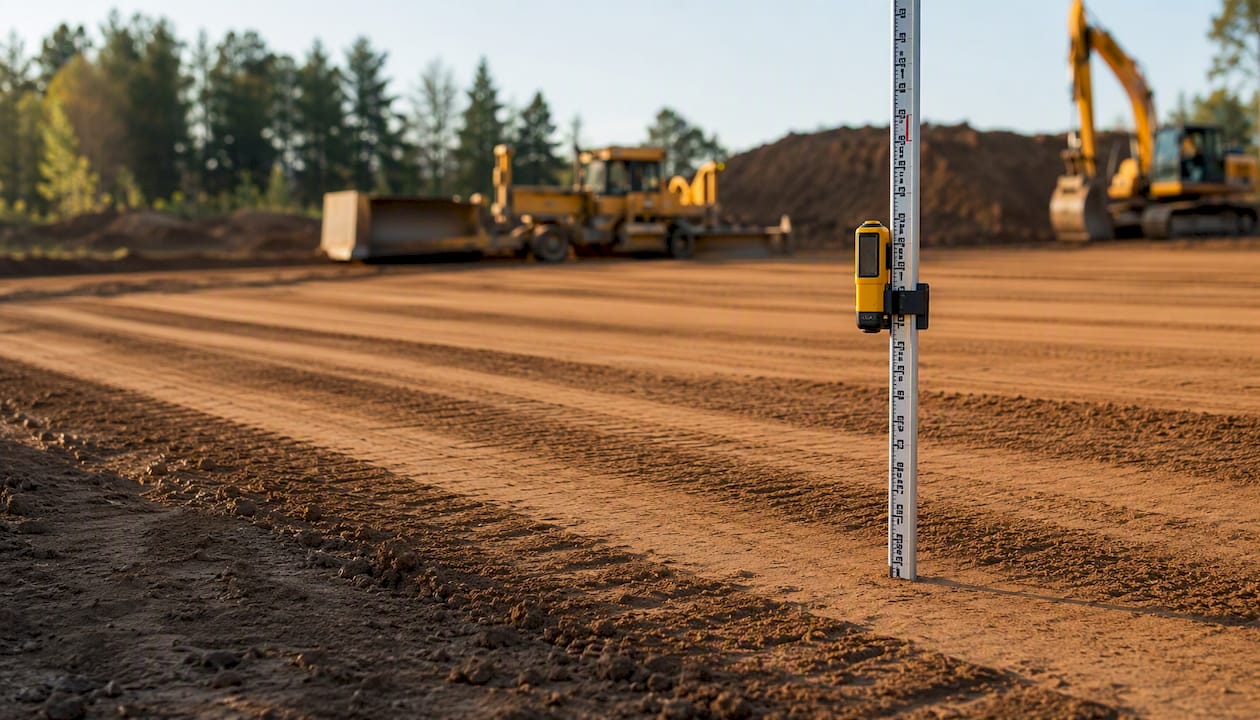
- Laser level and grade rod: reliable for small to medium sites; requires a calibrated rotating laser and a skilled operator reading the rod
- GPS machine control: integrates a digital terrain model directly into the machine’s blade control; standard for large grading contracts and agricultural leveling
- String line and sight level: adequate for residential lawn leveling and small pads; low cost but operator-dependent
Compaction testing is a separate but related step. Before placing structural fill, concrete, or pavement, a compaction test (typically a Proctor or nuclear density gauge test) confirms the sub-grade meets specification. Skipping this step is a leading cause of future settlement.
Pro Tip: Always ask your contractor whether equipment has been calibrated within the current season. A laser receiver that has drifted out of calibration can introduce errors of 10 mm or more across a large site, which is enough to reverse a drainage slope.
For a broader look at earthmoving equipment roles in Canadian construction, the equipment selection principles apply directly to grading and leveling project planning.
Why grading matters more in freeze-thaw climates
Alberta’s climate makes grading a longevity issue, not just a construction formality. Edmonton and the surrounding region experience significant freeze-thaw cycling through late autumn and early spring, and clay-heavy soils amplify the effect. Water that infiltrates poorly graded ground freezes, expands, and shifts the soil surface. Over several seasons, this produces settlement, drainage reversal, and in severe cases, foundation movement.
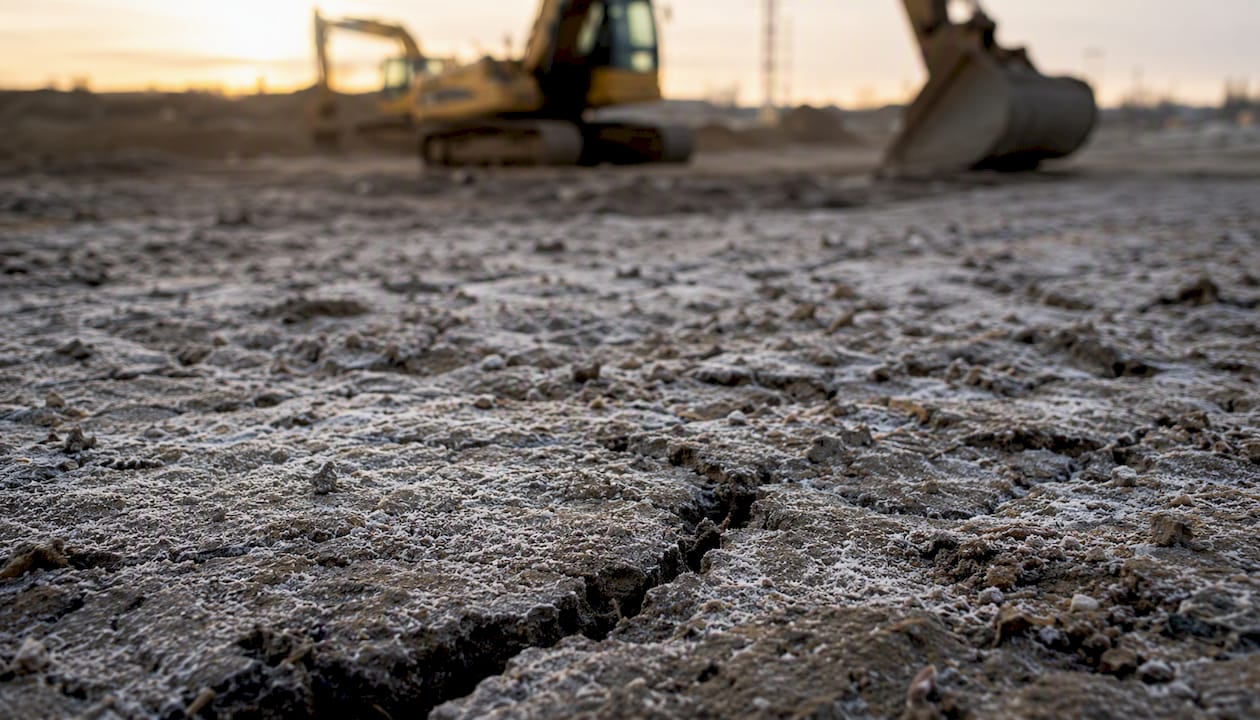
Positive drainage away from foundations is the single most effective long-term control. A gentle minimum slope away from the building perimeter is standard practice in Alberta residential construction to ensure positive drainage. Anything less, and frost-driven soil movement can redirect surface water toward the structure within a few years.
Regional best practices for Alberta sites:
- Strip and stockpile topsoil before rough grading; replace it after fine grading is complete to preserve organic matter and drainage behaviour
- Complete final grading before freeze-up to allow the surface to settle and compact naturally over winter
- Specify compaction testing on all structural fill areas, particularly in clay soil zones
- Use drainage aggregates at foundation perimeters to supplement graded surface drainage
Pro Tip: In Alberta, schedule final grading no later than mid-October. Grading frozen or partially frozen ground produces inconsistent compaction and surface irregularities that become visible the following spring.
For a detailed look at construction safety and soil management standards relevant to Alberta projects, the regional guidance on freeze-thaw precautions is directly applicable to grading scope decisions.
What quality grading and leveling actually look like on site
The most common client errors in grading and leveling projects are not technical; they are scoping errors. Over-leveling a site that actually needs grading creates artificial flat areas that trap water. Disposing of topsoil rather than stockpiling it adds cost and degrades the finished surface. Skipping compaction tests on fill areas saves a few hundred dollars and risks thousands in remediation later.
Quality workmanship is verifiable. Before accepting a grading or leveling job as complete, check for:
- Grade stakes or batter boards still in place or documented in a survey report confirming final elevations were achieved
- Measured tolerances recorded by the contractor or a third-party inspector, not estimated by eye
- Calibrated equipment used throughout, with laser or GPS control logs available on request for larger projects
- Topsoil replaced to a consistent depth across the finished area, not patchy or mixed with subsoil
- Drainage tested by observation after a rain event or by water testing with a hose before final sign-off
A contractor who cannot answer questions about grade stakes, compaction results, or equipment calibration is not operating to a professional standard. Alberta Safety Codes and site-specific grading plans exist precisely to make these outcomes verifiable, not optional.
ProZone handles grading and leveling for Alberta projects
ProZone provides site preparation, engineered grading, and earthworks services for commercial, municipal, and residential clients across Edmonton and the surrounding region. Whether your project needs a graded road base, a leveled building pad, or a complete site preparation sequence from excavation through finished grade, ProZone’s certified operators work to Alberta Safety Codes and documented tolerances.
For municipal and commercial projects requiring engineered grading and road construction, ProZone’s road construction services cover the full scope from sub-grade preparation to finished surface. Residential and commercial property owners can request a free estimate through the online form at Prozoneltd or by calling ProZone directly. Bring your site plan or a description of the drainage issue, and ProZone’s team will scope the work and confirm whether grading, leveling, or a combination is the right approach for your site.
Sources
- Grading and Leveling: Key Differences and When Your Land Needs Each
- Differences between land grading and land leveling
- Land Leveling vs. Land Grading: Understanding the Difference
- Land Grading vs Excavation: What’s the Difference?
FAQ
Is leveling a yard worth it?
Yes, for most residential properties with drainage problems or uneven turf. Leveling corrects low spots that cause pooling, improves mowing consistency, and can redirect minor surface drainage, though it does not replace proper grading where water needs to move away from a foundation.
Is grading land difficult?
Grading to a specified slope requires calibrated equipment and a skilled operator; it is not a practical DIY task for anything beyond a small lawn area.
What is grading in soil?
In construction and landscaping practice, grading shapes the soil surface to a specified contour or slope to control drainage, prepare a sub-grade for pavement or concrete, or stabilise a slope. It works primarily within the topsoil and shallow subsoil layers, distinct from excavation which reaches greater depths.
Is grading the same as excavating?
No. Excavation removes soil to create voids for footings, utilities, and underground structures, while grading redistributes material to refine the finished surface and direct water away from structures. On most construction sites, excavation happens first, followed by rough grading, then fine grading and leveling.
When should you hire a professional for grading or leveling?
For leveling, professional involvement is strongly advised for building pads, sports fields, and agricultural fields where tight tolerances and compaction testing are part of the specification.