
TL;DR:
- Sustainable landscaping in Edmonton prioritizes regional climate adaptation, native plants, and resource-efficient design. It emphasizes site-specific planning, soil health, water conservation, and microclimate comfort to create resilient outdoor spaces. Proper assessment and tailored plant choices reduce maintenance costs and enhance ecological value.
Sustainable landscaping is the practice of designing outdoor spaces that prioritise ecological health, resource efficiency, and regional adaptability. For Edmonton homeowners and property managers, this definition carries real weight. Edmonton’s freeze-thaw cycles, short growing seasons, and periodic drought conditions make generic landscaping advice unreliable. This sustainable landscaping guide 2026 addresses those regional realities directly, covering native plant selection, water-efficient irrigation, soil health, and experiential yard design. Traditional lawn area is shrinking at 25% year-over-year as homeowners replace grass with native groundcovers and clover blends. That shift reflects a broader move toward yards that perform ecologically and feel genuinely restorative.
What is the sustainable landscaping guide 2026 approach for Edmonton?
Sustainable landscaping in Edmonton means working with the local climate rather than against it. Alberta’s continental climate delivers temperature swings of 40°C or more between seasons, and freeze-thaw cycles can heave poorly prepared soil and damage shallow-rooted plantings within a single winter. The 2026 landscape design trends emerging across Alberta reflect this reality: property owners are prioritising resilience, low maintenance, and ecological function over ornamental complexity.
The core principle is site-specific design. Every sustainable plan begins with an honest assessment of soil type, sun exposure, drainage patterns, and prevailing wind. Skipping this step is the most common reason Edmonton yards underperform despite significant investment.
How do native plants improve sustainability and reduce maintenance?
Native plants are the foundation of any credible eco-friendly gardening approach in Edmonton. Local ecotype native plants support pollinators substantially better than generic wildflowers and require less water and fewer soil amendments. That distinction matters: a native plant sourced from Alberta seed stock is genetically adapted to Edmonton’s frost dates, soil pH, and precipitation patterns. A generic wildflower mix sold nationally may look similar but delivers far less ecological value.
Property owners reported a 23% increase in native planting requests in early 2026. This trend reflects growing awareness that native plants reduce long-term maintenance costs while supporting local biodiversity. The University of Florida’s Florida-Friendly Landscaping™ programme popularised the “right plant, right place” principle, and Edmonton practitioners apply the same logic: match plant selection to existing soil, light, and moisture conditions rather than forcing plants into unsuitable sites.
Common Edmonton-region native plants suited to sustainable landscaping:
- Wild bergamot (Monarda fistulosa): drought-tolerant, attracts native bees
- Prairie crocus (Pulsatilla patens): early spring bloom, thrives in well-drained soils
- Blue wild rye (Elymus glaucus): low-maintenance grass for erosion control
- Saskatoon berry (Amelanchier alnifolia): edible, wildlife-supporting shrub
- Blanket flower (Gaillardia aristata): heat and drought tolerant, long bloom period
- Trembling aspen (Populus tremuloides): fast-growing native tree for privacy and shade
Layered planting using climbing vines, evergreens, and conifers creates lush, low-maintenance gardens suited to 2026 trends. Layering also provides year-round structure, which is particularly valuable in Edmonton where bare winters can make a yard feel exposed and uninviting.
Pro Tip: Layer your plantings vertically: groundcovers at the base, mid-height native perennials in the middle, and evergreen shrubs or conifers at the back. This structure reduces weeding, retains soil moisture, and provides habitat for beneficial insects through all four seasons.
What irrigation and soil practices save the most water?
Water management is the single most impactful variable in sustainable garden planning for Edmonton properties. Drip irrigation reduces outdoor water consumption by 50%–90% compared to conventional spray sprinkler systems. That range is wide because results depend on plant selection, soil type, and system calibration, but even the lower end represents a substantial reduction in municipal water use.
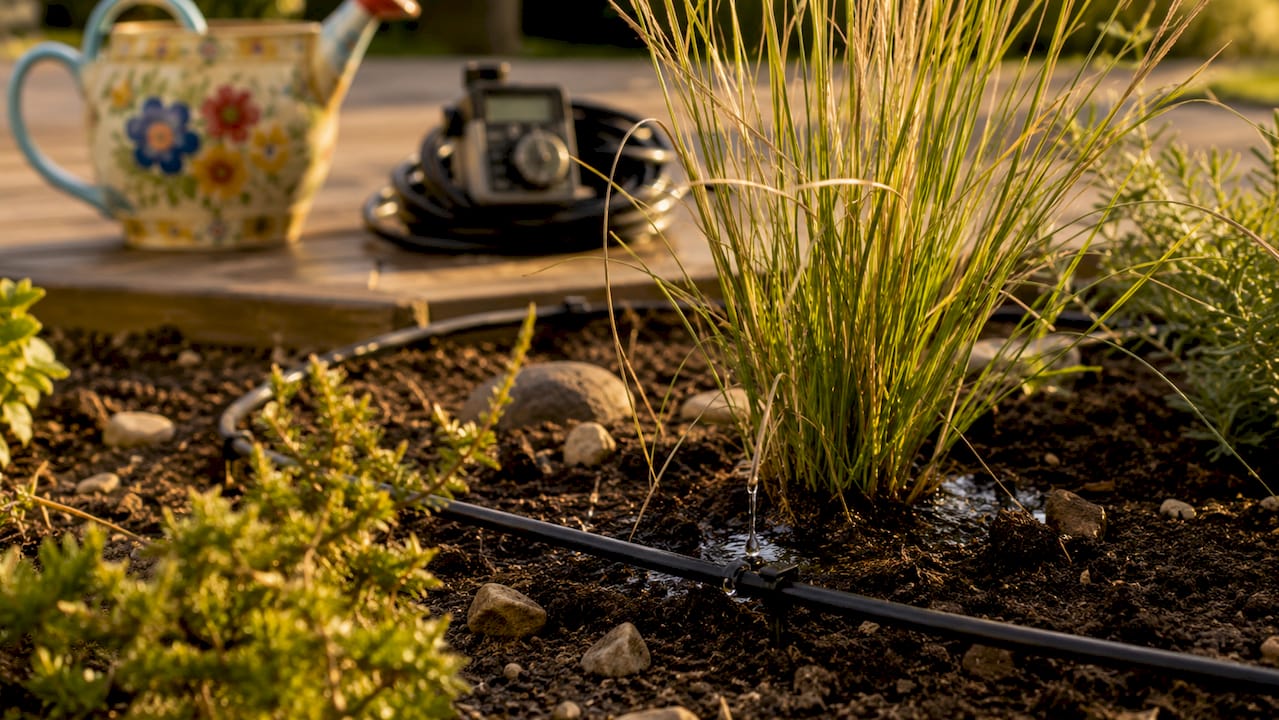
Deep, infrequent watering encourages deep root growth, which builds drought tolerance and reduces irrigation dependency over time. Many homeowners overestimate the value of irrigation gadgets. Changing the watering habit itself, from frequent shallow watering to deep weekly cycles, delivers more lasting resilience than any timer or sensor alone.
| Irrigation method | Water use vs. spray | Best application | Edmonton suitability |
|---|---|---|---|
| Drip irrigation | 50%–90% less | Beds, shrubs, trees | Excellent |
| Soaker hose | 30%–50% less | Row plantings, hedges | Good |
| Spray sprinkler | Baseline | Lawns, large open areas | Poor for drought resilience |
| Hydrozoning layout | Varies by zone | Mixed plant types | Excellent |
Hydrozoning groups plants with similar water needs into the same irrigation zone. This prevents overwatering drought-tolerant natives while underwatering thirstier species. It also simplifies seasonal adjustments when Edmonton transitions from wet spring conditions to dry mid-summer.
Soil health practices reinforce irrigation efficiency. Grasscycling returns clippings to the lawn, reducing the need for synthetic fertilisers and conserving soil moisture naturally. Composting and organic mulch applied at 5–8 centimetres depth suppress weeds, regulate soil temperature, and slow evaporation. In Edmonton, mulch also buffers soil against freeze-thaw heaving, protecting root systems through the shoulder seasons of october and april.
Natural stone in sustainable design offers an additional soil management benefit: permeable stone surfaces allow rainfall to infiltrate rather than run off, reducing erosion and recharging groundwater. This is especially relevant for Edmonton properties with clay-heavy soils that shed water quickly.
Pro Tip: Set irrigation timers to run between 4:00 a.m. and 6:00 a.m. Watering at night risks fungal disease; early morning watering reduces evaporation by up to 30% compared to midday cycles and gives foliage time to dry before evening.
How do you design for microclimate comfort and experiential outdoor living?
The 2026 trend in environmentally conscious landscaping is a shift from feature-driven yards to experiential ones. Sustainable yard design now prioritises how outdoor spaces feel, focusing on microclimates and emotional connection over ornamental features. For Edmonton property owners, this means designing for thermal comfort across a short but intense outdoor season.
Privacy and microclimate design requests rose by 10%–13% year-over-year, reflecting the importance of cooling and shade features in outdoor living spaces. Privacy has become a luxury amenity, not just a fence decision. Tall native shrubs, gravel gardens with organic geometry, and layered tree canopies now serve the same function that walls and fences once did, while contributing to biodiversity and reducing heat island effects.
| Design approach | Traditional landscaping | Experiential landscaping |
|---|---|---|
| Primary goal | Aesthetic appearance | Comfort and ecological function |
| Plant selection | Ornamental, often non-native | Native, climate-adapted |
| Hardscape | Impermeable concrete or paving | Permeable gravel, natural stone |
| Maintenance demand | High (mowing, spraying, pruning) | Low (mulching, seasonal cutting) |
| Microclimate management | Incidental | Deliberate (shade, wind, cooling) |
| Biodiversity value | Low | High |
Practical microclimate design for Edmonton considers sun angles, prevailing northwest winds, and the urban heat island effect in denser neighbourhoods. Placing deciduous trees on the south and west sides of a property provides summer shade while allowing winter sun to reach the house. Gravel mulch in exposed areas reduces dust, reflects heat, and drains freely through freeze-thaw cycles without heaving. Wellness features such as outdoor seating areas, fire pits, and pollinator gardens extend the usable season and increase perceived property value.
For commercial landscaping projects, microclimate design also addresses regulatory compliance. Alberta Safety Codes govern grading, drainage, and site preparation, and a well-designed sustainable landscape must meet these standards to avoid costly remediation.
Step-by-step sustainable landscaping planning for Edmonton properties
A structured workflow prevents the most common and expensive mistakes in green yard transformation projects.
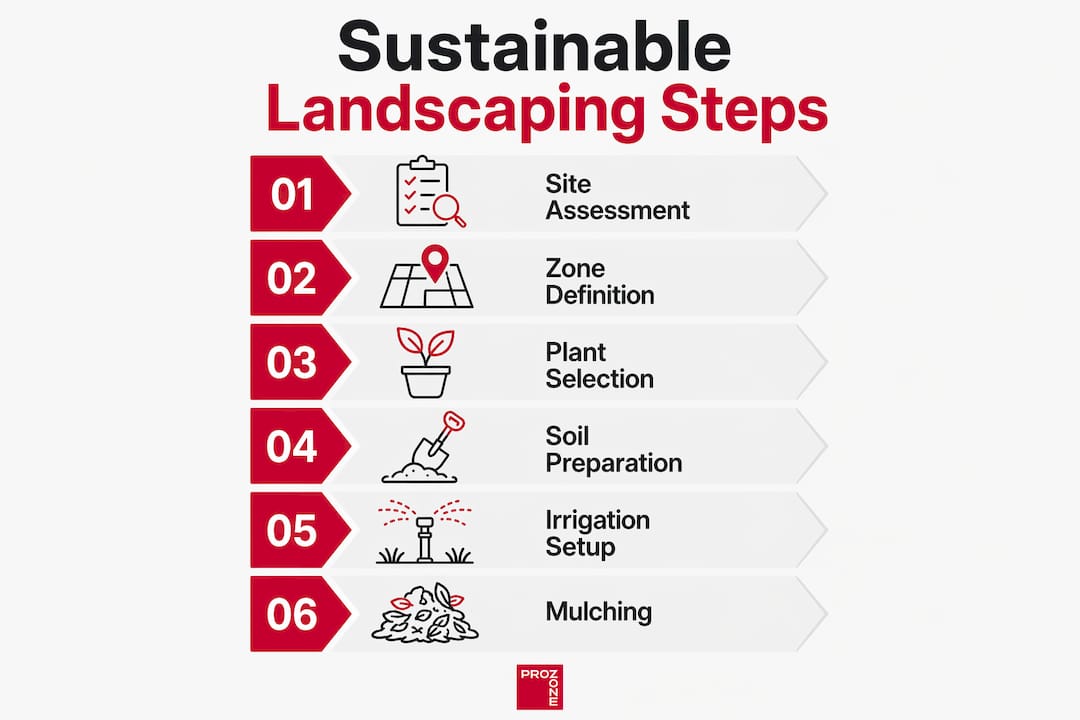
1. Site assessment
Walk the property and document soil texture, drainage patterns, sun exposure by hour, and wind direction. Note existing trees, utility lines, and any grade changes that affect water flow.
2. Define zones by water need
Group areas into high, moderate, and low water zones based on your site assessment. This forms the basis of your hydrozoning plan.
3. Select plants by ecotype and function
Choose native or locally adapted species matched to each zone’s conditions. Prioritise plants that serve multiple functions: erosion control, pollinator support, privacy, or seasonal colour.
4. Prepare soil before planting
Amend with compost to a depth of 20–30 centimetres in planting beds. Test soil pH; Edmonton soils often trend alkaline, which affects nutrient availability for some species.
5. Install irrigation before planting
Lay drip lines or soaker hoses before placing plants. Retrofitting irrigation after planting damages roots and increases labour costs significantly.
6. Mulch immediately after planting
Apply 5–8 centimetres of organic mulch to all planting beds. Keep mulch 10 centimetres clear of plant stems to prevent rot.
7. Establish a maintenance schedule
Plan for seasonal tasks: spring soil inspection, summer deep watering, fall mulch refresh, and winter protection for any marginally hardy species.
Checklist of tools and materials:
- Soil test kit or professional soil analysis
- Compost and organic mulch (bark, wood chip, or straw)
- Drip irrigation kit with timer
- Landscaping edging for bed definition and weed suppression
- Pea gravel or washed rock for permeable pathways and mulch zones
- Hand trowel, garden fork, and hose with adjustable nozzle
Pro Tip: Inspect your irrigation system and soil moisture levels at the start of each freeze-thaw transition, typically in late march and again in october. Soil that has heaved or compacted over winter needs aeration before the growing season begins. Adjust watering schedules by at least 20% as temperatures shift.
For a detailed breakdown of landscaping material installation suited to Alberta’s climate, Prozoneltd publishes region-specific guidance covering material selection, grading, and drainage requirements.
ProZone’s perspective on sustainable landscaping in Edmonton
The most consistent mistake I see on Edmonton properties is treating sustainable landscaping as a product purchase rather than a design discipline. Homeowners invest in drip timers, native seed mixes, and decorative gravel, then install them without a site assessment. The result is a yard that looks sustainable but performs poorly because the plant selection ignores microclimate, the irrigation zones ignore soil variation, and the gravel paths shed water onto neighbouring properties.
Edmonton’s freeze-thaw cycles are unforgiving. A plant that survives a mild winter in zone 3b can be killed by a late frost in april following an early warm spell. Soil that drains well in summer can become a frost lens in winter if grading is not managed correctly. These are not theoretical risks. They show up in project remediation calls every spring.
The shift toward experiential yards is genuinely positive. Homeowners who prioritise how their outdoor space feels, rather than how it looks in a catalogue, tend to make better long-term decisions. They choose plants for habitat value, not just colour. They invest in shade and wind management, not just furniture. That mindset produces yards that are more resilient, less expensive to maintain, and more ecologically valuable.
The practical advice I give consistently: start with soil, not plants. A soil test costs less than a single replacement shrub. Understanding your site’s drainage and pH before you spend a dollar on plants will save you more money and frustration than any other single step in the process.
— ProZone
Prozoneltd supports Edmonton property owners with certified landscaping services
Prozoneltd delivers professional construction and landscaping services for Edmonton homeowners and property managers who need work done to Alberta Safety Codes standards. ProZone’s team manages site preparation, grading, drainage, material supply, and installation with the regional knowledge that Edmonton’s climate demands. Every project uses premium materials selected for freeze-thaw durability, not lowest cost. Whether you are planning a full green yard transformation or upgrading irrigation and drainage on an existing property, ProZone provides a free estimate and a clear project scope. Contact ProZone directly through the online form at prozoneltd.ca or call to speak with a project manager about your 2026 landscaping plans.
FAQ
What is sustainable landscaping?
Sustainable landscaping is the design and maintenance of outdoor spaces that prioritise ecological health, water efficiency, and regional plant adaptation. It reduces resource consumption while supporting local biodiversity and soil health.
Which native plants work best for Edmonton landscaping?
Wild bergamot, prairie crocus, Saskatoon berry, and trembling aspen are well-suited to Edmonton’s climate. These species tolerate freeze-thaw cycles, require minimal irrigation once established, and support native pollinators.
How much water does drip irrigation save compared to sprinklers?
Drip irrigation reduces outdoor water consumption by 50%–90% compared to conventional spray sprinkler systems. The actual saving depends on soil type, plant selection, and system calibration.
What is hydrozoning and why does it matter?
Hydrozoning groups plants with similar water needs into the same irrigation zone. This prevents overwatering drought-tolerant species and underwatering thirstier ones, reducing total water use and plant stress.
How does freeze-thaw affect sustainable landscaping in Edmonton?
Freeze-thaw cycles can heave soil, damage shallow roots, and disrupt drainage patterns. Sustainable designs address this through deep soil preparation, permeable surfaces, correct grading, and plant species rated for Alberta hardiness zones.