
TL;DR:
- Poor drainage damages landscaping by suffocating roots, causing erosion, and weakening structures. Proper assessment and integrated systems like French drains and rain gardens effectively improve soil health and property resilience. Addressing drainage proactively saves costs, enhances outdoor usability, and protects fundamental structural elements.
Most homeowners put real effort into watering schedules and fertilizer programs, then watch their plants struggle anyway. The role of drainage in landscaping is the missing variable they rarely consider. Poor drainage quietly undermines everything else you do for your yard. It rots roots, compacts soil, erodes beds, and turns beautiful outdoor spaces into soggy, unusable patches. This article breaks down why drainage matters more than most people realize, what problems to look for, and which drainage systems for landscaping actually work in residential settings.
Table of Contents
- The role of drainage in landscaping and soil health
- Common drainage problems homeowners face
- Landscape drainage solutions that actually work
- How to assess and improve drainage on your property
- My perspective: drainage is where landscaping either succeeds or fails
- Professional drainage solutions for Edmonton homeowners
- FAQ
The role of drainage in landscaping and soil health
Healthy roots need two things from soil: water and oxygen. Those two requirements are in direct competition when drainage fails. When water fills the air pockets between soil particles and has nowhere to go, roots begin to suffocate. Within days, even healthy, well-established plants can start declining.
How waterlogged soil attacks roots
Poor drainage causes root suffocation and creates ideal conditions for fungal pathogens like Pythium and Phytophthora to multiply. These organisms thrive in oxygen-depleted, saturated soil and attack plant root systems rapidly. By the time you see symptoms above ground, the root damage is often already severe.
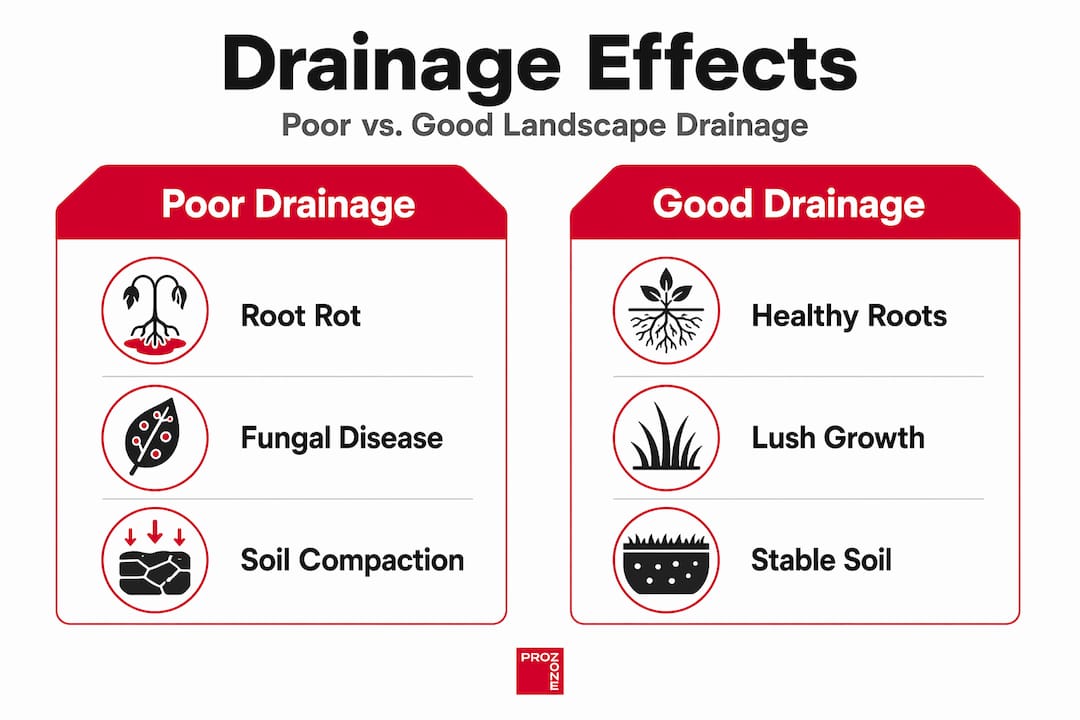
The frustrating part is that symptoms of drainage-related root damage look almost identical to drought stress. You will see yellowing leaves, wilting during warm afternoons, and stunted growth. Many homeowners mistakenly blame fertilizers or pests for poor plant health when drainage is the actual problem. They add more fertilizer, which makes things worse, or increase watering, which accelerates root rot.
Compaction and nutrient loss
Soil compaction compounds drainage problems in ways that are easy to overlook. Dense, compact soil layers hold water against roots, inhibit oxygen movement, and flush nitrogen and other soluble nutrients out of the root zone during heavy rainfall. You end up with a situation where the soil holds too much water but delivers fewer nutrients, the opposite of what plants need.
This is particularly common in Edmonton and surrounding Alberta communities where heavy clay soils are widespread. Clay particles are tiny and pack tightly together, leaving minimal pore space for drainage. After freeze and thaw cycles, these soils can become even more compacted, making drainage design for outdoor spaces a critical step in any landscaping project.
Here are the most common signs that drainage is affecting your soil and plants:
- Yellowing leaves and wilting despite regular watering
- Moss or algae growing on soil surfaces where grass thins out
- Mushrooms appearing repeatedly in the same spots after rain
- Soil that stays wet to the touch three or more days after rainfall
- Plant growth that is noticeably slower on one side of a bed than the other
Pro Tip: Dig a hole about 12 inches deep and fill it with water. If it drains completely within an hour, your soil drainage is acceptable. If water is still sitting after four hours, you have a drainage problem that will affect plant health over time.
Correcting drainage at the soil level, through amendments like compost, coarse sand, or perlite mixed into clay, can dramatically improve oxygen availability to roots and reduce the foothold that water-borne pathogens gain in your beds.
Common drainage problems homeowners face
Understanding the specific ways that poor drainage shows up in residential landscapes helps you connect the problem to the solution. These issues range from mildly inconvenient to genuinely costly, and many homeowners don’t realize how interconnected they are.
Surface water pooling and lawn damage. After heavy rain, water should move away from planted areas and structures within a few hours. When it pools and sits, the lawn beneath it suffocates, creating dead patches that are slow to recover. Repeated flooding in the same spots signals either grading problems or soil permeability issues, and often both.
Erosion and soil displacement. Without drainage systems for landscaping that channel water appropriately, runoff travels across your property at speed, carrying topsoil with it. You lose the nutrient-rich upper layer that supports plant growth, and the displaced soil can clog lower garden beds, cover grass, and create uneven surfaces throughout the yard.
Damage to hardscaping. Water that accumulates on or beneath patios, driveways, and walkways accelerates deterioration. It works into cracks, freezes in winter, and expands those cracks season after season. Drainage prevents foundation cracks and moisture intrusion by redirecting surface and subsurface water before it reaches structural elements. For Edmonton homeowners dealing with Alberta winters, this is especially relevant because freeze-thaw cycles intensify the damage water does to paved surfaces.
Foundation risks. Prolonged water contact damages basement walls, causing cracks and moisture intrusion that can cost thousands to repair. Foundation specialists frequently recommend yard drainage improvements as a financial safeguard precisely because water accumulation near the home structure is among the most expensive problems a homeowner can face.
Reduced usability and curb appeal. Soggy lawns can’t be used for outdoor activities for days after rain. Wet, muddy pathways frustrate daily use of the yard. Persistent moisture also encourages weed species that tolerate wet soil, gradually displacing the plants you actually want. The impact of poor drainage on outdoor space usability is real, and it compounds over multiple seasons if left unaddressed.
Landscape drainage solutions that actually work
The good news is that drainage problems are solvable. Several proven drainage systems for landscaping address both surface and subsurface water, and the right choice depends on your property’s specific conditions and budget.
| Drainage System | Best For | Approx. Cost Range | Key Benefit |
|---|---|---|---|
| French drain | Subsurface groundwater and soggy beds | $1,000 to $5,000+ | Redirects water away from roots and foundations |
| Channel (trench) drain | Surface runoff on driveways and patios | $400 to $2,400 | Handles sheet flow efficiently from paved areas |
| Catch basin | Low spots collecting surface runoff | $500 to $3,000 | Collects and directs water underground |
| Rain garden | Stormwater capture and ecology | $500 to $3,500 | Filters pollutants, supports wildlife, reduces flooding |
| Raised beds with amended soil | Poor-draining areas for planting | $200 to $1,500 | Elevates roots above saturated ground |
French drains
French drains use gravel-filled trenches with perforated pipes to redirect subsurface groundwater away from problem areas. They work best for chronic wet spots in lawns and planting beds, and for diverting water away from foundations. One technical detail worth knowing: piped drainage requires a minimum slope of approximately 1:40 to maintain proper water flow toward a designated outlet or soakaway. Without adequate slope, water stalls in the pipe and drainage effectiveness drops significantly.
Channel drains
Channel drains sit flush with surfaces and collect sheet flow runoff from driveways, patios, and paved walkways. They are particularly effective for preventing driveway flooding during heavy rains. You can find information on channel drains in hardscape projects that ties drainage directly into paving design, which is the right approach for any serious landscaping project that includes paved surfaces.
Catch basins
Catch basins are grated inlets installed at low points in the yard that collect surface runoff and direct it into an underground pipe system. They are highly effective at preventing pooling in specific problem spots without requiring major regrading.
Rain gardens
Rain gardens deserve more attention than they typically receive. Rain gardens capture about 30% more stormwater runoff than standard grass lawns, and they filter pollutants from runoff, support pollinators, and reduce flooding at the same time. A rain garden is essentially a shallow depression planted with deep-rooted native plants that absorb and filter stormwater before it can run off or pool. For homeowners looking for landscape drainage solutions that also add visual appeal, rain gardens are among the best options available. The Prozoneltd blog covers stormwater management in Alberta in detail if you want to understand the broader context.
Pro Tip: Combining multiple drainage systems provides the most reliable protection. Designing combined systems using French drains, catch basins, and channel drains creates a layered defense against both surface and subsurface water problems, and reduces the risk that one extreme weather event overwhelms a single drainage method.
How to assess and improve drainage on your property
You don’t need professional equipment to get a useful picture of your drainage situation. A few simple tests and some careful observation during and after rain will tell you a great deal about where your property’s drainage design for outdoor spaces needs work.
-
Run the percolation test. Dig a hole roughly 12 inches wide and 12 inches deep in the area you want to assess. Fill it with water and time how long it takes to drain completely. Well-draining soil empties within one to two hours. Poorly draining soil holds water for four or more hours.
-
Walk your yard after heavy rain. Note every spot where water pools and stays. Mark them on a sketch of your property layout. Spots that remain wet 24 hours after rain need attention. Spots that are still wet 48 hours later indicate a serious drainage deficit.
-
Check seasonal behavior. Spring snowmelt in Alberta puts an enormous volume of water on the ground quickly. Watch where that water flows and accumulates. Winter drainage behavior often reveals problems that aren’t visible during summer’s drier periods.
-
Match the solution to the problem type. Surface pooling calls for regrading, catch basins, or rain gardens. Subsurface saturation requires French drains. Runoff from paved surfaces calls for channel drains. Choosing the wrong system for the problem wastes money and time.
-
Plan installation timing wisely. The optimal drainage installation window is late summer to early winter when soil is drier, excavation is easier, and there is less disruption to established plantings. In Alberta, this typically means aiming for August through October before the ground freezes.
-
Maintain systems regularly. Clear debris from catch basin grates twice per year at minimum. Flush channel drains with a garden hose after heavy leaf fall. Check French drain outlets for blockages in spring after snowmelt. For more complex blockages, professional storm drainage repair may be needed when roots or debris infiltrate underground pipe systems.
Pro Tip: If your yard has both clay-heavy soil and areas with surface ponding, tackle soil amendment and surface grading together rather than separately. Fixing grading without improving soil permeability often just moves the water problem to a different part of the yard.
Routine maintenance keeps drainage systems functioning for ten to twenty years in most residential settings. Neglect, on the other hand, can allow sediment buildup or root intrusion to disable a system within three to five years. The best drainage practices in landscaping combine smart initial design with consistent upkeep.
My perspective: drainage is where landscaping either succeeds or fails
I’ve worked with homeowners and landscape teams across many projects, and the pattern is consistent: the yards that look genuinely healthy year after year are the ones where drainage was addressed deliberately from the start. The ones that struggle, where plants keep dying in the same spots or lawns stay patchy no matter how much seed goes down, almost always have an unresolved drainage problem underneath the surface.
What I’ve found is that homeowners rarely think about drainage until something dramatic happens, like a flooded basement or a dead hedge that cost them several hundred dollars. By that point, they’ve already lost money, time, and plant material that a well-designed drainage system would have protected.
The other thing I want to be direct about is the financial case. Good drainage is not just a plant health measure. It is property protection. Water that accumulates against foundation walls, under patios, or in low spots near the home does structural damage at a pace that’s invisible until it’s expensive. Investing in drainage is almost always cheaper than repairing what water does when it’s left unmanaged.
I also think rain gardens are significantly underused by homeowners in Alberta. They are genuinely effective, they look good, they support local wildlife, and they work with the natural behavior of water rather than trying to redirect it entirely. Any landscape construction plan should at minimum evaluate whether a rain garden makes sense for the property. For reference, the team at Prozoneltd covers integrated drainage in landscape construction for Edmonton properties, which is worth reading if you’re planning a significant project.
Drainage is not the most glamorous part of landscaping. But it is the part that determines whether everything else works.
— CSolution
Professional drainage solutions for Edmonton homeowners
If you’ve identified drainage problems on your property or are planning a landscaping project from scratch, working with professionals who understand both the technical and aesthetic dimensions of drainage design makes a significant difference. Prozoneltd provides construction and landscaping services across Edmonton and the surrounding Alberta region, including earthworks, grading, and the installation of drainage systems tailored to residential and commercial properties.
Whether you need a French drain installed to protect planting beds, a channel drain system for a driveway, or guidance on integrating a rain garden into an existing landscape, Prozoneltd brings the equipment and expertise to do it correctly. Proper grading and drainage installation require precision, and getting it right the first time avoids the cost of rework later. For those comparing material and installation costs, resources on paving and drainage costs can help you budget accurately before committing to a project.
Reach out to Prozoneltd directly to discuss your property’s drainage challenges and get a professional assessment of the best solutions for your site.
FAQ
What is the main role of drainage in landscaping?
Drainage removes excess water from soil and surface areas, protecting plant roots from suffocation and fungal disease, preventing erosion, and preserving the structural integrity of hardscaping and foundations.
How does poor drainage affect plant health?
Poor drainage saturates soil, displaces oxygen from root zones, and creates conditions where pathogens like Pythium and Phytophthora thrive, leading to root rot, wilting, and plant death even when watering and fertilizing appear adequate.
What drainage system works best for residential yards?
The best system depends on the specific problem. French drains address subsurface saturation, channel drains handle surface runoff from paved areas, catch basins collect pooling water at low points, and rain gardens manage stormwater naturally while adding ecological value.
When is the best time to install drainage systems?
Late summer to early winter is the optimal window for drainage installation because soil is drier and easier to excavate, and there is minimal disruption to active growing seasons.
Can rain gardens replace traditional drainage systems?
Rain gardens complement traditional drainage but rarely replace it entirely. They are most effective when combined with grading corrections and, where needed, piped drainage systems that manage subsurface water.