
TL;DR:
- Winter maintenance in Alberta involves proactive snow removal, surface treatment, and hazard inspection to ensure safety during freeze-thaw cycles. Proper planning, real-time weather monitoring, and documentation are essential to minimize liability, protect infrastructure, and optimize treatment costs significantly. Emphasizing anti-icing strategies over reactive de-icing reduces chemical damage and extends pavement lifespan while maintaining compliance with legal standards.
Winter maintenance is the operational discipline that combines timely snow removal, surface treatment, and risk management to keep properties safe and functional during Alberta’s freeze-thaw seasons. For property managers, facility managers, and homeowners across Edmonton and Calgary, this is not a seasonal inconvenience to manage reactively. It is a structured programme of activities with direct consequences for safety, legal liability, and the long-term durability of paved surfaces and structures. Understanding the full scope of winter upkeep is the foundation of sound property management in this region.
What is the role of winter maintenance in Alberta property management?
Winter maintenance is defined in professional practice as an ongoing operational function integrating snow plowing, ice control, surface treatment, and hazard inspection across a property’s full season. The American Public Works Association frames winter maintenance as an operational discipline requiring coordinated strategy, preparation, and response. That framing applies directly to facility managers in Edmonton and Calgary, where Chinook weather events can shift surface temperatures by 20°C within hours, creating black ice conditions with almost no warning.
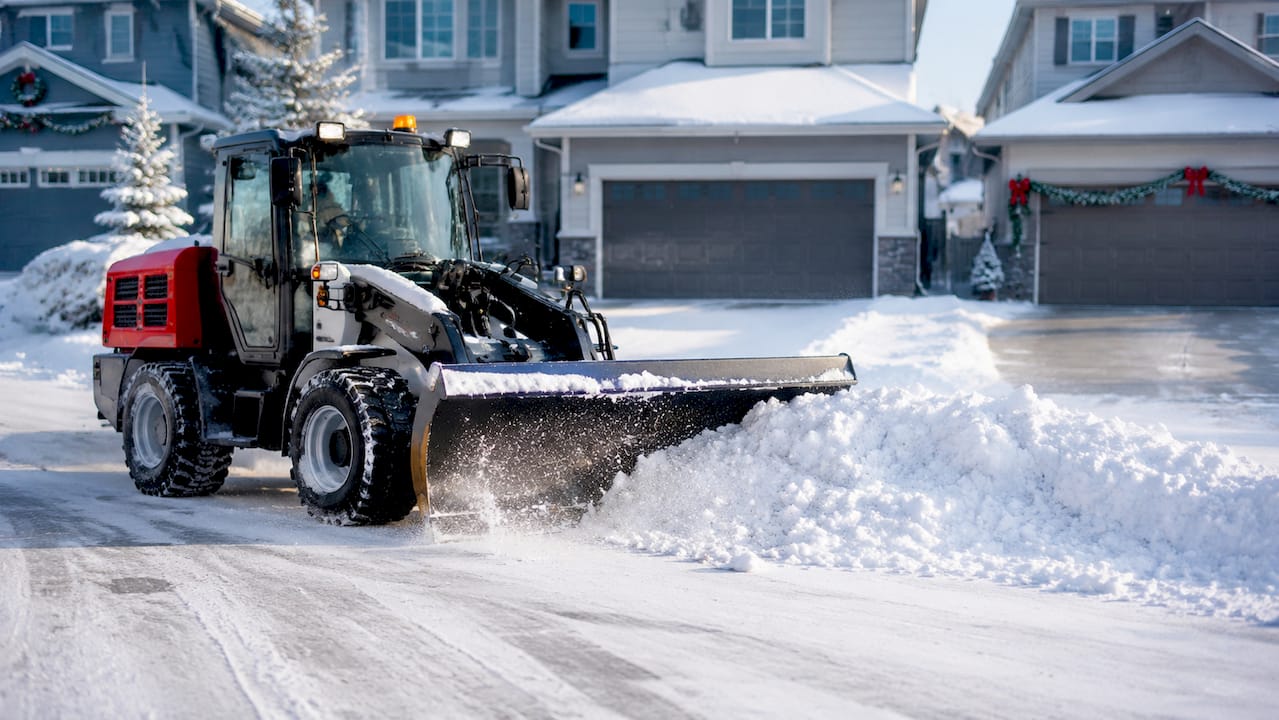
Alberta’s freeze-thaw cycle is the defining challenge. A surface that is clear at noon can be a sheet of ice by 3 p.m. after melt water refreezes in shade or overnight. Proactive winter maintenance services address this by scheduling inspections and treatments around weather forecasts rather than waiting for complaints or incidents. The importance of winter upkeep, in this context, extends well beyond aesthetics. It directly determines whether a property meets its legal duty of care and whether its concrete and asphalt surfaces survive multiple seasons without costly structural repair.
What winter maintenance services are essential for Alberta properties?
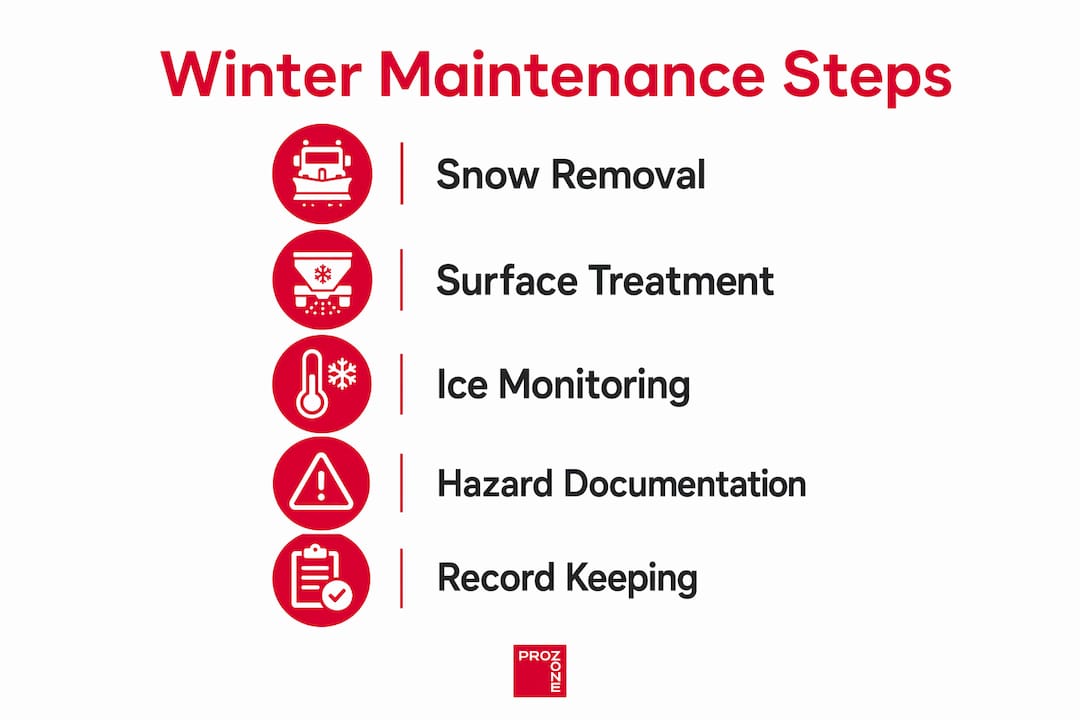
The core services that define a complete winter maintenance programme fall into three categories: snow removal, surface treatment, and inspection. Each category carries distinct timing requirements and shared responsibilities between municipalities and private owners.
Snow removal priorities in Calgary follow a structured hierarchy. The City of Calgary prioritises major roadways, cycling infrastructure, bus routes, and high-traffic sidewalks. Residential streets and lower-priority pathways follow in subsequent phases. Property owners must understand where municipal responsibility ends and their own begins.
Sidewalk clearance is a shared obligation. The City of Calgary clears major sidewalks on key routes, but adjacent property owners must clear sidewalks bordering their land within 24 hours after snowfall ends. Failure to comply with this bylaw exposes owners to fines and, more critically, to liability if a pedestrian is injured on an uncleared surface.
Surface treatment includes both de-icing and anti-icing. De-icing applies product after ice has formed to break the bond with the pavement. Anti-icing applies liquid deicer, typically salt brine, before a storm to prevent that bond from forming. Anti-icing reduces hazardous conditions more effectively than reactive de-icing and lowers total treatment cycles, which reduces labour, fuel, and equipment wear over the season.
- Plowing: remove accumulated snow from driving and walking surfaces promptly after snowfall ends
- Sanding: apply sand or grit to high-traffic pedestrian areas for immediate traction
- Salt brine anti-icing: apply before forecast precipitation to prevent ice bond formation
- Post-storm inspection: walk all surfaces within two hours of treatment to identify refreezing zones
- Repeat treatment: address freeze-thaw refreeze events, which can occur multiple times daily during Chinook conditions
Pro Tip: Schedule anti-icing applications based on Environment and Climate Change Canada forecasts rather than waiting for precipitation. Applying salt brine six to twelve hours before a storm is significantly more effective than treating after ice has formed.
How does winter maintenance protect safety and reduce legal risk?
Under Alberta’s Occupiers’ Liability Act, the party controlling a property must keep premises reasonably safe for all visitors. Failure to address snow and ice hazards promptly increases liability risk substantially, particularly when freeze-thaw cycles create black ice that is not visually obvious to pedestrians.
The standard of “reasonable care” in Alberta is not a vague concept. Courts and insurers look at specific evidence: Was there a written maintenance plan? Were inspections conducted and logged? Was treatment applied within an appropriate timeframe after snowfall ended? Were hazard signs posted during active icing conditions? Property managers who cannot produce this documentation face significantly greater exposure in slip-and-fall claims.
Due to rapid black ice formation from Chinook-driven melt and refreeze cycles, high-risk pathways require inspection multiple times daily rather than once to fulfil reasonable care obligations. This is a higher standard than many property managers currently apply, and it reflects the specific climate conditions in the Edmonton and Calgary regions rather than a generic national guideline.
A practical risk management protocol for Alberta properties includes the following steps:
- Develop a written snow and ice management plan before the season begins, with named responsible parties for each task.
- Log every inspection, treatment, and observation with date, time, and the name of the person who completed the work.
- Post hazard signage at building entrances and high-traffic pedestrian zones during active icing events.
- Inspect all surfaces within two hours of any temperature change that could trigger refreezing.
- Review and update the plan after each significant weather event to capture lessons and adjust treatment timing.
Pro Tip: Maintain a dedicated winter maintenance log in a shared digital format accessible to all site staff and your contractor. A timestamped record is your primary defence in any liability claim.
What impact does winter maintenance have on infrastructure durability?
The relationship between de-icing chemicals and concrete infrastructure is well documented and directly relevant to property managers making decisions about treatment products and frequency. A 2026 study found that flexural strength decreased approximately 9.9% after 180 days of wet-dry chloride exposure in reinforced concrete. The corrosion followed a decelerating progression model, meaning early-season exposure causes the most damage per treatment cycle.
This finding has a direct implication for concrete surface management: applying the minimum effective dose of chloride-based deicer, rather than over-applying for convenience, measurably extends the service life of driveways, parking structures, and walkways. Over-application is a common error among property managers who equate more product with better safety outcomes.
| Maintenance approach | Treatment cycles per season | Infrastructure impact | Relative cost |
|---|---|---|---|
| Reactive de-icing only | High (8 to 12+) | Higher chloride accumulation, accelerated corrosion | Higher long-term |
| Proactive anti-icing | Lower (4 to 6) | Reduced chloride load, slower strength degradation | Lower long-term |
| Combined anti-icing and targeted de-icing | Moderate (5 to 8) | Balanced protection and preservation | Moderate |
Winter maintenance budgets should account for labour, fuel, equipment hours, and post-season repair costs, not just deicer volume. Outcome-based contracts that measure reduced hazardous surface windows and optimised treatment cycles consistently outperform volume-based contracts on total cost. This is a structural shift in how property managers should evaluate contractor proposals.
- Use magnesium chloride or calcium chloride at lower application rates than sodium chloride for equivalent ice control with reduced concrete impact
- Seal concrete surfaces before winter to reduce chloride penetration depth
- Schedule post-season pavement inspections to identify and repair micro-cracking before it progresses
- Track treatment volumes per surface area to identify over-application patterns
What are best practices for winter maintenance planning in Alberta?
Effective winter property management begins before the first snowfall, not during it. The APWA’s operational model for public works winter maintenance translates directly to private property: treat winter operations as a year-round programme with defined preparation, response, and review phases rather than a reactive cleanup exercise.
| Planning element | Reactive approach | Proactive approach |
|---|---|---|
| Trigger for action | Snowfall already occurring | Weather forecast 12 to 24 hours ahead |
| Documentation | Post-incident notes | Pre-season plan with daily logs |
| Contractor selection | Called as needed | Pre-season SLA with defined response times |
| Treatment method | De-icing after ice forms | Anti-icing before storm arrives |
| Cost outcome | Higher per-event spend | Lower total season cost |
A written winter maintenance plan should specify which surfaces are treated in which order, what products are used at what application rates, who is responsible for each task, and what weather thresholds trigger each activity. Assigning a named individual to each responsibility eliminates the ambiguity that leads to missed treatments and liability exposure.
When selecting a contractor, prioritise outcome-based service level agreements over price-per-visit structures. An SLA that defines maximum allowable icy surface duration and required response times after snowfall ends gives you measurable accountability. Contractors who cannot commit to those metrics are not equipped for Alberta’s conditions.
Technology integration is no longer optional for mid-to-large properties. Real-time weather monitoring platforms connected to contractor dispatch systems reduce response lag significantly. Parking lot maintenance operations in particular benefit from automated alerts that trigger pre-treatment before a forecast storm rather than waiting for a site manager to make a call.
ProZone’s perspective on winter maintenance strategy
The most consistent mistake I observe among property managers in Edmonton is treating winter maintenance as a cost to minimise rather than a risk to manage. The instinct to reduce contractor visits or switch to cheaper de-icing products is understandable when budgets are tight. The consequences, however, arrive as slip-and-fall claims, concrete repair bills, and regulatory fines that dwarf the savings.
Alberta’s Chinook cycles are genuinely different from conditions in most other Canadian provinces. A single warm afternoon in January can undo three days of careful surface preparation. Properties that rely on once-daily inspection schedules are routinely out of compliance with reasonable care standards by mid-afternoon. The solution is not to spend more money indiscriminately. It is to spend it at the right time, on the right surfaces, with the right products and documented proof of every action taken.
The shift toward anti-icing as a primary strategy rather than a supplementary one is the single most impactful change a property manager can make. It reduces total treatment cycles, lowers chloride accumulation on concrete, and produces better safety outcomes than reactive de-icing alone. The data from 2026 research on chloride-induced strength loss reinforces what experienced contractors have observed for years: the pavement you protect in January is the pavement you do not replace in May.
— ProZone
How ProZone supports Alberta property managers through winter
ProZone delivers certified winter maintenance services across Edmonton and the surrounding region, with programmes built around Alberta Safety Codes compliance, outcome-based service agreements, and quality-controlled material application. Our team develops customised snow and ice management plans for commercial, municipal, and residential properties, with treatment cycles optimised to reduce both hazardous surface duration and chloride load on your infrastructure. For property and facility managers who need professional snow removal backed by documentation and accountability, ProZone provides the technical expertise and regional experience to meet Alberta’s legal and operational standards. Explore our full range of construction and maintenance services or contact us directly for a free estimate via our online form.
FAQ
What does the role of winter maintenance include?
Winter maintenance includes snow plowing, anti-icing, de-icing, surface inspection, and hazard documentation across all pedestrian and vehicle surfaces on a property. It is an ongoing operational function, not a single post-storm activity.
How soon must Calgary property owners clear sidewalks after snowfall?
Calgary’s bylaw requires property owners to clear bordering sidewalks within 24 hours after snowfall ends. Freeze-thaw conditions may require additional treatments beyond that initial clearing.
Does de-icing salt damage concrete surfaces?
Yes. A 2026 study confirmed that chloride exposure reduces flexural strength in reinforced concrete by approximately 9.9% after 180 days of wet-dry cycling. Minimising application rates and using anti-icing strategies reduces cumulative chloride damage.
What is anti-icing and why is it more effective than de-icing?
Anti-icing applies liquid deicer before ice forms, preventing the chemical bond between ice and pavement. This approach reduces treatment cycles and total costs compared to reactive de-icing applied after ice has already bonded to the surface.
How does Alberta’s Occupiers’ Liability Act affect property managers?
The Act requires the party controlling a property to maintain reasonably safe conditions. Timely clearing and recordkeeping are the primary evidence of compliance, and failure to address ice hazards promptly increases exposure to slip-and-fall liability claims.