
Why quality materials define project outcomes
Quality materials are not defined by brand or price point. They are defined by performance: the ability to meet load requirements, resist environmental stress, and maintain structural integrity over time. In Alberta construction, that definition is set by the National Building Code – 2023 Alberta Edition, which came into force on May 1, 2024, and establishes performance criteria for every material installed in a building.
The core reasons to use quality materials include factors such as safety, durability, and compliance. Substandard materials may pass a visual inspection but fail under thermal cycling, moisture infiltration, or sustained load. Prozoneltd’s role in every project begins with verifying that specified materials meet those performance benchmarks before a single tonne reaches the site.
Quality materials share these characteristics:
- Verified durability under freeze-thaw and moisture stress
- Compliance with Alberta Safety Codes and NBC 2023 performance criteria
- Documented thermal resistance and compressive strength ratings
- Consistent composition confirmed through supplier quality control records
- Traceable sourcing that supports inspection and warranty claims
Key benefits of high-quality materials for construction projects
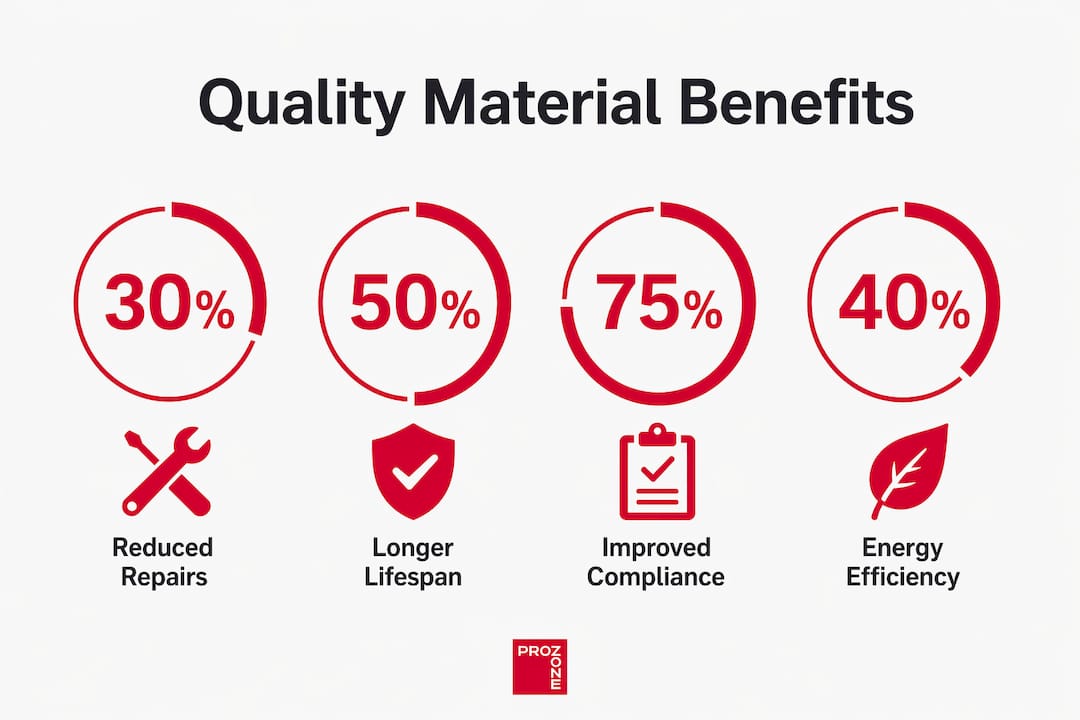
The advantages of using quality materials extend well beyond structural performance. High-quality materials provide greater safety, longer service life, better energy efficiency, and reduced risk of structural failure under Alberta’s severe weather conditions.
- Safety: Stronger materials resist wind, moisture, and seismic loads, protecting occupants and the investment itself.
- Durability: Structures built with verified materials require fewer repairs and replacements over their service life.
- Energy efficiency: Higher thermal resistance in insulation, windows, and cladding reduces heating costs through Alberta winters.
- Aesthetic value: Premium finishes and consistent material composition produce a cleaner, more marketable final product.
- Code compliance: Materials tested to meet stringent standards reduce the risk of failed inspections, costly rework, and project delays.
- Market value: Buildings constructed with quality materials command higher resale and lease values.
Pro Tip: Compliance risk is one of the most overlooked benefits of quality materials. A single non-conforming product can trigger a stop-work order under Alberta Safety Codes, costing far more in delays than the price difference between a premium and a budget material.
How Alberta’s climate drives material selection
Alberta’s freeze-thaw environment is one of the most demanding in Canada. Edmonton frequently experiences temperature fluctuations around the 0°C threshold during freeze-thaw seasons, and each freeze-thaw cycle forces moisture into microscopic openings in materials. When that moisture freezes, water expands roughly 9%, generating internal pressure that widens cracks and weakens structural bonds. The damage accumulates across seasons, often invisible until it reaches a critical threshold.
Research on freeze-thaw performance in cold-region applications confirms that repeated cycles degrade both thermal conductivity and compressive strength in standard materials. Materials selected without accounting for this stress pattern fail prematurely and trigger repair costs that dwarf the original savings.
Alberta climate reality: Freeze-thaw damage does not announce itself. Internal bond degradation can progress for multiple seasons before surface symptoms appear, by which point structural remediation is far more costly than prevention.
| Material property | Low-grade material | Code-compliant quality material |
|---|---|---|
| Freeze-thaw resistance | Degrades rapidly after repeated cycles | Designed to maintain structural integrity across seasonal cycles |
| Moisture permeability | High; accelerates internal cracking | Low; limits moisture infiltration |
| Compressive strength retention | Can decrease substantially after many freeze-thaw cycles | Intended to remain stable when meeting NBC 2023 AE benchmarks |
| Thermal conductivity stability | Decreases with each freeze event | Retained through proper material specification |
| Maintenance interval | Short; frequent repair required | Extended; lower lifecycle intervention |
The NBC 2023 Alberta Edition requires materials to meet strict performance benchmarks for freeze-thaw durability and moisture resistance. Selecting materials that only meet minimum visual or price criteria leaves projects exposed to accelerated degradation under real Alberta conditions.
The economic case for investing in quality materials
Professional project managers consistently find that initial lower-cost materials incur higher total cost of ownership due to premature repairs and performance losses. The purchase price is only one component of what a material actually costs over a project’s lifetime.
- Reduced lifecycle costs: Fewer repairs and replacements lower total expenditure over 10, 20, and 30-year horizons.
- Energy savings: Better-insulated materials cut operational heating and cooling costs year over year.
- Avoided compliance costs: Materials that meet NBC 2023 AE criteria from the start eliminate rework triggered by failed inspections.
- Property valuation: Quality materials improve energy efficiency and contribute to higher appraised values and stronger tenant retention.
- Client satisfaction and referrals: Projects that hold up over time generate repeat business and professional reputation, both of which carry measurable commercial value.
Choosing materials based on upfront cost alone is a short-term calculation applied to a long-term asset. For Alberta projects subject to NBC 2023 AE requirements, that calculation tends to produce the wrong answer.
How Prozoneltd manages material quality for Alberta projects
Prozoneltd’s quality control process is built around one principle: material specifications are set by the site’s environmental loads, not by availability or budget pressure. Every project in the Edmonton region begins with an assessment of freeze-thaw exposure, drainage conditions, and load requirements before a material list is finalised.
- Adherence to NBC 2023 Alberta Edition and Alberta Safety Codes at every project stage
- Supplier verification confirming freeze-thaw durability ratings and compressive strength data
- Pre-installation quality checks on delivered materials against project specifications
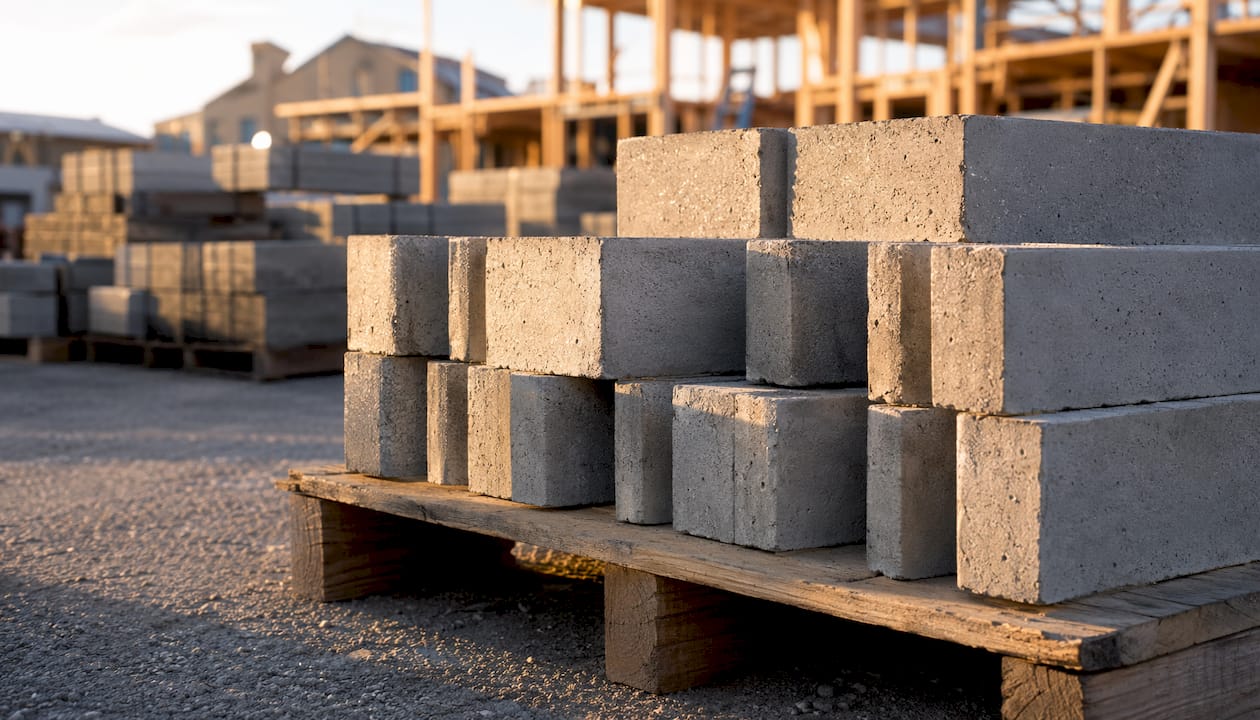
- Selection of concrete types and aggregate products verified for Edmonton’s thermal cycling conditions
- Documentation supporting inspection readiness and client warranty claims
Prozoneltd’s project managers carry direct accountability for material compliance. That accountability is not delegated to suppliers or subcontractors. When a delivered material does not meet the specified performance criteria, it is rejected before it reaches the work area.
Pro Tip: Ask your contractor for written documentation of material performance ratings before work begins. Prozoneltd provides this as standard practice. If a contractor cannot produce it, that is a meaningful signal about how they manage risk on your project.
Get a free estimate from Prozoneltd for your Alberta project
Prozoneltd brings construction expertise for Edmonton that is grounded in Alberta’s specific regulatory and climate demands. Every estimate includes a material specification review aligned with NBC 2023 AE requirements, so you know what you are getting before the project starts. Whether you are managing a commercial site, a municipal contract, or a private property, Prozoneltd’s team is ready to assess your project and recommend materials proven for Alberta conditions. Reach out through the online form at prozoneltd.ca or call directly for a free consultation.
FAQ
What makes a material “quality” under Alberta building codes?
The NBC 2023 Alberta Edition defines quality by performance criteria, not brand. Materials must demonstrate freeze-thaw durability, moisture resistance, and structural integrity under Alberta’s climate conditions.
Why do cheap materials cost more in the long run?
Lower-cost materials typically require more frequent repairs and replacement, producing a higher total cost of ownership than premium materials with longer service lives.
How does freeze-thaw cycling damage building materials?
Water expands roughly 9% when it freezes inside a material, generating internal pressure that widens cracks and weakens structural bonds with each cycle.
Should I invest in quality materials for a short-term project?
Yes. Even short-term structures in Alberta must meet NBC 2023 AE compliance standards, and substandard materials risk failed inspections, stop-work orders, and costly remediation.
How does Prozoneltd verify material quality before installation?
Prozoneltd reviews supplier documentation for freeze-thaw durability and compressive strength ratings, conducts pre-installation checks, and rejects any delivered material that does not meet the project’s specified performance criteria.