
TL;DR:
- Well-planned landscaping can significantly increase home value through curb appeal, often for less than interior renovations.
- Regular maintenance and native plant choices offer the highest returns and long-term health benefits for Edmonton homeowners.
Most homeowners assume that adding real value to their property means gutting a kitchen or finishing a basement. But well-planned landscaping can improve perceived home value through curb appeal and buyer confidence alone, often for a fraction of what interior renovations cost. Your yard is the first thing every visitor, neighbor, and potential buyer sees. This article breaks down the financial returns, health advantages, lifestyle upgrades, and sustainable strategies that make outdoor landscaping one of the smartest investments an Edmonton homeowner can make.
Table of Contents
- The financial impact: How landscaping boosts home value
- Health and wellness: The hidden advantages of more green space
- Functionality and lifestyle: Making your outdoors work for you
- Sustainability and maintenance: Smart choices for long-term value
- What most homeowners misunderstand about outdoor landscaping
- Enhance your outdoor space with professional help
- Frequently asked questions
Key Takeaways
| Point | Details |
|---|---|
| Landscaping boosts value | Evidence shows outdoor landscaping can increase your home’s value by 5–15% in Edmonton. |
| Routine care yields ROI | Maintaining lawns and landscaping functions consistently return high resale ROI, often outperforming cosmetic upgrades. |
| Health benefits are possible | Residential green spaces may lower health risks and support well-being, as supported by epidemiology. |
| Sustainability matters | Long-term value comes from sustainable choices and regular maintenance, especially in Edmonton’s climate. |
| Function meets beauty | Well-designed landscaping enhances practical outdoor living while adding visual appeal. |
The financial impact: How landscaping boosts home value
Most people think about landscaping as decoration. A few flowers here, some trimmed shrubs there. The reality is that thoughtful landscaping is a financial instrument with measurable, documented returns.
Research consistently shows that landscaping increases home value by roughly 5 to 15 percent, with exceptional work pushing that figure toward 20 percent. Studies from Virginia Tech and the American Society of Landscape Architects (ASLA) back these numbers up. On a $500,000 Edmonton home, even a conservative 5 percent improvement represents $25,000 in added perceived value. That is a meaningful return on an investment that often costs far less to achieve.
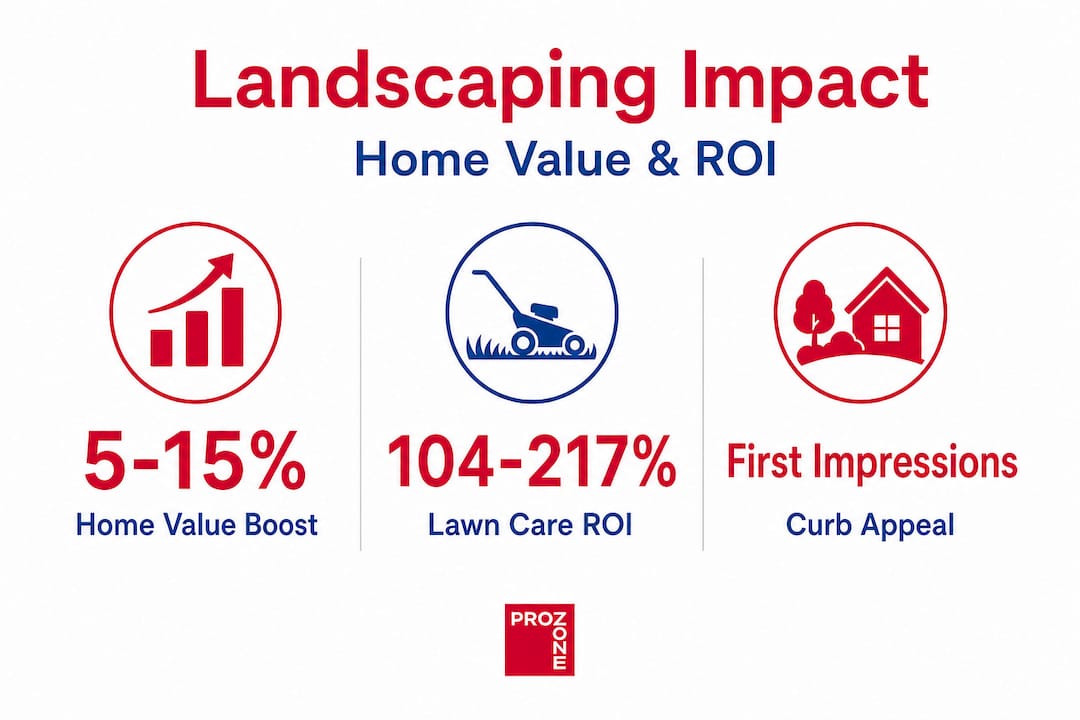
What drives that value? Curb appeal. Buyers form strong first impressions within seconds of seeing a property, and a well-kept exterior tells them the entire home is cared for. It triggers confidence in the quality of what they cannot see: the roof, the plumbing, the interior finishes. This “halo effect” is well-documented in real estate psychology and it works directly in your favor when you maintain your outdoor space consistently.
Interestingly, routine lawn care and general landscape maintenance consistently show some of the highest resale ROI of any home improvement category, often outperforming expensive cosmetic upgrades. Buyers respond strongly to clean edges, healthy grass, and well-mulched beds because these signal ongoing care. You do not need a custom outdoor kitchen to move the needle.
Here is a comparison of common landscaping investments and their approximate return profiles:
| Landscaping type | Typical cost range | Estimated ROI |
|---|---|---|
| Routine lawn care and mowing | $500 to $2,000/year | 104 to 217% |
| Mulching and bed maintenance | $300 to $1,500/year | 100 to 150% |
| Tree and shrub planting | $1,000 to $5,000 | 80 to 120% |
| Hardscape (walkways, patios) | $5,000 to $25,000+ | 50 to 80% |
| Outdoor kitchen or feature walls | $15,000 to $60,000+ | 30 to 60% |
The pattern is clear. Spending big does not always mean earning more back. The fundamentals, lawn health, bed care, edging, and seasonal cleanup, deliver disproportionate returns.
“Landscaping is one of the few home improvements where a modest, consistent investment beats a one-time luxury upgrade almost every time when measured against resale return.”
Here are the top landscaping tasks that reliably move home value upward for Edmonton homeowners:
- Regular mowing, edging, and fertilizing to maintain a lush, even lawn
- Mulching garden beds to suppress weeds and retain moisture
- Planting native shrubs and trees that thrive in Alberta’s climate
- Installing clean, defined walkways and front paths
- Seasonal cleanup including fall leaf removal and spring bed preparation
- Exterior lighting along pathways and focal plantings
If you want to connect these strategies to specific home value landscaping ideas suited to Edmonton properties, the combination of hardscape and consistent maintenance is where the strongest returns live. And for homeowners ready to think bigger, reviewing a solid landscape construction guide before starting any project helps you plan with ROI in mind from day one.
Health and wellness: The hidden advantages of more green space
The financial case for landscaping is strong. But there is another category of benefit that rarely makes it into a contractor’s sales pitch, and it may matter even more in the long run: your health.
Epidemiological research, the study of how health outcomes distribute across populations, has produced striking findings about green space. A large peer-reviewed study published in Environmental Epidemiology found that residential green space access is associated with meaningful reductions in nonaccidental and cause-specific mortality across the United States. In other words, people who live near and use green spaces tend to live longer on average.
These are population-level findings, not individual guarantees. Context matters: the type of greenery, how it is used, and local factors all influence outcomes. But the directional signal is consistent across dozens of studies in multiple countries. Green space near your home is not just pleasant. It appears to support better physiological and psychological function over time.
Here are the primary health mechanisms that researchers link to residential greenery:
- Stress reduction – Exposure to natural environments measurably lowers cortisol levels, the stress hormone tied to a range of chronic conditions including cardiovascular disease.
- Increased physical activity – Inviting outdoor spaces encourage walking, gardening, and play, all of which contribute to better metabolic health.
- Improved air quality – Plants absorb carbon dioxide and certain pollutants, and healthy lawns and trees help filter particulates near your home.
- Mental health support – Studies link regular access to green environments with lower rates of anxiety and depression, and faster psychological recovery from stress.
- Social connection – Well-designed outdoor spaces encourage neighbors to interact, which has its own well-documented benefits for loneliness and overall wellbeing.
Stat to know: In the Environmental Epidemiology study referenced above, greening interventions in residential areas were associated with reductions in mortality risk, particularly for cardiovascular and respiratory causes.
The key nuance for Edmonton homeowners is that not all plants or landscape choices produce equal health benefits. A yard full of invasive species that trigger allergies or require constant chemical treatment is not the same as a thoughtfully planted space using native Alberta species. Choosing the right landscaping materials for Alberta climate conditions ensures your yard stays healthy and manageable year-round.
Pro Tip: In Edmonton’s climate, cold-hardy perennials like Siberian iris, prairie crocus, and native grasses require little maintenance and provide year-round texture and wildlife habitat. They are also far more resistant to Alberta’s freeze-thaw cycles than many ornamental species.
Defined bed structures also matter. Clean garden bed edging keeps lawn grass from creeping into plant beds, reduces the need for herbicide use, and makes the entire space easier to care for. Pairing edging with quality landscape fabric and stakes cuts down on annual weeding time significantly, so you spend more time enjoying your space and less time fighting it.
Functionality and lifestyle: Making your outdoors work for you
Here is a question worth asking: how much of your yard do you actually use?
For many Edmonton homeowners, the honest answer is “not much.” A lawn gets mowed, maybe a patio chair sits in one corner, and that is about it. The yard exists but does not function as part of daily life. This is a missed opportunity, both for quality of life and for property value.
Functional landscaping transforms passive space into active space. A patio that connects smoothly to your back door extends your usable living area by hundreds of square feet during Edmonton’s warmer months. A proper walkway makes getting to your door in the morning feel intentional and welcoming rather than an afterthought. A defined play area for children creates a space that actually gets used, which in turn encourages more time outdoors.
The distinction between decorative and functional landscaping is worth understanding clearly:
| Feature | Decorative landscaping | Functional landscaping |
|---|---|---|
| Primary goal | Visual appeal | Usability and lifestyle support |
| Example | Ornamental flower bed | Paved walkway to front entry |
| ROI driver | Curb appeal, buyer impression | Daily use, long-term durability |
| Best for | Resale preparation | Long-term residents and families |
| Maintenance level | Moderate to high | Low to moderate with good materials |
The smartest Edmonton yards blend both. A well-paved walkway with bordered plantings on either side achieves curb appeal and function at the same time. A defined fire pit zone with gravel ground cover and perennial plantings looks beautiful and actually gets used three seasons a year.
Curb appeal and buyer confidence are byproducts of functional design done well. When your yard looks like people live in it and love it, that translates directly into positive perceptions during a sale.
Here are practical ideas for blending beauty and function in your Edmonton outdoor space:
- Install a permeable gravel or flagstone path connecting garage, front door, and side gate
- Create a defined seating area with a concrete or stone patio surface and perimeter plantings
- Add raised garden beds near the house for growing herbs or vegetables within easy reach
- Use boulder clusters or rock chips to fill low-traffic zones that are hard to mow
- Plant a windbreak row of spruce or willow on the north side to reduce heating costs in winter
- Design a dedicated children’s play zone with soft ground cover and clear sight lines from the house
Pro Tip: When selecting hardscape materials for Edmonton, prioritize materials tested for freeze-thaw durability. Many decorative pavers crack after two or three Alberta winters because they absorb water that expands when it freezes. Using durable landscaping materials designed for our climate saves you from costly replacements in just a few years.
If managing the logistics of a landscaping project feels overwhelming, reviewing a landscaping workflow guide before starting helps you sequence the work correctly so one phase does not undo the next.
Sustainability and maintenance: Smart choices for long-term value
Sustainability in landscaping is not a trend. It is a practical strategy for reducing your costs, protecting your investment, and making your yard genuinely easier to manage over time.
Edmonton’s climate creates unique challenges. Winters are long and severe, spring arrives fast and wet, summers can swing between drought and heavy rain, and fall provides a very short window for seasonal prep. Landscaping that ignores these conditions will constantly fight you. Landscaping designed around them will thrive with minimal effort.
Here is a step-by-step approach to building a sustainable, high-value outdoor space in Edmonton:
- Start with soil health. Test your soil before planting. Alberta soils vary widely, and adding the right amendments up front prevents years of struggling plants and repeated replanting costs.
- Choose native and climate-adapted plants. Species native to Alberta evolved alongside local rainfall, frost patterns, and soil conditions. They need less supplemental watering and rarely require chemical intervention to stay healthy.
- Install efficient irrigation. A simple drip irrigation or soaker hose system reduces water use by 30 to 50 percent compared to overhead sprinklers, and it keeps water at the root zone where plants need it most.
- Use quality hardscape materials. Invest once in freeze-thaw-rated concrete, natural stone, or composite materials. Cheap alternatives fail within a few seasons in Alberta’s climate, costing you more in replacements.
- Establish a seasonal maintenance calendar. Knowing exactly what needs to happen in April, June, August, and October prevents small issues from becoming expensive ones.
- Edge your beds consistently. Clean edges prevent grass encroachment, reduce weed pressure, and make the entire yard look intentional. Edging solutions designed for Alberta conditions hold through frost heave better than plastic alternatives.
“Maintaining existing landscaping, through lawn care, upkeep, and edging beds, is repeatedly shown as a high-return lever compared with more cosmetic or low-quality upgrades.”
This quote captures what the ROI data consistently shows: the highest-return landscaping activity is not the dramatic upgrade. It is the boring, consistent work of keeping what you have in excellent condition. Buyers and appraisers notice neglect immediately, and it discounts perceived value fast.
Pro Tip: Before Edmonton’s first hard frost, do a full property walk to identify anything that needs protection or winterization. Wrap young tree trunks, drain irrigation lines, clean up perennial beds, and add a final layer of mulch around vulnerable root zones. Ten hours of fall prep saves you weeks of spring repair.
For practical guidance on staying consistent year-round, reviewing streamlining maintenance resources helps you build repeatable routines. For seasonal-specific guidance, the seasonal landscaping upkeep resource covers what Edmonton properties need through every stage of the year.
What most homeowners misunderstand about outdoor landscaping
Here is the uncomfortable truth that most landscaping conversations skip over: the majority of Edmonton homeowners are dramatically overthinking the big stuff and completely underinvesting in the basics.
We see it constantly. A homeowner installs an elaborate outdoor kitchen with built-in lighting and custom stonework, spending $40,000 or more, while their lawn is patchy and their garden beds are overrun with creeping grass. Then they wonder why their property appraises lower than their neighbor’s, whose yard features nothing more than a well-maintained lawn, clean edges, and a few mature trees.
The ROI evidence is consistent: routine maintenance and fundamental care outperform cosmetic additions in terms of resale return. A mowed, edged, fertilized lawn communicates competence and care to every buyer who walks by. An elaborate feature that sits in a neglected yard communicates the opposite.
There is also a specific Edmonton dimension to this. Our climate punishes neglect fast. One missed fall cleanup leads to winter mat in the lawn that takes most of spring to recover. Skipping two years of bed maintenance allows perennial weeds to establish root systems that take a full season to eliminate. The compounding cost of deferred maintenance in this climate is higher than in warmer, more forgiving cities.
The other misconception worth addressing is the idea that landscaping is a “one and done” project. Homeowners hire a contractor, install new features, pay the invoice, and assume the work is complete. In reality, that installation is only the beginning. The plants need care, the hardscape needs seasonal inspection and cleaning, and the overall space needs consistent attention to maintain its value and appearance.
Thinking about landscaping the way you think about your car maintenance is a useful mental model. You would not install a custom paint job and then never change the oil. The paint looks great, but the car will still fail if you ignore the fundamentals.
Shifting your investment priority toward consistent, quality maintenance, especially in a city like Edmonton where weather extremes accelerate wear, is almost always the smarter financial decision. For ideas on boosting home value through smart landscaping choices, start with what you already have before you plan what to add.
Enhance your outdoor space with professional help
If you are ready to move from knowing the value of landscaping to actually capturing it, working with experienced local professionals makes a real difference in Edmonton. At ProZone Ltd, we supply and install materials built for Alberta’s demanding climate, from decorative rock chips that add instant visual structure to low-maintenance zones, to pea gravel for walkways that provide durable, frost-resistant paths across your property. Our team understands what holds up through freeze-thaw cycles, what native plants complement hardscape materials, and how to plan a landscape project that delivers strong ROI from the start. Reach out to us to discuss your property and get a plan that works for Edmonton’s conditions, your lifestyle, and your budget.
Frequently asked questions
How much can landscaping increase my Edmonton home’s value?
Quality landscaping increases perceived home value by roughly 5 to 15 percent, with exceptional projects potentially reaching 20 percent, based on Virginia Tech and ASLA research.
Is lawn care or upscale landscaping better for resale ROI?
Routine lawn care and maintenance consistently return 104 to 217 percent at resale, which outperforms most high-cost cosmetic upgrades in nearly every comparison.
Do green spaces really improve health?
Peer-reviewed epidemiology links residential green space access to lower mortality risk and better mental health outcomes, though individual results depend heavily on local context and how the space is actually used.
What are some sustainable landscaping strategies for Edmonton?
Native plants, drip irrigation systems, freeze-thaw-rated hardscape materials, and a consistent seasonal maintenance calendar are the most practical and cost-effective strategies for Edmonton’s climate.
How do I find reliable landscaping services in Edmonton?
Look for providers with specific experience in Alberta’s climate conditions, a portfolio of local completed projects, and clear material sourcing standards, then verify with references or reviews before committing to a major project.