
TL;DR:
- Municipal regulations and climate variability in Alberta emphasize water conservation and native planting, impacting landscaping choices. Implementing smart irrigation, organic layouts, and native plants enhances compliance, reduces long-term costs, and increases property value. Hybrid, site-specific strategies that adapt through seasonal observations offer the most resilient and cost-effective commercial landscape solutions.
Municipal rules are tightening, climate variability is intensifying, and property owners across Alberta are discovering that landscaping decisions carry more weight than ever before. Choosing the wrong approach can mean non-compliance fines, ballooning maintenance costs, or outdoor spaces that simply fail to perform through a prairie winter. The right strategy, however, can reduce operating expenses by tens of thousands annually, boost property valuations, and satisfy increasingly strict city bylaws. This article breaks down the most important commercial landscaping trends for 2026, helps you weigh your options, and gives you the practical guidance to make decisions that hold up across seasons.
Table of Contents
- New regulations and selection criteria: Setting the 2026 baseline
- Trend 1: Smart irrigation and tech-driven efficiency
- Trend 2: Nature-inspired layouts and multi-seasonal use
- Trend 3: Native plants, biophilic wellness, and low-maintenance solutions
- Head-to-head: Comparing 2026’s leading landscaping solutions
- Why Alberta’s 2026 landscaping ‘rules’ are only the beginning
- Transform your property with Alberta’s trusted commercial landscape experts
- Frequently asked questions
Key Takeaways
| Point | Details |
|---|---|
| Compliance is critical | New rules for trees, shrubs, and irrigation mean Alberta managers must prioritize smart, regulation-friendly landscaping. |
| Tech drives savings | Smart irrigation systems can reduce water costs by as much as 50% on commercial properties. |
| Design for all seasons | Organic layouts, permeable surfaces, and local stone support year-round use and resilience. |
| Go native for ease | Native plants and biophilic elements cut maintenance and boost property appeal. |
| Compare, then customize | Use head-to-head comparisons to match trends to your site, then adapt for local needs. |
New regulations and selection criteria: Setting the 2026 baseline
With increasing demands and constraints shaping Alberta’s green spaces, the right starting point is understanding what the rules actually require and what they cost you when ignored.
Alberta’s regulatory environment for commercial landscaping has shifted noticeably heading into 2026. Both municipal and provincial frameworks now place a premium on water conservation, plant selection, and long-term maintenance responsibility. New home landscaping requirements in Alberta now mandate 1-2 trees and 4-6 shrubs per lot, with an 18-24 month maintenance obligation and a clear push for low-maintenance native species over conventional turf to reduce operational costs by up to 40%. While those specific numbers apply to residential lots, commercial property requirements follow similar logic at a larger scale, with municipal development permits increasingly requiring native plant ratios, permeable surface percentages, and documented maintenance plans.
For property managers and landscape architects evaluating options, the most useful selection criteria right now come down to four factors:
- Water use: How much irrigation will this design demand, and does it meet city watering schedules?
- Compliance fit: Does the planting plan satisfy local tree, shrub, and maintenance requirements?
- Maintenance cost: What are the realistic annual labor inputs once the site matures?
- Property value impact: Does the design enhance curb appeal, attract tenants, or support asset appreciation?
The 2026 plant trend reports from the landscape industry consistently reinforce that low-maintenance, regionally appropriate selections are no longer a preference but a baseline expectation for commercially managed properties.
When you work through the right landscaping materials in Alberta alongside your planting plan, the choices you make at this stage directly shape every cost line you’ll manage for the next decade. Selecting materials that support drainage, reduce frost heave, and minimize weed suppression labor pays back quickly. Understanding how to maximize value and compliance from day one should be the lens through which every design decision is made.
Pro Tip: If your property has multiple zones with different sun exposure, soil type, or foot traffic, phase your upgrades by zone rather than tackling everything at once. Starting with the highest-visibility or highest-compliance-risk areas delivers faster regulatory alignment and a more manageable capital outlay.
Trend 1: Smart irrigation and tech-driven efficiency
Having clarified what the baseline criteria look like, the biggest single trend reshaping commercial landscape management in 2026 is automation, specifically smart irrigation.
The numbers are difficult to ignore. Smart irrigation systems equipped with soil moisture sensors and weather-based controllers consistently cut overwatering by 30-50%, which is critical for commercial properties operating under Calgary’s year-round watering schedule that restricts irrigation to three days per week during evening hours only. That is not a minor operational constraint. It affects everything from turf health to planting survivability to bylaw compliance risk.
Here is what a modern smart irrigation setup typically includes on a commercial site:
- Soil moisture sensors: Measure actual moisture levels at root depth and prevent irrigation from triggering when soil is already saturated.
- Weather-based controllers (ET controllers): Pull real-time evapotranspiration data and adjust run times automatically based on temperature, wind, humidity, and solar radiation.
- Zone-by-zone scheduling: Allow different irrigation volumes and timing for turf, shrub beds, trees, and hardscape borders.
- Remote monitoring dashboards: Give facility managers visibility into water consumption in real time, flagging leaks or overuse before they become expensive problems.
- Integration with building management systems: Allow irrigation to be coordinated with other property systems for consolidated reporting.
For managers overseeing multiple sites across Edmonton or Calgary, that last point is particularly valuable. Alberta water restriction bylaws like Calgary’s Bylaw 40M2006 carry real enforcement teeth, and the ability to demonstrate documented compliance through a digital system protects you if questions arise.
The operational case for investment is equally strong from a pure cost perspective. A commercial property using traditional time-clock irrigation on a two-acre site can easily spend 20-35% more on water annually compared to a smart-managed equivalent. Over a five-year period, the capital cost of the smart system is typically recovered several times over.
If you’re planning a new development or renovating an existing landscape, exploring what the right landscaping services in Edmonton look like for your site type is a practical early step. Your Edmonton landscape construction guide options will influence what infrastructure needs to be in place before the landscape layer is installed.
Pro Tip: Prioritize irrigation upgrades above almost every other landscape improvement when working with a constrained budget. The water savings alone typically generate the fastest payback, and compliance with watering bylaws is the area where non-compliance costs escalate most quickly.
Seasonal transitions also require attention. Following exterior maintenance guidance for winterization and spring startup of irrigation systems prevents damage from freeze-thaw cycles, which are especially aggressive in Alberta’s climate zone.
Trend 2: Nature-inspired layouts and multi-seasonal use
Having covered water-saving technology, the next key trend is how the look and functional layout of commercial landscapes are shifting in 2026.
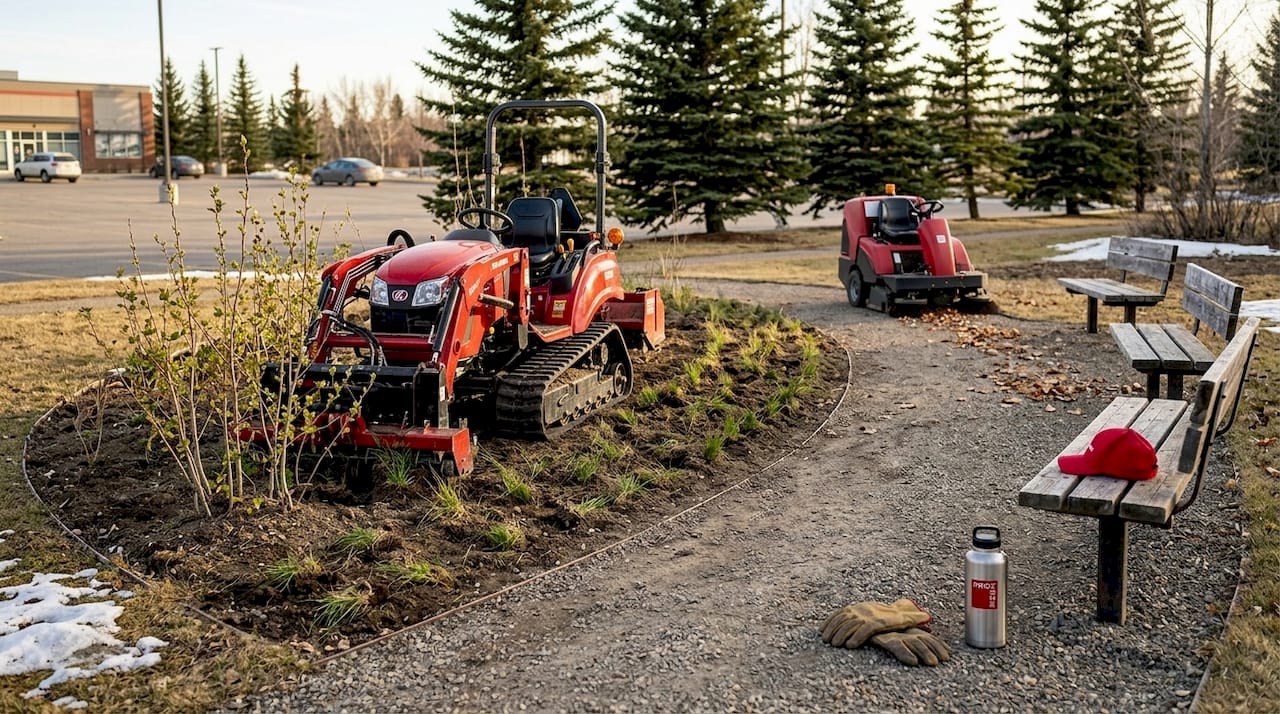
Rigid symmetry, identical plant masses, and purely ornamental borders are giving way to something more layered and livable. Curved, organic layouts using natural materials like warm stone and cedar are replacing formal arrangements, and the driving logic is not purely aesthetic. They create multi-functional outdoor rooms that perform year-round in Alberta’s highly variable weather, from -30°C winter cold snaps to warm, dry late summer afternoons.
The concept of the outdoor room is worth unpacking for commercial applications. Rather than treating a property’s exterior as an undifferentiated green zone, the outdoor room approach divides space into purposeful areas with distinct functions:
- Circulation corridors: Defined pathways that guide foot traffic efficiently without damage to planted areas.
- Break and gathering areas: Shaded seating zones using cedar pergolas or stone-edged planter walls that double as informal meeting spaces for tenants.
- Buffer planting zones: Layered shrub and perennial beds that screen parking areas, reduce noise, and provide seasonal color.
- Transition edges: Soft curves where hardscape meets planting, using natural stone that complements rather than competes with the surrounding landscape.
The material choices matter enormously for Alberta’s climate. Permeable surfaces combined with smart technology now satisfy stormwater management regulations while enabling year-round patio functionality. Permeable pavers specifically handle freeze-thaw cycles better than conventional asphalt edges when properly installed, and they reduce the pooling issues that create slip hazards during spring melt.
| Feature | Summer benefit | Winter benefit | Maintenance level |
|---|---|---|---|
| Permeable stone paving | Reduces heat island effect | Manages melt water runoff | Low |
| Cedar pergola/screening | Provides shade and privacy | Windbreak for gathering areas | Medium |
| Native shrub buffer beds | Seasonal bloom and color | Structure and wildlife cover | Low |
| Curved pathway edging | Clear circulation flow | Reduces snow removal complexity | Very low |
| Stone planter walls | Defines space, raises beds | Thermal mass, frost protection | Very low |
The design principle to avoid, as many experienced landscape architects will tell you, is the “matchy-matchy” approach where every element coordinates too perfectly. Eclectic, resilient designs that mix textures, materials, and plant forms actually perform better over time because they hedge against weather variability and evolving tenant expectations.
If you’re evaluating outdoor materials for Edmonton properties specifically, the combination of locally quarried stone and responsibly sourced cedar offers both durability and a visual language that resonates with Alberta’s landscape character. You can see how this plays out on actual commercial sites in the ProZone project gallery.
Pro Tip: Mix at least three different materials and two contrasting plant textures in any commercial outdoor space larger than 500 square meters. This approach future-proofs the design against the visual monotony that sets in after a few seasons and reduces the replacement cost when one element eventually needs updating.
Trend 3: Native plants, biophilic wellness, and low-maintenance solutions
With design and durability principles established, the third major trend for 2026 is driven by native species selection, biophilic design thinking, and the practical maintenance realities of managing commercial outdoor spaces at scale.
Biophilic design elements, including layered plantings that mimic natural ecosystems and dedicated wellness nooks, demonstrably boost property value and tenant retention. The edge case worth knowing: gravel gardens save as much as 80% on water compared to traditional turf installations, but they carry a real risk of looking visually stark and inhospitable when not balanced with textured native plant material. A bare gravel field is not biophilic design, it is a desert.
Alberta-specific native plant selection is where landscape architects can add the most value for commercial clients. Prairie-hardy perennials like potentilla and saskatoons thrive with minimal irrigation and maintenance inputs, but over-relying on xeriscape principles ignores the microclimatic realities of urban commercial sites. Blending these species with evergreen structure plants provides winter presence and year-round visual weight.
Key considerations when specifying native and low-maintenance planting for Alberta commercial sites:
- Potentilla fruticosa (shrubby cinquefoil): Extremely cold-hardy, long blooming season, requires almost no supplemental watering once established. Works well as foundation planting or low border hedge.
- Saskatoon serviceberry: Provides spring bloom, summer fruit, and excellent fall color. Attracts pollinators, which is increasingly valued by LEED-conscious building owners.
- Blue oat grass: Provides texture contrast and holds its structure through winter, reducing the bare-bed appearance that makes commercial landscapes look neglected after first frost.
- Native sedges: Excellent ground cover for shaded or partially wet areas where turf fails, requiring virtually no mowing.
- Spruce and pine species: Provide evergreen structure and wind screening for year-round property performance.
“The temptation on commercial projects is to go all-in on low-input xeriscape, but the best results we see consistently come from layered compositions where gravel mulch is one texture among several, not the dominant visual element.” This reflects a view widely shared among practitioners who have watched first-generation xeriscape retrofits age poorly over five to ten years.
The sustainable plant approach applies indoors and outdoors: the more the planting plan mirrors natural plant community structures, the more self-regulating it becomes over time.
When evaluating how native planting and low-maintenance materials work together, a clear comparison helps:
| Solution | Water savings | Maintenance cost | Compliance fit | Visual appeal |
|---|---|---|---|---|
| Native shrub/perennial mix | 40-60% vs turf | Low after year 2 | High | High |
| Gravel garden (xeriscape) | Up to 80% | Very low | Medium | Medium without texture |
| Traditional turf | Baseline | High | Low (regulations shifting) | High initially, fades |
| Evergreen structural planting | 30-50% vs turf | Low | High | Year-round structure |
Working through the right material installation approach in Alberta is critical here. How gravel mulch is installed, edged, and layered over geotextile fabric affects both long-term performance and how it interacts with Alberta’s frost heave cycles.
Pro Tip: Never let gravel cover more than 40% of a visible bed area without interrupting it with clumping grasses, dwarf shrubs, or decorative boulders. The goal is to make the low-maintenance elements invisible within a rich planting composition, not to telegraph that the property owner chose the cheapest option.
Integrating easy-care plants into open workspaces is a principle that extends from interior to exterior commercial environments, reinforcing the biophilic connection that tenants and building users respond to positively.
Head-to-head: Comparing 2026’s leading landscaping solutions
Having explored each trend’s fundamentals and tradeoffs, a direct side-by-side comparison provides the clearest picture for decision-making across different commercial property scenarios.
| Landscaping approach | Water savings | Regulatory fit | Up-front cost | Long-term cost | Best property type |
|---|---|---|---|---|---|
| Smart irrigation system | 30-50% | High (supports bylaw compliance) | Medium-high | Low | Any commercial site |
| Organic/outdoor room layout | Moderate | Medium-high (permeable surfaces) | Medium-high | Low-medium | Retail, office, mixed-use |
| Native plant focused design | 40-60% | High (meets shrub/tree requirements) | Medium | Very low | All types, especially parkland edges |
| Gravel xeriscape | Up to 80% | Medium | Low | Very low | Industrial, low-traffic commercial |
| Traditional turf | None (baseline) | Low (cost, water, maintenance) | Low | High | Not recommended as primary |
For most commercial property managers in Edmonton and Calgary dealing with Alberta’s regulatory environment in 2026, the strongest outcome comes from combining smart irrigation with native plant selection and organic design principles. These three elements reinforce each other. Smart irrigation makes native plants more resilient through establishment. Organic layouts create space for the layered planting that biophilic design requires. And permeable surfaces satisfy stormwater regulations while contributing to multi-season usability.
The table makes clear that traditional turf is losing ground on almost every metric. Its low up-front cost is more than offset by the labor, water, and compliance costs it generates over a five to ten year horizon. Property managers still relying primarily on turf for commercial sites should treat 2026 as the year to begin a serious transition plan.
Why Alberta’s 2026 landscaping ‘rules’ are only the beginning
The comparisons above are genuinely useful, but here is a perspective built from watching Alberta commercial landscapes succeed and fail over years of project work: the managers who get the best long-term outcomes are rarely the ones who followed the current trend most precisely. They are the ones who understood that every landscaping decision is really a long-term infrastructure decision.
Alberta’s climate regime is genuinely unusual from a landscape design standpoint. You have early spring freeze-thaw that destroys poorly specified hardscape edges. You have dry summers that punish any design dependent on consistent rainfall. You have heavy snow loads that test structural planting and damage irrigation heads left inadequately winterized. And you have increasingly strict municipal bylaws that will only tighten further as cities push toward water conservation and urban biodiversity goals.
One-size-fits-all design, whether it is full native xeriscape or full smart-tech irrigation or full organic outdoor-room layout, consistently underperforms against hybrid, site-specific approaches. The best commercial landscapes we see are the ones where the designer started with a pilot area, observed how it performed through a full Alberta calendar year, and then scaled what worked. That discipline is rare, but it pays off in lower remediation costs and higher tenant satisfaction scores year after year.
The advice to maximize value and compliance is not just about checking regulatory boxes. It is about building outdoor environments that are genuinely resilient, that do not require emergency intervention after every hard winter, and that hold their visual quality for a decade rather than fading after two or three seasons.
The uncomfortable truth for property managers is that the cheapest design decision almost always generates the highest long-term cost. Investing in site-specific soil analysis, proper drainage infrastructure, and phased native plant establishment costs more in year one. It costs dramatically less across years two through ten. That math is consistent enough across projects that it should be a standard part of how you evaluate any landscaping proposal.
Transform your property with Alberta’s trusted commercial landscape experts
The 2026 trends covered here are not abstract ideas. Smart irrigation, organic multi-seasonal design, and native planting systems are being implemented right now across commercial properties in Edmonton and the surrounding region. The challenge for most property managers and landscape architects is having the right technical partner to translate these principles into site-specific plans that perform under Alberta’s real conditions.
ProZone Ltd brings deep experience in construction services for Edmonton managers across the full range of commercial property needs, from initial earthworks and drainage preparation through hardscape installation and long-term maintenance programs. Our team understands the intersection of municipal compliance, material performance, and design quality that determines whether a commercial landscape investment holds its value. Whether you need guidance on municipal and commercial road construction adjacent to your landscaping project or a full landscape construction plan, reach out to discuss your site and goals.
Frequently asked questions
What are Calgary’s most important landscaping regulations in 2026?
Calgary requires 1-2 trees and 4-6 shrubs per lot with a mandatory 18-24 month maintenance period, alongside strict watering schedule restrictions that limit irrigation days and hours for commercial properties.
How much water can smart irrigation really save on commercial sites?
Smart irrigation systems with soil sensors and weather-based controllers typically reduce water use by 30-50% compared to traditional time-clock systems on commercial properties.
Which native plants deliver the best results for Alberta properties?
Prairie-hardy perennials like potentilla and saskatoons require minimal irrigation and maintenance once established, and they perform best when blended with evergreen species for year-round structural presence.
Are gravel gardens a good choice in Alberta’s climate?
Gravel gardens reduce water use by up to 80% compared to turf, but they risk looking visually stark and inhospitable unless balanced with textured native plants, boulders, and clumping grasses.
Why is phasing landscaping upgrades recommended for managers?
Phased upgrades starting with irrigation and native plant installation generate the fastest payback, delivering 20-50% water savings while bringing the site into immediate compliance with municipal watering bylaws like Calgary’s Bylaw 40M2006.