
TL;DR:
- Many property managers mistakenly believe overlays are just fresh asphalt poured over old surfaces, leading to premature failures and costly repairs. Overlays are effective only on well-maintained, sound bases, and require thorough assessment, proper preparation, and proper material selection to last years longer. Applying overlays without proper evaluation or neglecting milling over existing layers often results in short-lived and ineffective pavement solutions.
Many property managers assume that a pavement overlay is nothing more than pouring fresh asphalt over an old surface and calling it done. That assumption is exactly what leads to cracked parking lots two winters later, expensive emergency repairs, and frustrated tenants. Edmonton’s freeze-thaw cycles and heavy commercial traffic place real stress on pavement, making the difference between a well-executed overlay and a rushed one painfully obvious by spring. This guide cuts through the confusion, explains the full overlay process, and gives you the grounded, practical advice you need to make the right call for your property.
Table of Contents
- What is pavement overlay? Definition and purpose
- How pavement overlays work: Process explained
- Overlay vs. milling vs. reconstruction: What’s right for your property?
- Risks and limitations: What property managers need to know
- Best practices: Maximizing overlay value for Edmonton properties
- Our perspective: Overlay solutions that actually last
- Next steps: Connecting with Edmonton’s overlay experts
- Frequently asked questions
Key Takeaways
| Point | Details |
|---|---|
| Overlay restores asphalt surface | A pavement overlay adds new asphalt to existing surfaces, renewing appearance and function. |
| Base condition matters most | Overlay works best on surfaces with solid underlying bases—otherwise, more extensive repairs are necessary. |
| Milling prevents short-term fixes | Milling old overlays before applying new ones can avoid premature failures and maximize overlay lifespan. |
| Expert assessment saves money | Consulting experienced contractors ensures overlays are applied only when appropriate, avoiding wasted costs. |
| Regular maintenance extends value | Routine inspections and repairs keep overlays lasting longer and prevent costly disruptions. |
What is pavement overlay? Definition and purpose
A pavement overlay is the process of applying a new layer of hot mix asphalt (HMA) directly on top of an existing pavement surface, without removing the original material. The new layer bonds to the existing surface and restores ride quality, seals minor surface cracks, and extends the functional lifespan of the pavement without the cost and disruption of a full teardown.
The key word is “surface.” Overlays are not a structural solution. They address what is happening on top, not what is happening underneath. When a commercial parking lot starts showing minor rutting, weathering, or surface cracking but still has a sound base (the gravel and compacted subgrade layers below the asphalt), an overlay can be an excellent investment. When the base is compromised, an overlay becomes an expensive delay.
Common scenarios where overlays make sense:
- Parking lots with surface oxidation and minor cracking but a structurally intact base
- Low-volume roadways with surface wear but minimal potholing
- High-traffic drive aisles that need smoothness restored after several years of use
- Properties preparing for resurfacing before winter to protect the base from water infiltration
Compared to full reconstruction, which involves removing all existing pavement, regrading the base, and repaving from scratch, overlays are faster, less expensive, and cause far less disruption to tenants and customers. A parking lot reconstruction can take days or even weeks. An overlay on the same lot might be completed in a single day, with the surface ready for light traffic within hours.
Pro Tip: Before approving any overlay project, request a core sample or structural assessment of your pavement. If a contractor cannot tell you the condition of the base below the surface, you are not getting enough information to make a sound decision.
According to the TxDOT flexible pavement rehabilitation manual, overlays are ideal for preservation on pavement with a good base, offering the best combination of cost and extended life. However, the same guidance warns against applying overlays without milling when prior overlay layers already exist, because stacked layers without removal create bonding and thickness problems that lead to premature failure.
For Edmonton property managers who want a broader picture of how overlays fit into the overall pavement maintenance picture, reviewing Edmonton paving processes is a practical starting point. You will also find useful context by reviewing basic pavement facts that explain how asphalt roads and lots are built from the ground up.
How pavement overlays work: Process explained
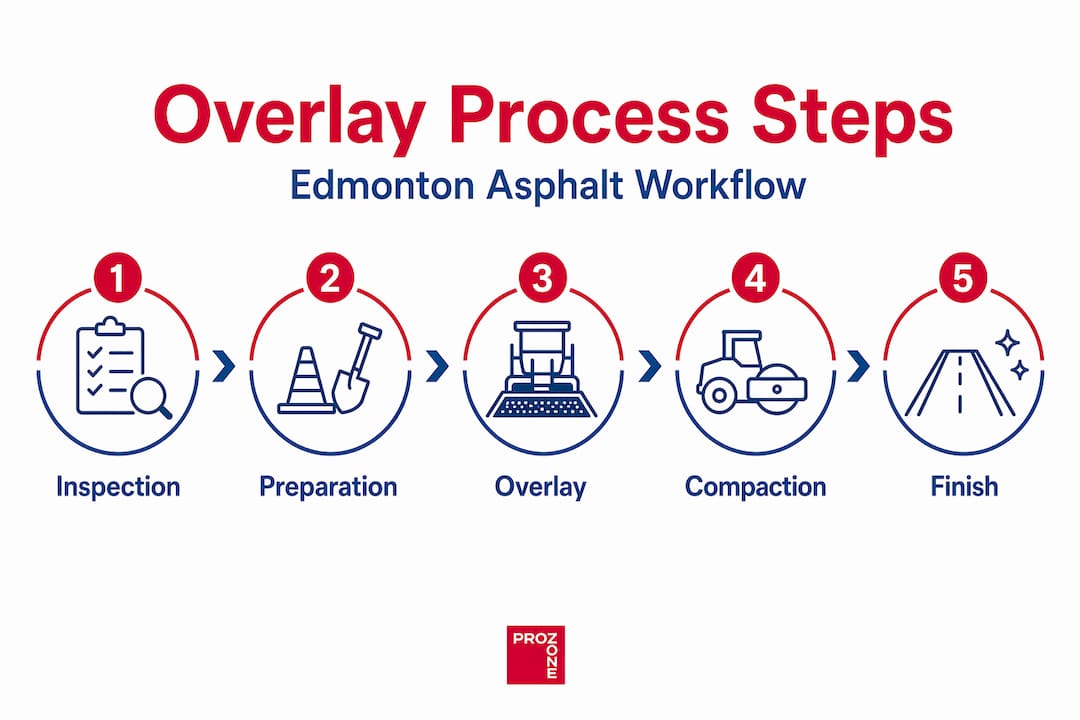
Understanding the process prevents you from being surprised mid-project and helps you hold contractors accountable for every step. A professionally installed overlay is not just “pour and go.” It involves preparation, assessment, material selection, and quality control.
Step-by-step overlay installation process:
- Site inspection and base assessment. Before any material is ordered, the existing pavement is evaluated. Contractors check for subsurface failures, drainage problems, and the number of previous overlay layers. This step determines whether the project will proceed as a standard overlay, a mill-and-overlay, or be redirected to reconstruction.
- Cleaning and crack repair. The existing surface is swept, blown clear of debris, and cleaned. Any significant cracks are filled with hot rubberized crack sealant. Potholes and areas of localized failure are patched and allowed to cure.
- Milling (if required). In situations where the existing surface is too high relative to curbs, drainage structures, or building entrances, or where prior overlays have compromised bonding potential, the surface is milled (ground down) to the appropriate depth using a cold planer machine. Milling creates a textured surface that improves adhesion of the new layer.
- Tack coat application. A thin layer of asphalt emulsion called a tack coat (or bond coat) is sprayed on the prepared surface. This sticky layer ensures the new HMA bonds tightly to the existing pavement and does not slide or delaminate under traffic.
- Hot mix asphalt placement. The HMA is delivered by truck, spread using a paving machine to the specified thickness, typically 1.5 to 2.5 inches for commercial overlays, and screeded to a uniform surface.
- Compaction. Steel drum rollers compact the HMA while it is still hot, closing air voids and achieving the specified density. This step is critical. Under-compacted asphalt fails faster under traffic.
- Finishing and striping. Once the surface cools and reaches adequate hardness, line markings, directional arrows, and ADA-compliant striping are reapplied.
| Overlay stage | Typical duration | Key quality check |
|---|---|---|
| Inspection and prep | 1–2 hours | Base integrity confirmed |
| Crack and pothole repair | 2–4 hours | Full cure before overlay |
| Milling (if needed) | 2–6 hours | Target depth achieved uniformly |
| Tack coat application | 30–60 minutes | Even coverage, no puddles |
| HMA placement | 2–8 hours | Consistent thickness across lot |
| Compaction | 1–3 hours | Density tests passed |
| Striping | 1–2 hours | Markings meet local code |
Material choice matters significantly in Edmonton. Standard HMA using a Superpave mix design performs well in Alberta’s climate, handling both summer heat and extreme cold. Specialty polymer-modified mixes can add flexibility and resistance to cracking in freeze-thaw conditions, which is especially relevant for Edmonton properties that may see temperatures swing from minus 30 degrees Celsius in January to plus 30 in July.
For a closer look at parking lot overlay steps specific to commercial applications, those resources break down maintenance decisions in detail. If you are planning ahead financially, reviewing asphalt budgeting advice will help you set realistic expectations well before the contractor arrives. Understanding the full paving process overview also helps you verify that your contractor is following an industry-standard sequence.
Overlay vs. milling vs. reconstruction: What’s right for your property?
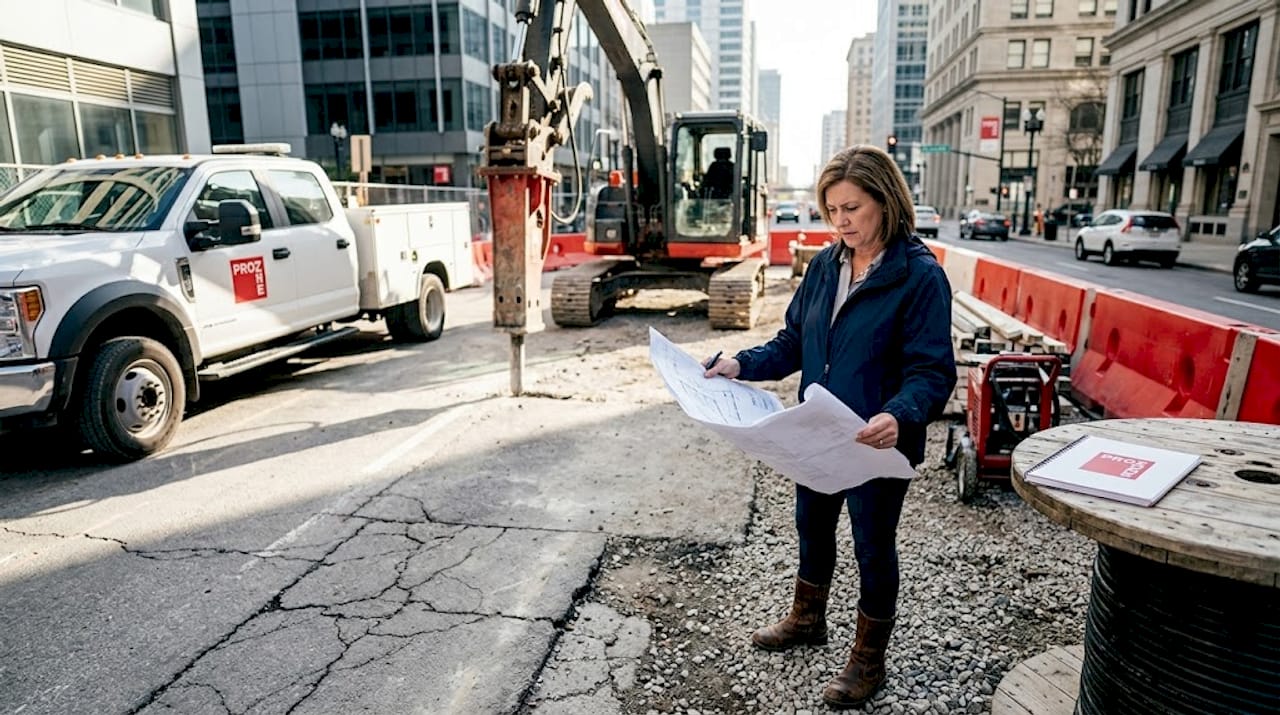
Choosing the right approach comes down to one thing: the current condition of your pavement base. Once you understand what each method addresses, the decision becomes much clearer.
| Method | Best for | Average lifespan added | Relative cost | Disruption level |
|---|---|---|---|---|
| Overlay only | Sound base, surface wear | 8–12 years | Low | Low |
| Mill and overlay | Prior overlays, grade issues, bonding concerns | 10–15 years | Medium | Medium |
| Full reconstruction | Failed base, drainage issues, structural failure | 20–30 years | High | High |
When overlay alone makes sense:
- The pavement base passes structural testing
- No more than one or two prior overlay layers exist
- Surface cracks are less than 6 mm wide and not reflective of base movement
- Drainage performs adequately with no standing water after rain
- The pavement is within its serviceable life but showing normal wear
When milling plus overlay is the better choice:
- Existing surface height is too close to curbs, drains, or building thresholds
- Prior overlays have already built up significant elevation
- Surface delamination (separation between layers) is present
- Bonding quality of the existing surface is poor or contaminated
When full reconstruction is necessary:
- Large areas of alligator cracking (interconnected cracks resembling reptile skin) indicate base failure
- Potholes continue to reappear despite repeated repairs
- Standing water collects and does not drain, suggesting subgrade saturation
- The pavement has been overlaid multiple times and further layers are not structurally viable
The TxDOT flexible pavement rehabilitation manual makes the case clearly: overlays deliver optimal cost efficiency and longevity when applied to pavement with a sound foundation, but skipping milling on deteriorated or multiply-overlaid surfaces is a documented path to short-term fixes that cost more over time.
Overlays typically offer 30 to 50% cost savings compared to full reconstruction, but those savings evaporate quickly when an overlay fails within three years due to base problems that a reconstruction would have corrected. For Edmonton property managers managing multi-tenant commercial properties or large parking lots, the long-term budget impact of choosing the wrong method can be substantial.
For a detailed breakdown of milling as a standalone process, the resource on asphalt milling explained covers when and why milling is worth the additional cost. Properties dealing with severely deteriorated surfaces may also benefit from reading about asphalt pulverization, which is a more aggressive reclamation approach. A broader comparison of available road repair options in Edmonton ties these methods together in a single resource.
Risks and limitations: What property managers need to know
Even well-planned overlays can underperform if you are not aware of the conditions that make them a poor fit. Understanding these limitations is not pessimistic. It is how you protect your investment.
“Applying an overlay to a structurally weak pavement base is like painting over a water-damaged wall. The surface looks fine until the underlying problem forces its way through.” This principle appears consistently in pavement engineering guidance, including the TxDOT flexible pavement manual, which cautions that overlays without milling over deteriorated or previously overlaid surfaces risk becoming expensive short-term fixes rather than genuine solutions.
Warning signs that overlay is not the right choice:
- Reflective cracking: Cracks from the base that push upward through the new overlay layer within one or two seasons indicate base movement that no surface treatment can stop.
- Alligator or map cracking: Wide networks of interconnected cracks covering large areas are a base failure indicator. Overlaying these areas delays reconstruction but does not fix the problem.
- Drainage failure: If water pools on your lot after rain, overlay will not solve it. Water will still infiltrate through joints and cracks and continue to weaken the subgrade.
- Multiple prior overlays: Three or more overlays stacked without milling create an unstable system with poor bonding between layers. Each overlay loses adhesion faster than the last.
- Frost heave damage: Edmonton winters cause frost heaving in pavements with poor drainage or insufficient base depth. These heaves must be addressed at the base level, not covered.
Maintenance strategies that maximize overlay lifespan after installation:
- Seal coat the new overlay within 12 to 18 months of installation to protect the binder from UV oxidation and water infiltration
- Fill any new cracks promptly, before winter freeze-thaw cycles widen them
- Sweep the lot regularly to prevent abrasive debris from degrading the surface
- Inspect drainage structures annually and keep them clear to prevent water saturation of the base
- Conduct a formal pavement condition inspection every three years to catch problems early
Proactive asphalt repair before issues escalate is consistently more cost-effective than waiting for visible failure. The strategy of catching problems early is also central to resources on how to extend asphalt life, which is worth reviewing as part of your ongoing property maintenance planning.
Best practices: Maximizing overlay value for Edmonton properties
Getting a quality overlay installed is only part of the equation. How you manage your pavement after installation determines whether you get 8 years or 14 years of service life from that investment.
Practical steps for maximizing overlay value:
- Schedule installation during dry, warm months. Edmonton’s ideal paving window runs from late May through September. HMA needs adequate temperature to compact properly. Cold weather paving is possible but requires additional precautions and specialist mixes that add cost.
- Ensure proper drainage before the overlay goes down. Overlay contractors should review lot grading and confirm that water will shed away from the new surface. Correcting drainage after the fact is far more expensive.
- Request material certifications. Ask your contractor for the asphalt mix design and density test results. Quality contractors provide this documentation without hesitation. It is your evidence that the job was done to specification.
- Plan for thickness. A 1.5-inch overlay is common for light commercial use. High-traffic areas, such as loading zones and drive-through lanes, often need 2 to 2.5 inches to handle wheel loads. Cutting corners on thickness to save money consistently leads to early failure in these high-stress zones.
- Mark out utilities before milling. If milling is included, confirm that all underground utility lines, conduit covers, and drain grates are marked and protected before equipment moves.
- Keep records. Document the overlay date, contractor, mix type, and thickness. This history is essential for future maintenance decisions and can affect property valuation during sale or lease renewal.
Pro Tip: Partner with contractors who have direct experience with Edmonton’s climate. Freeze-thaw cycling, spring breakup loads, and temperature extremes require specific mix designs and compaction techniques that contractors from milder climates may not factor into their standard work. Local experience is not just a preference. It is a performance variable.
Seasonal planning matters more in Edmonton than in most North American cities. Spring breakup, when ground thaw weakens pavement bases, is not the time to schedule overlays. Early summer, after the ground has stabilized, is typically the best window. Fall overlays are viable but come with risk if temperatures drop unexpectedly before the HMA achieves full density.
For a structured approach to asphalt preservation strategies specific to properties in Alberta, reviewing those resources will help you build a multi-year maintenance plan rather than reacting to problems as they appear. A solid maintenance checklist for commercial parking lots is also a practical tool for building regular inspection habits.
Our perspective: Overlay solutions that actually last
After years of working on Edmonton parking lots, roadways, and commercial properties, we have seen one mistake repeated more often than any other: property managers approving overlays over surfaces that were never going to support them. The projects look fine on day one. By the second winter, cracks are coming back, patches are needed, and the budget shortfall becomes a real conversation.
The industry has a pressure problem. Overlays are faster and cheaper to quote than reconstruction, so the path of least resistance is always to recommend an overlay. Contractors under cost pressure skip the milling step, stack the new layer on top of a compromised surface, and move on. Some of those projects last five years. Some last two. None of them should be considered a success when the alternative was a properly assessed mill-and-overlay or reconstruction that would have lasted fifteen.
The TxDOT pavement rehabilitation guidance is explicit on this point. Overlays work. They are a legitimate, cost-effective maintenance tool when the base is sound. But applying them without a proper base assessment, and without milling when prior overlays exist, is documented in engineering literature as a recipe for premature failure. This is not a fringe opinion. It is industry consensus.
Our perspective is that property managers deserve honest assessments, not convenient ones. When a surface has had two or more overlays and is showing reflective cracking, the right answer is milling or reconstruction. Telling a client what they want to hear to win a contract, and then watching the surface fail on schedule, is not a sustainable business practice and it is not good for Edmonton’s built environment.
If your contractor cannot explain the condition of your base, cannot show you density test results, and cannot tell you whether milling is warranted, those are red flags. Get a second opinion. A proper assessment of milling best practices will help you understand what responsible preparation looks like and what questions to ask before signing off on any overlay project.
The good news is that when overlays are done right, on solid bases, with appropriate thickness and proper compaction, they are genuinely excellent value. You get a smooth, durable surface that protects the base investment below, extends the pavement’s service life significantly, and keeps your property looking professional. The goal is not to avoid overlays. It is to apply them where they will actually succeed.
Next steps: Connecting with Edmonton’s overlay experts
The insights in this guide are only useful if you apply them to your specific property. Every parking lot and roadway is different. The pavement at a light-use office complex ages differently than the surface at a busy retail center with delivery traffic and snowplow loads all winter. That is why a site-specific assessment, not a generic quote, is the right first step. At ProZone Ltd, we provide professional overlay assessments, honest base condition evaluations, and clear recommendations based on what your pavement actually needs, not what is easiest to sell. Whether you need a straightforward overlay, a mill-and-overlay, or guidance on reconstruction planning, our team has the Edmonton experience to help you make the right call. Start with our asphalt paving guide for a broader view of your options, or review our step-by-step resource on laying asphalt correctly to understand the standards we hold ourselves to on every project.
Frequently asked questions
Is pavement overlay always cheaper than reconstruction?
Overlay is usually cheaper upfront, but total costs rise quickly if the underlying base needs significant repair or milling before the overlay can be applied. The TxDOT rehabilitation manual confirms that overlay savings are only realized when the base is in good condition.
How long does a pavement overlay typically last?
A properly installed overlay on a sound base can last 8 to 15 years, depending on traffic volume, maintenance quality, and climate stresses. Skipping preparation steps or applying overlay to a weak base can cut that lifespan to three to five years according to pavement rehabilitation standards.
Do overlays fix drainage or base issues?
No. Overlays only address surface-level problems. Drainage deficiencies and base failures require targeted repair or full reconstruction before any overlay will perform reliably.
Can overlays be applied multiple times?
Yes, but with diminishing returns. Repeated overlays without milling build up elevation, reduce bonding strength, and eventually reach a point where milling or full reconstruction is the only viable path forward, as noted in flexible pavement guidance.