
TL;DR:
- Proper site analysis, soil testing, and regulatory compliance are essential for successful municipal landscaping projects.
- Implementing adaptive maintenance practices and using technology ensures long-term resilience and cost efficiency of public spaces.
Municipal landscaping how to do it well is a question planners and professionals across North America wrestle with every budget cycle. The gap between a functional public space and one that genuinely serves its community often comes down to preparation, not funding. Budget constraints, regulatory compliance, community engagement, and long-term maintenance costs all compete for attention before a single plant goes in the ground. This guide walks through the full process from site analysis to post-installation evaluation, giving you a structured, practical approach to creating public spaces that hold up under real-world conditions.
Table of Contents
- Municipal landscaping how to prepare before work begins
- Step-by-step execution of the landscaping work
- Common challenges and maintenance troubleshooting
- Evaluating success and maintaining compliance
- My perspective on where municipal landscaping gets it wrong
- How Prozoneltd supports your municipal landscaping projects
- FAQ
Municipal landscaping how to prepare before work begins
Solid preparation separates projects that thrive from those that require costly remediation within three years. Before any design decisions are finalized, site analysis must come first.
Site analysis and soil testing
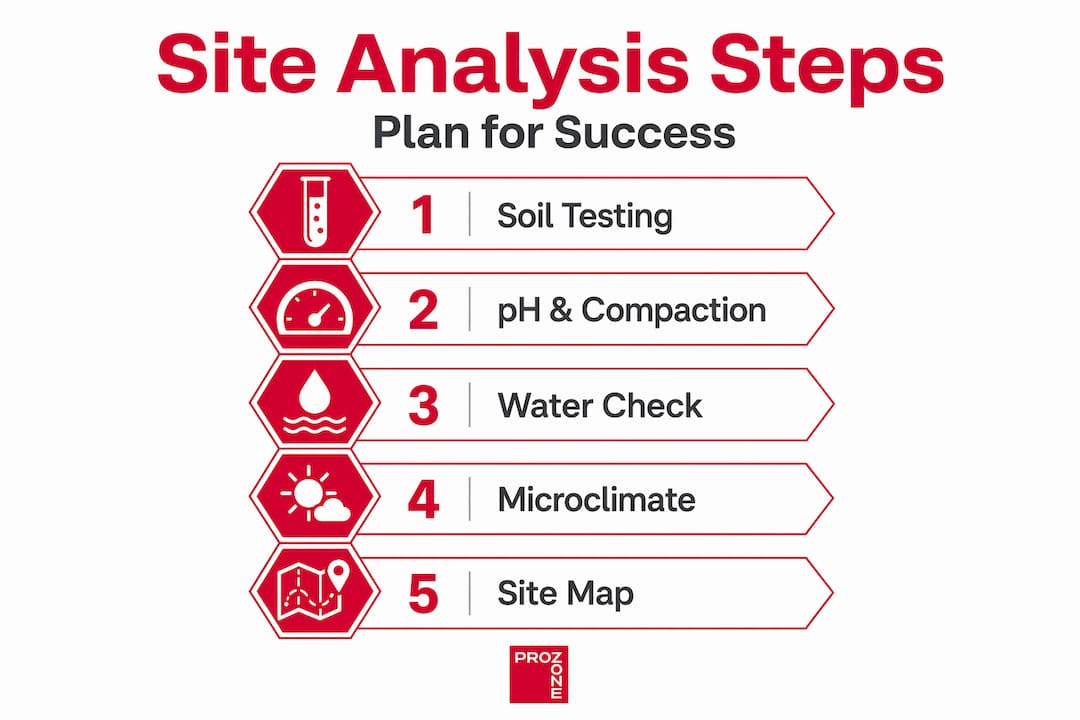
Urban soil conditions vary widely and require site-specific analysis including pH, compaction, and water availability before you select a single plant. In municipal settings, soils are frequently compacted from foot traffic, previous construction, or decades of de-icing salt application. Microclimate mapping adds another layer: south-facing plazas in Edmonton experience heat loading that would kill shade-tolerant species, while low-lying areas near storm drains may retain moisture that causes root rot in drought-adapted plants. Sunlight hours, prevailing wind patterns, and proximity to hardscape all factor into a defensible planting plan.
Regulatory requirements and permit documentation
Municipal projects almost always require multiple permits, and the documentation expectations differ sharply depending on the reviewing authority. Zoning approvals, ADA accessibility compliance, environmental impact reviews, and local safety regulations each demand distinct formats and levels of technical detail. The table below summarizes common permit types and what each requires.
| Permit Type | Primary Reviewing Authority | Key Documentation Required | Typical Review Timeline |
|---|---|---|---|
| Zoning/Land Use | Municipal planning department | Site plan, species list, setback compliance | 3 to 8 weeks |
| Environmental Impact | Provincial/State environmental agency | Soil/water analysis, native species rationale | 4 to 12 weeks |
| ADA Accessibility | Building/accessibility department | Path widths, surface material specs, grade percentages | 2 to 6 weeks |
| Pesticide Application License | Agricultural/environmental authority | Applicator credentials, chemical inventory | 2 to 4 weeks |
| Stormwater Management | Public works or watershed authority | Drainage calculations, green infrastructure plan | 4 to 10 weeks |
Integrating Crime Prevention Through Environmental Design (CPTED) principles from the outset helps address safety requirements proactively. CPTED calls for clear sightlines to building access points, avoiding dense low plantings that create concealment opportunities, and using lighting in coordination with canopy heights.
Plant and material selection
Plants and materials must be selected for longevity, minimal maintenance, and cost efficiency, avoiding frequent repairs and replacements. Native and drought-tolerant species reduce pesticide dependence and lower water consumption, both of which translate directly to long-term budget savings. Materials for hardscape elements should be assessed for freeze-thaw durability, load-bearing capacity, and slip resistance.
Pro Tip: Tailor your documentation to your audience. Budget-focused stakeholders respond to lifecycle cost comparisons, while regulatory reviewers need technical specifications. Creating three versions of the same project brief, one for each audience type, significantly improves approval rates and stakeholder buy-in.
Step-by-step execution of the landscaping work
Once permits are in hand and the site analysis is complete, execution moves through several distinct phases. Skipping or compressing any of them increases the likelihood of failure.
-
Conduct pre-installation grading and drainage work. Establish proper grades before any planting or hardscape installation begins. Poor drainage is the single most common cause of premature plant failure in urban environments. Verify that grades direct water away from structures and toward intended bioretention areas or drainage infrastructure.
-
Install irrigation infrastructure before planting. Placing irrigation lines after plants are in the ground damages root systems and increases labor costs. Use zoned irrigation systems that group plants by water requirement, a practice known as hydrozoning. Hydrozoning combined with xeriscaping techniques optimizes irrigation efficiency and reduces municipal water consumption measurably.
-
Prepare soil amendments by zone. Based on your soil testing results, apply targeted amendments rather than uniform applications across the entire site. Compacted areas may need mechanical aeration and organic matter incorporation. Areas with drainage issues may benefit from sand or perlite additions.
-
Install hardscape elements. Complete permanent hardscape features such as pathways, retaining walls, and plazas before planting begins. This sequencing prevents soil compaction around newly planted specimens. For permeable pavement and bioswales, coordinate with civil engineering teams to verify that the subbase specifications match the drainage design calculations.
-
Plant installation using site-adaptive techniques. Match planting depths precisely to each species requirement. In municipal settings, trees and large shrubs benefit from structural soil cells beneath paving areas, which allow root expansion without lifting hardscape surfaces. Avoid the common mistake of planting trees at the same depth regardless of species or soil moisture level.
-
Coordinate with public works, security, and engineering teams. Municipal landscaping exists within a web of infrastructure. Security landscaping integrates physical barriers and informal design elements to balance openness with protection, requiring coordination with security assessments. A planting plan that blocks a utility access point or a canopy that interferes with surveillance cameras creates conflict that is expensive to resolve post-installation.
-
Install monitoring technology and establish baseline data. Sensor-based soil moisture monitors, weather stations, and GIS-supported site analyses improve implementation accuracy and set up an adaptive maintenance program from day one. Capturing baseline soil moisture, temperature, and plant stress data in the first growing season creates a reference point for future decision-making.
Pro Tip: Install soil moisture sensors at root depth in representative zones of the planting plan during installation, not after. Real-time data from these sensors lets maintenance crews respond to stress before visual symptoms appear, which typically adds weeks to intervention lead time.
For guidance on choosing durable materials suited to Alberta’s climate, Prozoneltd’s material specifications are directly applicable to municipal project requirements in the region.
Common challenges and maintenance troubleshooting
Even well-executed municipal landscapes encounter performance problems over time. Understanding the most frequent failure points allows for faster, lower-cost corrections.
Adaptive management as a core practice
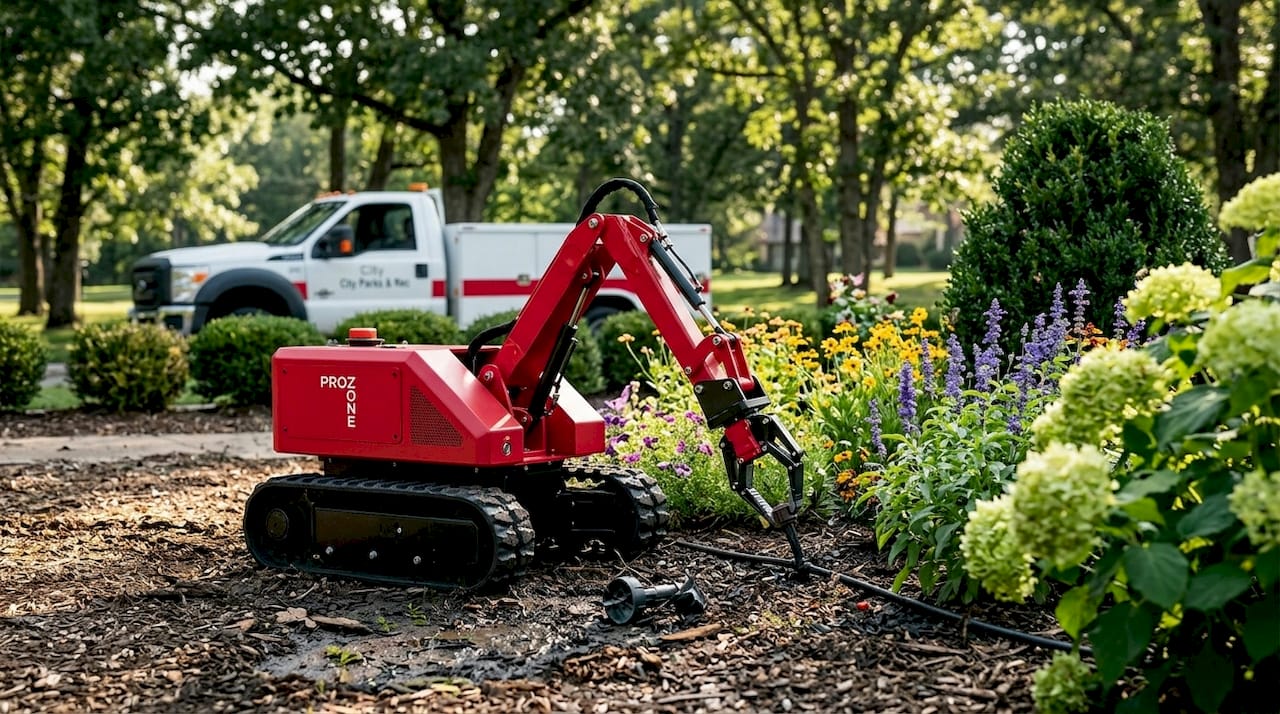
Adaptive planting is a process that includes planning, execution, and ongoing maintenance as interlinked phases to ensure resilience. This means maintenance plans cannot be static documents filed after installation. They need scheduled review points, typically at six months, one year, and three years post-installation, where plant performance data drives adjustments to irrigation schedules, fertilization programs, or species substitutions.
Proactive, adaptive maintenance avoids costly large-scale replanting and preserves ecosystem function in urban landscapes, which requires flexible budget allocations rather than fixed line items. Municipalities that treat maintenance budgets as a fixed cost rather than an adaptive one consistently underperform on landscape longevity.
Frequent failure points to watch for
Inappropriate plant selection accounts for a disproportionate share of municipal landscape failures. Trees selected for their mature appearance in a nursery catalog often perform poorly under the combined stresses of urban heat islands, compacted soils, and high foot traffic. The solution is to require field-verified provenance data and climate-zone confirmation from suppliers, not just species names on a planting list.
Public use impacts require separate management strategies. High-traffic areas around benches, transit stops, and playground perimeters need turf varieties with recovery capacity or ground covers that tolerate compaction. Vandalism and unauthorized use, such as vehicle intrusion on planted medians, should be anticipated in the design phase through the use of bollards, root barriers, or species with natural physical deterrents.
Integrated pest management (IPM) should be the operational standard for municipal sites rather than reactive chemical application. IPM uses threshold-based intervention, biological controls, and targeted chemical use only when non-chemical methods fail.
Safety protocols for maintenance crews
Maintenance operations on public sites carry both worker and public safety obligations. The following protocols apply to all municipal maintenance work:
- Conduct a written risk assessment before each maintenance operation, including identification of underground utilities and public access zones.
- Require personal protective equipment (PPE) appropriate to each task: eye protection, cut-resistant gloves, hearing protection for powered equipment, and high-visibility vests on traffic-adjacent sites.
- Verify that pesticide applicators hold current licenses and that all chemical handling follows licensing and documentation requirements to prevent legal and environmental violations.
- Maintain a site exclusion perimeter when using powered cutting or grinding equipment near public pedestrian areas.
- Document all maintenance activities in a digital log with date, crew, materials used, and observed conditions.
Pro Tip: Use digital maintenance scheduling tools that link directly to permit conditions and permit expiry dates. This creates automatic compliance checkpoints without requiring manual tracking, which is where compliance gaps most often appear in large municipal portfolios.
For more on organizing maintenance operations efficiently, Prozoneltd’s landscaping maintenance workflow guide provides a practical framework adapted to commercial and municipal conditions.
Evaluating success and maintaining compliance
Post-installation evaluation is where many municipal projects go quiet precisely when ongoing attention matters most. Establishing clear performance metrics before installation gives the evaluation phase real teeth.
Key performance indicators for municipal landscapes
Effective KPIs for municipal landscaping span three domains: ecological performance, cost performance, and community experience. Ecological KPIs include plant survival rates at defined intervals, canopy coverage growth, and stormwater retention volume measured against design specifications. Cost KPIs track actual maintenance expenditure against the projected lifecycle cost model developed during planning. Community experience metrics include resident satisfaction surveys, usage counts in public spaces, and incident reports related to safety concerns.
Life-cycle cost analysis versus upfront investment is a calculation that consistently reveals where value resides. Framing landscape assets with performance, risk, and cost language helps engage conservative stakeholders and facilitates project approvals. A native planting scheme may cost 15% more to install than a conventional one, but its 10-year maintenance cost is frequently 40 to 60% lower. Presenting that data clearly changes the conversation with budget-focused decision-makers.
Community feedback and regulatory verification
Community engagement after installation should be structured rather than passive. Formal feedback mechanisms such as quarterly surveys, designated comment channels at city halls, and visual progress reports on municipal websites give residents a stake in the landscape’s success. This structured engagement supports what practitioners call community stewardship, where residents report vandalism, water waste, or unauthorized modifications rather than ignoring them.
The table below compares common evaluation methods and their practical benefits for municipal projects.
| Evaluation Method | What It Measures | Primary Benefit | Best Application |
|---|---|---|---|
| Plant survival rate audit | Species-specific survival at 1, 3, and 5 years | Reveals selection and installation quality | All planted zones |
| Stormwater retention test | Volume captured vs. design specification | Confirms green infrastructure performance | Bioswales, permeable surfaces |
| Resident satisfaction survey | Perceived usability, safety, aesthetics | Surfaces community priorities for future planning | Parks, plazas, transit corridors |
| Lifecycle cost tracking | Actual vs. projected maintenance expenditure | Supports budget advocacy and contract evaluation | All municipal landscapes |
| Regulatory compliance audit | ADA, environmental, and zoning adherence | Prevents legal exposure and permit violations | Sites with public access and sensitive ecology |
Key takeaways from this guide:
| Point | Details |
|---|---|
| Plan before you plant | Site analysis, soil testing, and microclimate mapping must precede any design decisions. |
| Match materials to lifecycle expectations | Select plants and hardscape for durability and low maintenance, not just initial cost. |
| Safety and compliance are design inputs | CPTED, ADA, and stormwater regulations must be integrated from the concept phase, not added at the end. |
| Adaptive maintenance is non-negotiable | Flexible budgets and scheduled performance reviews prevent the need for costly replanting. |
| Evaluation drives continuous improvement | Post-installation KPIs and community feedback create the data needed for future project funding and approval. |
My perspective on where municipal landscaping gets it wrong
I’ve worked on enough municipal and commercial landscape projects to observe a consistent pattern. The most expensive mistakes don’t happen during installation. They happen six months after installation when no one is looking at the plants anymore.
The traditional approach treats landscaping as a capital project with a completion date. Approve it, fund it, build it, and move on. What that model misses is that a public landscape is a living system that performs differently in year three than it does in year one. In my experience, municipalities that build adaptive maintenance into the original project contract rather than treating it as a future budget item protect both their investment and their community’s trust.
The interdisciplinary coordination piece is also consistently undervalued. I’ve seen beautifully designed planting plans fail because no one cross-referenced them with the utility layout or the security team’s sightline requirements. Bringing public works, engineering, security, and landscape professionals into the room before design is finalized avoids the kind of post-installation conflicts that are expensive and embarrassing to fix in public view.
Climate-adaptive planting is not a trend. In Alberta and across the northern prairies, climate variability has already shifted growing zone expectations. Designs that rely on species requiring average conditions that no longer reliably occur are not conservative choices. They are high-risk ones. Diversifying species palettes and selecting for a range of stress tolerances is a more defensible strategy than optimizing for one average condition.
Technology has a practical role here, not a theoretical one. Soil moisture sensors, digital maintenance logs, and GIS analysis tools are now accessible and cost-effective enough for mid-sized municipal projects. The planners who use them consistently make better decisions faster than those who rely on scheduled site visits alone.
My strongest advice: prioritize quality and long-term value over the lowest bid. The commercial landscaping value principles that Prozoneltd applies to its projects reflect the same logic. A low upfront cost that generates repeated remediation costs is not a saving. It is a deferred expense with interest.
— CSolution
How Prozoneltd supports your municipal landscaping projects
Municipal planners in Edmonton and the surrounding Alberta region need more than design guidance. They need materials that meet the durability and compliance requirements of public infrastructure, delivered by a team that understands the regulatory and operational context of government-funded projects.
Prozoneltd supplies landscaping materials for Alberta projects including permeable surfaces, hardscape materials, and installation-ready products tested for freeze-thaw performance. These materials are specified for municipal and commercial environments where longevity and low maintenance are non-negotiable requirements.
Beyond materials, Prozoneltd provides construction and installation services that integrate with municipal landscaping timelines, including earthworks, asphalt laying, and concrete screeds that form the structural foundation of public space design. The team’s experience with road construction for municipalities also means that hardscape and infrastructure elements within larger landscaping projects receive the same standard of execution as dedicated road and civic works contracts.
If you are planning a public space project in the Edmonton region and need material specifications, site preparation expertise, or construction support, Prozoneltd can provide detailed consultation. Reach out through the Prozoneltd website to discuss project scope and timeline requirements.
FAQ
What does municipal landscaping how to start with?
Every successful municipal landscape project begins with thorough site analysis, including soil testing, microclimate mapping, and utility identification. These assessments directly determine plant selection and design viability before any permits are filed.
How do you select plants for city parks and public spaces?
Select plants based on soil conditions, climate zone, water availability, maintenance capacity, and resistance to public use stress. Native and drought-tolerant species consistently outperform conventional choices over a 10-year lifecycle in terms of cost and survival rate.
What are the best practices for municipal landscaping maintenance?
Best practices include adopting adaptive management with scheduled performance reviews, using integrated pest management, maintaining digital maintenance logs, and ensuring all crew members follow documented safety protocols including PPE requirements and pesticide licensing compliance.
How should municipal planners engage stakeholders on landscaping projects?
Frame proposals around performance metrics, lifecycle cost savings, and risk reduction rather than aesthetic or ecological ideals alone. Tailoring documentation to each audience type, whether technical reviewers, budget stakeholders, or community members, improves approval rates and project support.
What role does technology play in urban landscaping projects?
Digital tools including soil moisture sensors, GIS-supported site analysis, and scheduling software improve both installation accuracy and long-term maintenance effectiveness. These tools reduce resource waste and enable faster, data-driven responses to plant stress or performance issues.