
TL;DR:
- Cold mix asphalt is produced with bitumen emulsions at ambient temperatures, suitable for low-traffic repairs.
- It is cost-effective for pothole patching and low-volume roads but less durable under high traffic loads.
- Proper formulation, additives, and maintenance extend CMA longevity while supporting sustainability goals.
Not all asphalt is created equal, and assuming otherwise is one of the most expensive mistakes a property or facility manager can make. Cold mix asphalt sits in a category that most managers overlook entirely, defaulting instead to hot mix for every repair job regardless of context or cost. That habit burns through maintenance budgets faster than necessary. This article breaks down what cold mix asphalt actually is, where it delivers real value, what it costs compared to alternatives, and what Edmonton managers specifically need to know to use it effectively across parking lots, access roads, and low-traffic surfaces.
Table of Contents
- What is cold mix asphalt? Key characteristics explained
- Where cold mix asphalt works best (and key limitations)
- Cost, sustainability, and performance: The real numbers
- Essential additives and maintenance tips for Edmonton managers
- Our take: When cold mix asphalt is the smart choice (and when it’s not)
- Discover smarter asphalt solutions with ProZone
- Frequently asked questions
Key Takeaways
| Point | Details |
|---|---|
| Cost-efficient for repairs | Cold mix asphalt is 30–50% cheaper than hot mix, especially for low-traffic areas. |
| Ideal for low-traffic use | It’s well-suited for parking lots, access roads, and pothole fixes in areas with lighter vehicle flow. |
| Quick, flexible installation | It can be installed year-round without specialized equipment, making it practical for Edmonton climates. |
| Sustainable and lower emissions | CMA allows up to 100% recycled content and reduces energy use during application. |
| Not suitable for heavy loads | Avoid using cold mix asphalt for main roads or high-traffic lots where durability is critical. |
What is cold mix asphalt? Key characteristics explained
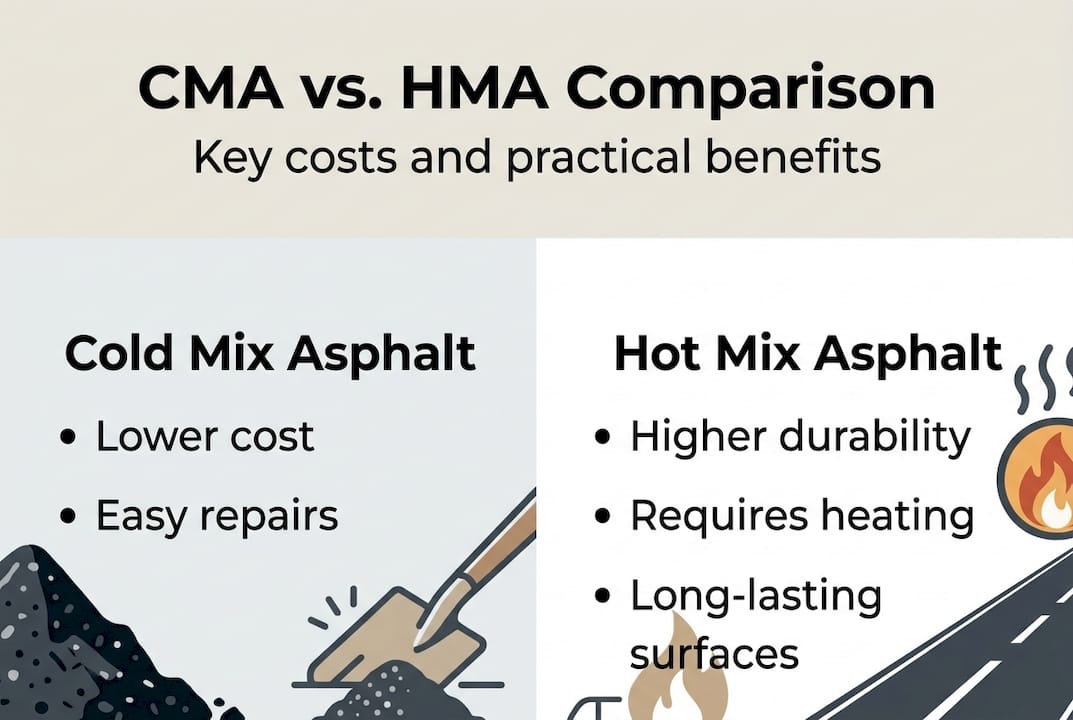
Cold mix asphalt, often abbreviated as CMA, is an asphalt mixture produced using bitumen emulsions rather than heat. Unlike hot mix asphalt, which requires temperatures between 280°F and 320°F during production and placement, CMA is manufactured and applied at ambient temperatures. That single difference changes nearly everything about when, where, and how you use it.
The bitumen emulsion in CMA is essentially bitumen suspended in water with an emulsifying agent. When the water evaporates after placement, the bitumen “breaks” and binds the aggregate together. This curing process takes longer than the cooling of hot mix, which is why CMA typically needs time and traffic pressure to reach its full strength.
Understanding the what is an asphalt road framework helps clarify how CMA fits into the broader spectrum of road surface materials. To see how asphalt stacks up against concrete in general terms, the asphalt vs concrete advantages breakdown is worth reviewing before you commit to any surface decision.
CMA vs. hot mix asphalt: A side-by-side comparison
| Feature | Cold mix asphalt (CMA) | Hot mix asphalt (HMA) |
|---|---|---|
| Production temperature | Ambient (no heating needed) | 280°F to 320°F |
| Installation conditions | Wide temperature range | Warm, dry conditions required |
| Primary binder | Bitumen emulsion or cutback | Heated bitumen |
| Best application | Patching, low-traffic repair | Structural, high-traffic roads |
| Equipment needed | Basic compaction equipment | Specialized heating/laying equipment |
| Ready for traffic | Immediate to a few hours | After cooling, typically a few hours |
Production methodologies include plant-mixed, on-site mixing, or cold in-place recycling. CMA follows established engineering standards such as ASTM D4215, IRC SP:100, and UFGS 32 12 16.19, each with defined tolerances for gradation and binder content.
Key properties that define CMA include:
- Workability at low temperatures: Usable in cool and even near-freezing conditions
- Long shelf life: Bagged CMA can be stored 6 to 12 months without degrading
- Immediate trafficability: Repaired areas can often be reopened right away
- Flexibility: Easier to apply in confined or remote areas without heavy equipment
- Lower energy footprint: No heating requirement significantly reduces energy use
These properties make CMA a legitimate tool in your maintenance toolkit, not just a convenience product. But it works best when matched to the right scenario, which is where many managers go wrong when reviewing road repair methods for Edmonton managers.
Where cold mix asphalt works best (and key limitations)
CMA shines in specific situations, and knowing those situations precisely is what separates cost-effective maintenance from wasted spending. Most property managers default to hot mix for everything, which is like using a full construction crew to fix a single cracked sidewalk square. Sometimes it’s overkill. Sometimes it’s just wrong.
Where CMA delivers strong results:
- Pothole patching on low-traffic parking lots and service roads
- Temporary repairs on access roads and utility cuts awaiting permanent work
- Low-volume municipal or private roads carrying under 500 vehicles per day
- Edge repairs, shoulder work, and minor surface distress correction
- Remote or hard-to-access areas where heavy equipment cannot reach efficiently
- Cold weather repairs when hot mix plants are not operating
The durability numbers for these applications are genuinely solid. Research on low-traffic road performance shows a 92% three-year survival rate for CMA used on roads with under 500 vehicles per day, with rural road applications lasting 2 to 5 years and cold-recycled applications maintaining a Pavement Condition Index of 92.6 after seven years of service.
“Cold mix asphalt applied on low-traffic surfaces demonstrates a 92% survival rate at three years, making it a reliable choice for facilities with light to moderate vehicle loads.”
For facility managers overseeing asphalt vs concrete parking lots, this kind of performance data matters. A parking lot serving a small commercial building or industrial yard with moderate traffic is an ideal candidate for CMA patching rather than a full hot mix mobilization.
Where CMA falls short:
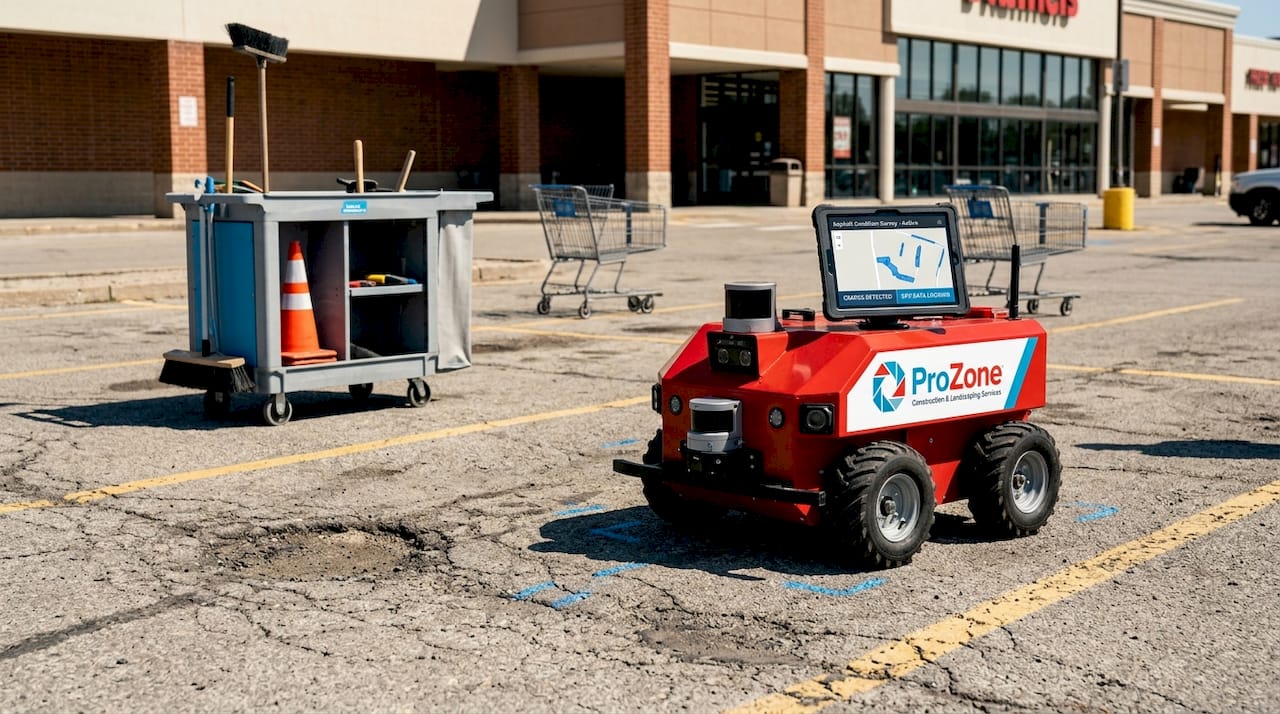
However, durability limitations of CMA are real and not something to ignore. On high-traffic roads, heavy haul routes, or structural pavement layers, CMA ravels and ruts far faster than HMA. UV exposure and freeze-thaw cycling without proper modifiers accelerates surface deterioration. Cutback-based CMA products also release volatile organic compounds, which creates both environmental and regulatory concerns in some zones.
Specific limitations to keep on your radar:
- Not appropriate for roads carrying heavy trucks or high daily traffic volumes
- Freeze-thaw cycles without polymer or cement additives will shorten lifespan significantly
- VOC emissions from cutback-based products require ventilation and handling precautions
- Storage life is finite at 6 to 12 months; old stock loses workability and binding strength
- CMA is not a substitute for structural rehabilitation on roads that need base repair
Pro Tip: If you’re managing a parking lot or access road with moderate wear, apply a resealing treatment annually on high-use edges and entry points. This simple step dramatically reduces raveling and extends the effective life of any CMA repair by protecting the emulsion binder from UV degradation and freeze-thaw stress. For more context on how long asphalt lasts under different conditions, local climate data should factor into your maintenance calendar.
Cost, sustainability, and performance: The real numbers
Budget conversations are where cold mix asphalt really earns its place. The cost difference between CMA and HMA is not marginal. It’s substantial enough to shift annual maintenance budgets meaningfully, especially for managers overseeing multiple properties.
Cost and performance comparison: CMA vs. HMA
| Category | Cold mix asphalt | Hot mix asphalt |
|---|---|---|
| Material cost per ton | $25 to $40 | $80 to $120 |
| Cost savings vs. HMA | 30% to 50% lower | Baseline |
| Expected lifespan (low traffic) | 1 to 5 years | 10 to 20 years |
| Maintenance interval | Annual sealing recommended | Every 3 to 5 years |
| Equipment mobilization cost | Low | High |
| Recycled material content | Up to 100% RAP possible | Typically 20% to 40% RAP |
| Energy use during production | Very low | Very high |
The PMC durability study confirms that CMA costs $25 to $40 per ton compared to $80 to $120 per ton for hot mix, making it 30 to 50% cheaper on a material basis alone. When you factor in lower mobilization costs and no need for specialized heating equipment, the savings compound further on smaller-scale repair projects.
That said, the lower upfront cost needs to be weighed against maintenance frequency. CMA requires more attention over time. A parking lot patched with CMA will need annual monitoring and likely a resealing treatment every 12 to 18 months in Edmonton’s climate. HMA patches last longer with less intervention. So the question for managers isn’t simply which material is cheaper today. It’s which approach delivers better value over a three to five year planning horizon for your specific facility.
Key decision factors for choosing CMA:
- Budget constraints: CMA works well when capital budgets are tight and immediate structural integrity isn’t the primary concern
- Traffic volume: Roads or lots under 500 vehicles per day are well-suited; heavier use favors HMA
- Repair timeline: CMA is faster to mobilize, making it ideal for quick repairs that can’t wait for warm-weather HMA installation windows
- Sustainability goals: If your facility has ESG targets, CMA’s lower energy use and recycled content are measurable wins
- Maintenance tolerance: CMA requires a more active maintenance schedule; factor in your team’s capacity
- Climate timing: Edmonton winters make CMA the only viable option for off-season repairs when hot mix plants are shut down
From a sustainability standpoint, CMA offers real advantages. Because no heating is required, production energy and CO2 emissions are dramatically lower than HMA. Proactive asphalt repair savings are maximized when you use the right material for each repair type, rather than over-specifying HMA for every situation. CMA can also incorporate up to 100% Reclaimed Asphalt Pavement (RAP), meaning old pavement material gets reused rather than sent to landfill. This supports circular infrastructure goals that are becoming increasingly relevant for corporate facility managers operating under ESG reporting requirements.
Understanding the asphalt road composition in detail also helps managers communicate with contractors and verify that material specifications match the project scope before work begins.
Essential additives and maintenance tips for Edmonton managers
Edmonton’s climate is unforgiving. Temperatures swing from below -30°C in January to over 30°C in July. That freeze-thaw cycling is brutal on any pavement surface, and it’s particularly hard on CMA if it hasn’t been formulated with the right additives. Using off-the-shelf bagged CMA without considering local conditions is a common mistake that leads to premature failure and frustrated facility managers.
Additives that make a difference:
Research on CMA formulation confirms that polymer, cement, and lime additions improve moisture resistance and workability significantly. Specifically, polymer additions of 1 to 3% improve elasticity and reduce cracking under temperature swings. Cement additions of 1 to 2% increase the early strength of the mix and improve resistance to deformation. Lime additions improve adhesion between the binder and aggregate, which matters especially in mixes using local Alberta limestone aggregates.
For Edmonton specifically, cationic emulsions work best with limestone-based aggregates, which are common in Alberta quarry supply. Anionic emulsions are better matched to granite-heavy aggregate sources. Getting this match wrong reduces the quality of the bond between binder and stone, which leads to faster raveling. Confirming emulsion type with your supplier based on local aggregate source is a small step that pays off in durability.
Compaction method also affects final density and long-term performance. Marshall compaction, the older standard, and gyratory compaction, the more modern method, produce different density and Indirect Tensile Strength results. Gyratory compaction generally produces a denser mix with better resistance to rutting, which matters if your CMA application will see any vehicle loading beyond light passenger cars.
Maintenance checklist for Edmonton CMA surfaces:
- Spring inspection: Check for frost heave damage, edge cracking, and raveling after winter; document and prioritize repair zones
- Early summer patching: Fill any potholes or edge failures before summer heat sets in and surfaces soften
- Mid-season resealing: Apply a resealing treatment on areas showing surface oxidation or aggregate loss
- Fall inspection: Confirm drainage is clear and all open repairs are patched before ground freeze
- Stockpile review: Verify stored CMA product is within its 6 to 12 month usable window before ordering new material
Pro Tip: Don’t wait until a pothole is fully formed to intervene. Edge cracking and early raveling, where small aggregate particles begin to loosen from the surface, are signals that a repair is needed within the next few weeks. Acting at that stage costs a fraction of what it takes to address a full pothole. Regular walk-throughs of your facility’s paved areas, especially after freeze-thaw events, are the single most cost-effective maintenance habit you can build. Review how winter weather impacts asphalt in detail to understand the specific mechanisms that accelerate damage and where to look first each spring.
Building a proper maintenance plan also means understanding your surface’s remaining life. Resources on asphalt life expectancy give you the framework to schedule interventions at the right time rather than reacting to failures after they’ve caused operational disruptions or liability concerns.
Our take: When cold mix asphalt is the smart choice (and when it’s not)
Here’s the honest, experienced view on cold mix asphalt: it is one of the most underused tools in a facility manager’s maintenance strategy, and one of the most misused at the same time. Those two problems coexist in the industry constantly.
Managers who ignore CMA entirely are leaving money on the table. A parking lot serving a light-duty commercial operation, a gravel yard access road that needs annual topping, a utility cut that won’t get permanent repair until next quarter: these are exactly the situations where CMA saves budget without sacrificing function. The long-term performance data on CMA repairs supports integrating RAP up to 100% for sustainability and cost savings, and monitoring for raveling in high-use areas with annual resealing is all the maintenance those surfaces typically need.
On the other side, managers who treat CMA as a universal solution because it’s cheaper and easier to install are setting themselves up for accelerated failures. Applying it to a high-traffic drive aisle, a bus route, or a loading zone for heavy trucks is a decision that looks smart on the initial invoice and expensive six months later.
The most important framing is this: CMA is not a substitute for hot mix asphalt on structural applications. It is a complement to HMA in a well-designed facility asset management plan. Think of it as a precision tool, effective within a defined range of conditions and destructive outside of them.
The sustainability angle deserves serious attention. CMA’s role in the circular economy is real and measurable. Lower production energy, reduced CO2, and the ability to use recycled aggregate and reclaimed pavement all support the decarbonization goals that more corporate and municipal clients are tracking in 2026. Choosing CMA where appropriate isn’t just a budget decision. It’s a procurement decision that aligns with broader organizational commitments.
“Empirical data consistently supports CMA as a viable, cost-effective solution for low-traffic facilities when paired with appropriate RAP content and an annual monitoring and resealing protocol.”
Matching your repair strategy to your use scenario, not to your contractor’s default preference, is the discipline that separates managers who consistently stay within maintenance budgets from those who are always chasing reactive repairs. For facilities with mixed-use surfaces, a combination approach using CMA for patching and low-traffic areas alongside HMA for primary drive lanes and asphalt vs concrete parking lot choices for specific zones often delivers the best overall cost-per-year outcome.
Pro Tip: Before any paving or patching contract, define your surface use categories: light, moderate, and heavy traffic. Apply that classification to every zone in your facility and specify materials accordingly. This single planning step prevents the single most common and costly mistake in facility pavement management.
Discover smarter asphalt solutions with ProZone
Understanding cold mix asphalt is only the starting point. Applying that knowledge to a real facility in Edmonton’s climate, with its specific traffic patterns, drainage conditions, and maintenance schedules, requires experienced contractors who can assess your surfaces and recommend the right approach. ProZone Ltd. works with property and facility managers across the Edmonton region on everything from CMA patching and pothole repair through to full asphalt installation and concrete work. Our team understands how to match materials and methods to your budget and operational needs. Start with our asphalt paving explained guide, review the asphalt installation guide for installation specifics, and explore the full range of Edmonton construction services available through ProZone to plan your next maintenance cycle with confidence.
Frequently asked questions
What is the main difference between cold mix and hot mix asphalt?
Cold mix asphalt is applied without heating and is ideal for quick repairs and low-traffic areas, while hot mix requires high temperatures and is used for permanent, high-traffic surfaces. Production methodologies and applicable engineering standards such as ASTM D4215, IRC SP:100, and UFGS 32 12 16.19 define the technical specifications for each.
How long does cold mix asphalt typically last?
Expect 1 to 5 years for low-traffic areas, with cold-recycled applications maintaining a Pavement Condition Index of 92.6 after seven years. Resealing and proactive maintenance can extend the functional lifespan at either end of that range.
Can cold mix asphalt be used in winter?
Yes, CMA can be installed at lower temperatures than hot mix, making it useful for emergency and temporary repairs during Edmonton winters when hot mix plants are not operating. However, freeze-thaw sensitivity without polymer or cement modifiers can limit durability through repeated winter cycles.
How does cold mix asphalt support sustainability goals?
CMA uses significantly lower energy during production, generates less CO2 than hot mix, and can incorporate up to 100% RAP for materials efficiency. These characteristics make it a practical choice for facilities tracking emissions and recycled content in their infrastructure decisions.