
TL;DR:
- Proper site preparation and base stability are crucial for long-lasting asphalt in Edmonton’s climate.
- Micro-surfacing is an effective, budget-friendly maintenance option suitable for surface issues.
- Edmonton-specific conditions require tailored methods and expert local knowledge to prevent premature failure.
Poor asphalt installation in Edmonton is not just an inconvenience. It is an expensive mistake that compounds over time. A parking lot or municipal road laid without proper base preparation can begin showing cracks, rutting, and surface raveling within a single freeze-thaw season. Improper asphalt application in Edmonton accelerates pavement breakdown under harsh weather cycles, turning a preventable problem into a full repaving bill. This guide walks property managers, commercial owners, and municipal authorities through every stage of a proper asphalt installation: methods, site prep, step-by-step execution, and post-installation quality checks. Follow this process and you protect your investment from day one.
Table of Contents
- Understanding asphalt paving: methods and modern practices
- Preparing for asphalt installation: site, tools, and materials
- Step-by-step guide: How to lay asphalt in Edmonton
- Common issues and quality checks after asphalt installation
- Why Edmonton’s climate changes everything: a local perspective
- Get expert asphalt paving and maintenance for Edmonton
- Frequently asked questions
Key Takeaways
| Point | Details |
|---|---|
| Proper method choice | Choosing between hot mix and micro-surfacing depends on local traffic patterns and maintenance needs. |
| Site preparation is critical | Thorough site and base preparation is non-negotiable for long-term surface durability. |
| Timing affects pavement quality | Curing time and staged opening to traffic directly impact the lifespan and safety of new asphalt. |
| Edmonton-specific techniques | Adapting techniques to local climate and soil prevents premature pavement failure. |
Understanding asphalt paving: methods and modern practices
Not every paving job calls for the same approach. Edmonton projects range from full-depth parking lot construction to routine road surface maintenance, and the method you choose directly affects cost, durability, and how quickly you can reopen to traffic. Two methods dominate the local market: traditional hot mix asphalt and micro-surfacing.
Hot mix asphalt (HMA) is the standard for new construction and major resurfacing. It is produced at high temperatures, typically between 300°F and 350°F, and must be laid and compacted while still hot. HMA delivers a strong, load-bearing surface ideal for high-traffic roads, parking lots, and new infrastructure. The tradeoff is cost and complexity. You need heavy equipment, a nearby plant, and a tight working window before the mix cools.
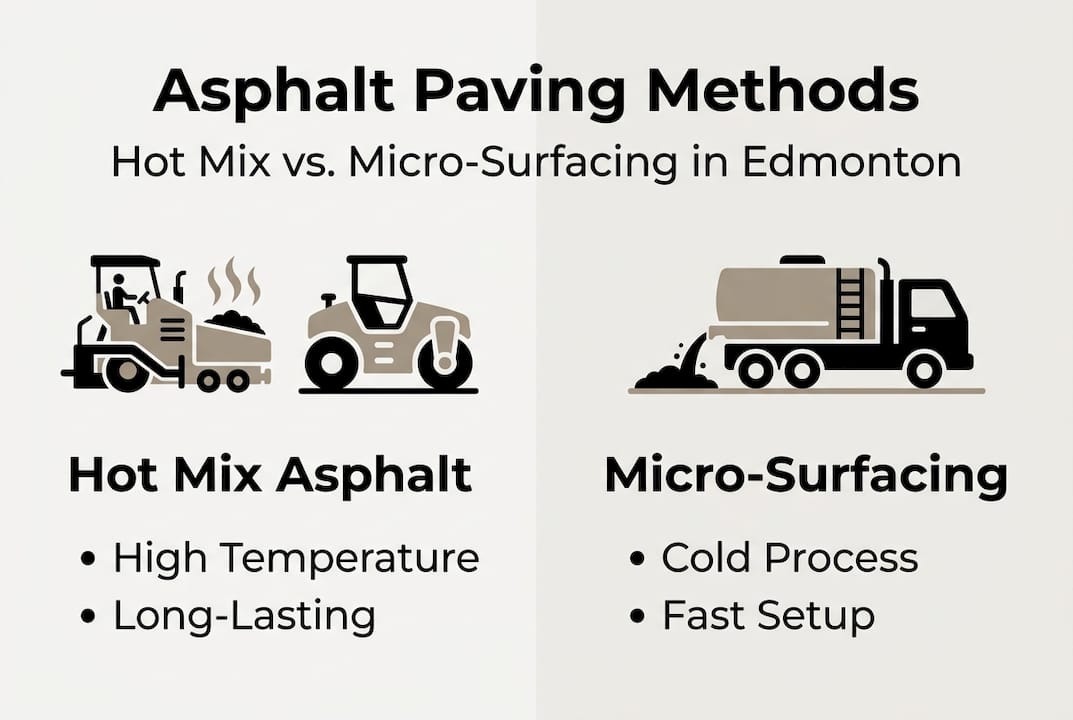
Micro-surfacing is a cold process using emulsion and aggregate, making it ideal for maintenance and extending the life of existing roads in Edmonton. It does not require heating, which reduces energy costs and equipment needs. It is widely used by the City of Edmonton for preventive road maintenance because it seals surface cracks, restores skid resistance, and adds years to a road’s life at a fraction of full repaving cost.
Here is a direct comparison to help you decide:
| Feature | Hot mix asphalt | Micro-surfacing |
|---|---|---|
| Process temperature | High (300°F+) | Cold (ambient) |
| Best use | New construction, major overlays | Maintenance, surface restoration |
| Curing time | 24 to 48 hours | Up to two weeks (full cure) |
| Cost | Higher | Lower |
| Traffic reintroduction | 24 hours | Hours (light), days (heavy turning) |
| Equipment needed | Paver, roller, dump truck | Micro-surfacing machine, squeegee box |
For Edmonton infrastructure managers, micro-surfacing is often the smarter budget choice for roads that are structurally sound but showing surface wear. For new lots or heavily damaged surfaces, HMA is the right call. You can review a broader Edmonton paving process overview to match method to project type.
Key factors to consider when choosing your method:
- Structural condition of the existing surface
- Traffic volume and load the surface must support
- Budget and timeline for the project
- Season and temperature at time of installation
- Long-term maintenance plan for the property
For a wider look at available options, the top road repair methods for Edmonton properties cover additional techniques worth knowing. You can also review asphalt resurfacing basics to understand when resurfacing is the right move over full replacement.
Pro Tip: If you choose micro-surfacing, restrict turning movements on the new surface for the first few days. Tight turns from delivery trucks or heavy vehicles will shear the fresh material before it fully bonds.
Preparing for asphalt installation: site, tools, and materials
With the methods defined, you will need the right preparation to ensure a lasting result. Skipping or rushing site prep is the single most common reason Edmonton asphalt fails prematurely. Proper base preparation, including cleaning and leveling, directly impacts the lifespan and performance of new asphalt surfaces.
Site inspection checklist:
- Check for standing water or poor drainage patterns
- Probe the subgrade for soft spots or unstable fill
- Assess the condition of existing pavement: cracking, heaving, or delamination
- Identify utility covers, curb edges, and grade transitions
- Confirm frost depth has not compromised the base layer
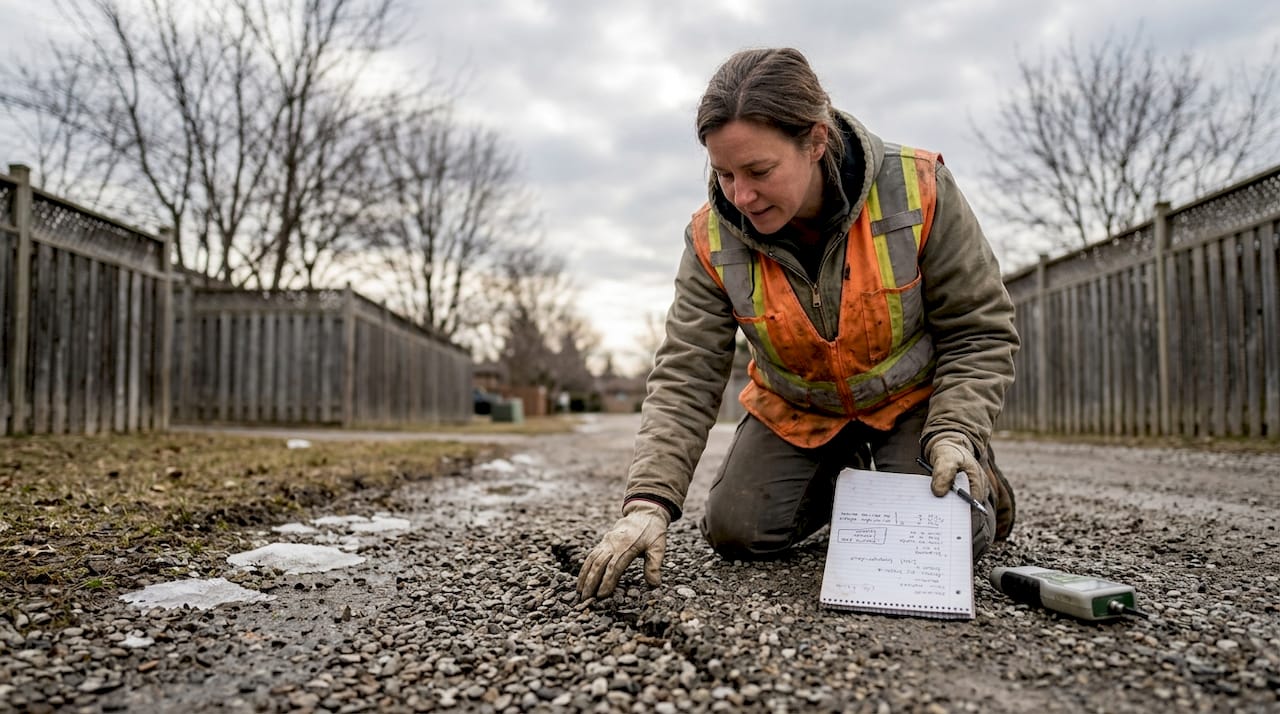
Edmonton’s freeze-thaw cycles are brutal on subgrades. Water infiltrates small cracks, freezes, expands, and pushes the base out of alignment. Before any asphalt goes down, the subgrade must be stable, properly graded, and compacted to the right density. This is not optional. A weak base will telegraph every flaw straight through to the surface within one or two winters.
For a deeper look at what property owners need to know before starting, the property owner asphalt guide covers the full scope of decisions involved. Understanding asphalt road facts also helps you set realistic expectations for performance and lifespan.
Here is a practical tools and materials checklist for both methods:
| Item | Purpose | Notes |
|---|---|---|
| Asphalt paver | Lays and screeds hot mix | Required for HMA only |
| Vibratory roller | Compacts the surface | Essential for both methods |
| Plate compactor | Compacts edges and tight areas | Use where roller cannot reach |
| Emulsion sprayer | Applies tack coat or emulsion | Required for micro-surfacing |
| Aggregate (crushed stone) | Base and mix material | Grade to spec for Edmonton loads |
| Tack coat | Bonds new layer to old surface | Never skip on overlays |
| Infrared thermometer | Monitors mix temperature | Critical for HMA quality control |
| PPE kit | Worker safety | Hard hat, gloves, high-vis vest |
For Edmonton projects specifically, base stabilization is not a luxury. If the existing base shows any sign of movement or moisture damage, address it before paving. Adding geotextile fabric under the base layer is a proven method for reducing frost heave in areas with poor drainage.
Pro Tip: Never skip base grading or compaction, even for thin overlays. A smooth, well-compacted base is what separates a five-year surface from a fifteen-year surface in Edmonton’s climate.
Step-by-step guide: How to lay asphalt in Edmonton
Once the site is prepared, follow these essential steps for proper asphalt application. The sequence matters. Cutting corners at any stage creates problems that show up months or years later, often at the worst possible time.
- Clean and prepare the surface. Remove all debris, vegetation, and loose material. For overlays, mill or grind any high spots to ensure a uniform base depth. Sweep the surface clean and blow out all cracks.
- Apply tack coat. Spray a thin, even layer of asphalt emulsion (tack coat) over the prepared surface. This creates a bond between the old surface and the new layer. Allow it to break (turn from brown to black) before paving begins.
- Check weather conditions. Edmonton’s working window for HMA is roughly May through October, when air temperatures stay above 50°F. Never lay hot mix on a wet surface or when rain is forecast within the curing window. Micro-surfacing has more flexibility but still requires temperatures above 50°F.
- Deliver and place the mix. For HMA, coordinate delivery so trucks arrive in sequence. The paver should move at a consistent speed to avoid mat thickness variations. For micro-surfacing, the machine mixes and places the slurry in a single pass.
- Compact immediately. For HMA, begin rolling as soon as the mat is placed, while the mix is still above 250°F. Use a breakdown roller first, then an intermediate roller, then a finish roller for a smooth, dense surface. Edge compaction is critical to prevent raveling.
- Check for smoothness and grade. Use a straightedge or level to check for high and low spots. Address any irregularities before the mat cools.
- Allow proper curing. For HMA, keep traffic off for at least 24 hours. For micro-surfacing, full curing takes about two weeks, with no heavy turning allowed for the first few days.
Safety note: All workers must wear appropriate PPE at all times, including heat-resistant gloves when handling hot mix. Weather monitoring is mandatory before and during paving operations. Never work in high wind conditions that accelerate mat cooling or in temperatures that fall below the minimum threshold for the chosen mix.
For a detailed look at managing the full repair and paving sequence, the asphalt repair workflow guide covers scheduling and sequencing for Edmonton conditions. If your project involves removing existing material, asphalt milling explained walks through when and how milling fits into the process.
Pro Tip: Roll in a straight line parallel to the centerline of the paved area. Diagonal or erratic rolling patterns create density variations that show up as surface irregularities after the first winter.
Common issues and quality checks after asphalt installation
After paving is complete, ongoing checks ensure the surface performs as intended. Early traffic or missed curing times can cause surface defects and shorten pavement life significantly. Knowing what to look for in the first days and weeks gives you a chance to catch problems before they become costly.
Common post-installation issues to watch for:
- Surface raveling: Aggregate particles loosening from the surface, often caused by poor compaction or contaminated mix
- Segregation: Coarse aggregate separating from fine material, leaving rough, open-textured patches
- Rutting: Permanent deformation in wheel paths, usually from insufficient compaction or a weak base
- Cracking: Transverse or longitudinal cracks appearing within the first season, often linked to thermal movement or base failure
- Bleeding: Excess binder migrating to the surface, creating a shiny, slippery film in warm weather
First-week dos and don’ts:
- Do keep heavy vehicles off the surface for the full curing period
- Do inspect the surface after the first rain for drainage performance
- Do not allow sharp turns or spinning tires on new micro-surfacing
- Do not park vehicles in the same spot for extended periods during the first week
- Do not apply sealcoat until the surface has fully cured
Here is a quick reference for diagnosing and responding to common symptoms:
| Symptom | Likely cause | Quick response |
|---|---|---|
| Surface raveling | Poor compaction, cool mix | Seal affected area, review compaction records |
| Cracking within 30 days | Base failure or thermal shock | Core sample, assess base depth |
| Rutting in wheel paths | Weak subgrade or thin layer | Mill and overlay, address drainage |
| Bleeding (shiny surface) | Excess binder in mix | Apply sand to absorb excess binder |
| Standing water | Poor cross-slope or drainage | Regrade or add drainage infrastructure |
For a structured approach to keeping your surface in top condition after installation, proactive asphalt maintenance covers the full maintenance cycle. Understanding the paving benefits explained helps you make the case for proper installation investment to stakeholders.
Why Edmonton’s climate changes everything: a local perspective
All these steps reveal one truth: standard approaches from other regions do not always yield the best outcomes in Edmonton. We have seen this repeatedly. A contractor with solid experience in a milder climate arrives in Edmonton, follows the same process that worked in Vancouver or Calgary, and within two winters the surface is failing. The issue is not skill. It is adaptation.
Edmonton’s subgrade is not static. Frost penetrates deep, sometimes over six feet, and the ground moves. Conventional wisdom says compact the base and you are done. Here, compaction is just the starting point. You also need to account for frost heave potential, drainage paths that freeze and redirect water, and the fact that temperature swings of 50°F or more can happen within a single week in spring.
The unexpected insight is this: investing more in preparation, specifically base stabilization, drainage correction, and proper material selection, costs less than one emergency repair cycle after a bad winter. We have seen clients who spent an extra 15% on preparation avoid three repair calls in the first five years. That math is straightforward.
Micro-surfacing is a perfect example of Edmonton-smart thinking. It is not the flashiest solution, but applied at the right time on a structurally sound road, it can add five to seven years to a surface’s life. That is years of deferred full repaving cost. The bespoke paving strategies that work here are built around local conditions, not imported playbooks.
The bottom line is that Edmonton paving rewards patience and preparation. It punishes shortcuts more harshly than almost any other climate in North America.
Get expert asphalt paving and maintenance for Edmonton
A specialized approach makes all the difference, and here is how to get help with your next project.
Working with a local expert means your site gets assessed for the specific conditions that matter in Edmonton: subgrade stability, drainage, frost depth, and the right material for your traffic load. ProZone Ltd brings that local knowledge to every project, from commercial parking lots to municipal road maintenance programs. Getting the installation right the first time saves you from the repair cycle that catches so many property managers off guard.
If you are planning a new installation or need to assess an existing surface, the asphalt paving guidance on our site is a strong starting point. For larger infrastructure work, our Edmonton road construction services cover the full scope of municipal and commercial projects. You can also explore the full range of Edmonton construction services available for 2026 project planning. Reach out for a consultation or project quote and get a plan built around your site, not a generic template.
Frequently asked questions
How long before I can use a newly paved asphalt surface in Edmonton?
For standard hot mix asphalt, keep traffic off for at least 24 hours. For micro-surfacing, full curing takes two weeks, with no heavy turning permitted for the first few days after installation.
What is the advantage of micro-surfacing versus traditional asphalt paving?
Micro-surfacing uses emulsion and aggregate in a cold process that extends road life with less energy and equipment, making it ideal for maintenance work with minimal traffic disruption compared to full hot mix repaving.
What preparation do I need before laying asphalt?
You need a thorough subgrade inspection, confirmed drainage, and verified compaction before any mix goes down. Proper base preparation is the single biggest factor in how long your new asphalt surface will last in Edmonton’s climate.