
A decorative asphalt coating delivers lasting colour, improved skid resistance, and clearer wayfinding on asphalt surfaces. For Alberta property owners and managers, the right system also needs to flex through Edmonton’s freeze-thaw cycles without peeling or spalling. The two most reliable choices for Canadian conditions are flexible acrylic surfacings such as StreetBond and hot-applied thermoplastic for durable pavement markings.
Key facts to know before you request quotes:
- Coloured asphalt coatings are not paint. They are engineered surfacing systems with specific binder chemistry, aggregate profiles, and curing requirements.
- Product classes range from polymer cement surfacings and acrylic colour coatings to thermoplastic markings and integral hot-mix colour additives.
- Alberta Safety Codes and ASTM standards govern surface preparation and traffic control on commercial sites.
- Every product should come with a Technical Data Sheet (TDS) and Safety Data Sheet (SDS) from the manufacturer.
Pro Tip: Request a site assessment before finalising your product choice. Surface age, traffic volume, and existing crack patterns all affect which system will perform best on your specific pavement.
Contact ProZone for a free estimate and site assessment using the online form at Prozoneltd or by phone.
Table of Contents
- What are the main types of decorative asphalt coatings?
- Where can decorative coloured asphalt be used?
- How do materials compare on durability, skid resistance, and reflectivity?
- How long do decorative asphalt coatings last in Canadian climates?
- What does the surface preparation and application process look like?
- What drives the cost of a decorative asphalt coating project in Canada?
- How do you choose a qualified contractor in Alberta?
- ProZone’s decorative asphalt coating services in Edmonton and Alberta
- Why specification and local experience determine long-term performance
- Sources
- FAQ
What are the main types of decorative asphalt coatings?
A decorative asphalt coating is a factory-engineered surfacing product applied over existing or new asphalt to add colour, texture, and functional performance. It differs from traffic paint in binder thickness, aggregate content, and service life. Paint is a thin film that fades within one to two seasons; a properly specified coating system bonds to the substrate and moves with it.
The four primary product classes property owners will encounter are:
- Polymer cement surfacings (e.g., StreetBond-style systems): Acrylic polymer binders combined with fine aggregate. StreetBond is formulated to balance flexibility and hardness, resist UV degradation, and accommodate pavement movement in freeze-thaw climates. Applications include bike lanes, bus lanes, crosswalks, branded plazas, and play surfaces.
- Acrylic colour coatings and colourised sealers: Water-based acrylic systems that apply like a thick sealer and add colour while protecting the surface. Products from suppliers such as Sealmaster are marketed for driveways, parking lots, and recreational courts. Lifespan is shorter than polymer cement systems but cost is lower.
- Thermoplastic pavement markings: A binder-plus-pigment product heated to roughly 400°F for molten application. Thermoplastic materials include glass beads for retroreflectivity and generally outlast paint significantly when installed correctly. Available as hot-applied or as factory-preformed sheets for logos and symbols.
- Hot-mix and emulsion colour additives (inPHusion-type systems): Pigment additives blended into hot-mix asphalt during production or into cold emulsion sealers. These create integrally coloured pavement rather than a surface coating. Useful for new construction where colour through the full wearing course is specified.
Always request the TDS and SDS for any product before signing a contract. These documents confirm performance claims, application requirements, and safe handling procedures, and they belong in your facility maintenance file.
| Product class | Primary use | Relative durability | Freeze-thaw suitability |
|---|---|---|---|
| Polymer cement surfacing | Full-surface colour, plazas, bike lanes | High | Excellent (flexible binder) |
| Acrylic colour coating/sealer | Driveways, courts, parking lots | Moderate | Good with quality product |
| Thermoplastic marking | Crosswalks, symbols, legends | High for markings | Good when correctly applied |
| Hot-mix colour additive | New paving, integral colour | Very high | Excellent (integral) |
Where can decorative coloured asphalt be used?
Coloured and patterned asphalt surfacings work across a wider range of applications than most property owners expect. The most common projects in Alberta include:
- Driveways: A driveway decorative finish using an acrylic colour coating or stamped asphalt overlay adds kerb appeal without the spalling risk of decorative concrete.
- Parking lots: Colour contrast between drive lanes, pedestrian paths, and stalls improves wayfinding and reduces conflict points.
- Bike lanes and bus lanes: Polymer cement surfacings in green or red are the standard for dedicated active-transportation infrastructure.
- Crosswalks and pedestrian plazas: Thermoplastic preformed markings and full-surface acrylic coatings both perform well here, depending on traffic frequency.
- Play surfaces and schoolyards: Play surface coatings and playground asphalt coating systems use slip-resistant aggregates and bright colours to delineate activity zones safely.
- Medians and traffic-calming features: Coloured surfacings signal speed-reduction zones and improve driver awareness.
- Logos and branded elements: Preformed thermoplastic or polymer cement systems allow custom shapes, corporate colours, and Pantone-matched branding on commercial sites.
Design choices extend beyond colour. Solid single-colour applications are the most cost-effective. Multi-tone stamped patterns and textured anti-slip surfacings add visual complexity and tactile differentiation. Inlay logos in thermoplastic or polymer cement can be produced to custom shapes with StreetBond thermoplastic markings that meet MUTCD compliance requirements for legends and symbols.
Pro Tip: Ask your contractor for a colour chart and a photo gallery of installed projects in similar climates. Colours shift slightly after curing and under UV exposure, so reviewing aged installations gives a more accurate preview than a fresh sample board.
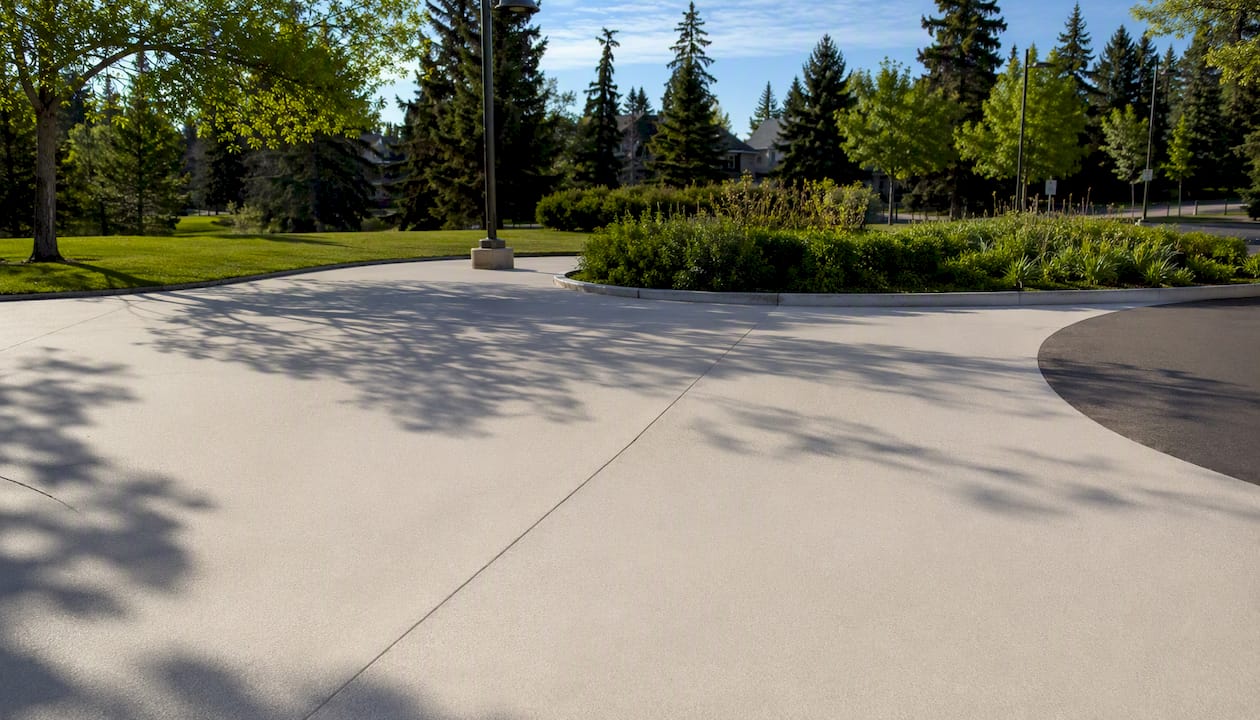
Raising surface reflectivity through pigment selection also carries a functional benefit. Cool pavement strategies that increase surface albedo can reduce peak pavement temperatures and help mitigate urban heat island effects, which is relevant for exposed plazas and schoolyards during Alberta summers.
How do materials compare on durability, skid resistance, and reflectivity?
Choosing between product classes comes down to three performance axes: how long the surface lasts under your traffic conditions, how much slip resistance it provides, and whether reflectivity or heat reduction matters for your site.
Durability by system class
Thermoplastic markings, when correctly applied to a properly prepared surface, typically outlast paint by a significant margin and can remain legible for several years in moderate-traffic conditions. Polymer cement surfacings such as StreetBond are engineered to flex with the asphalt substrate, which is the critical property for Edmonton’s freeze-thaw cycles. Acrylic colour coatings sit in the middle: durable enough for low-to-moderate traffic but requiring more frequent recoat cycles than polymer cement systems. Standard traffic paint is the shortest-lived option and is not considered a decorative coating for the purposes of this guide.
Bond quality in thermoplastic depends heavily on surface temperature and substrate porosity. TxDOT guidance recommends primers for older or heavily oxidised asphalt and for concrete surfaces, because bond strength depends on both binder thermal properties and surface porosity.
Skid resistance and retroreflectivity
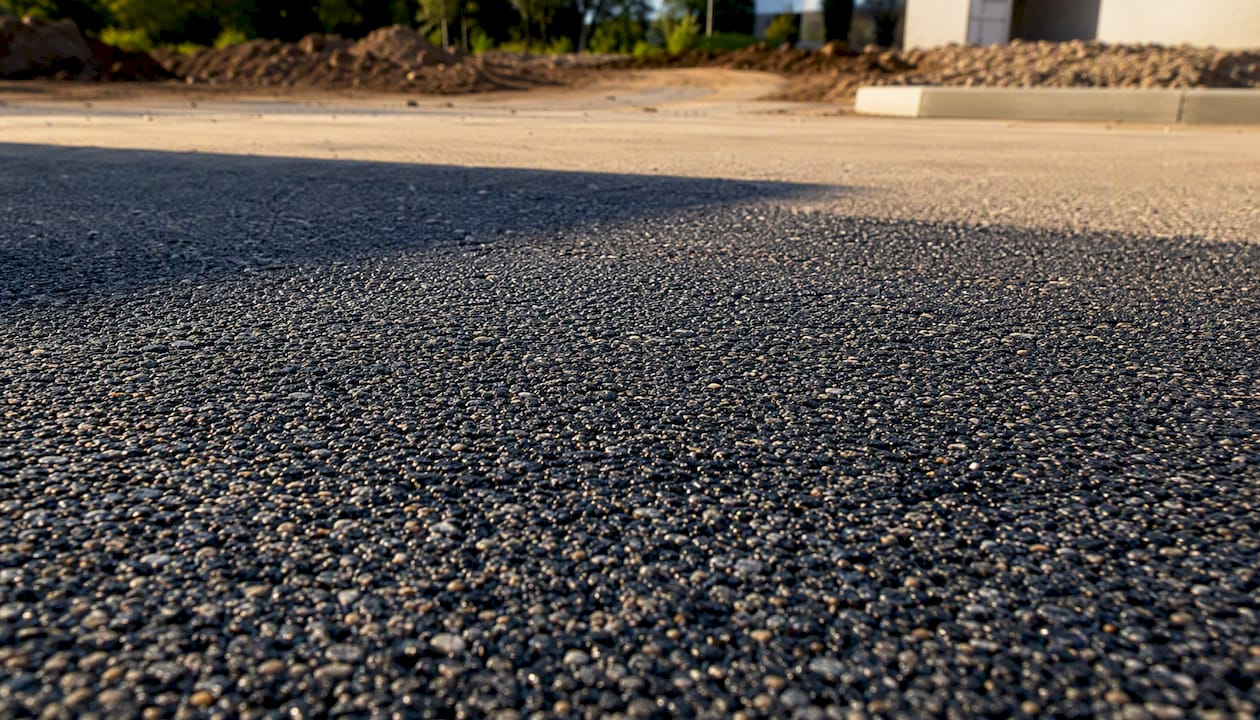
Aggregates and glass beads are the two primary tools for skid resistance and night visibility. Thermoplastic products incorporate glass beads either pre-mixed into the binder or drop-applied to the surface immediately after application. Polymer cement surfacings use fine aggregate profiles to achieve slip-resistant textures. For playground asphalt coating and play surface coatings, aggregate selection is especially important because wet-weather traction is a safety requirement, not just a performance preference.
Reflectivity and cool-pavement effects
Lighter pigments reflect more solar energy than dark asphalt, reducing surface temperatures in exposed areas. This matters for pedestrian comfort in plazas and for reducing heat stress on play surfaces during summer. Pigment selection and surface reflectance are design decisions that should be made at the specification stage, not as an afterthought.
Pro Tip: Use thermoplastic for high-wear markings such as stop bars, crosswalk lines, and directional arrows. Choose a flexible acrylic surfacing for full-colour plazas, bike lanes, and play areas where coverage area and colour uniformity matter more than line precision.
How long do decorative asphalt coatings last in Canadian climates?
Lifespan varies by system class, traffic volume, and maintenance discipline. Under Alberta conditions, general service life ranges are:
- Polymer cement surfacings: Have a reasonable service life in moderate pedestrian and light-vehicle traffic with proper maintenance. High-traffic vehicle areas shorten this range.
- Acrylic colour coatings and sealers: Require recoating periodically depending on UV exposure and traffic.
- Thermoplastic markings: Last several years for high-traffic crosswalks and drive lanes, with longer durability in lower-traffic applications.
- Integral hot-mix colour: Lifespan follows the asphalt wearing course itself and lasts until the pavement requires resurfacing.
Edmonton’s climate adds specific stressors. Freeze-thaw cycling, mechanical snow clearing, and de-icing salts all accelerate surface wear. Flexible acrylic polymer surfacings are specifically formulated to expand and contract with the asphalt substrate, which reduces the spall-and-peel failure mode that affects decorative concrete in cold climates. Stamped asphalt with a flexible coating typically outperforms decorative concrete in Canadian freeze-thaw conditions, with lower lifecycle cost and easier, localised repairs.
Recommended maintenance actions for Alberta properties:
- Spring inspection: Check for delamination, aggregate loss, and crack propagation after the final freeze-thaw cycle.
- Cleaning: Power wash to remove sand, salt residue, and organic debris before any recoat work.
- Spot repairs: Address cracks and edge failures promptly to prevent water infiltration under the coating.
- Recoat cycles: Schedule recoating based on the manufacturer’s TDS recommendation, not purely on visual appearance.
- Winter protocol: Rubber-edged snow clearing equipment reduces abrasion on coloured surfaces compared with bare steel blades.
Pro Tip: Budget for a recoat cycle at the time of initial installation. Knowing the expected recoat interval lets you include it in your annual maintenance contract rather than treating it as an unplanned capital expense.
What does the surface preparation and application process look like?
Surface preparation is where most coating failures originate. A thorough prep sequence is non-negotiable, particularly on aged or oxidised Alberta pavements.
- Traffic management: Establish a traffic control plan that meets Alberta Safety Codes requirements before any work begins. Commercial sites typically require signage, barriers, and a flagging protocol.
- Power washing: High-pressure cleaning removes loose aggregate, oil contamination, salt residue, and biological growth. The surface must be fully dry before coating application.
- Crack repair and patching: Cracks wider than 3mm should be routed and sealed. Structural failures require patching with compatible asphalt mix before any decorative system is applied. See asphalt repair solutions for Edmonton for patching method options.
- Primer application: Required for thermoplastic on older or oxidised asphalt and on concrete substrates. Primer improves bond strength by penetrating surface porosity. Skipping this step on aged pavement is a common cause of early delamination.
- Coating or thermoplastic application: Polymer cement and acrylic systems are applied by squeegee, spray, or roller depending on the product. Thermoplastic is applied molten at roughly 400°F by spray, ribbon, or extrusion equipment. Preformed thermoplastic is placed on a heated surface and bonded by torch or heat gun.
- Curing and reopen time: Acrylic systems typically require 24–48 hours before vehicle traffic, depending on temperature. Thermoplastic cools rapidly and can often be opened to traffic within 30 minutes of application.
Temperature and moisture conditions are critical. Most acrylic coatings require a minimum surface temperature of 10°C and an air temperature above 5°C. Thermoplastic application also depends on surface temperature; poor bond results when the pavement is below the recommended threshold.
Pro Tip: Schedule decorative coating work for late spring through early autumn in Edmonton. Avoid application when overnight temperatures are forecast to drop below 5°C within the curing window.
Thermoplastic application involves molten material at high temperatures. Crews must use appropriate PPE including heat-resistant gloves and face shields, and the site perimeter must be secured to prevent public access during application.
What drives the cost of a decorative asphalt coating project in Canada?
No two projects price identically, but the primary cost drivers follow a consistent pattern:
- Surface area: Unit rates apply per square metre. Larger areas benefit from lower mobilisation cost per square metre.
- Surface preparation level: Heavily cracked, oil-contaminated, or structurally compromised pavement requires more prep time and materials before coating can begin.
- Pattern and design complexity: Solid single-colour applications cost less than multi-colour stamped patterns, inlay logos, or custom thermoplastic symbols.
- Material class: Polymer cement surfacings carry a higher material cost than acrylic sealers. Thermoplastic is priced by linear metre for markings or by square metre for full-surface applications.
- Traffic control requirements: Commercial and municipal sites with active traffic require a formal traffic control plan, signage, and sometimes flagging personnel, all of which add to project cost.
- Local labour rates: Alberta labour rates reflect the regional construction market and vary by project complexity and crew certification level.
Contractors estimate using unit rates for materials and labour, plus mobilisation, waste allowance, and any subcontracted traffic control. A well-structured quote will itemise these components separately.
Pro Tip: Ask for an itemised quote that references the specific product TDS, states the warranty length, and includes the recommended maintenance schedule. A quote that lists only a lump sum with no product specification is a red flag, not a bargain.
Planned maintenance reduces lifecycle cost. Proactive pavement maintenance consistently delivers savings compared with reactive repair, which is worth factoring into your total cost of ownership when comparing product classes.
| Cost driver | Lower cost scenario | Higher cost scenario |
|---|---|---|
| Surface prep | New or recently sealed pavement | Heavily cracked, oil-stained, aged surface |
| Design complexity | Solid single colour | Multi-colour stamped pattern with logos |
| Material class | Acrylic colour sealer | Polymer cement surfacing |
| Traffic control | Off-hours residential | Active commercial site, daytime |
| Area | Large open lot | Small, irregular, or obstructed area |
How do you choose a qualified contractor in Alberta?
The contractor you select matters as much as the product you specify. A correctly specified system applied by an unqualified crew will fail faster than a modest product applied by an experienced one.
Credentials and proof points to verify:
- Familiarity with Alberta Safety Codes for traffic control and worksite safety.
- TDS and SDS on file for every product they propose to use.
- A project gallery with installed examples in similar applications and climates.
- Verifiable references from commercial or municipal clients in Alberta.
- Current liability insurance and WCB coverage.
- Written warranty terms that specify coverage period, exclusions, and the contractor’s obligations.
Questions to ask before signing:
- What specific product brand and system are you proposing, and can you provide the TDS?
- What is the expected service life under my traffic conditions?
- What maintenance schedule does the manufacturer recommend?
- What does your warranty cover, and what voids it?
- How will traffic be managed during application and curing?
- Can you provide a completed project reference in a similar Alberta climate?
Red flags to watch for:
- Vague product descriptions (“coloured sealer” with no brand or system name).
- No written warranty or a warranty that excludes normal wear.
- Refusal to provide SDS or TDS on request.
- No local project references or a gallery of only stock images.
- Unusually low pricing with no itemised breakdown.
Pro Tip: Ask to see the thermoplastic and StreetBond product overview before your contractor meeting. Understanding the basics of each system helps you ask better questions and evaluate the answers you receive.
ProZone’s decorative asphalt coating services in Edmonton and Alberta
ProZone delivers StreetBond polymer cement surfacing, thermoplastic pavement markings, and full surface preparation services across Edmonton and the surrounding Alberta region. The crews are experienced with Alberta Safety Codes requirements, and every project is supported by manufacturer TDS and SDS documentation. ProZone’s StreetBond and thermoplastic services cover bike lanes, crosswalks, parking lots, play surfaces, branded plazas, and commercial driveways, with project management from site assessment through to final inspection.
For property owners planning a broader scope, ProZone’s asphalt paving and coating services address substrate preparation, patching, and new paving before any decorative system is applied. Warranty terms and maintenance schedules are provided in writing with every contract.
Request a free estimate and site assessment by completing the online form at Prozoneltd or by calling ProZone directly. A site visit confirms surface condition, prep requirements, and the most appropriate system for your application before any commitment is made.
Why specification and local experience determine long-term performance
The most consistent performance gap seen across Alberta decorative pavement projects is not between product brands. It is between projects where the system was correctly specified for the substrate and climate, and projects where it was not. A flexible acrylic polymer surfacing on a sound, properly prepared asphalt base will outlast a premium polymer cement system applied over a cracked, unprimed surface.
Freeze-thaw cycling in Edmonton is not a marginal stressor. Pavements can cycle through freeze-thaw dozens of times in a single winter season. Any coating that cannot move with the substrate will delaminate, and delamination on a commercial site creates both a maintenance liability and a safety hazard. Specifying decorative concrete in this climate, rather than a flexible asphalt-based system, typically results in spall patching and partial replacement within a few years, at considerably higher cost than a recoat cycle on a flexible surfacing.
The other factor that experienced project managers build in from the start is maintenance planning. A coating system without a defined recoat schedule is a system that will be neglected until it fails visibly. Integrating the manufacturer’s recommended maintenance interval into the facility’s annual maintenance contract at procurement stage is the single most effective way to extend service life and control lifecycle cost.
Sources
When specifying or reviewing a decorative asphalt coating project, these sources provide authoritative technical detail:
- StreetBond® — Durable Asphalt Coatings for Safer Streets | HUB Surface Systems
- Thermoplastic 101 | For Construction Pros
- Thermoplastic Marking Material Characteristics | TxDOT
- Thermoplastic Pavement Markings | StreetBond®
Always request the TDS and SDS from your contractor for every product proposed. Keep copies in your facility maintenance file alongside the warranty documentation and the recommended recoat schedule.
FAQ
What is a decorative asphalt coating?
A decorative asphalt coating is an engineered surfacing product applied over asphalt to add colour, texture, and skid resistance. Unlike paint, these systems use polymer binders and aggregates that bond to the substrate and flex with pavement movement.
Is there such a thing as coloured asphalt?
Yes. Coloured asphalt is produced either by adding pigment additives to hot-mix asphalt during production (integral colour) or by applying a coloured coating system such as an acrylic surfacing or thermoplastic marking over existing pavement.
How long does a decorative asphalt coating last?
Lifespan depends on the system class and traffic conditions. Polymer cement surfacings have a reasonable service life in moderate pedestrian and light-vehicle traffic; acrylic colour coatings require recoating periodically depending on UV exposure and traffic; thermoplastic markings last several years for high-traffic crosswalks and drive lanes, with longer durability in lower-traffic applications.
How do you make asphalt look better without full replacement?
Cleaning, crack repair, and applying a coloured acrylic sealer or polymer cement surfacing can significantly improve the appearance and extend the service life of existing asphalt. ProZone offers surface preparation and coating application services across Edmonton and Alberta.
What is the most cost-effective way to coat an asphalt driveway?
An acrylic colourised sealer is the lowest-cost entry point for a driveway decorative finish, though it requires recoating more frequently than a polymer cement system. For driveways with significant cracking or surface deterioration, addressing the substrate first produces better long-term value than coating over unrepaired damage.