
Cracked pavement, standing water, and a pothole that appeared overnight – these are not just eyesores. For commercial property managers in Edmonton, neglected asphalt translates directly into liability exposure, tenant complaints, and repair bills that compound fast. Twice-yearly inspections are the standard starting point for catching problems early, but a solid repair workflow goes well beyond scheduling a walk-around. This article walks you through every stage: inspecting your lot, prioritizing repairs, executing crack and pothole fixes, and building a multi-year maintenance plan that protects your investment.
Table of Contents
- Understanding the unique challenges of Edmonton asphalt
- Preparation: Inspection and planning for repairs
- Step-by-step crack repair workflow
- Pothole repair approaches: Traditional, infrared, and Plastasphalt
- Preventive maintenance and multi-year asphalt planning
- Discover professional asphalt repair and maintenance solutions
- Frequently asked questions
Key Takeaways
| Point | Details |
|---|---|
| Twice-yearly inspections | Inspect your asphalt in spring and fall to catch issues early and reduce repair costs. |
| Choose the right repair method | Infrared technology and Plastasphalt options offer fast, durable pothole repairs suited to Edmonton’s climate. |
| Preventive maintenance saves | Regular sealcoating and planning keep asphalt in top condition and lower long-term expenses. |
| Prioritize drainage fixes | Address drainage problems before any repair – this prevents recurring failures and maximizes longevity. |
| Budget effectively | Use local cost benchmarks and documentation to optimize repair timing and avoid overspending. |
Understanding the unique challenges of Edmonton asphalt
Edmonton’s climate is genuinely hard on pavement. Temperatures swing from below -30°C in January to above 30°C in July, and that range creates a relentless freeze-thaw cycle that no asphalt surface escapes. Water seeps into small cracks, freezes, expands, and forces those cracks wider. Repeat that process dozens of times each winter and you understand why parking lots here age faster than in milder climates.
The winter effects on asphalt are compounded by heavy snow removal equipment, road salt, and the sheer volume of traffic that commercial lots handle. Edge deterioration is especially common because pavement edges lack lateral support and are the first areas to crumble under load. Drainage failures make everything worse – water that pools on the surface accelerates oxidation and softens the base layer beneath.
The City of Edmonton tracks Edmonton roadway repairs and prioritizes crack sealing over simple filling because sealant stays flexible under temperature swings. That flexibility is the key difference. A rigid filler cracks again within one or two freeze-thaw cycles, while a properly applied rubberized sealant moves with the pavement.
Here are the primary deterioration factors you need to account for in your repair planning:
- Freeze-thaw cycling: The single biggest driver of crack growth in Edmonton
- Edge erosion: Pavement edges without curb support fail first
- Poor drainage: Standing water softens the sub-base and accelerates surface wear
- UV oxidation: Summer sun dries out the binder, making asphalt brittle
- Heavy vehicle loads: Delivery trucks and waste collection vehicles stress pavement beyond its design load
“Freeze-thaw cycles make crack sealing the most critical preventive maintenance task for commercial asphalt in northern climates.”
Understanding these factors shapes every decision in your repair workflow. You are not just fixing what you see – you are interrupting a deterioration cycle. Explore road repair methods Edmonton property managers are using in 2026 to stay ahead of seasonal damage.
Preparation: Inspection and planning for repairs
A repair workflow without a solid inspection phase is just guesswork. You need documented evidence of what is failing, where, and how fast. That documentation drives your budget requests, contractor conversations, and scheduling decisions.
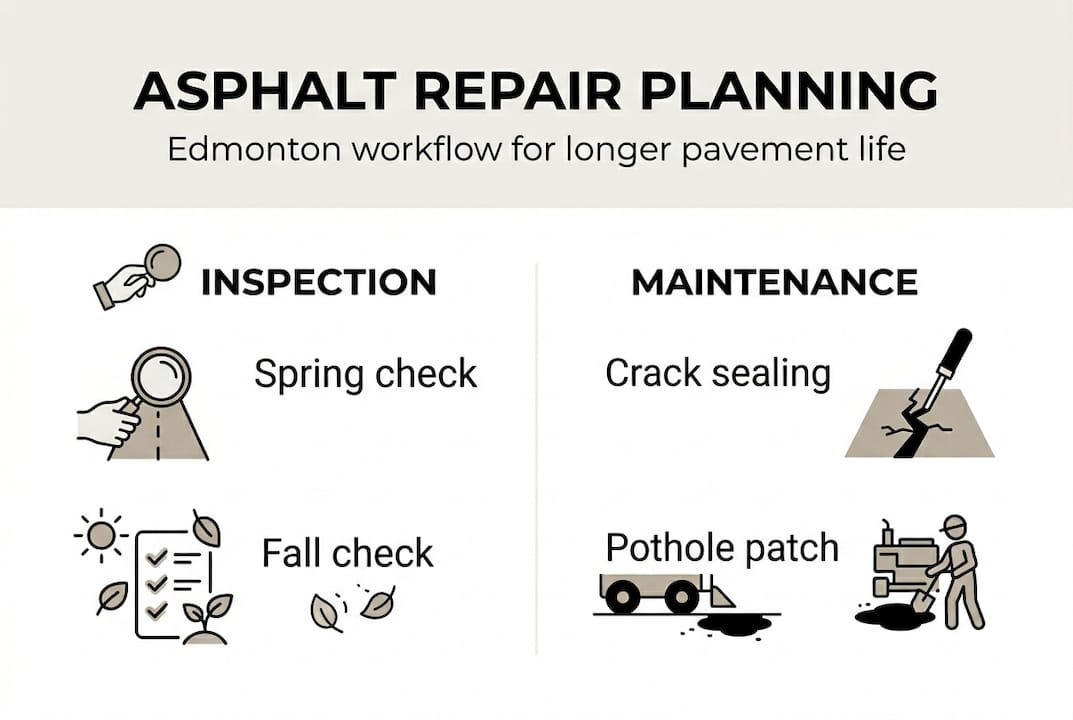
Spring and fall inspections are the standard cadence for Edmonton properties. Spring reveals what winter did to your pavement. Fall gives you a window to seal cracks before the next freeze cycle begins. After any severe weather event – a major hailstorm, an unusually wet spring – add an unscheduled walkthrough.
Use this checklist during every inspection:
- Cracks: Note width, length, and pattern (linear vs. alligator/fatigue cracking)
- Potholes: Measure diameter and depth; flag any near pedestrian paths
- Drainage: Check for pooling water, blocked catch basins, and low spots
- Edge condition: Look for crumbling, heaving, or separation from curbs
- Surface texture: Raveling (loose aggregate on the surface) signals oxidation
- Line markings: Faded markings are a safety and compliance issue
| Inspection item | Priority level | Repair timing |
|---|---|---|
| Active potholes | Critical | Within 48 hours |
| Wide cracks (>6mm) | High | Before next freeze |
| Drainage blockages | High | Immediately |
| Narrow cracks (<6mm) | Medium | Fall sealing window |
| Surface raveling | Low to medium | Next sealcoat cycle |
| Faded line markings | Low | Annual restriping |
Pro Tip: Photograph every defect with a timestamp and GPS tag if your phone supports it. A visual record makes it far easier to track deterioration rates year over year and justify repair budgets to ownership.
Address drainage issues before any crack or pothole repair. Fixing surface damage over a compromised sub-base is a waste of money – water will simply undermine the new repair within one season. Once drainage is resolved, you can prioritize surface repairs with confidence. For guidance on keeping costs manageable, review affordable asphalt repairs options available in Edmonton. A solid understanding of the full paving process guide also helps you communicate clearly with contractors and avoid surprises.
Step-by-step crack repair workflow
Cracks are the most common issue in Edmonton parking lots, and they are also the most preventable from escalating. A crack ignored today becomes a pothole in two winters. The repair process is straightforward when you follow the right sequence.
- Clean the crack thoroughly. Use compressed air or a wire wheel to remove all debris, vegetation, and loose material. Sealant bonds to clean asphalt, not dirt.
- Route the crack (optional but recommended). Routing creates a uniform channel that holds more sealant and improves adhesion. It is especially worthwhile for cracks wider than 6mm.
- Apply heat lancing if needed. For cracks with moisture or stubborn debris, a heat lance dries and cleans simultaneously, improving bond strength.
- Apply hot rubberized sealant. Pour or inject the sealant, slightly overfilling the crack, then squeegee flush with the surface. Hot-applied sealant stays flexible through freeze-thaw cycles.
- Allow proper cure time. Most hot sealants need 30 to 60 minutes before traffic can resume, depending on temperature.
The crack repair process – cleaning, optional routing, and hot rubberized sealant – is the industry standard for commercial properties in freeze-thaw climates. Skipping the cleaning step is the most common reason repairs fail prematurely.
| Method | Cost per linear ft | Durability | Best for |
|---|---|---|---|
| Cold pour crack filler | $0.50 to $0.90 | 1 to 2 years | Narrow cracks, DIY |
| Hot rubberized sealant | $0.90 to $1.50 | 3 to 7 years | Commercial lots, Edmonton climate |
| Routed and sealed | $1.25 to $2.00 | 5 to 8 years | Wide or active cracks |
Pro Tip: Schedule crack sealing in fall, ideally when temperatures are between 10°C and 20°C. Sealant flows and bonds best in moderate temperatures, and you get the maximum benefit heading into the freeze season.
For lots that also need surface protection, pairing crack sealing with a sealcoating guide program delivers the best value. Sealcoating without sealing cracks first is like painting over rust – the underlying damage continues. A commercial asphalt maintenance program that combines both extends pavement life significantly.
Pothole repair approaches: Traditional, infrared, and Plastasphalt
Potholes demand faster action than cracks. An open pothole is a trip hazard, a vehicle damage risk, and a liability. You have three main repair approaches, each with distinct tradeoffs.
Traditional cut-and-patch involves sawcutting a clean rectangle around the pothole, removing all failed material, compacting the base, filling with hot mix asphalt, and compacting the surface. It is durable and permanent but requires equipment, crew, and a hot mix plant nearby. Cost typically runs $3 to $7 per square foot depending on depth and access.
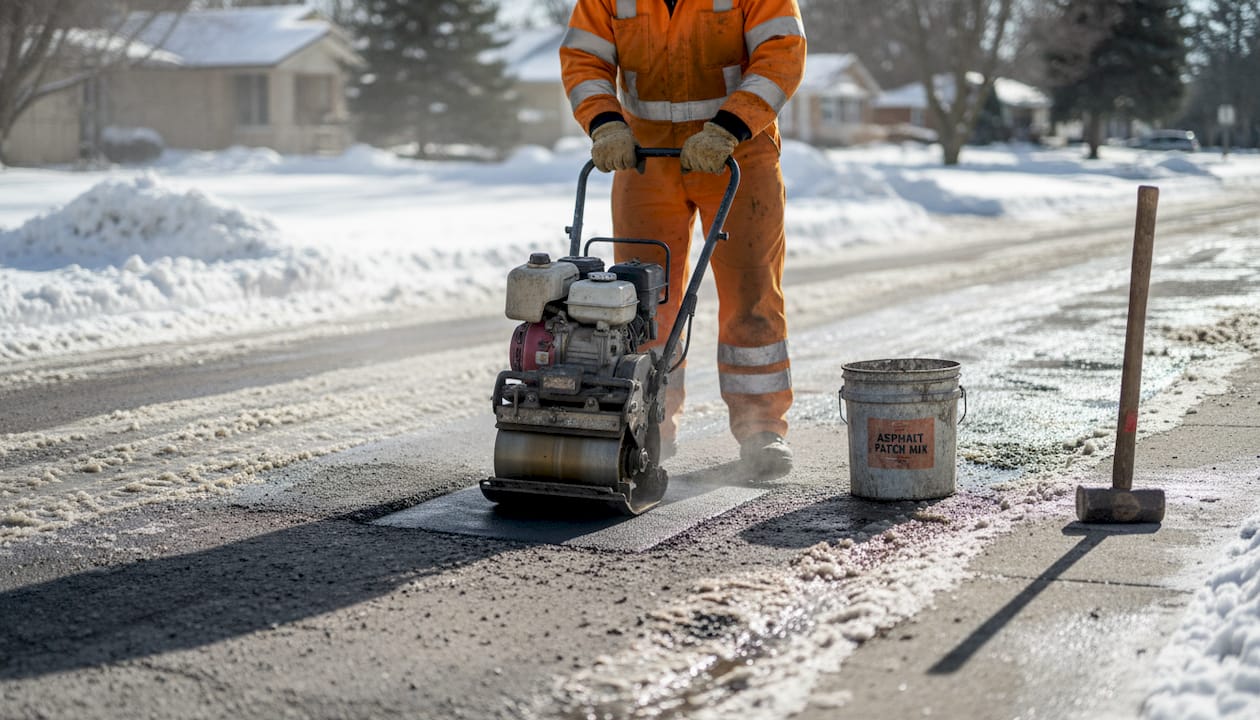
Infrared repair heats the existing asphalt to around 300°F, allows it to be reworked, blends in fresh material as needed, and compacts the seamless patch. Infrared repair reduces waste by 90% and can be completed in under an hour. The seamless bond eliminates cold joints – the weak seams where new and old asphalt meet in traditional patches – which is a major advantage in freeze-thaw conditions.
Plastasphalt cold patch uses a cold-mix formula with recycled rubber content. It requires no heating equipment, bonds in cold temperatures, and opens to traffic almost immediately. It is the right tool for emergency repairs, winter patching, or locations where infrared equipment cannot easily access.
| Method | Speed | Durability | Cold weather use | Relative cost |
|---|---|---|---|---|
| Traditional cut-and-patch | Slow | Excellent | Limited | Medium to high |
| Infrared repair | Fast | Excellent | Limited | Medium |
| Plastasphalt cold patch | Very fast | Good | Yes | Low to medium |
Infrared repair is the preferred method for high-traffic commercial lots because it eliminates cold joints and recycles existing material, reducing both cost and environmental impact.
For Plastasphalt repairs Alberta property managers need during winter or for urgent fixes, the cold-mix option keeps lots safe without waiting for ideal conditions. When damage is extensive and the surface is beyond patching, an asphalt resurfacing guide can help you evaluate whether a full overlay makes more financial sense than repeated spot repairs. You can also compare asphalt options against concrete parking lot repairs when planning major rehabilitation work.
Preventive maintenance and multi-year asphalt planning
Repairs fix problems. Preventive maintenance stops them from forming in the first place. The math is straightforward: sealcoating costs a fraction of what patching or resurfacing costs, and it dramatically extends the intervals between major repairs.
Sealcoating every 2 to 3 years protects against UV oxidation and water infiltration, keeping asphalt viable for up to 30 years with proper care. In Edmonton’s climate, realistic pavement life with consistent maintenance is 15 to 25 years. Without it, you are looking at major rehabilitation in 10 to 12 years.
Here is what a practical preventive maintenance program looks like:
- Year 1 to 2: Inspect, seal cracks, address drainage
- Year 2 to 3: First sealcoat application
- Year 3 to 5: Inspect, seal new cracks, spot patch as needed
- Year 5 to 6: Second sealcoat application
- Year 10 to 12: Evaluate surface wear; consider thin overlay if more than 25% shows distress
- Year 20 to 25: Full resurfacing or reconstruction based on condition
A multi-year maintenance plan also makes budget forecasting predictable. Instead of reacting to failures, you allocate funds annually for known maintenance activities. Ownership appreciates that kind of financial visibility.
Pro Tip: When more than 25% of your lot surface shows cracking, raveling, or distortion, patching becomes less cost-effective than resurfacing. Use that threshold as your trigger for a full condition assessment.
The proactive asphalt repair benefits extend beyond cost savings – well-maintained lots reduce slip-and-fall incidents, protect vehicles, and signal to tenants that the property is professionally managed. If your portfolio includes concrete elements, reviewing concrete repair costs Edmonton businesses face helps you build a complete facility maintenance budget.
Discover professional asphalt repair and maintenance solutions
A well-structured workflow is only as effective as the team executing it. ProZone Ltd. brings hands-on expertise in infrared repair, Plastasphalt cold patching, crack sealing, and full-scale resurfacing to commercial properties across Edmonton and the surrounding region.
Whether you need emergency pothole repairs before a tenant event or a multi-year maintenance contract that keeps your lot in top condition year-round, expert asphalt repair Edmonton professionals at ProZone are ready to help. Expand your knowledge with a deep look at asphalt road facts and material composition, or explore how concrete flatwork guide considerations fit into your broader facility planning. Contact ProZone Ltd. to schedule an inspection and get a repair plan built around your property’s specific needs.
Frequently asked questions
How often should asphalt parking lots in Edmonton be inspected?
Twice-yearly inspections are the standard in Edmonton – once in spring and once in fall. Add an extra walkthrough after any severe weather event to catch damage before it escalates.
What is the best repair method for potholes in Edmonton’s climate?
Infrared repair is the top choice for commercial lots because it creates a seamless bond and avoids cold joints that fail under freeze-thaw stress. Plastasphalt cold patch is the best option for emergency or winter repairs.
How does sealcoating impact asphalt longevity?
Sealcoating every 2 to 3 years shields asphalt from UV damage and water infiltration, extending pavement life to 20 to 30 years with consistent maintenance.
What are the typical costs for crack and pothole repairs?
Crack sealing costs range from $0.50 to $2.00 per linear foot depending on method, while pothole patching runs $3 to $7 per square foot. Minimum mobilization fees for crack sealing typically start at $1,500 to $3,500.
Why is drainage important in asphalt maintenance?
Poor drainage softens the sub-base and causes repairs to fail quickly. Fixing drainage first ensures that crack and pothole repairs hold up through Edmonton’s wet springs and freeze-thaw cycles.